Sobriety Did for Me What No Beauty Product Could
By Mary Honkus
As someone who has spent years testing every serum, cream, and mask promising luminous skin or unshakeable confidence, I believed all problems—be they surface-level or rooted deeply inside—could be solved with the right beauty product. But after a transformative year without alcohol, I discovered that true, lasting self-love is far less about what you put on your face and more about what you refuse to pour into your glass.
Hello, It’s Me, the Mocktail Queen
My relationship with alcohol was fraught with contradictions. While friends described feeling carefree, bold, and powerful after a few drinks, I felt myself shrinking into the background, questioning my worth as others seemed to soak up attention I craved but seldom received. At the bar, as compliments flew past me, my inner critic gained strength. Instead of embracing the fleeting buzz, my insecurities deepened; nights out ended with me scrutinizing every flaw in the mirror, convinced I’d never be enough.
- Alcohol intensified self-criticism: The negative voice in my head sharpened with each drink, turning minor imperfections into supposed evidence of low worth.
- Physical self-doubt: I’d obsess over features like my chin or weight, convinced beauty was slipping further away with every shot.
- Seeking external validation: Nights out became exercises in measuring myself against others; the more I drank, the more crucial others’ opinions felt.
The Cycle of Temporary Abstinence
After every intense bout of drinking, guilt pushed me into temporary sobriety. For weeks at a time, I’d quit, pouring energy into research about alcohol’s effects:
- Watching videos describing alcohol as “poison.”
- Reading studies and health articles emphasizing the long-term damage alcohol inflicts.
- Trying to convince myself that quitting should be easy; after all, the negative facts stared me in the face.
Yet, the broader culture of “everything is bad for us” made these warnings feel distant, and before long, I’d fall back into old habits—repeating the cycle for months.
The Turning Point: Rethinking Drinking
Things shifted the day my best friend recommended The Huberman Lab podcast. In one episode, Andrew Huberman, Stanford professor of neurobiology, explained that alcohol is a depressant; it’s intended to make you sleepy, not energized. To feel revved up rather than tired after a drink, he said, is a red flag—a sign you’re more predisposed to alcoholism.
- Personal realization: I’d always felt alert and restless after drinking, not relaxed.
- Scientific perspective: Learning more about how my reactions linked to alcohol’s underlying dangers forced me to consider the long-term impact on my brain and body.
This prompted extensive soul-searching for nearly two years, eventually leading me to attempt a full year without alcohol.
Preparing for Sobriety: Accountability and Mindset
The decision to quit drinking wasn’t impulsive. I told friends and family about my plan well ahead of the holidays—choosing accountability and community over secrecy. Naming the challenge, planning for occasions I’d typically drink at, and swapping champagne for sparkling cider at midnight helped cement my resolve.
- Sharing the journey publicly: Announcing my intentions kept me accountable.
- Ritual replacements: Swapping alcohol for celebratory non-alcoholic drinks made the change feel positive, not restrictive.
One Year Sober: Immediate and Lasting Effects
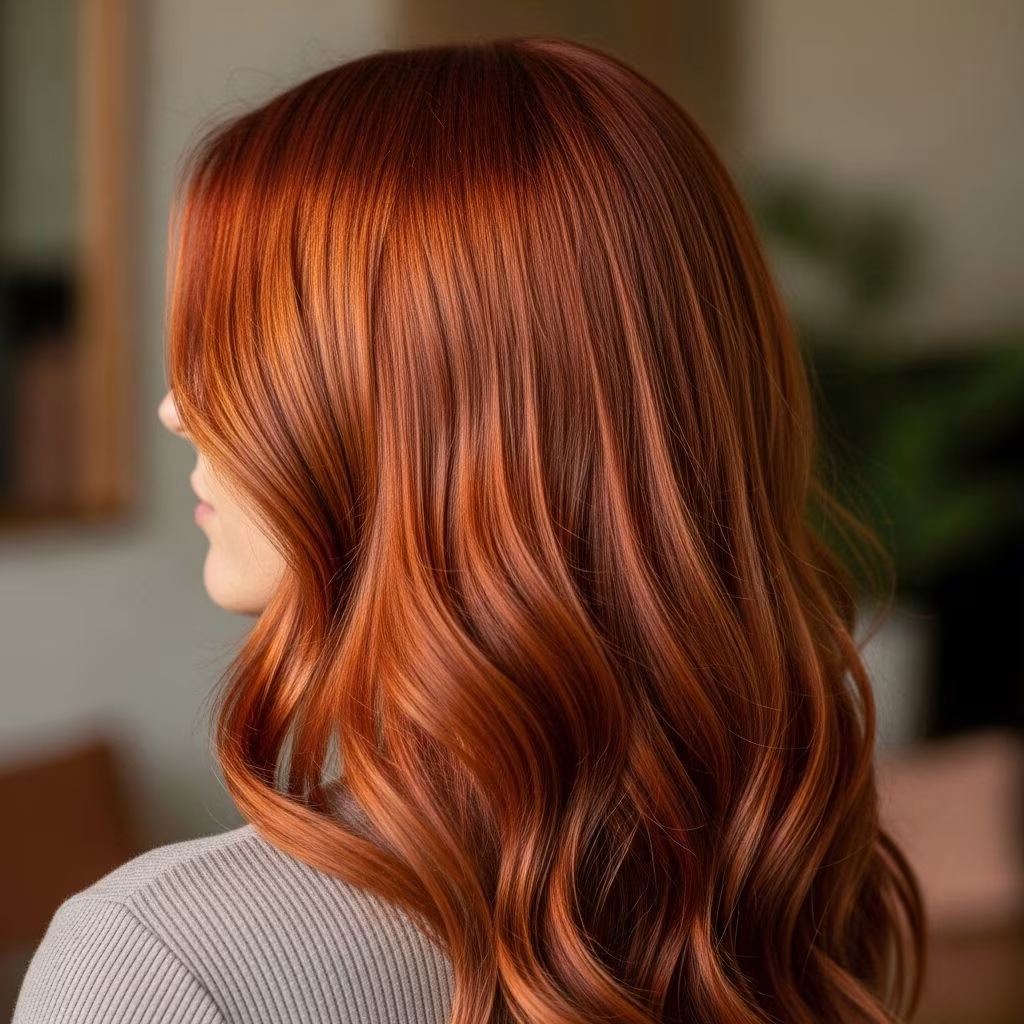
The changes came faster than I expected. Within weeks, my hair shone brighter, my skin cleared, and my eyes sparkled with new vitality. But these physical transformations paled compared to the mental shift that slowly unfolded—the effects that no product could ever bottle.
| Physical Benefits | Mental/Emotional Benefits |
|---|---|
|
|
The Unseen Beauty: Confidence and Mental Clarity
As someone whose career centered on beauty—once crowned a teen pageant queen—I’d always struggled with self-esteem. Alcohol, intended as a shortcut to confidence, only amplified old anxieties. But sobriety challenged my deepest scripts:
- Self-criticism faded: The voice telling me I wasn’t enough grew weaker, replaced by self-acceptance and even admiration.
- Clarity conquered chaos: Instead of waking with regret or anxiety over forgotten moments, I remembered everything—good or bad—and learned to love my choices.
- Authentic social experiences: Where I once relied on substances to foster connection, I could now enter any situation as myself, unfiltered and real.
Social Anxiety and Real Connection
One of sobriety’s quiet miracles was the disappearance of social anxiety. Contrary to everything I feared, ditching alcohol made me less anxious, not more. I’d always assumed that drinking was essential for loosening up at parties or meeting new people, but I discovered a deeper freedom.
- No more second-guessing words or actions in a haze.
- Authentic conversations, honest connection without the need to keep up a facade.
- The ability to be fully present—no numbing, no forgetting.
Beauty Isn’t Bought—It’s Chosen
After a year alcohol-free, my original goal seemed almost trivial. I’d set out to prove I could survive one year without drinking. But what I gained was a love of self that felt revolutionary compared to any product, trend, or external fix. The thought of letting alcohol back into my life seems distant—not out of fear, but because the rewards of sobriety are simply too rich.
- Sobriety as a permanent lifestyle, not just a passing challenge.
- Self-acceptance and inner peace as the ultimate foundation for beauty.
Why Sobriety’s Power Surpasses Beauty Products
- Lasting results: While serums and creams may offer temporary improvements, sobriety transforms from the inside out.
- Changed perspective: Freed from social pressure and the tyranny of comparison, I could finally appreciate my own uniqueness.
- Empowerment: The realization that no bottle—whether of gin or retinol—could contain what I found in true self-love.
Frequently Asked Questions (FAQs)
Q: Did physical beauty changes happen quickly after quitting alcohol?
A: Yes, many people notice brighter, clearer skin and healthier hair within weeks or months of abstaining from alcohol, thanks to better hydration, sleep, and reduced inflammation.
Q: Was socializing harder without alcohol?
A: Initially, situations with drinking felt awkward, but authenticity and true connection emerged with time, making socializing easier and more rewarding.
Q: Did you use any beauty products to supplement the change?
A: While I continued using my normal skincare and haircare routines, the most powerful shift came from within—mental clarity and self-love amplified their effects far more than any bottle ever could.
Q: What inspired the choice to go public with the sobriety challenge?
A: Sharing the journey openly kept me accountable and fostered support, turning a potentially lonely process into a community effort.
Q: Are the emotional benefits of sobriety universally experienced?
A: While everyone’s journey is unique, many report less anxiety, improved mood, and deeper self-acceptance after quitting alcohol—especially over sustained periods.
Tips for Those Considering or Beginning Their Own Sober Journey
- Be honest about why you want to quit and how alcohol actually makes you feel.
- Tell supportive friends and family; use accountability as a motivator.
- Replace rituals—find new celebratory drinks or activities.
- Expect mental and physical benefits to evolve over time; patience pays off.
- Remember: true confidence and beauty grow from self-acceptance, not external fixes.
A Beauty Editor’s Final Reflection
After living through a year’s worth of celebrations, stress, and everyday life alcohol-free, I discovered something the beauty industry rarely sells: the courage to be yourself, the clarity to forget old insecurities, and the kind of radiant confidence that no product could possibly replicate. Sobriety isn’t just a wellness fad—it’s a commitment to the messy, glorious process of loving yourself unconditionally.
About the Author
Mary Honkus is a freelance writer specializing in beauty, home, fashion, health, and wellness. With bylines in Real Simple, People, and InStyle, Mary draws on her diverse expertise to inspire holistic approaches to self-care and joy. Find her testing the latest products, exploring NYC’s food scene, or podcasting about modern living.
References
- https://www.cosmopolitan.com/style-beauty/beauty/a64478553/sober-beauty-essay/
- https://www.aol.com/sobriety-did-no-beauty-product-161900498.html
- https://www.cosmopolitanme.com/cosmo/editors-letter-a-sober-curious-summer
- https://www.cosmopolitan.com/uk/body/health/a38604238/stop-drinking-year/
- https://www.women.com/1870627/chrissy-tiegen-alcohol-struggles-sobriety-different-everyone/
- https://oasis.library.unlv.edu/cgi/viewcontent.cgi?article=3382&context=thesesdissertations