The Hunger Games trilogy captivated audiences worldwide not only through its gripping storyline but also through its visually stunning aesthetics, particularly the intricate hairstyling that brought each character to life. Behind every carefully crafted braid, elaborate Capitol wig, and textured look was a team of dedicated hair professionals led by department head Linda Flowers, who revealed fascinating secrets about creating the iconic hairstyles that defined Panem’s districts and the Capitol.
The Art of Character Development Through Hair
Hair styling in The Hunger Games served as more than mere aesthetic appeal—it was a powerful storytelling tool that conveyed character depth, social status, and emotional journey. The contrast between District 12’s practical, humble hairstyles and the Capitol’s extravagant, colorful creations reflected the stark divide between the oppressed and the privileged in Suzanne Collins’ dystopian world.
Linda Flowers, the lead hair designer who wore multiple hats as department head, head colorist, and wig designer, approached each character’s hair as an extension of their personality and circumstances. This philosophy resulted in hairstyles that weren’t just visually striking but also narratively significant.
Jennifer Lawrence’s Transformation Journey
The Great Wig Selection Process
Jennifer Lawrence’s journey to becoming Katniss Everdeen began with an extensive wig selection process that would determine the character’s signature look. The production team tested six different brown wigs, each representing a different shade from light to dark brown. This meticulous selection process took over two hours, with director Gary Ross carefully considering how each shade would translate on screen.
Despite Jennifer Lawrence’s preference for the lightest brown shade, Ross ultimately selected the darkest option. This decision wasn’t arbitrary—the deeper brown provided better contrast against the film’s natural lighting and helped establish Katniss’s connection to District 12’s earth-toned, practical aesthetic. The darker shade also photographed beautifully against the various backdrops, from the forest scenes to the metallic environments of the Capitol.
Real Hair vs. Extensions Strategy
Contrary to what many fans might assume, Jennifer Lawrence didn’t wear a wig throughout the filming of the first Hunger Games movie. Her iconic side-braid was created using her own natural hair, which required significant preparation and maintenance. However, whenever Katniss appeared with her hair down, the styling team strategically placed three sections of high-quality clip-in extensions to achieve the desired fullness and length.
These extensions were positioned at three key points: one on each side of her head and one along the back. This technique allowed for quick style changes between scenes while maintaining consistency in Katniss’s appearance throughout the film.
The Iconic Katniss Side-Braid: More Than Meets the Eye
Symbolic Significance and Practical Benefits
The famous Katniss side-braid wasn’t chosen randomly—it served multiple purposes that extended far beyond aesthetic appeal. From a narrative standpoint, the braid represented Katniss’s connection to her family, her District 12 roots, and her refusal to completely assimilate into Capitol culture. As Linda Flowers explained, the braids were symbolic of rebellion, with larger, more elaborate versions appearing during pivotal moments in the story.
From a practical filmmaking perspective, the side-braid solved several on-set challenges. It ensured that Jennifer Lawrence could be immediately recognized from any camera angle, maintaining character consistency throughout various shots. Additionally, the contained hairstyle prevented hair from interfering with action sequences, weapons handling, and costume elements.
The Complex Creation Process
Creating Katniss’s signature braid required more skill and technique than audiences might realize. The process began with achieving the right texture, which was crucial for both character authenticity and visual impact on screen. Linda Flowers used a specialized product called the TopStyler to create dread-like texture at the crown of Jennifer’s head, reflecting Katniss’s limited access to bathing facilities in District 12.
The texturing process involved several steps:
- Creating roughed-up texture at the crown using specialized styling tools
- Twisting sections of hair around a curling iron rod for added dimension
- Incorporating textured pieces into the braid for visual depth
- Braiding strands under each other rather than over to create more prominence
- Securing with perfectly color-matched hair ties for seamless finishing
This intricate process ensured that Katniss’s braid appeared naturally weathered while still looking cinematic and visually appealing to audiences.
District 12: Creating Authentic Diversity
The 100-Braid Challenge
One of the most impressive logistical achievements in the film’s hair department was creating over 100 unique braid variations for District 12 residents. This massive undertaking ensured that no background character would have a hairstyle identical to Katniss’s signature look, while still maintaining the district’s overall aesthetic of practical, resource-conscious styling.
The variations included:
- Headband braids, like those worn by Primrose Everdeen
- Plaiting techniques using more than three strands
- Wrapped braids that incorporated additional texture elements
- Half-up styles that combined braids with loose hair
- Multi-braid combinations that created more complex patterns
This attention to detail helped establish District 12 as a community where braiding was a common practice, passed down through generations as both a practical necessity and a cultural tradition.
Capitol Extravaganza: Wigs and Color Mastery
The 500-Wig Production Marathon
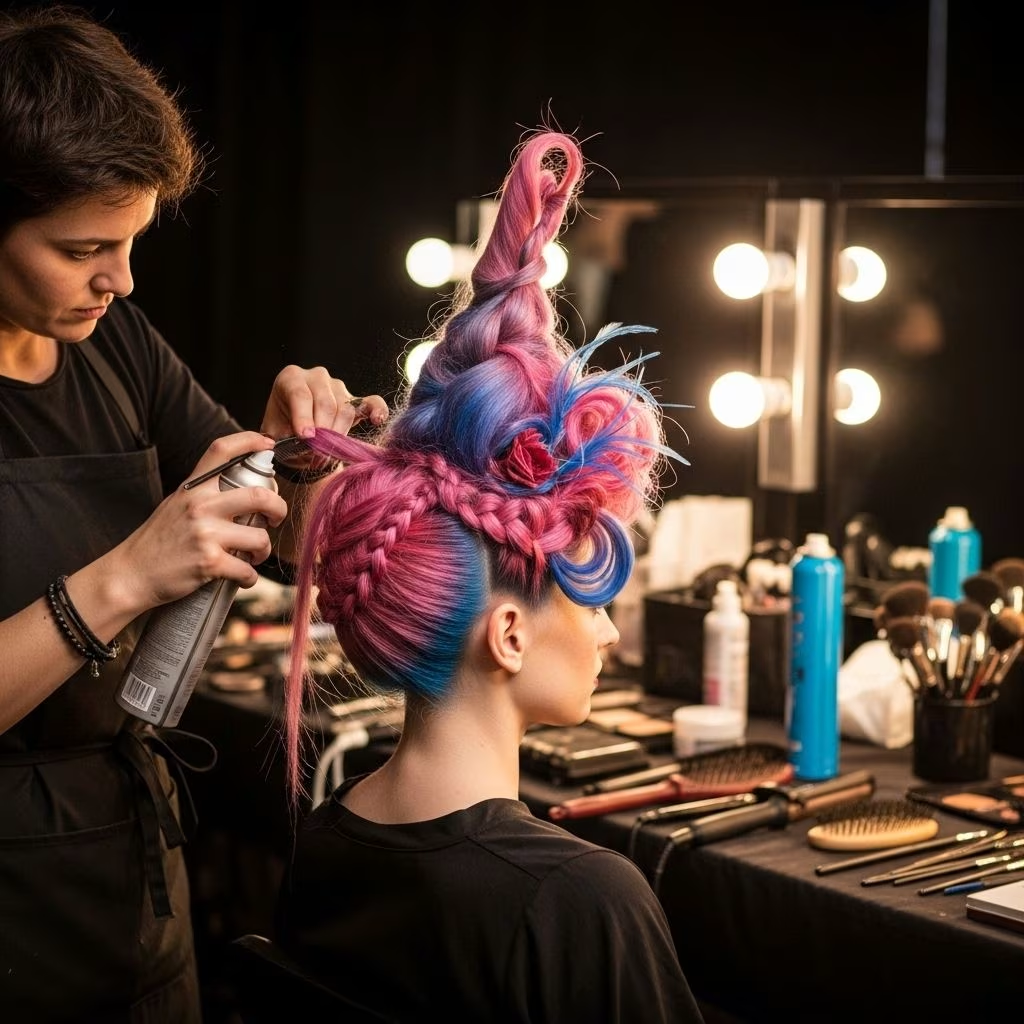
The Capitol scenes required an entirely different approach to hair styling, one that emphasized luxury, excess, and otherworldly fashion sensibilities. Linda Flowers and her team created over 500 wigs and hair pieces specifically for Capitol residents and extras, ensuring that each character embodied the district’s obsession with appearance and status.
This massive production involved:
- Custom color formulations for each wig
- Intricate styling that complemented elaborate costumes
- Maintenance systems for quick touch-ups between takes
- Size adjustments for various actors and extras
- Backup pieces for continuity purposes
Effie Trinket: Fashion Forward Extremes
Elizabeth Banks’s character, Effie Trinket, represented the ultimate Capitol fashionista, requiring hairstyles that could compete with Alexander McQueen costumes for visual impact. Her wigs were deliberately over-the-top, incorporating bold colors, unusual shapes, and avant-garde elements that reflected the Capitol’s disconnect from practical concerns.
The design philosophy for Effie’s hair focused on creating looks that were “immaculately accessorized” and capable of standing up to the elaborate costume work. Simple styles would have been visually lost against such dramatic fashion elements, so each wig was designed to complement and enhance the overall aesthetic impact.
Technical Challenges and Solutions
Climate Considerations in North Carolina
Filming in North Carolina presented unique challenges due to the region’s intense humidity, which could quickly ruin carefully styled hair. To combat this environmental factor, the hair department made the strategic decision to use synthetic hair exclusively for many scenes. Synthetic materials maintained their styling longer than human hair under humid conditions, ensuring consistency throughout long filming days.
This technical adaptation required:
- Sourcing high-quality synthetic materials that photographed well
- Adjusting color formulations for synthetic fibers
- Developing specialized styling techniques for synthetic hair
- Creating maintenance protocols for synthetic pieces
- Training the team in synthetic hair handling and care
Color Evolution Across Films
The transition from The Hunger Games to Catching Fire brought new color challenges and opportunities. Director Gary Ross specifically requested a pastel color palette for the Capitol scenes in the sequel, moving away from potentially garish bright colors that might appear unsophisticated on screen.
This shift required extensive color research and testing to achieve:
- Sophisticated pastel formulations that read well on camera
- Tonal variations that created visual interest without overwhelming costumes
- Color coordination with lighting and set design elements
- Consistency across multiple characters and scenes
- Maintenance protocols for delicate pastel shades
Behind-the-Scenes Challenges and Creative Solutions
Jennifer Lawrence’s Hair Evolution
By the time filming began for Catching Fire, Jennifer Lawrence had grown tired of her character’s signature braid, creating an interesting challenge for the hair department. Linda Flowers found creative ways to honor the character’s iconic look while providing variety for both the actress and audiences.
The solution involved strategic styling choices:
- Maintaining the braid during hunting and action sequences where it was most iconic
- Gradually introducing style variations throughout the film
- Creating hybrid looks that incorporated braid elements with other styling
- Developing quick-change techniques for different scenes
- Balancing character consistency with creative variety
Post-Production Hair Recovery
The intensive dyeing process required for Jennifer Lawrence’s darker hair color created significant damage over time. After completing Catching Fire, she faced the challenge of returning to her preferred blonde shade for award season appearances. The removal process proved extremely difficult and time-consuming.
The restoration process involved:
- Multiple attempts at color removal using base-breaking formulas
- Eight hours of professional bleaching treatments
- Significant hair damage from the chemical processing
- The ultimate decision to cut her hair into a pixie style
- A fresh start approach to achieving healthy hair again
Industry Impact and Trendsetting
The hairstyling work in The Hunger Games trilogy extended far beyond the film sets, influencing beauty trends and inspiring countless fans to recreate the looks. The combination of practical District 12 braids and fantastical Capitol styles provided inspiration for both everyday wear and special occasions.
The films’ hair designs contributed to:
- A resurgence in braiding techniques and tutorials
- Increased interest in textured, lived-in hairstyles
- Bold color experimentation in mainstream fashion
- Appreciation for hair as storytelling element in film
- Integration of practical and fantastical styling approaches
Frequently Asked Questions
Q: Did Jennifer Lawrence actually learn to braid her own hair for the role?
A: While Jennifer Lawrence’s natural hair was used for the braid, it was styled by professional hair artists on set. The complexity of achieving the proper texture and technique required expert knowledge and specialized tools.
Q: How long did it take to style Jennifer Lawrence’s hair each day?
A: The complete styling process, including texturing, braiding, and finishing touches, typically took 45 minutes to an hour each morning, with touch-ups throughout filming days.
Q: Were any of the Capitol wigs made from real hair?
A: While some wigs incorporated human hair, many Capitol pieces used high-quality synthetic materials due to the humid filming conditions in North Carolina and the need for consistent styling.
Q: Can fans recreate Katniss’s braid at home?
A: Yes, with practice and the right techniques. The key is creating texture first, then braiding under rather than over, and securing with a color-matched hair tie for the most authentic look.
Q: What happened to all the wigs after filming ended?
A: Many of the custom wigs and hair pieces were kept by the production company for potential sequels, while others were donated to costume and theater departments for educational purposes.
The hair artistry in The Hunger Games trilogy represents a masterclass in using beauty elements to enhance storytelling, create believable worlds, and develop authentic characters. From Jennifer Lawrence’s practical yet iconic braids to the fantastical creations of Capitol citizens, every strand served the greater narrative while setting new standards for cinematic hair design.
References
- https://www.cosmopolitan.com/uk/beauty-hair/celebrity-hair-makeup/a24222/the-hunger-games-hairstyles/
- https://www.cosmopolitan.com/style-beauty/beauty/advice/a6787/hair-secrets-from-behind-the-scenes-of-the-hunger-games-movie/
- https://www.youtube.com/watch?v=DI5zSaNicmY
- https://www.justjaredjr.com/2023/09/22/10-hunger-games-set-secrets-including-the-scene-that-horrified-jennifer-lawrence-more/5/
- https://www.youtube.com/watch?v=Y-orwOsdPeY