Meet Valeria Lukyanova – The Internet Icon Known as the Human Barbie
In the ever-shifting world of internet celebrity, few figures have achieved quite the same status—or notoriety—as Valeria Lukyanova, the woman who became famous as the “Human Barbie.” Her uncanny resemblance to Mattel’s iconic doll, combined with her mystifying personal beliefs and carefully curated online presence, captured the imagination and criticism of millions. Lukyanova’s story is as surreal as it is provocative, challenging prevailing concepts of beauty, self-expression, and the limits of physical transformation.
The Rise of a Real-Life Barbie
Born in Tiraspol, Moldova in 1985, Valeria Valeryevna Lukyanova’s early life offered little foreshadowing of her future. As a teen, she rebelled against her conservative family and the drab aesthetic of her Soviet-rooted hometown, experimenting with goth fashion, black hair, and even artificial fangs. Bullied for her dark, unconventional style, Lukyanova gradually gravitated towards something far more extreme and, ultimately, globally recognizable: the visage of a living doll.
- Goth to Glam: Early looks included black clothing and striking accessories like spiked bracelets, setting the foundation for a willingness to transform that would only intensify with age.
- Model Beginnings: By 16, Lukyanova entered the modeling world, quickly developing the makeup techniques and stylizations that would later make her famous.
- Controversial Ambition: Her move to Odesa, a hub for modeling and matchmaking agencies, fueled her fascination with transformation, set against local gender expectations of marriage and beauty.
Inside the Transformation: Surgeries, Claims, and Controversy
Lukyanova’s transformation into the “Human Barbie” is both the core of her public persona and the subject of endless speculation. Despite widespread belief that she underwent multiple cosmetic procedures, she consistently claims she has only had a single surgery (breast augmentation), crediting the rest to extreme makeup artistry, colored contact lenses, and disciplined lifestyle choices.
What She Admits to—and What She Denies
- Admitted: Breast augmentation surgery in early adulthood, marking her only publicly confirmed procedure.
- Denied: Any further surgical enhancement. Lukyanova attributes her narrow waist, doll-like face, and large eyes to her makeup routine, corsetry, and eyewear.
- Expert Opinions: Plastic surgeons like Dr. Sam Rizk assert she’s likely had additional procedures, including rhinoplasty (nose reshaping) and body contouring, although definitive proof remains elusive.
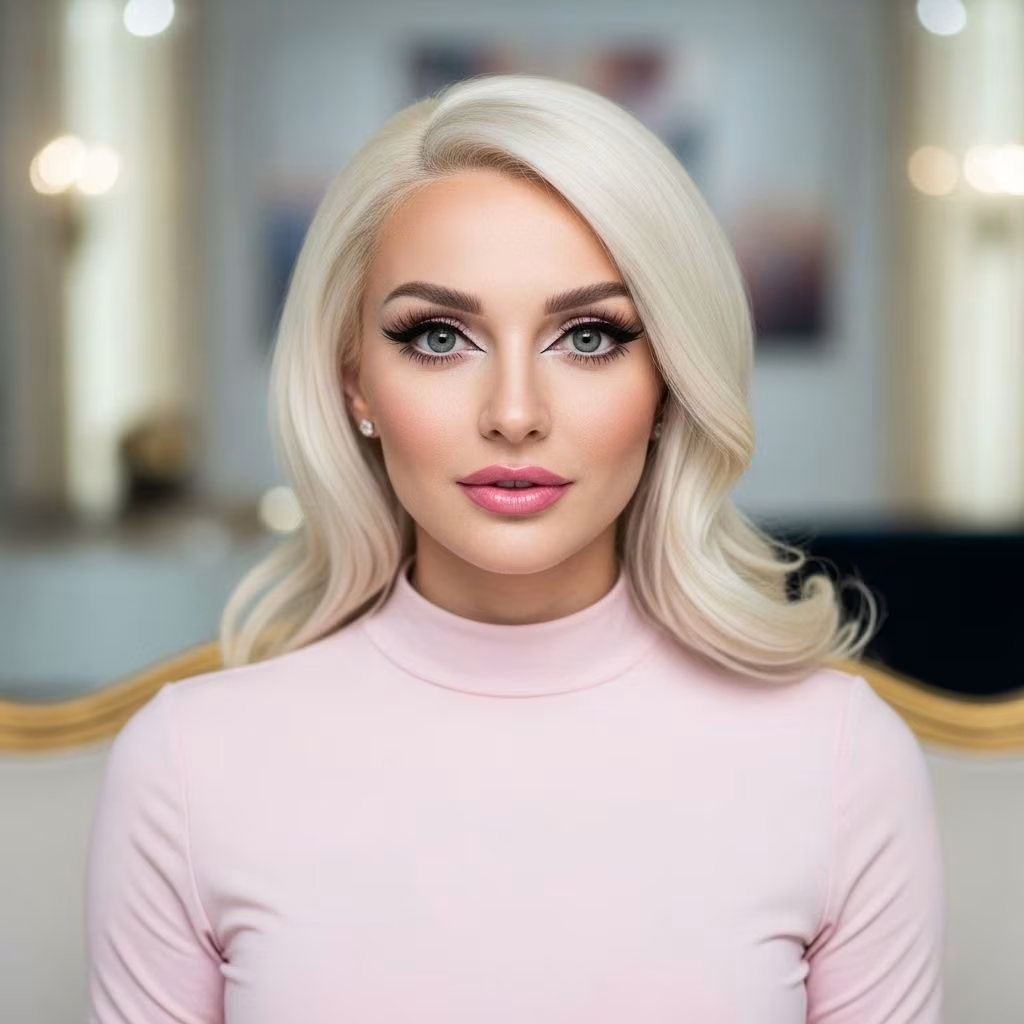
Her beauty regimen can reportedly take over ninety minutes daily. Lukyanova utilizes heavy contouring, shading, and custom-made contact lenses to enlarge and accentuate her eyes, further blurring the line between human and doll.
The Photoshop Debate
- Early on, Valeria refuted accusations that she digitally altered her images, insisting her appearance was entirely physical.
- Recently, she has admitted to using Photoshop to achieve skin “smoothness” and further exaggerate her doll-like qualities in photos shared with her vast Instagram following.
Dietary Extremes and the Quest for Perfection
Lukyanova’s approach to beauty doesn’t stop at makeup or cosmetic procedures. She has followed a strict exercise regime and, at times, promoted radical diets—including, by her own claim, periods of attempting to “live on air and light” alone. This practice of breatharianism (forgoing food and water) is widely viewed by health experts as both dangerous and medically impossible.
Not Just a Pretty Face: Lukyanova’s Mystical Worldview
As striking as Lukyanova’s appearance is, her spiritual beliefs are equally unorthodox and controversial. Far from simply aspiring towards physical transformation, she has cultivated an online persona that merges her Barbie-like image with new-age mysticism, esoteric teachings, and occult philosophies.
- Out-of-Body Experiences: Lukyanova openly discusses her belief in astral projection—leaving her physical body behind to explore alternate realities.
- Reincarnation Beliefs: She claims to recall past lives and often incorporates these themes into her writings and interviews.
- Teaching and Lecturing: Through seminars and YouTube videos, Lukyanova offers guidance on topics such as meditation, self-discovery, and spiritual awakening.
International Spotlight and Human Ken Doll Encounter
Lukyanova’s profile exploded internationally in 2012, when viral images and YouTube content launched her to global internet fame as the “Human Barbie.” The fascination was as much about her physicality as the oddity of her lifestyle and the spectacle of her choices.
- Media Storm: Lukyanova became a fixture in fashion, beauty, and pop culture media, with interviews in outlets ranging from Cosmopolitan to GQ.
- Comparison with Justin Jedlica: In 2013, Lukyanova met “Human Ken Doll” Justin Jedlica on a TV show. Unlike Lukyanova, Jedlica readily admits to over 780 surgical procedures, costing nearly one million dollars. Their meeting highlighted divergent philosophies on self-transformation: Jedlica embracing artificial change, Lukyanova alleging naturalism and spiritual intent.
Table: Valeria Lukyanova vs. Justin Jedlica
| Aspect | Valeria Lukyanova | Justin Jedlica |
|---|---|---|
| Nickname | Human Barbie | Human Ken Doll |
| Confirmed Surgeries | 1 (breast augmentation) | 780+ |
| Beliefs | New Age, spiritual transformation | Embraces plastics/artificial change |
| Cost of Procedures | Undisclosed | $800,000+ |
The Social Media Legacy and Cultural Critique
From the start, Lukyanova’s digital persona has been meticulously managed. Instagram, Facebook, and YouTube provided the global stage on which she could amplify her image and message—often to millions of followers. Her visual brand became inseparable from intensely filtered selfies, elaborate doll costumes, and background scenery engineered for maximal effect.
- Viral Sensation: Photos and videos of Lukyanova quickly spread across forums and news sites, sparking debates about authenticity, Photoshop use, and body image.
- Influence on Beauty Trends: Her look inspired both imitation and parody, reigniting discussions about body modification and the dangers of beauty obsession.
- Criticism: Lukyanova has been called out for promoting unrealistic, unhealthy ideals, and some speculate she suffers from body dysmorphia, although she has never accepted such a diagnosis.
Controversies, Backlash, and the Dark Side of Fame
Lukyanova’s story is not one of unchallenged adoration. Her public comments have frequently ignited fierce backlash. Perhaps most notably, she has made disparaging remarks about people she deems as “ugly,” blaming their lack of attractiveness on supposed laziness or moral failings. These statements have been met with widespread condemnation, even among her fans.
- In several videos, she expressed that “ugly people” only have themselves to blame, advocating strict diets and heavy self-discipline.
- She critiqued celebrities, notably making unsolicited remarks about actress Sarah Jessica Parker’s appearance, which further fueled public outrage.
- Her most controversial dietary phase promoted living without food or water, condemned and labeled as dangerous by health experts and the public alike.
- Social backlash included unfollows, critical comments, and think-pieces dissecting her influence on young women and perceptions of self-worth.
Beyond the Barbie Image: Artistry, Music, and Personal Life
Lukyanova’s talents and interests extend beyond appearance. She is a composer and opera singer, recording New Age-style music under the name Amatue and has released two albums. She has also participated in independent films and documentaries, often themed around her doll persona.
- Music: Recorded albums like “Sun in the Eyes” and “2013” as Amatue, featuring ethereal vocals and ambient instrumentals.
- Film: Appeared in projects such as “The Doll” (2017) and “Doll House Workout” (2017), which showcase her aesthetic and personality.
- Personal: Married to Dmitry Shkrabov, a childhood friend who reportedly supports her choices and lifestyle.
Debate on Beauty, Identity, and the Internet
The phenomenon of Valeria Lukyanova acts as a mirror reflecting 21st-century obsessions surrounding beauty, identity, and digital fabrication. The visceral reactions she evokes—admiration, disbelief, revulsion, and fascination—demonstrate the cultural anxiety around body modification and unattainable beauty ideals. Analysts point out that Lukyanova’s popularity aligns with a period of accelerated globalization in beauty standards, where filters, surgeries, and digital editing converge into one curated self.
- Collective Vanity: Some commentators argue Lukyanova embodies society’s endless pursuit of perfection and spectacle, raising questions about the line between self-expression and self-erasure.
- Feminist Perspective: Others point out how her story is situated within the pressures on women to achieve impossible beauty, particularly in post-Soviet societies obsessed with femininity and marriageability.
Frequently Asked Questions (FAQs)
Q: Did Valeria Lukyanova really only have one surgery?
A: She publicly admits only to breast augmentation, but experts believe she likely underwent additional procedures for facial and body sculpting.
Q: Is her appearance achieved only with makeup?
A: While makeup tricks and contact lenses do much of the work, many surgeons and fans remain skeptical a natural look alone could produce her extreme proportions.
Q: What kind of beliefs does Lukyanova have?
A: She espouses new-age spiritualism, including belief in astral travel, reincarnation, and higher realms of consciousness, which feature prominently in her videos and lectures.
Q: Has she influenced body image trends?
A: Her presence helped fuel “living doll” and extreme transformation trends on social media, sparking both admiration and criticism about the impact on beauty standards.
Q: What is her status today?
A: While her mainstream fame has cooled, Lukyanova remains active on social media and in artistic circles, still polarizing audiences who debate her legacy and message.
References
- https://allthatsinteresting.com/human-barbie-valeria-lukyanova
- https://www.imdb.com/name/nm6724094/bio/
- https://www.womenshealthmag.com/life/a19969203/human-barbie-ugly-people/
- https://www.mic.com/articles/29550/human-doll-valeria-lukyanova-an-extreme-reflection-of-our-collective-vanity
- https://www.youtube.com/watch?v=1uBwFW1Dfng