No-Makeup Challenge: A Week-Long Confidence Experiment
Could you go an entire week without wearing any makeup? While some trendsetters and celebrities post unfiltered selfies, most of us still reach for concealer, mascara, or brow gel before stepping out—especially to work. But what actually happens when you give up your routine and embrace your skin, flaws and all? I set out to find the answers by committing to a seven-day no-makeup challenge, and the journey changed more than just my morning schedule.
Why I Chose the No-Makeup Challenge
Despite not being what most would call a heavy makeup user, I’d mastered the art of subtle enhancement: enough to feel confident and “presentable,” not so much that anyone called it out. Like many women, I used makeup to blur imperfections and enhance features I favored. But a conversation changed my thinking.
On a hectic morning, I showed up to work bare-faced—under-eye circles, uneven skin tone, and all. When a coworker candidly said, “You look so fresh-faced,” I felt instantly exposed, scrambling to explain:
“I just started a new face cream and want it to soak in.” My insecurities surfaced, but so did curiosity: Did I really need makeup for others, or for myself?
My Everyday Makeup Habits
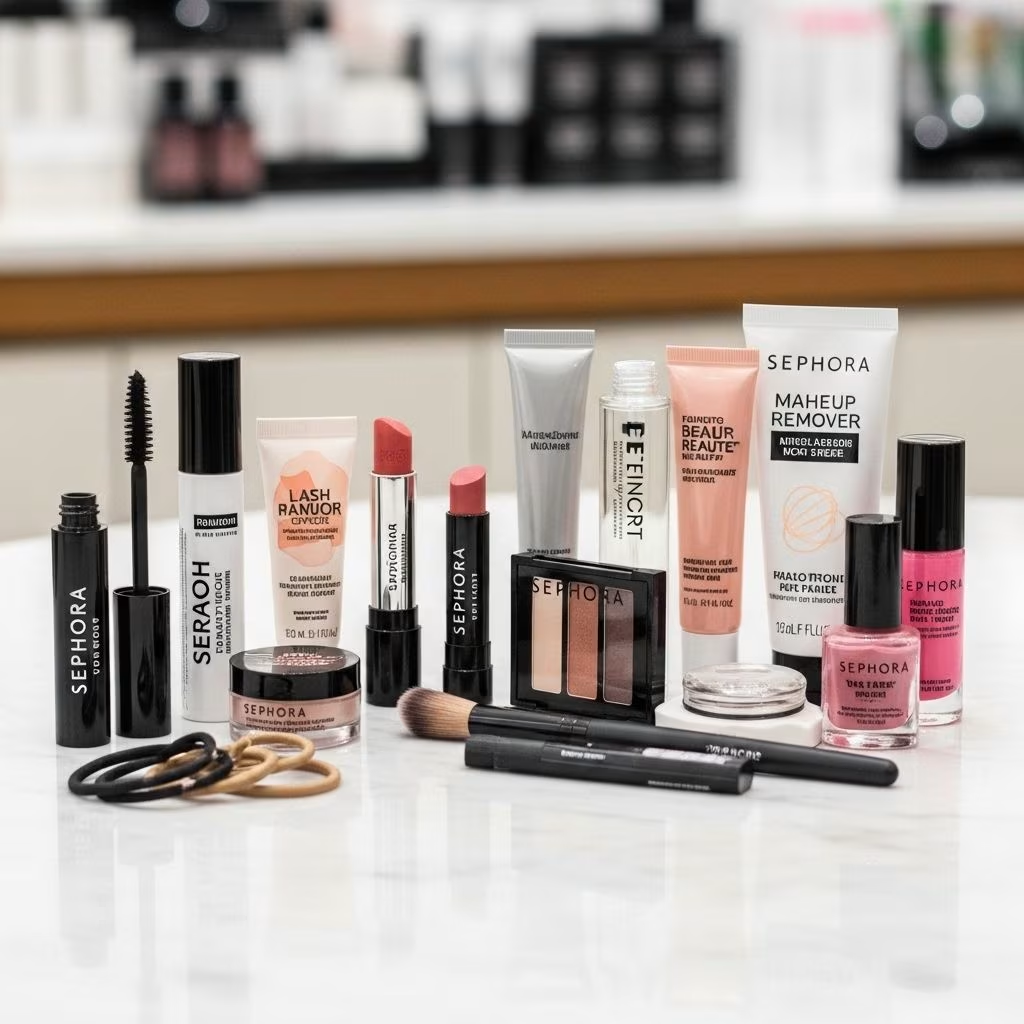
For context, here’s my typical morning beauty routine:
- Tinted moisturizer and concealer to even out splotchy skin and cover discoloration
- Filling in my brows for a bolder look (the “bold brow” trend reigns supreme)
- Curling and coating my lashes with mascara, because my eyes have always seemed “too small”
- 10 minutes from start to finish—enough coverage to feel work-ready
This process felt automatic: a shield against the judgment of others and my own inner critic. My skin had its “flaws”—melasma, dark spots, under-eye circles—but why was I so invested in hiding them, especially when those close to me frequently saw me makeup-free on weekends?
The Accidental Bare-Faced Day
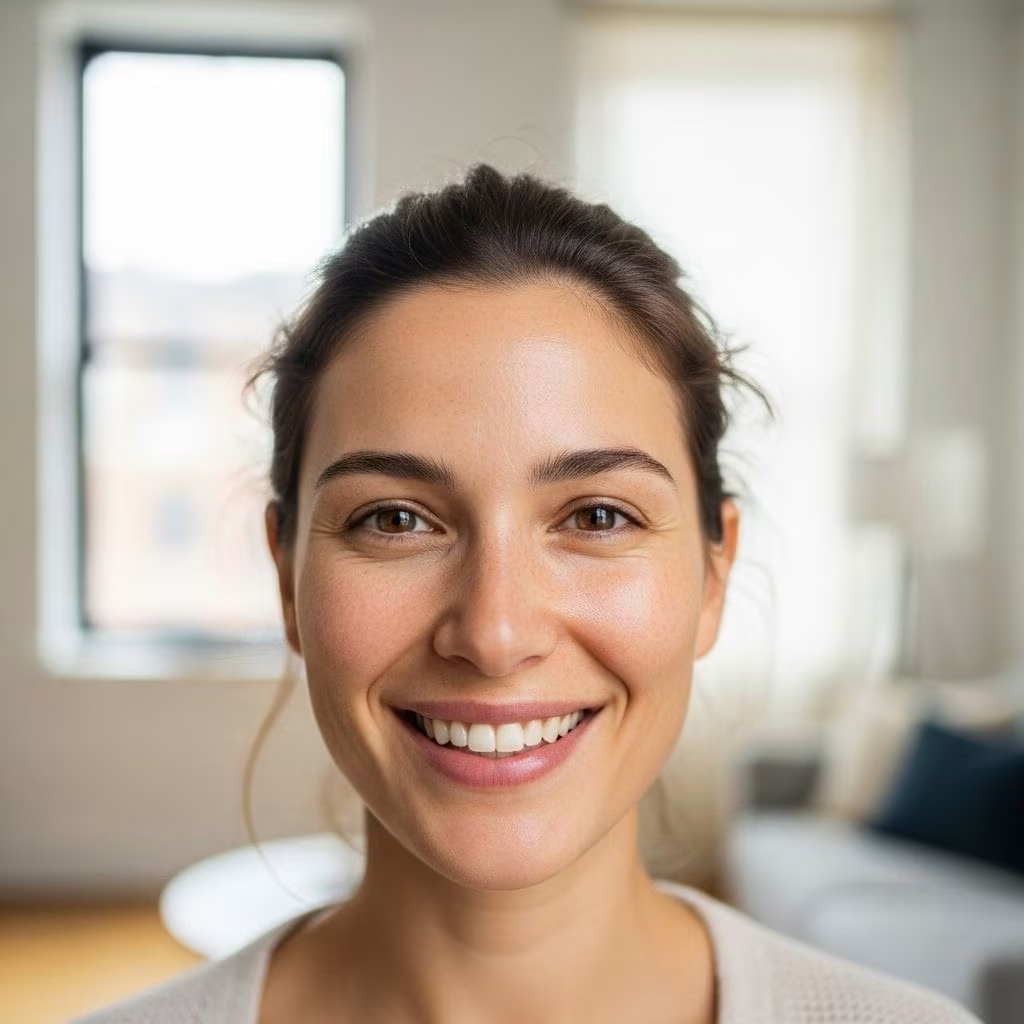
My unplanned morning without makeup was initially mortifying. I expected questions, judgment, maybe even pity. Instead, the reactions were neutral or positive. My coworker called me “fresh-faced.” I gave too many excuses—”I’m trying a new product,” “I didn’t have time,”—and realized how deeply I’d internalized the need to look a certain way, even among familiar faces.
That moment stuck with me. Why did I feel less “me” without mascara and concealer? Had makeup become my emotional crutch?
Deciding to Go Makeup-Free
Emboldened, I decided to conduct an experiment: one week with absolutely no makeup—not even on workdays, not for errands, and not for special occasions. If celebrities could post makeup-free selfies to millions, surely I could handle it for seven days among coworkers, friends, and strangers. I figured it would be easy—most weekends, I wore no makeup anyway. #FamousLastWords.
Setting Expectations and Fears
Before starting, I confronted my top worries:
- Would people notice? Would they ask if I was tired, sick, or “okay”?
- Could I handle having my skin—melasma, blemishes, uneven pigmentation—fully exposed at work?
- Would my own self-confidence plummet?
- How would it feel to ditch beauty routines that felt like armor?
I braced for awkward questions and uncomfortable stares.
Day-by-Day: The Reality of No Makeup
The week’s experiences revealed more than I expected. Here’s how each phase unfolded:
| Day | Feelings/Experiences | Surprises/Challenges |
|---|---|---|
| 1 | Self-conscious and hyper-aware of every spot and flaw | People seemed not to notice, or complimented my “freshness” |
| 2–3 | Still uneasy, wanted to reach for concealer every morning | No pointed comments; realized the “worst feedback” was my own |
| 4–5 | Growing more comfortable as anxiety faded | Noticed skin actually felt smoother and less irritated |
| 6 (Slip-ups) | Tempted to use makeup for a work event; resisted | Took extra care with sun protection and skincare |
| 7–8 (Extended) | Birthday: kept it bare during the day, celebrated skin’s strength | Allowed myself makeup for dinner; realized it’s about choice, not habit |
How People Reacted (and How I Reacted to Them)
Most people simply didn’t care or notice that I wasn’t wearing makeup. The few who did mention it either complimented my “no-makeup” confidence or asked if I had changed my skincare.
- One coworker suggested, “You should just stop wearing makeup then.”
- Another actually called out my uneven skin tone, but the impact was less than I’d feared.
- Surprisingly, I received more compliments on makeup days, but found the validation less meaningful.
Initially, this challenged my confidence, but as the days passed, I realized the discomfort was mine, not theirs.
What Happened to My Skin
- Less Irritation: Freed from foundation and powders, my skin felt less sensitive and smoother, with fewer clogged pores.
- Heightened Awareness: I paid closer attention to skincare needs—hydration, SPF, addressing discoloration—rather than simply covering up.
- Sun Protection: I became diligent with sunscreen, especially after realizing how much my skin health depended on it.
- Self-Acceptance: Over time, I grew used to seeing my natural skin, even the “imperfections.”
By the end of the week, my complexion genuinely looked better, though the biggest change was how I felt about it, not necessarily the skin itself.
Biggest Revelations from the Challenge
- Makeup Should Be for You, Not Expectations: The only reason to wear makeup should be personal choice—not because you fear others’ opinions.
- People Notice Less Than You Think: Most people barely register a bare face. Our own insecurities are often invisible to others.
- Loving Your Skin Takes Practice: Regularly seeing your real skin (not just the filtered version) helps normalize it for yourself.
- The Value of Time and Energy: I recovered wasted minutes every morning and felt less stressed about appearances; the freedom was refreshing.
Permanently abandoning makeup isn’t the answer for everyone. But learning to appreciate yourself as you are—and to use makeup as an option, not a necessity—profoundly shifts your sense of self-worth.
Beyond the Challenge: A Changed Perspective
Since completing the one-week no-makeup challenge, I haven’t returned to daily makeup at work. I still love getting dolled up for special occasions or whenever I personally want to—but that’s the point: Makeup is a tool, not a mask. Who I am, comfortable in my own skin, does not depend on cosmetics.
This experiment forced me to rethink where I spend time, money, and confidence. Now, I prioritize skin health over coverage and am more mindful about why I reach for certain products. My hope is that others can find similar freedom in choosing makeup (or not) on their own terms, instead of out of habit or pressure.
Frequently Asked Questions
Q: Did your skin actually improve after not wearing makeup for a week?
A: Yes—my skin felt smoother and less irritated, with fewer new blemishes. However, the psychological benefit of accepting my natural complexion was even more transformative.
Q: Did people really not notice you were makeup-free?
A: Most people didn’t comment at all. Those who did were positive or simply curious about my skincare, not judgmental about my lack of makeup. The anxiety was mostly in my own head.
Q: What if I have significant blemishes or discoloration—would a no-makeup week help or hurt my confidence?
A: It can be challenging at first, but many find that the discomfort fades and true confidence grows from self-acceptance. Caring for your skin (cleansing, sun protection) becomes more important, and you may be surprised by the sense of freedom.
Q: Will you ever go back to wearing makeup daily?
A: Only if and when I want to. Occasional makeup feels more like a celebration than a requirement now—a much healthier mindset.
Q: Is a no-makeup challenge right for everyone?
A: Not necessarily! Everyone’s relationship with makeup is different, shaped by culture, profession, and personality. If you’re curious, even a few makeup-free days can help reset your perspective and boost self-confidence.
Key Takeaways
- Makeup is a choice, not an obligation.
- Authenticity and self-acceptance build real confidence.
- Caring for your skin feels more important than covering it up.
- Letting go of rigid beauty routines frees time and mental energy.
Whether you love cosmetics or prefer going bare, the most liberating beauty lesson is this: You define what makes you feel good—no filter, no pressure, no apologies.
References
- https://www.cosmopolitan.com/style-beauty/beauty/a62007975/no-makeup-trend/
- https://www.cosmopolitan.com/style-beauty/beauty/a42263/no-makeup-challenge/
- https://africanismcosmopolitan.com/2015/05/27/makeup-detox-14-days-of-no-makeup-so-far/
- https://www.cosmopolitanme.com/beauty/318-i-wore-instagram-makeup-for-a-week-and-this-is-what-happened
- https://www.cosmopolitanme.com/beauty/1088-heres-what-happened-when-i-tried-alicia-keyss-no-makeup-makeup-routine