Why Racist Asian Halloween Costumes Are Not Just Bad Taste
With Halloween approaching each year, people get creative with costumes, drawing on everything from pop culture to fantasy. Yet, amid the fun, a persistent issue arises: costumes that caricature or appropriate Asian cultures. Choosing attire like “geisha,” “ninja,” or “sushi chef” is not simply a matter of bad taste; it perpetuates harmful stereotypes, strengthens discrimination, and trivializes the real-life experiences of Asian and Asian-American communities.
The Problem With Turning a Culture Into a Costume
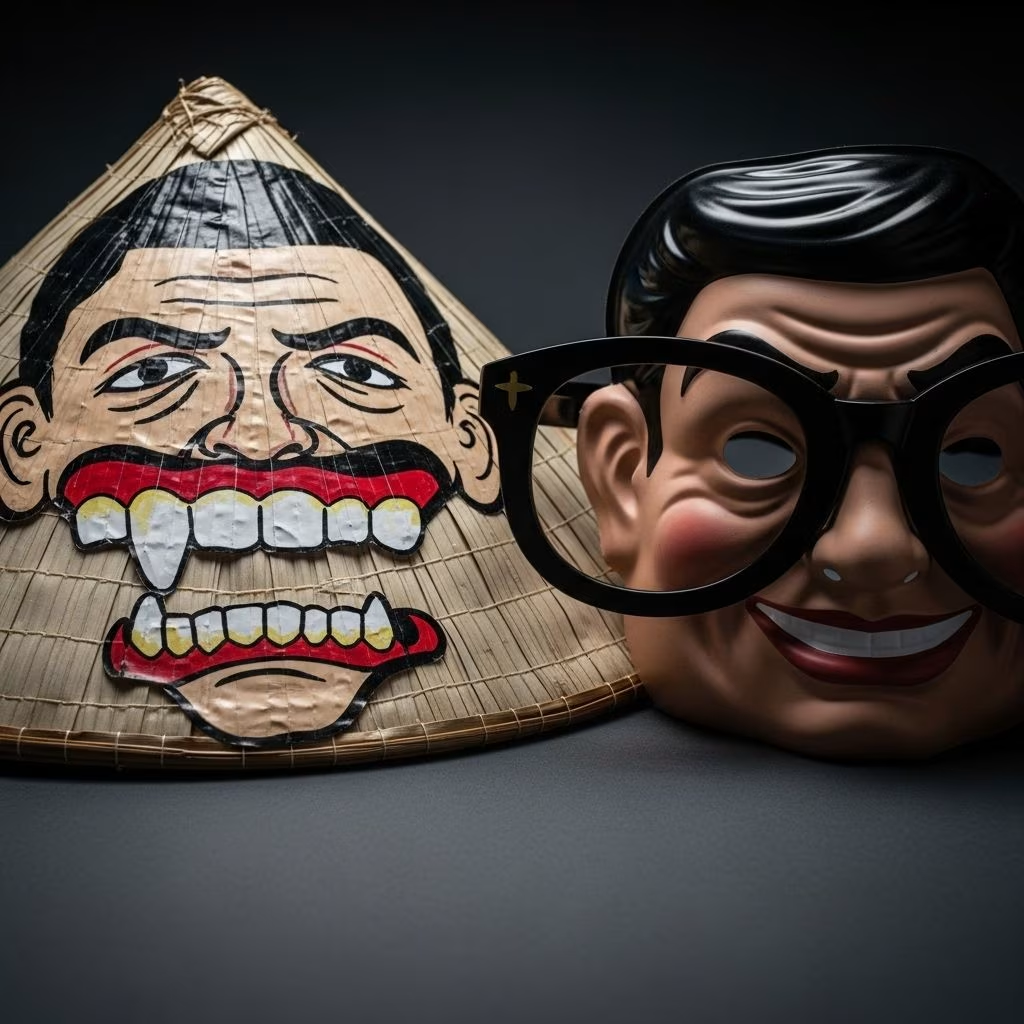
When people opt for costumes that mimic traditional Asian clothing or exaggerated “Oriental” features, they are often engaging in cultural appropriation—taking elements from a culture without understanding or respecting its significance. For those who belong to marginalized groups, this can be a painful reminder of societal exclusion, historical exploitation, and ongoing prejudice.
- Stereotypes Reinforced: Outfits like “rice paddy farmer,” “kung fu master,” or “sexy geisha” reduce complex cultural identities to flat, cartoonish tropes.
- Ignorance Over Respect: Wearing such costumes usually overlooks the cultural and historical context, making mockery of what is meaningful attire for others.
- Objectification and Hypersexualization: Costumes like “sexy ninja” or “slutty geisha” contribute to the longstanding and dangerous sexualization of Asian women.
Pottery Barn’s Kimono Controversy
Retailers have also been at the center of this debate. For example, Pottery Barn Kids faced significant backlash and pulled a kimono costume and a “sushi chef” outfit from sale after advocacy groups raised concerns about reducing Japanese cultural dress to Halloween novelties. Asian American civil rights activists pointed out the disconnect between the intent—fun or exoticism—and the real-world impact: perpetuating the idea that Asian cultures exist to be commodified and consumed for entertainment.
“Our problem is not with the attire itself; it is with the fact that Pottery Barn is marketing these outfits as costumes.” — Ling Woo Liu, Asian Americans Advancing Justice
How Stereotypical Costumes Harm Real People
The ramifications of racist costumes extend well beyond the holiday:
- Normalization of Racism: Treating cultures as costumes normalizes casual racism and can legitimize more overt discrimination or hate crimes.
- Reinforcing Invisibility: These costumes often reinforce the harmful message that Asian individuals are perpetual foreigners or mere props in American society.
- Triggering Stigmas: For many Asians and Asian Americans, seeing their heritage mocked can be retraumatizing, especially in contexts where they fight daily against being stereotyped or othered.
As one Ohio University campaign noted: “You wear the costume for one night. I wear the stigma for life.”
Historical Context: From Yellowface to Modern Halloween
The tradition of using racist caricatures in Western media runs deep. Yellowface—the practice of Caucasian actors using makeup to appear East Asian, often in exaggerated, demeaning ways—was a staple of Hollywood for decades. These portrayals distorted and simplified Asian identity while fueling social alienation. Modern Halloween costumes, by reviving these tropes under the guise of “fun,” keep those harmful traditions alive.
Examples from Popular Culture
- Characters like the “Madame Butterfly” or the “Kung Fu Master” draw directly from Western fantasies of the “exotic East,” rooted more in stereotype than reality.
- Films such as “Austin Powers” and “The World of Suzie Wong” have sexualized or mocked Asian women, contributing to persistent patterns of objectification and violence.
The Impact on College Campuses and Youth Culture
Incidents involving racist Halloween costumes frequently surface on college campuses. Students, sometimes unaware or dismissive of the issues, choose to don attire mimicking other cultures. For example, a recent incident saw college athletes posting images of themselves dressed as a “rice paddy farmer” and exaggerating eye shapes, spreading rapidly across social media and triggering outrage, protest, and calls for administrative response.
- Backlash and Education: Students, faculty, and advocacy groups often respond with posters, protests, and school-wide discussions, demanding both accountability and broader education on cultural sensitivity.
- Administrative Action: Many schools have adopted bias response systems, DEI (Diversity, Equity, and Inclusion) initiatives, and campus climate surveys to address incidents and foster a more inclusive environment.
Understanding Cultural Appropriation
Cultural appropriation is not just about borrowing symbols or clothing. It is about taking those elements out of context—especially from groups that have historically faced oppression and marginalization. The distinction between cultural appreciation and appropriation hinges on intent, awareness, and the power dynamic involved.
| Appreciation | Appropriation |
|---|---|
| Seeking to understand and honor another culture | Borrowing styles/symbols for amusement or trend |
| Invited participation (e.g., at a cultural event) | Costuming for entertainment, disconnected from context |
| Engaging with cultural representatives, respecting traditions | Using cultural signifiers without respect or research |
The Harm of Sexualized and Exaggerated Depictions
A particularly insidious aspect is the hypersexualization of Asian women through costumes. “Sexy geisha” or “submissive lotus blossom” outfits reinforce decades-old fantasies used in media and society to objectify and control Asian women. This dynamic is not harmless: research links sexualized stereotypes with increased risk of real-life violence and discrimination against Asian women.
- Media Tropes: The use of Asian women as sexual objects in movies and costume shops reflects—and encourages—dangerous attitudes.
- Real-world Impact: Violence and harassment against Asian women often invoke similar stereotypes and objectifying language.
Common Excuses—And Why They Don’t Hold Up
- “It’s just a joke”: Humor does not exempt one from being responsible for the harm caused. Jokes rooted in stereotypes reinforce those stereotypes in society.
- “It’s a compliment”: Complimenting a culture by reducing it to a stereotype isn’t respectful. True appreciation involves learning and thoughtful engagement, not mimicry.
- “I didn’t mean to offend”: Impact outweighs intent. Good intentions do not erase the effects of reinforcing racism or triggering trauma.
How to Avoid Cultural Appropriation on Halloween
The path toward more respectful celebrations begins with thoughtful decision-making. Here are some practical steps to avoid causing harm:
- Choose costumes that don’t rely on racial or ethnic stereotypes.
- Research the origins and meanings of attire before wearing them.
- Listen to voices from the culture in question. If advocacy groups or community leaders say a costume is offensive, take their concerns seriously.
- If in doubt, leave it out. There are countless creative costumes that do not draw from marginalized cultures.
Alternatives to Culturally Insensitive Costumes
- Fictional characters that are not rooted in specific real-world cultures
- Animals, objects, concepts, or puns
- Self-created fantasy personas that do not borrow from cultural stereotypes
The Role of Education and Advocacy
Advocacy and education are key for shifting attitudes toward costumes and cultural sensitivity. Many campuses and organizations are proactively:
- Hosting workshops and discussions about cultural appropriation and racism.
- Displaying posters and launching social media campaigns—like the “We’re a culture, not a costume” initiative—to spread awareness.
- Supporting victims of racism and implementing formal reporting and disciplinary processes for cultural insensitivity.
Frequently Asked Questions (FAQs)
Q: Why are “Asian” or “Oriental” costumes considered racist?
A: These costumes often rely on stereotypes that exoticize, mock, or sexualize Asian cultures rather than respecting their complexity and significance. The practice perpetuates harmful narratives and reinforces the idea that Asians are outsiders or objects of amusement rather than individuals and communities with diverse identities.
Q: Is it okay to wear traditional attire (like a kimono or cheongsam) if I admire a culture?
A: Simply admiring a culture does not equate to understanding or respecting it. Wearing such attire as a costume—especially for entertainment—strips it of its meaning and can be deeply disrespectful. Cultural appreciation requires active engagement, education, and, ideally, invitation from the culture’s members.
Q: How does sexualized Asian costuming contribute to real-life harm?
A: Hypersexualized portrayals in costumes reinforce wider social narratives that Asian women are submissive or exotic, and are linked to higher rates of harassment and violence against them. These portrayals are not just offensive—they can endanger real people.
Q: What should I do if I see someone wearing a racist costume?
A: Approach the subject with sensitivity. If possible, explain calmly why the costume is problematic. Share resources or suggest they research more about cultural appropriation and stereotypes. If you’re in a position to do so (such as on a campus or organization), report the incident according to relevant policies.
Q: What role do retailers and brands play in perpetuating or stopping racist costumes?
A: Retailers have significant power in what they normalize for consumers. By selling or promoting racially stereotypical costumes, they help perpetuate cultural appropriation and racism. Brands that pull such products and issue apologies, or better yet, avoid selling them in the first place, help set a standard for inclusivity and respect.
Moving Forward: Redefining Fun and Respect
Halloween remains an opportunity for creativity, community, and self-expression. By leaving behind costumes steeped in racial stereotypes and by being mindful of how our choices affect others, we contribute to a more inclusive celebration—one that values fun, respect, and real cultural appreciation in equal measure.
References
- https://www.latimes.com/local/lanow/la-me-ln-halloween-costume-apology-20131028-story.html
- https://www.the-college-reporter.com/anger-controversy-sparked-over-racist-halloween-costumes-worn-by-students-2/2019/11/
- https://gunnoracle.com/21321/forum/offensive-halloween-costumes-perpetuate-harmful-stereotypes-for-minority-groups/
- https://www.cbsnews.com/news/kung-fool-costume-enrages-asians/
- https://www.heraldtribune.com/story/news/2002/10/17/asian-groups-offended-by-kung-fool-costume/28725449007/
- https://www.anselm.edu/sites/default/files/Documents/Multicultural%20Center/Don%E2%80%99t%20Mess%20Up%20When%20You%20Dress%20Up.pptx