


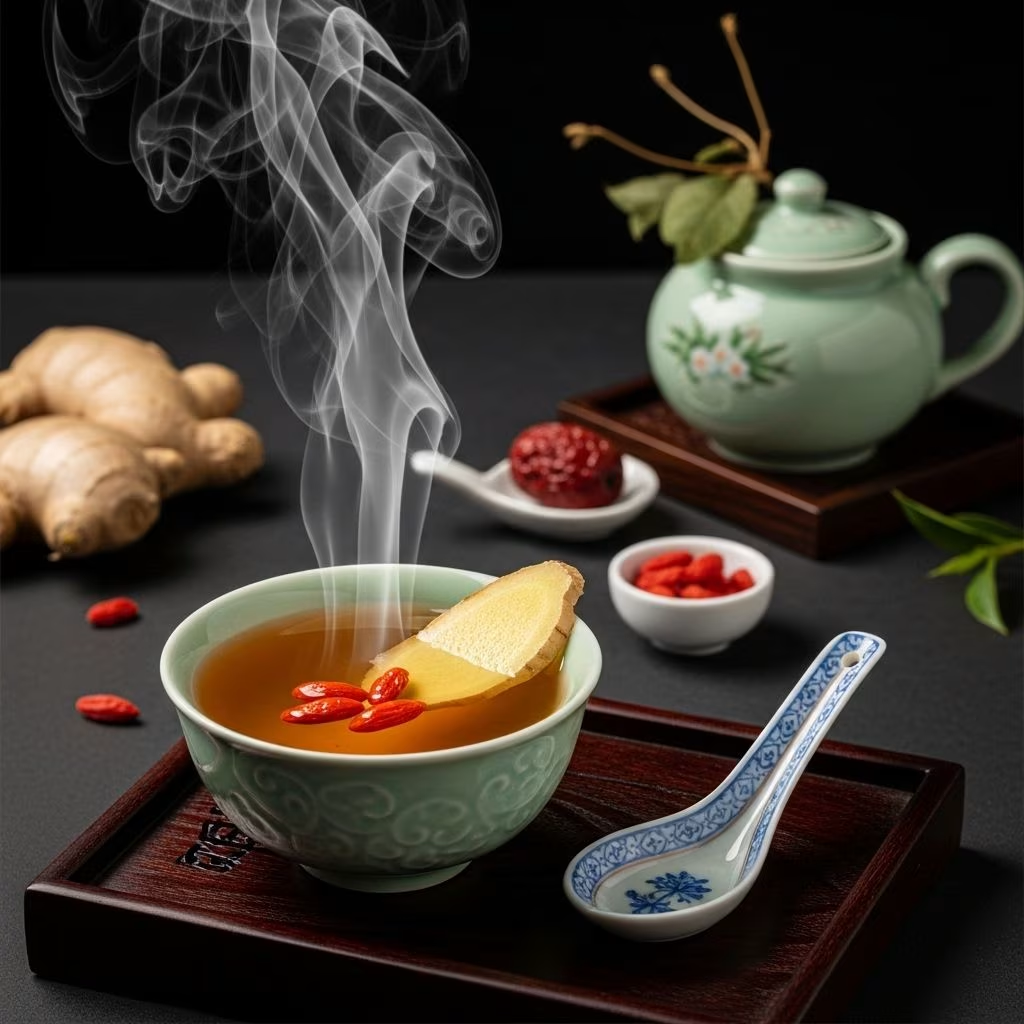
Chinese Medicine for Sore Throat: Natural Remedies and Relief
Sore throat is a common ailment impacting people of all ages, often arising from infections, environmental irritation, or lifestyle factors. While Western medicine typically addresses sore throat with lozenges, painkillers, and in some cases, antibiotics, Traditional Chinese Medicine (TCM) offers a comprehensive, individualized approach that has been refined over thousands of years. This article will guide you through how TCM views sore throats, its holistic remedies, and practical home care strategies to restore comfort and health.
Understanding Sore Throat in Traditional Chinese Medicine
In TCM, a sore throat is not just a symptom, but a manifestation of an underlying imbalance within the body’s vital energies. Rather than focusing solely on suppressing discomfort, TCM practitioners analyze the root causes of the sore throat and tailor treatment to each individual’s constitution and condition.
- External Causes: Exposure to pathogenic factors such as wind-heat, wind-cold, or dryness can invade the lungs and throat, leading to inflammation and soreness.
- Internal Causes: Imbalances such as excess heat or fire (often from diet or stress), Yin deficiency (insufficient body fluids), and accumulation of phlegm or toxins may also trigger or aggravate a sore throat.
The goal in TCM is to expel external pathogens, cool excessive internal heat, nourish Yin, resolve phlegm, and support the body’s natural defense mechanisms.
Common Sore Throat Patterns in TCM
Practitioners categorize sore throats based on patterns discerned from symptoms, tongue, and pulse diagnosis. Common patterns include:
- Wind-Heat Invasion: Sudden sore throat, fever, aversion to wind, red tongue tip, rapid pulse.
- Wind-Dryness: Dry, scratchy throat, less redness, dry cough, dry tongue, thin pulse.
- Excess Heat/Fire: Severe pain, burning sensation, swelling, pronounced redness, possible yellow coating on tongue.
- Yin Deficiency: Chronic sore throat, dry or ticklish, worsens at night, red tongue with little coating, thin or rapid pulse.
- Phlegm-Heat: Sore throat with sticky mucus, cough, stuffy chest, greasy tongue coating.
Treatments are selected based on these patterns, ensuring a more specific and lasting resolution of the underlying problem.
Chinese Herbal Remedies for Sore Throat
Chinese herbal medicine utilizes single herbs and complex formulas to address both symptoms and root causes of sore throat. These formulas are adapted to the patient’s specific TCM diagnosis.
Key Herbs in TCM for Sore Throat
| Herb (Pinyin) | Botanical Name | Traditional Use |
|---|---|---|
| Jin Yin Hua | Lonicera japonica | Clears heat, relieves toxicity, soothes sore throat |
| Lian Qiao | Forsythia suspensa | Clears heat and toxins, often combined with Jin Yin Hua |
| Ban Lan Gen | Isatis tinctoria (root) | Clears heat, antiviral, anti-inflammatory |
| Da Qing Ye | Isatis indigotica (leaf) | Clears heat, detoxifies, treats severe sore throat |
| Xuan Shen | Scrophularia ningpoensis | Nourishes Yin, clears heat from throat |
| Mai Men Dong | Ophiopogon japonicus | Moistens throat, nourishes Yin, relieves dryness |
| Jie Geng | Platycodon grandiflorus | Dispels phlegm, opens lung Qi, relieves sore throat |
| Niu Bang Zi | Arctium lappa (burdock fruit) | Clears heat, relieves sore throat and swelling |
| Gan Cao | Glycyrrhiza uralensis (licorice root) | Soothes throat, harmonizes formulas |
Popular Herbal Formulas
- Yin Qiao San (Honeysuckle & Forsythia Powder): Best for early stages of sore throat with fever, headache, and wind-heat symptoms.
- Ban Lan Gen Chong Ji (Isatis Root Granules): Used for acute sore throats, especially with heat, redness, and swelling.
- Shuang Huang Lian: Contains honeysuckle, forsythia, and scutellaria; traditionally taken for viral upper respiratory symptoms.
- Xuan Mai Gan Jie Tang: Combines herbs like Xuan Shen for nourishing Yin and Gan Cao for soothing the throat, good for dry throat due to Yin deficiency.
It is important to note that while these formulas are widely used in TCM, clinical research is still evolving, with some studies supporting efficacy but others finding evidence inconclusive due to the variability in research quality. Always seek guidance from a licensed practitioner for personalized selection and dosing.
Acupuncture and Acupressure for Sore Throat Relief
Acupuncture is another core TCM modality for sore throat. By stimulating specific points, practitioners aim to reduce inflammation, clear blockages, and rebalance vital energies (Qi). Research suggests acupuncture may alleviate throat pain, reduce fever, improve immune response, and support faster recovery in acute and chronic cases.
Common Acupuncture Points
- LI4 (Hegu): On the hand; for removing exterior wind and relieving pain.
- LI11 (Quchi): At the elbow; clears heat, reduces inflammation.
- Lu7 (Lieque): On the forearm; opens the lungs, regulates defensive Qi.
- Ren22 (Tiantu): At the base of the throat; relieves local discomfort and supports voice.
- ST9 (Renying): At the side of the neck; for swelling or pain in the throat.
Acupressure (self-massage) on these points can also offer immediate comfort. Use gentle circular pressure for 2-3 minutes per point, several times a day.
Self-Care and Home Remedies According to TCM
In addition to professional herbal and acupuncture treatments, lifestyle and home care play a key role in both prevention and recovery. Here are TCM-guided self-care strategies:
- Stay Hydrated: Drink warm water and soothing teas. Avoid overly cold drinks, which may aggravate symptoms in TCM theory.
- Rest Your Voice: Minimize talking when your throat is sore to aid healing.
- Humidify Air: Use a humidifier or inhale steam to keep the throat moist, especially in dry environments.
- Avoid Irritants: Reduce or avoid smoke, strong spices, greasy foods, and alcohol.
- Eat Soft, Cooling Foods: Examples include pears, honey, mung bean porridge, or watermelon (for heat-type sore throat).
- Practice Gentle Gargling: Saltwater or honeysuckle tea gargles can help reduce local irritation.
TCM Dietary Advice for Sore Throat Relief
What you eat plays a significant role in your healing process. TCM recommends foods tailored to your specific pattern:
- For heat/excess type: Consume cooling fruits (pear, watermelon, cucumber), mung bean soup, tofu, and chrysanthemum tea.
- For Yin deficiency: Choose moistening foods such as snow fungus, lily bulb, and oatmeal.
- For wind-cold: Lightly cooked ginger tea and congee, avoid photosensitive or raw-cooling foods.
Foods and Substances to Avoid
- Spicy and oily foods
- Alcohol and tobacco
- Dry snacks like crackers and nuts
- Deep-fried or hard-to-digest dishes
Prevention: Keeping Your Throat Healthy with TCM Wisdom
Prevention is a core concept in Traditional Chinese Medicine. Maintain robust immunity and throat comfort with these preventive measures:
- Dress appropriately for the weather to avoid exposure to wind or cold.
- Eat seasonally and include warming, protective herbs in the winter, such as ginger or scallion.
- Practice moderate exercise and mindful breathing to expand lung capacity.
- Establish regular sleep patterns to fortify defensive Qi.
- Practice good hygiene (including regular hand and face washing) to reduce pathogen exposure.
Integrating TCM with Modern Medicine
It’s crucial to recognize when a sore throat requires prompt medical attention. Seek care if you experience:
- High fever (above 38.5°C)
- Difficulty breathing or swallowing
- Severe swelling or pain
- Persistent or recurrent symptoms despite home treatment
While TCM can offer effective natural relief for simple sore throats, serious or persistent symptoms can indicate underlying or complicated conditions that need modern diagnostics and intervention. Many people benefit from a combined approach, using TCM to ease mild symptoms and support recovery, while relying on Western medicine for serious infections or complications.
Frequently Asked Questions (FAQs)
What makes TCM different from Western medical approaches to sore throat?
TCM views sore throat as a symptom with multiple possible causes—both external and internal. Treatment is tailored to the root imbalances, not just the immediate pain, often involving personalized herbal formulas and lifestyle guidance in addition to symptom relief.
Are Chinese herbal remedies safe?
When prescribed and supervised by a qualified practitioner, Chinese herbs are generally safe for most people. However, inappropriate use or self-prescription can lead to side effects or interactions, especially in people with complex health conditions or who are taking multiple medications.
Can I self-treat my sore throat with TCM herbs?
Many mild sore throats can benefit from self-care and simple herbal teas found in reputable stores. However, individualized formulas and dosages require professional diagnosis. Consult a TCM practitioner for persistent, severe, or recurring symptoms.
How quickly do TCM remedies work for sore throats?
For simple wind-heat or wind-cold related sore throats, relief may be noticeable within 1-2 days with proper treatment. Chronic or deep-rooted imbalances may require several weeks of consistent therapy.
Is acupuncture or acupressure safe for sore throat?
When performed by a licensed acupuncturist or guided by a qualified professional, acupuncture and acupressure are considered safe and can offer significant symptom relief and support for healing. Always inform your practitioner of your full health history.
Can TCM help prevent future sore throats?
Yes, TCM emphasizes prevention by strengthening the body’s natural defenses, balancing lifestyle, and maintaining internal harmony. Regular use of gentle dietary therapies, seasonal herbal teas, and moderate exercise can reduce susceptibility to recurrent throat issues.
Conclusion
Traditional Chinese Medicine offers a nuanced approach to understanding and treating sore throat, with time-tested herbal formulas, acupuncture, and lifestyle recommendations at its core. Whether seeking rapid relief from an acute infection or managing chronic, recurring symptoms, TCM provides a gentle yet powerful toolkit for supporting whole-body health and restoring comfort to the throat.
References
- https://www.healthline.com/health/cold-and-flu/cold-and-flu-season-remedies-from-traditional-chinese-medicine-doctors
- https://pmc.ncbi.nlm.nih.gov/articles/PMC11374148/
- https://www.pacificcollege.edu/news/blog/2015/04/25/oriental-medicine-prevention-avoid-winter-sore-throats-the-chinese-way
- https://www.allinahealth.org/healthysetgo/care/fight-the-cold-and-flu-with-chinese-medicine
- https://myartofwellness.com/how-to-treat-a-sore-throat-with-acupuncture-and-tcm/
- https://www.thieme-connect.com/products/ejournals/pdf/10.1055/s-0042-1759765.pdf
- https://pubmed.ncbi.nlm.nih.gov/22419300/
- https://kaizenhealthgroup.com/recovery-sore-throat-with-acupressure-therapy/
- https://www.drxiangjun.com/blog/ask-dr-xiang-jun-what-to-eat-when-you-have-sore-throat


