


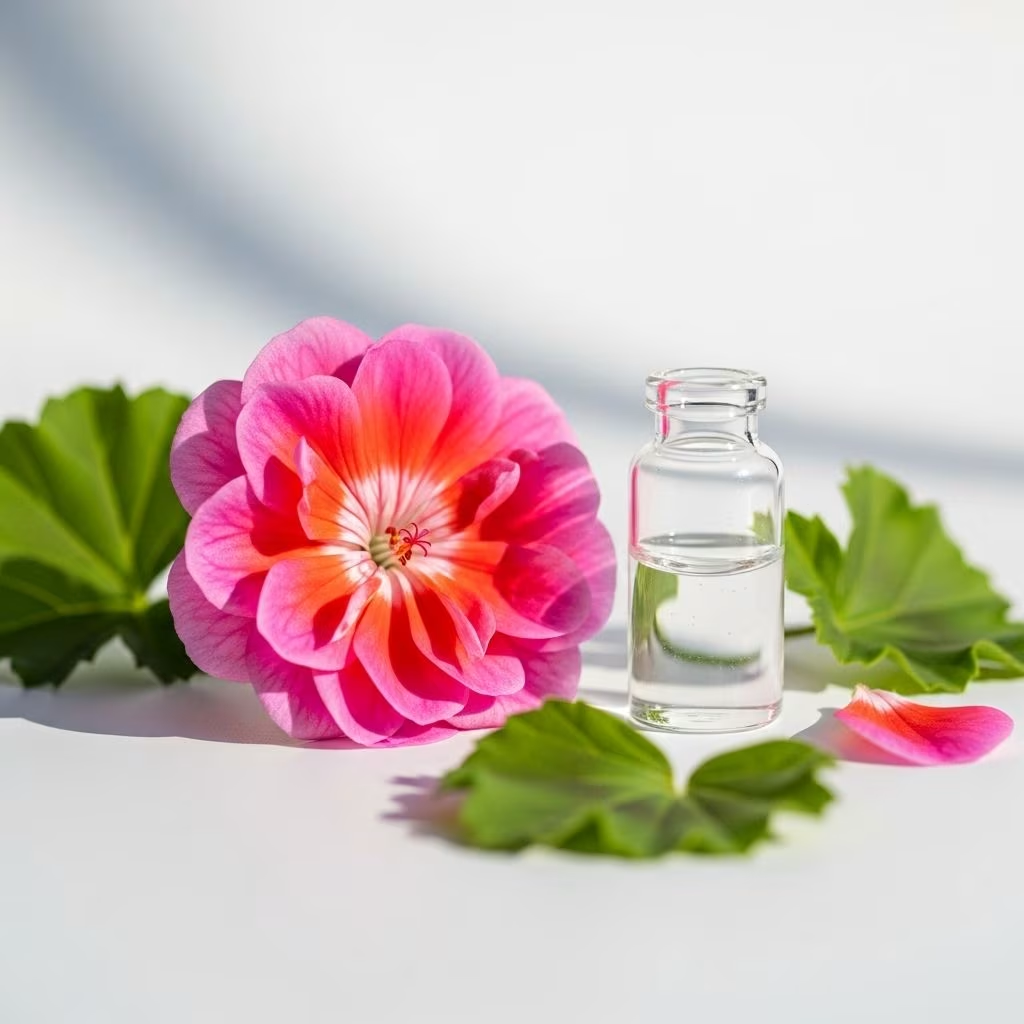
Geraniol is a naturally occurring monoterpenoid and alcohol that forms a major component in several essential oils, contributing not only to floral fragrances and flavors but also offering diverse applications across industries. From perfumery to pest control to nutritional supplements, geraniol plays a significant role, making it a valuable ingredient explored in depth for its unique properties and potential health implications.
Overview of Geraniol
Geraniol (chemical formula: C10H18O) is a monoterpenoid and an alcohol. It is recognized for imparting the primary aroma in rose oil, palmarosa oil, and citronella oil, among others. It is a clear, colorless to pale yellow liquid at room temperature, famous for its sweet, floral, rose-like scent. Commercial geraniol can sometimes appear yellow due to impurities or age. Geraniol’s versatility comes from its chemical properties and distinctive odor, making it an essential ingredient in fragrances, food flavors, and even natural pest control solutions.
Chemical Structure and Natural Occurrence
The structure of geraniol is as follows:
- Full name: (E)-3,7-Dimethylocta-2,6-dien-1-ol
- Type: Acyclic, doubly unsaturated alcohol (monoterpenoid compound)
- Molecular weight: 154.25
- Boiling point: 229-230°C
- Melting point: -15°C
- Density: 0.879 g/mL at 20°C
- Solubility: Practically insoluble in water but soluble in organic solvents
Natural Occurrence: Geraniol is present in almost all terpene-containing essential oils. High concentrations are found in palmarosa oil (up to 85%), and significant amounts are found in rose and geranium oils. It can also occur as esters and is frequently produced synthetically for commercial use.
Major Natural Sources of Geraniol
- Palmarosa oil (Cymbopogon martini): One of the richest sources, containing 70–85% geraniol.
- Rose oil (Rosa damascena, Rosa centifolia): Key aroma contributor.
- Citronella oil: Commonly used for repellent purposes.
- Geranium oil: Another floral oil with notable geraniol content.
- Other sources: Lemon, lemongrass, lavender, and various citrus and fruit essential oils.
Additionally, honeybees naturally produce geraniol in their scent glands as a marker for nectar-rich flowers and hive entrances.
Key Health Benefits of Geraniol
In recent years, research has explored geraniol’s health-related properties and potential therapeutic benefits:
- Antimicrobial and Antifungal: Geraniol displays substantial inhibitory effects against bacteria and fungi, making it a natural preservative and an ingredient in hygiene products. It disrupts microbial membranes, impairing their growth.
- Antioxidant Effects: Geraniol helps scavenge harmful free radicals, potentially protecting cells from oxidative damage, which is implicated in aging and chronic disease.
- Anti-Inflammatory: Studies suggest that geraniol may modulate inflammatory pathways, making it of interest for use in supplements aimed at reducing inflammation.
- Pain Relief: Its anti-inflammatory effect may also manifest as reduced pain or discomfort in experimental models.
- Insect Repellent: Geraniol is a well-known repellent, especially effective against mosquitoes, and is considered safer than many synthetic alternatives.
- Pest Control and Plant Health: Applied in agriculture as a fungicide and insecticide due to its natural origin and biodegradability.
- Potential Anti-Cancer Activity: Early-stage laboratory research indicates that geraniol might exhibit anti-tumor properties, interfering with cancer cell signaling and proliferation. However, these benefits remain primarily at the preclinical phase, warranting more research before therapeutic applications.
These properties combine to make geraniol a multifunctional natural ingredient in both human wellness and environmental management.
Industrial and Commercial Uses
Because of its unique chemical and aromatic profile, geraniol sees wide industrial and commercial use:
- Fragrance and Perfume: A key ingredient for floral and rose notes in perfumes, soaps, and cosmetics. Geraniol blends well and stabilizes fragrance compositions without discoloring products.
- Flavoring Agent: Used in trace amounts to enhance and accentuate citrusy, fruity, or floral notes in flavored foods and beverages, including candy, soft drinks, baked goods, chewing gum, and more.
- Pharmaceutical Intermediate: Geraniol is a precursor compound in synthesizing other valuable chemicals: citronellol, citral, and geranyl esters.
- Pesticidal and Veterinary Applications: Used as an active ingredient in eco-friendly insecticides and fungicides both in agriculture and for household applications.
- Personal Care and Household Products: Added to shampoos, lotions, deodorants, air fresheners, and cleaning products for scent and mild antimicrobial effects.
Owing to its natural derivation and low toxicity profile, geraniol is popular in green chemistry and for consumers seeking ‘natural’ product alternatives.
Use in Food and Beverages
Geraniol is recognized as a safe additive (GRAS status) by food safety authorities in the United States and the European Union. It is used in the food industry to impart a subtle rose, citrus, or fruity flavor in:
- Baked goods
- Confectionery and chocolates
- Non-alcoholic and alcoholic beverages
- Jams, jellies, and other fruit preserves
- Dairy products such as yogurts and ice cream
Only small quantities are needed for flavor enhancement. In flavor creation, geraniol is often used to highlight natural fruity notes (peach, raspberry, citrus), and to support the brightness of apple, lime, and berry flavors.
Aroma and Taste Profile
Geraniol stands out for its distinct sensory attributes:
- Aroma: Sweet, floral, rose-like, with fruity, waxy, and citrus nuances. The scent is described as both delicate and vibrant, which makes it ideal for lending natural complexity to fragrance blends.
- Taste: Slightly sweet, floral, and reminiscent of rose. When used in food, it imparts a gentle, uplifting geranium or sweet citrus flavor, useful for refreshing profiles.
- Flavor Type Examples: Besides rose, it can elicit perceptions of peach, raspberry, grapefruit, red apple, watermelon, pineapple, and lemon, depending on the blend.
| Characteristic | Description |
|---|---|
| Aroma | Floral, sweet, rose-like, waxy, citrusy |
| Taste | Mild, sweet-floral, hints of rosy-citrus, lightly fruity |
| Main Uses | Perfume, food flavoring, aromatherapy, insect repellent |
Mechanisms of Action
In biological systems, geraniol appears to work through several mechanisms:
- Interferes with cell membranes and disrupts integrity in microbes, inhibiting growth.
- Acts on voltage-gated sodium channels—altering nerve transmission in pest species and contributing to its repellent effect.
- Modulates glutathione-S-transferase, a detoxifying enzyme present in cells, influencing oxidative stress pathways.
Safety, Side Effects, and Regulation
Geraniol is generally recognized as safe for food, fragrance, and cosmetic use at recommended concentrations. Nonetheless, important safety details include:
- Some individuals with sensitivities may develop skin irritation or contact dermatitis with high or prolonged exposure, particularly in concentrated products such as perfumes or essential oils.
- Geraniol is classified as D2B under WHMIS, signifying it can cause toxic effects with overexposure.
- It is unstable under harsh conditions and may react with oxidizers or strong acids.
- Proper labeling is required for consumer and workplace safety, especially for products with higher geraniol content.
- It is considered safe when used according to food and cosmetic industry regulations, with established limits for consumer products.
Overall, incidents of adverse reactions are rare and dose-dependent, with most individuals able to consume or use geraniol-containing products with minimal risk.
Frequently Asked Questions (FAQs)
Q: What exactly is geraniol?
A: Geraniol is a terpene alcohol found commonly in essential oils like rose, palmarosa, and citronella, known for its characteristic floral scent and wide industrial use.
Q: Where does geraniol occur naturally?
A: It naturally occurs in many aromatic plants—most abundantly in palmarosa, citronella, rose, and geranium oils, and even as a constituent in certain fruits and herbs.
Q: What is geraniol used for?
A: Geraniol is used in perfumes, food flavorings, personal care products, pest repellents, and as an intermediate for the manufacture of other fragrances and flavor compounds.
Q: What does geraniol taste like?
A: The taste is soft, sweet, lightly floral and reminiscent of roses, sometimes imparting fruity and citrus-like nuances in foods and beverages.
Q: Is geraniol safe to consume?
A: Yes, geraniol has GRAS status for use in foods and is considered safe in cosmetic and fragrance applications at typical concentrations. However, skin irritation may occur in sensitive individuals.
Q: Can geraniol be used as a natural bug repellent?
A: Absolutely, geraniol is effective at repelling mosquitoes and other insects, and is often included in natural bug sprays and candles for this purpose.
Conclusion
Geraniol exemplifies the multifunctional beauty of nature’s chemistry, providing both vibrant aroma and flavor while offering substantive industrial and wellness benefits. Whether enhancing the bouquet of a perfume, the notes of a dessert, or the efficacy of a mosquito repellent, geraniol continues to attract research and consumer interest as a naturally-derived and highly versatile compound. As ongoing studies unfold, new roles for this subtle yet powerful phytochemical will likely emerge in health, agriculture, and beyond.


