


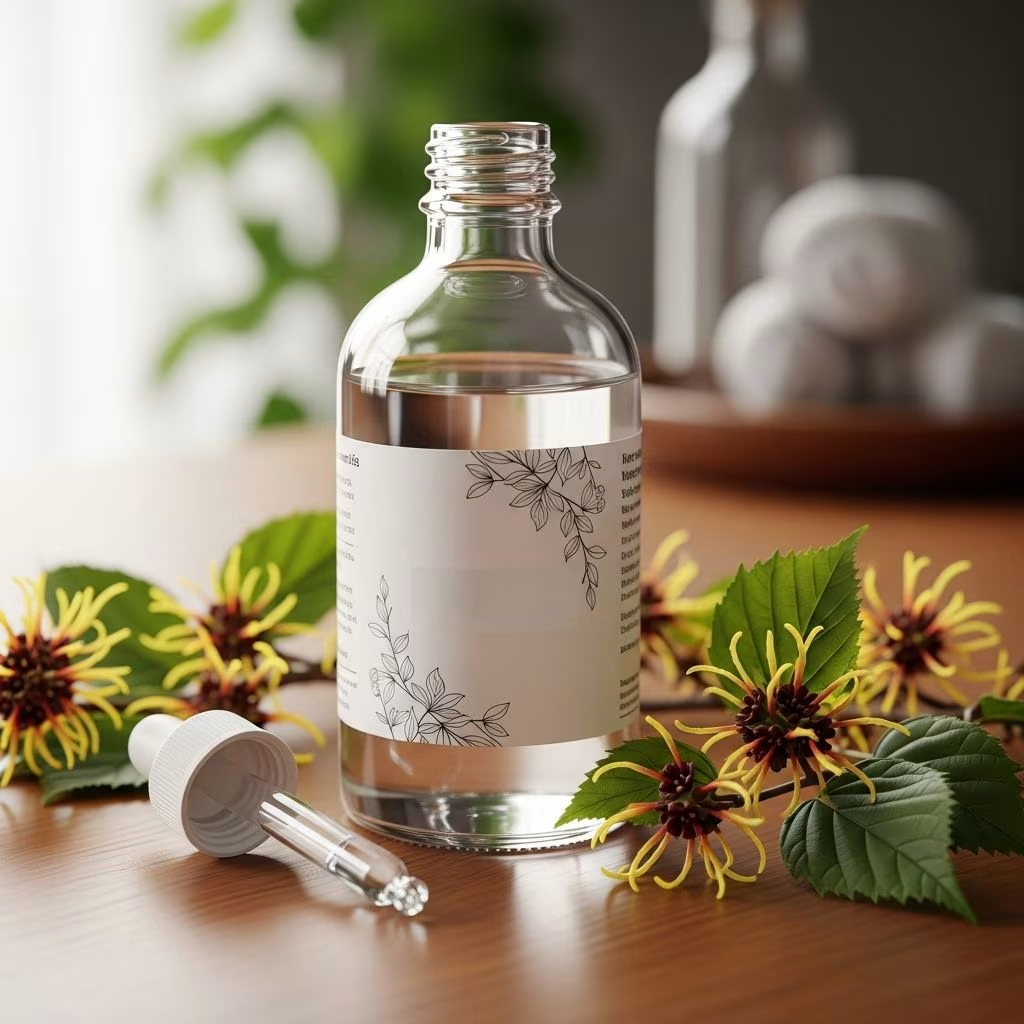
Hamamelis water, commonly known as witch hazel water, is a botanical distillate famous for its astringent, soothing, and anti-inflammatory properties. It originates from the North American shrub Hamamelis virginiana and has become a core ingredient in skincare, traditional medicine, and personal care routines. This in-depth guide explores the origins, chemical makeup, methods of extraction, proven and traditional benefits, diverse uses, and even the unique sensory qualities—like its taste profile—of Hamamelis water.
What Is Hamamelis Water?
Hamamelis water—also labeled as witch hazel water, Hamamelis virginiana distillate, or simply witch hazel hydrosol—is an aqueous botanical solution. It is produced by steam distillation or water distillation from the twigs, bark, and occasionally flowers and leaves of the Hamamelis virginiana shrub.
- Type: Clear, colorless (or pale yellow) liquid
- Odor: Characteristic, mild, slightly green and tea-like
- Primary Ingredient: Distillate from Hamamelis virginiana
- Common Alternative Names: Witch hazel water, witch’s hazel hydrosol
- Botanical Family: Hamamelidaceae
- Main Extraction Parts: Twigs, bark, leaves, sometimes flowers
History and Botanical Origins
The Hamamelis virginiana shrub is indigenous to the woodlands of eastern North America. With its golden, spider-like flowers appearing in autumn, this plant has fascinated Native Americans for centuries. They recognized its medicinal value and used the bark, leaves, and twigs for various remedies long before its introduction to Europe in the 18th century.
- Traditional Use: Native Americans boiled twigs and bark to create soothing compresses and topical solutions for wounds, skin irritation, and inflammation.
- Introduction to Europe: European settlers adopted its use in the 1700s, and by the 19th century, witch hazel extracts became popular in pharmaceutical and skin care products.
How Is Hamamelis Water Made?
The process for obtaining Hamamelis water is critical to its quality and efficacy. The main manufacturing method is steam distillation:
- Freshly cut, partially dried dormant twigs (sometimes bark and leaves) are collected.
- The plant material is subjected to steam or boiling water in a still.
- The steam passes through the plant, vaporizing the volatile compounds and water-soluble constituents.
- The vapor then condenses into a liquid, separating the essential oils (in tiny amounts) and the hydrosol—the Hamamelis water.
- Often, grain alcohol or ethanol (commonly 14–15%) is added as a preservative.
Sometimes, the process also produces witch hazel extract or tinctures, which differ chemically from the distillate and contain higher concentrations of tannins and certain polyphenols.
- Quality Note: The ratio of bark, leaves, and twigs and the specific distillation technique impact the chemical composition and potency.
- Storage: Hydrosols are prone to microbial contamination and should be used within 6 months of opening and stored in a refrigerator if possible.
Chemical Composition of Hamamelis Water
Hamamelis water contains a variety of phytochemicals and mineral components, although their concentrations are lower than in ethanol-based witch hazel extracts:
- Volatile Oils: Small amounts of safrole, eugenol, alpha-terpineol, and linalool
- Tannins: Mainly catechin-type, gallic, and hamamelitannin (in much lower concentrations than extracts)
- Bioflavonoids: Rutin, quercetin, kaempferol
- Phenolic Acids: Chlorogenic and hydroxycinnamic acids
- Resins, Wax, Choline, and Trace Minerals
- Vitamins: Trace amounts, notably vitamin P (bioflavonoids)
- pH: Acidic (typically 3.0–5.0)
This composition provides the hydrosol with mild astringency, antioxidant, and soothing actions.
| Property | Value |
|---|---|
| Form | Liquid |
| Color | Clear to pale yellow |
| Odor | Slight, green, tea-like |
| pH | 3.0–5.0 |
| Specific Gravity (20°C) | 0.976–0.982 |
| Boiling Point (°C) | 88 |
| Solubility | Very soluble in water |
Health and Skin Benefits
Hamamelis water is prized for its wide spectrum of benefits for skin and general health. These are largely attributed to its astringent, anti-inflammatory, antioxidant, and soothing effects.
- Astringent Action: Tightens skin, shrinks pores, and controls oiliness by constricting underlying tissue.
- Anti-inflammatory: Reduces swelling, redness, and skin irritation by modulating inflammatory responses.
- Soothing and Calming: Offers instant relief to stressed, sensitive, or sun-exposed skin.
- Antioxidant Effects: Bioflavonoids and polyphenols help neutralize free radicals, contributing to skin health and slowing visible aging.
- Antimicrobial Activity: Protective against some bacterial and minor fungal skin issues.
- Decongestant for Skin: Helps relieve puffiness, under-eye circles, and sensation of heavy legs.
- Reduces Appearance of Capillaries: Advised for couperose or visibly irritated skin.
Key Benefits in Different Conditions
- Oily and Acne-Prone Skin: Controls excess oil, reduces risk of clogged pores and breakouts.
- Sensitive or Irritated Skin: Calms itching and discomfort from allergies, eczema, or mild burns.
- Minor Cuts and Insect Bites: Promotes faster healing and reduces itching or burning.
- Under-Eye Dark Circles: Witch hazel water compresses are commonly used to freshen tired eyes.
- After-Shave Care: Soothes skin, reduces razor burn and bump formation.
Traditional and Modern Uses
The versatility of Hamamelis water extends across both ancestral and contemporary domains. It is employed in cosmetic, dermatological, hygienic, and even household applications.
Traditional Uses
- In Native American Medicine: Value for treating wounds, bruises, insect stings, inflammatory skin conditions, and eye irritations.
- As Soothing Compresses: Applied to sore muscles, sprains, and varicose veins.
Modern and Everyday Uses
- Facial Toners: Foundation in cleansing lotions and daily toners for oily, acne-prone, and combination skin.
- After-Sun and Soothing Sprays: Cools and calms sun-exposed skin.
- Eye Contour Care: Used in serums or compresses for puffy and tired eyes.
- After-Shave Lotions and Deodorants: Minimizes irritation and offers a mild protective barrier.
- Body and Hand Creams: Adds gentle astringency and soothing action to creams for rough or irritated skin.
- Scalp and Hair Care: Used in scalp lotions to alleviate itching and reduce oiliness.
- Intimate and Personal Hygiene: Formulated into wipes and gentle cleansing solutions.
- Household: Natural freshener for clothes, linens, or as a safe, gentle antiseptic spray for minor irritations.
Because of its mildness, Hamamelis water is suitable for most skin types—especially mature, oily, combination, and sensitive skin.
Taste Profile and Sensory Properties
Unlike herbal teas or culinary extracts, Hamamelis water is not consumed for taste and is rarely if ever ingested as a beverage due to its primary composition and purpose, as well as the possible inclusion of alcohol as a preservative.
Sensory characteristics:
- Appearance: Clear, liquid, colorless to pale yellow
- Odor: Mild, slightly green, with a subtle tea-like aroma
- Taste (if encountered): Astringent, slightly bitter, herbal or woody
While not toxic in small, external doses, the ingestion of Hamamelis water is not recommended, particularly products containing added alcohol. The astringency (drying mouthfeel) and mild bitterness are due to low concentrations of tannins and volatile oils.
If intended for food or drink, only products specifically labeled for such use—and free of alcohol—should be considered. This is rare and not a standard practice.
Side Effects, Precautions, and Safety
- Topical Use: Generally considered very safe for external application to skin, including sensitive areas like the face and under-eyes.
- Contraindications: None widely reported; can be used by children, pregnant, and breastfeeding women.
- Allergic Reactions: Rare, but possible in extremely sensitive individuals; patch test recommended.
- Ingestion: Not recommended without clear food-grade labeling; risk of gastrointestinal upset, vomiting, or toxicity at high doses or with alcohol-containing preparations.
- Storage: Store in refrigerator, use within 6 months after opening; discard if color, odor, or appearance changes.
Commercial witch hazel water sometimes contains small amounts of ethanol as a preservative. When using for children or on sensitive skin, seek alcohol-free formulations.
Frequently Asked Questions (FAQs)
Q: Is Hamamelis water the same as witch hazel extract?
No. Hamamelis water is a distillate (hydrosol) containing low concentrations of active compounds and is milder than witch hazel extracts, which are often ethanol-based and much richer in tannins.
Q: Can Hamamelis water be used on all skin types?
Yes. It is safe and beneficial for all skin types, especially oily, acne-prone, sensitive, and mature skin.
Q: How long does Hamamelis water last?
After opening, Hamamelis water should ideally be used within 6 months, especially for pure hydrosols with no added preservatives.
Q: Is it safe to ingest Hamamelis water?
Hamamelis water is not intended for internal use. For medicinal teas or tinctures, other preparations of witch hazel bark or leaves may be used under medical direction. Most commercial Hamamelis water contains alcohol and should not be ingested.
Q: What makes Hamamelis water an effective natural toner?
Its mild astringency, gentle anti-inflammatory effect, and antioxidant content help tone skin, reduce oil and visible pores, and soothe irritation—all without over-drying.
Q: Are there any known interactions with medications?
Topical use is not reported to interfere with prescription medicines. Still, consult a healthcare professional before combining with topical corticosteroids or other medicated skin treatments.
Q: Can Hamamelis water help with sunburn?
Yes, its soothing and anti-inflammatory properties can offer temporary relief to sun-exposed or sensitized skin.
Conclusion
Hamamelis water remains a staple in natural skincare and first-aid kits due to its safety, gentle action, and proven efficacy for a variety of external applications. Its subtle, astringent nature and adaptability have given it a lasting place in both traditional and modern wellness routines. For sensitive skin, inflammation, or simple everyday toning, few botanical waters are as versatile or well-tolerated as Hamamelis water.
References
- https://www.cir-safety.org/sites/default/files/HamVir062017SLR.pdf
- https://us.typology.com/library/hydrolat-dhamamelis
- https://www.cir-safety.org/sites/default/files/Witch%20Hazel.pdf
- https://pmc.ncbi.nlm.nih.gov/articles/PMC12250947/
- https://www.laballey.com/blogs/articles/witch-hazel-chemical-overview
- http://www.thegoodscentscompany.com/data/ex1618021.html
- https://www.rxlist.com/supplements/witch_hazel.htm
- https://www.ulprospector.com/en/na/PersonalCare/Detail/107918/2386989/Organic-Witch-Hazel-Water


