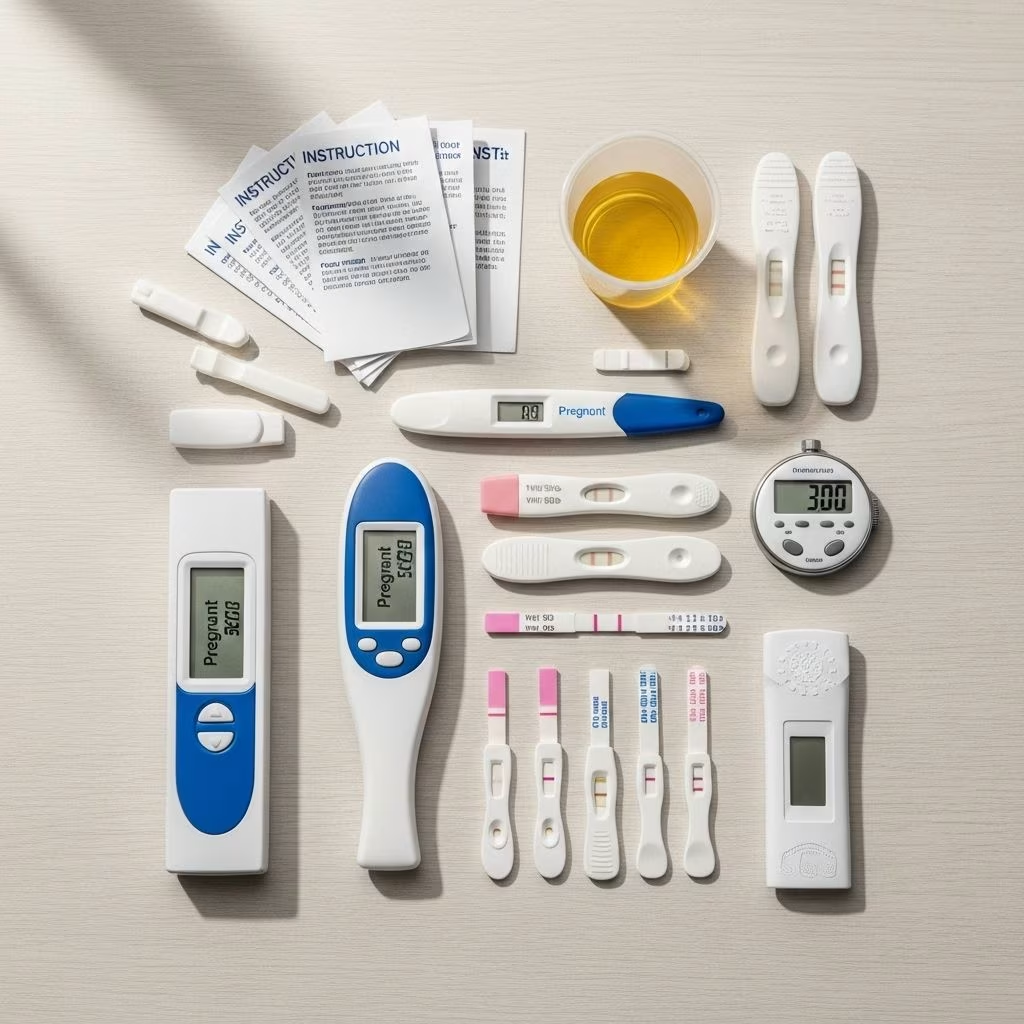
Pregnancy is a momentous event in any woman’s life, and the journey often begins with a simple yet powerful tool: the home pregnancy test. These tests empower millions by delivering answers quickly, privately, and conveniently from home. This comprehensive article covers the fundamentals of home pregnancy tests, their accuracy, various methods, correct usage steps, signs to look for, common mistakes, tips for best results, and frequently asked questions.
What Is a Home Pregnancy Test?
A home pregnancy test (HPT) is a device designed to detect pregnancy by measuring the presence of human chorionic gonadotropin (hCG) hormone in urine. This hormone is produced after a fertilized egg implants in the uterine lining—typically about 10 days after conception. Home pregnancy tests are valued for their accessibility, privacy, and immediate results, often before scheduling an appointment with a healthcare provider.
How Do Home Pregnancy Tests Work?
Most home pregnancy tests work on the same principle: detecting hCG. Here’s how it works:
- After ovulation and fertilization, the embryo implants in the uterus, and the body begins to produce hCG.
- hCG can first be detected in urine about 10–14 days after conception, which usually coincides with a missed menstrual period.
- On contact with urine, the test’s chemical strip reacts with hCG (if present), signaling either a positive or negative result through lines, symbols, color changes, or a digital display.
Types of Home Pregnancy Tests
Home pregnancy test kits come in various forms to suit personal preferences, sensitivities, and price points. The main types include:
1. Strip-Based Pregnancy Test
The most basic and affordable type. Involves dipping a test strip into a collected urine sample.
- Often sold individually or in packs
- Suitable for early testing and self-monitoring
- Results are interpreted by the appearance (or absence) of colored lines
2. Cassette-Based Pregnancy Test
This type includes a cassette and a dropper for more controlled measurement.
- Urine is drawn into a dropper and placed in a specimen well on a cassette
- Well-protected, less risk of spill
- Results appear as colored lines in designated windows
3. Midstream (Stick/Wand) Pregnancy Test
Designed for ease of use and often favored for convenience and speed.
- The user urinates directly onto an absorbent tip (midstream), eliminating the need for a cup
- Housed in a plastic wand with a result window
- Results appear as lines, symbols (like “+” or “-”), or digital words (“Pregnant/Not Pregnant”)
4. Digital Pregnancy Test
The most advanced and easy-to-read format. Employs a digital display to show results in words.
- No ambiguity—results shown clearly as “Pregnant” or “Not Pregnant”
- Some models provide an estimate of weeks since conception
- Tend to cost more than other types
When Should You Take a Home Pregnancy Test?
Timing is essential for accuracy. Home pregnancy tests are most reliable when taken:
- On or after the expected date of your period
- Ideally, using first morning urine for the highest hCG concentration
Some ultra-sensitive tests claim to detect pregnancy several days before a missed period, but accuracy increases as the days progress post-implantation.
How to Use a Home Pregnancy Test: Step-by-Step Guide
Following directions precisely is crucial for an accurate result. While instructions may vary between brands and test styles, the general procedure applies to most home pregnancy tests:
- Read the manufacturer’s instructions thoroughly before starting.
- Collect urine in a clean, sterile container (for strip/cassette tests), or prepare to urinate on the midstream test stick.
- For strip tests: Dip the strip into the urine sample up to the indicated line for the recommended time (often 5–10 seconds).
- For cassette tests: Use the provided dropper to place the correct number of drops into the sample well.
- For midstream/digital tests: Hold the absorbent tip in the urine stream for the time specified (usually 5 seconds), or dip in a collected sample.
- Lay the test flat and wait the indicated time (usually 3–5 minutes) for the results to appear.
- Interpret results: Match the lines, symbols, or digital display to the provided guide (included with the test kit).
How to Read Home Pregnancy Test Results
Each test has a dedicated results area. Interpretation depends on the style, but general guidelines include:
- Two lines: Often indicates a positive result (pregnant) but check your test’s guide.
- One line (control line): A negative result (not pregnant).
- No control line: The test did not work properly (invalid); repeat with a new device.
- Digital display: Clearly states “Pregnant” or “Not Pregnant.”
Always refer to your test kit’s unique instructions for definitive interpretation.
Understanding Home Pregnancy Test Accuracy
Home pregnancy tests are generally reliable when used correctly, but several factors can affect accuracy:
- Most modern tests claim over 99% accuracy from the day of the expected period.
- Testing too early may yield false negatives, as hCG levels may not yet be detectable.
- User error—such as not following instructions, not using fresh urine, or misreading the result—can reduce reliability.
- Some tests, especially digital versions, provide easier and more certain results than traditional line-based kits.
Scientific reviews indicate that factors such as test sensitivity (the ability to detect low levels of hCG), timing after suspected conception, and brand-specific performance contribute to overall accuracy.
| When Test Is Taken | Approx. Accuracy Rate |
|---|---|
| 5 days before expected period | ~70–77% |
| 3 days before expected period | 90–93% |
| Day of expected period or after | Up to 99% |
False Positives and False Negatives
- False negative results (test says not pregnant, but you are) are more common if you test too early.
- False positives (test says pregnant, but you’re not) are rare, but possible due to certain medications, medical conditions, or improper testing.
If your period does not start after a negative result, repeat the test after a few days or consult a healthcare provider for confirmation.
Pros and Cons of Home Pregnancy Tests
| Advantages | Disadvantages |
|---|---|
|
|
Tips for Using Home Pregnancy Tests Effectively
- Use first morning urine for highest hCG concentration.
- Do not drink excessive fluids before testing (this can dilute hCG levels).
- Follow the test’s instructions exactly.
- Wait the recommended time before reading the result; reading too early or too late can yield invalid results.
- Dispose of test kits after use; do not attempt to reuse.
- If in doubt, retest after a few days or consult a healthcare provider for confirmation.
Common Mistakes to Avoid
- Testing too early after conception (hCG not yet detectable)
- Misreading evaporation lines as positive results
- Using an expired or damaged test kit
- Not following instructions for sample collection and handling
- Checking results outside the indicated time window
Medical-Grade vs. Home Pregnancy Tests
While home pregnancy tests offer convenience, medical-grade pregnancy tests (performed in a clinic) provide greater accuracy and reliability. Medical tests can detect even lower levels of hCG and typically use blood samples, allowing for earlier and more definitive detection. Medical professionals also minimize user error in handling and interpretation.
Frequently Asked Questions (FAQs)
1. How soon can I use a home pregnancy test?
Most tests are accurate on or after the day of your expected period. Some ultra-sensitive tests may detect hCG a few days before a missed period but with reduced accuracy.
2. Are home pregnancy tests always accurate?
When used correctly, most are over 99% accurate from the day of the expected period. User error or testing too early can lower reliability.
3. Can medications or medical conditions affect test results?
Some fertility medications containing hCG, and rare medical conditions, may cause a false positive. For most medications, there is little effect.
4. What should I do if the result is unclear or invalid?
Repeat the test with a new kit, following instructions closely. If still unclear, seek medical confirmation through a professional test or blood work.
5. Can I reuse a pregnancy test?
No, pregnancy test kits are single-use only. Reusing a test will not provide accurate results.
6. Will drinking a lot of water before the test affect the result?
Yes, drinking excessive fluids can dilute urine, possibly making hCG harder to detect, especially in early pregnancy. Use first morning urine for best accuracy.
7. Is there any difference between expensive and budget home pregnancy tests?
All FDA-cleared home pregnancy tests work on the same principle, but sensitivity, readability, and convenience features (like digital results) may vary. Digital tests generally offer clearer results and higher certainty, especially at lower hCG concentrations.
Final Thoughts
Home pregnancy tests offer a reliable, private, and accessible means to detect pregnancy for millions of women worldwide. Choosing the right type, following instructions carefully, and testing at the right time greatly enhance accuracy. For confirmation or if in doubt, always consult a healthcare provider for further guidance.
References
- https://pubmed.ncbi.nlm.nih.gov/18457603/
- https://www.thebump.com/a/best-pregnancy-tests
- https://cascadehealth.com/blog/differences-between-medicalgrade-and-home-pregnancy-tests/
- https://pmc.ncbi.nlm.nih.gov/articles/PMC4119102/
- https://my.clevelandclinic.org/health/diagnostics/9703-pregnancy-tests
- https://www.mayoclinic.org/healthy-lifestyle/getting-pregnant/in-depth/home-pregnancy-tests/art-20047940
- https://www.webmd.com/baby/pregnancy-tests
- https://natalist.com/blogs/learn/digital-vs-regular-what-s-the-best-home-pregnancy-test-1