


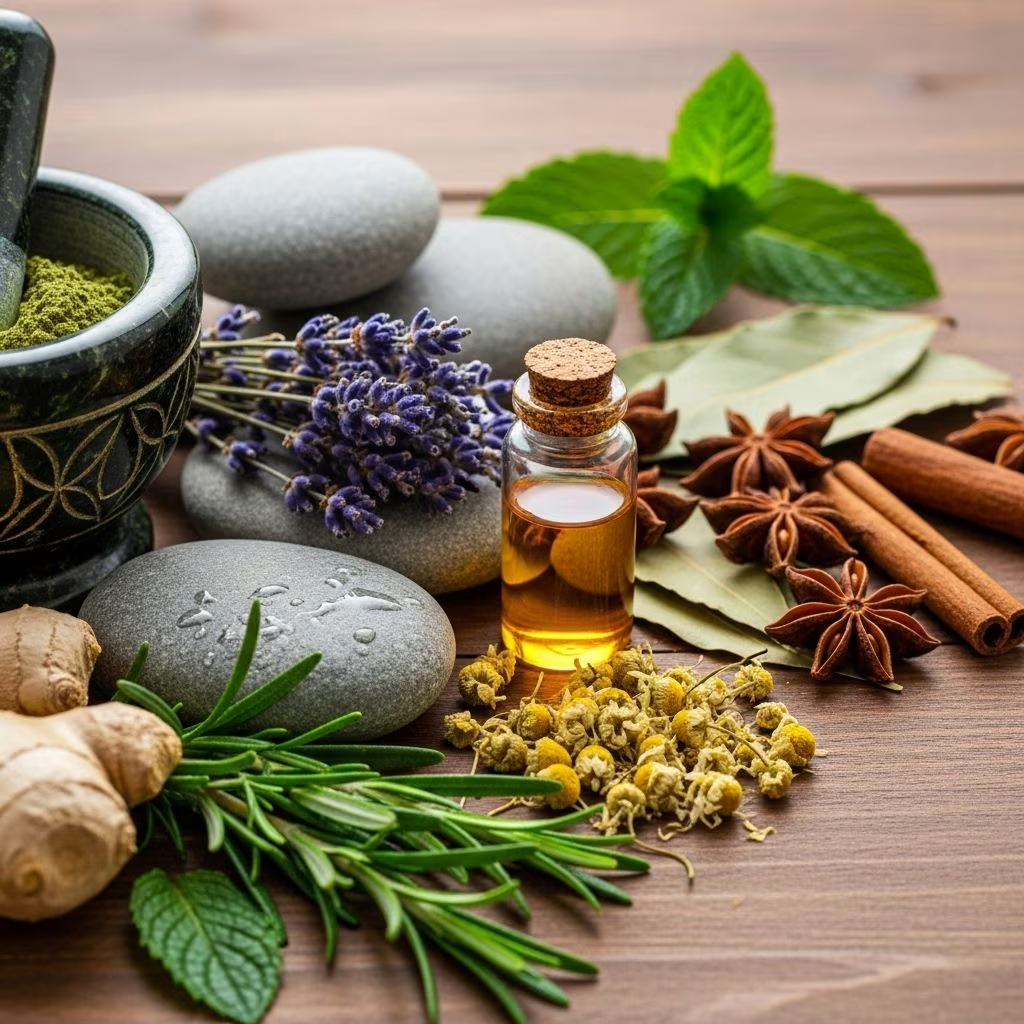
Natural Remedies: Unlocking Mother Nature’s Healing Secrets
Natural remedies have long captured human interest—offering relief and hope through herbal medicine, ancient therapies, and holistic wisdom. As science advances and people seek accessible, gentle, and preventive healthcare, these nature-inspired solutions are enjoying a renaissance. This article explores the roots, resurgence, benefits, and risks of natural remedies; examines their global use; and considers their place in modern medicine.
The Roots of Herbal Healing
For thousands of years, herbs and botanicals have been central to health and healing across cultures. Ancient civilizations—from Egypt and China to indigenous tribes worldwide—relied on plant extracts to treat disease, pain, and discomfort. Even today, the World Health Organization estimates that nearly 80% of the global population uses herbal medicine as their primary form of healthcare.
- Poppy extract was used in ancient Egypt to soothe crying children, centuries before opiates emerged in modern medicine.
- Ephedra has provided asthma relief in China for more than 5,000 years.
- Aspirin is derived from white willow bark, a staple in folk remedies long before pharmaceuticals.
- Digitalis (from foxglove) treats heart conditions; Taxol (from Pacific yew) is essential in cancer therapy.
These ancient remedies laid the foundation for countless modern drugs, reflecting the ongoing connection between nature and science in healing.
Modern Resurgence: Why Nature’s Remedies Matter Today
Herbal and alternative remedies have surged in popularity, driven by several notable trends:
- Patient empowerment: Aging populations, especially among baby boomers, seek control over their health, utilizing preventive measures beyond conventional medicine.
- Dissatisfaction with mainstream care: Red tape, impersonal interactions, and limited access to doctors lead individuals to explore accessible options.
- Desire for gentle, ‘natural’ interventions: Many prefer approaches viewed as milder and less invasive than pharmaceutical drugs.
Industry giants have responded, with trusted brands launching herbal supplement lines, fueling broader acceptance and research into efficacy and safety.
Herbs in Focus: Popular Botanical Remedies and Their Uses
| Herb | Traditional Uses | Modern Applications |
|---|---|---|
| Echinacea | Boosts immune response, fights infections | Cold and flu prevention, immune support |
| Ginkgo Biloba | Improves circulation | Cognitive enhancement, memory support |
| Black Cohosh | Female reproductive health | Menopausal symptom relief, PMS |
| Dong Quai | Blood health, hormonal balance | PMS management, reproductive health |
| Feverfew | Headache relief | Migraine prevention, anti-inflammatory |
| Reishi Mushroom | Vitality and longevity | Immune system support, adjunct in chemotherapy |
While some herbs are supported by rigorous studies, others rely largely on traditional use and anecdotal evidence. This distinction underscores the necessity for informed, evidence-based choices.
Holistic Therapies: Beyond the Pill
Holistic approaches complement herbal remedies, prioritizing the whole person—mind, body, and spirit. Practices such as acupuncture, reflexology, aromatherapy, and Ayurvedic treatments strive for balance, prevention, and comfort.
- Acupuncture uses fine needles to stimulate healing energy and alleviate pain.
- Reflexology manipulates pressure points on feet and hands, aiming to influence organs throughout the body.
- Aromatherapy employs essential oils like lavender, rosemary, and thyme to relax, energize, or aid healing.
- Ayurveda, the ancient Indian system, emphasizes dietary balance, detoxification, and herbal support through therapies such as warm oil massages.
Many practitioners blend techniques to tailor treatments to individual needs, reflecting a trend toward cross-disciplinary healing.
Scientific Scrutiny: Benefits and Risks
The appeal of natural remedies leads to a vital question: Are they safe and effective? Experts warn that not all herbs and practices offer the benefits advertised, and some may even be harmful if misused.
- Rigorous research has validated some botanicals; examples include aspirin’s origin and the chemotherapy drug Taxol.
- Side effects and interactions pose risks. For instance, St. John’s wort—often used for mild depression—can cause skin hypersensitivity to sunlight, and may interact with prescription medications.
- Regulation and quality can vary widely; not all supplements undergo rigorous testing for purity and dosage.
- Limited training among doctors: Many conventional physicians receive little education in herbal medicine, complicating a collaborative approach.
Consumers are urged to consult health professionals and seek credible sources when considering natural remedies to avoid pitfalls.
Global Perspectives: Herbal Medicine Across Cultures
Herbal healing is ubiquitous in Europe and Asia, particularly in countries like Germany, France, and Italy, where botanicals have mainstream acceptance.
- Traditional Chinese Medicine (TCM) features herbs for everything from digestive health to longevity.
- Homeopathy, popularized in Britain and other European nations, prescribes minute doses of various substances to stimulate healing.
- Ayurvedic medicine in India blends diet, lifestyle, and botanicals for holistic treatment.
Even in the U.S., the integration of herbal remedies is strengthening with broader research, better access, and increasing collaboration among medical disciplines.
Industry and Consumer Trends: The New Mainstream
The alternative medicine sector has grown into a $27 billion-a-year industry, with herbal supplements, essential oils, and holistic therapies finding their way into supermarkets, pharmacies, and health food stores.
- Major pharmaceutical companies are investing in, and producing, herbal lines—helping reduce stigma and boost legitimacy.
- More Americans are experimenting with these remedies; roughly a third have tried an herbal supplement, and the trend is rising.
- A telephone poll showed rising interest in seeking alternative care if conventional medicine proves ineffective.
This surge is supported by the notion that ‘natural’ equals safe and gentle—though, as experts caution, this perception can lead to misuse and oversimplification.
Alternative Medicine Modalities: A Closer Look
| Modality | Practice Description | Common Uses | Evidence Level |
|---|---|---|---|
| Botanical Remedies | Using plant extracts for treatment | Prevention, symptom relief, immune support | Mixed; some well-studied, others anecdotal |
| Acupuncture | Needles stimulate energy points | Pain relief, stress, chronic conditions | Supportive evidence for certain uses |
| Homeopathy | Tiny doses of ‘like cures like’ substances | Varied conditions | Controversial; limited scientific support |
| Reflexology | Pressure points manipulate bodily systems | Relaxation, pain, stress | Limited clinical support |
| Aromatherapy | Essential oils for mood and health | Relaxation, wound healing (in Europe), respiratory health | Some evidence for relaxation and mild effects |
Integrating Nature and Science: The Future of Healing
As research advances and traditional practices gain mainstream attention, the distinctions between alternative and conventional medicine may continue to blur. Researchers travel the globe, collecting knowledge from shamans and indigenous healers—helping discover and validate promising new compounds for mass production.
This evolving landscape promises new therapies, greater choice, and a stronger emphasis on prevention and personalization in healthcare.
Frequently Asked Questions (FAQs)
Q: Are natural remedies always safe because they are plant-based?
No. Many herbs contain potent chemicals that can cause side effects or interact dangerously with medications. For instance, St. John’s wort may lead to sun sensitivity and interact with antidepressants.
Q: How do I know if an herbal supplement is effective?
Look for products supported by rigorous research and consult professional sources. Not all marketed remedies are backed by scientific study.
Q: Can alternative medicine replace conventional treatment?
Alternative remedies can complement conventional medicine, especially in preventive care or symptom management, but should not replace essential treatments for serious illness without consulting a qualified healthcare provider.
Q: What are the most popular alternative therapies?
- Acupuncture
- Herbal medicine
- Massage and reflexology
- Homeopathy
- Aromatherapy
Q: Should I talk to my doctor before trying natural remedies?
Yes. A healthcare provider can help identify any risks or interactions, and may be able to recommend evidence-based options suited to your needs.
Practical Tips: Using Natural Remedies Wisely
- Consult with competent health professionals before starting any alternative remedy.
- Research supplements using reputable clinical studies and official resources.
- Monitor for side effects, especially when combining remedies with prescription drugs.
- Choose well-known brands with transparency regarding ingredients and dosages.
- Recognize that ‘natural’ does not guarantee safety—evaluate risks and benefits objectively.
Summary Table: Natural Remedies at a Glance
| Remedy | Traditional Origin | Modern Use |
|---|---|---|
| White willow bark | European folk | Aspirin/pain relief |
| Foxglove (Digitalis) | Medieval herbalists | Heart medication |
| Ephedra | Ancient China | Asthma and respiratory support |
| Poppy extract | Ancient Egypt | Pain management |
| Mexican yam | Mesoamerica | Birth control pill |
Conclusion: Honoring Nature, Empowering Health
Mother Nature’s little helpers offer wisdom rooted in tradition and proven by science. As natural remedies re-emerge—in supplements, holistic therapies, and preventive routines—they present fresh opportunities and cautions. By blending ancient insights with modern research, we can unlock healthier pathways, respecting the delicate balance of efficacy, safety, and holistic care.
References
- https://time.com/archive/6734032/herbal-healing-2/
- https://time.com/archive/6718908/why-new-age-medicine-is-catching-on/
- https://time.com/tag/alternative-medicine/
- https://content.time.com/time/subscriber/article/0,33009,999672,00.html
- https://content.time.com/time/covers/0,16641,19981123,00.html
- https://www.ebay.com/itm/186287736320
- https://news.stonybrook.edu/university/raja-jaber-featured-in-time-magazine-special-issue-on-the-future-of-medicine/
- https://sciencebasedmedicine.org/time-magazine-dr-oz-what-to-eat-and-supplements/
- https://time.com/5709245/bioelectronic-medicine-treatments/


