


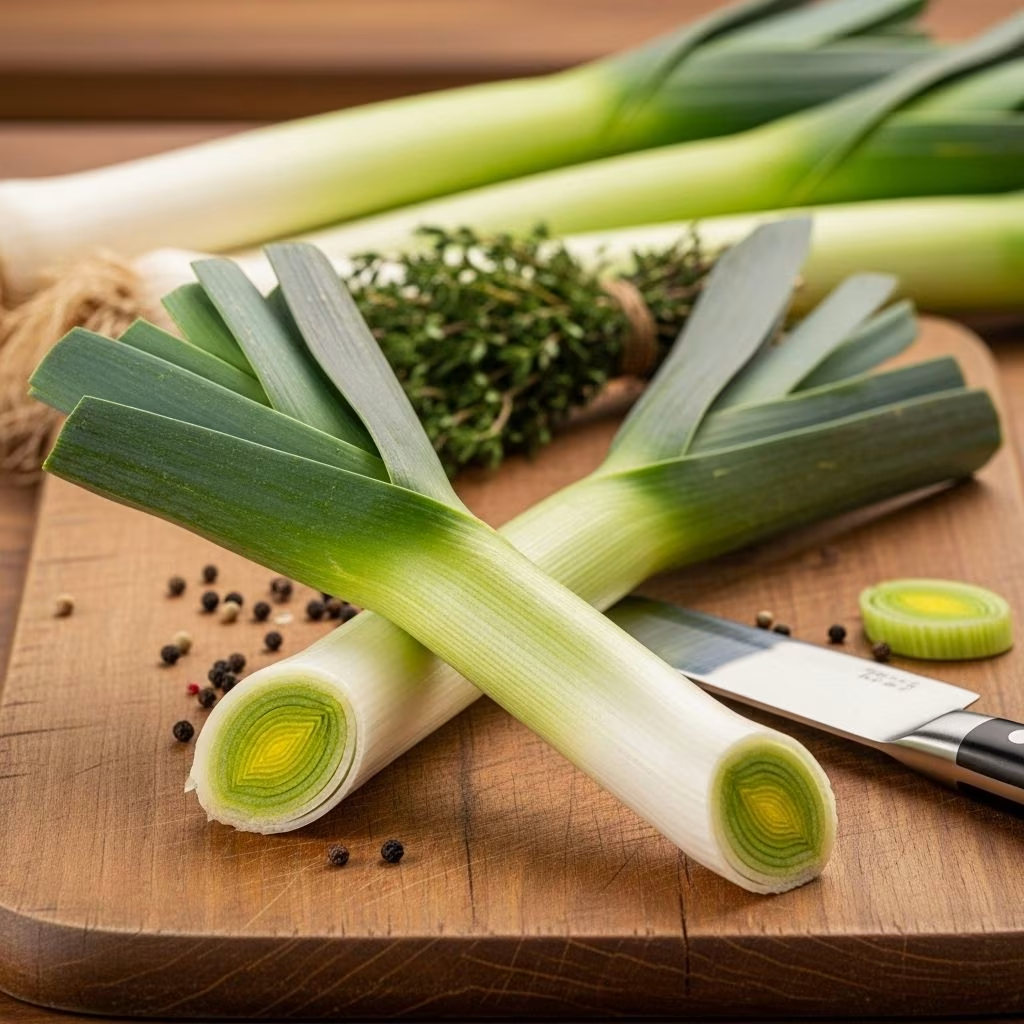
Leeks stand out among their allium relatives for their mild, sweet flavor and remarkable nutritional profile. Valued in kitchens and traditional medicine alike, leeks have been cultivated for thousands of years. Dive deep into understanding what leeks are, their health benefits, culinary versatility, taste profile, storage, and intriguing history, as well as practical tips for selecting and using them at home.
Introduction to Leeks
Leek is a versatile and ancient vegetable best known for its long, white stalk and flat, layered green leaves. As a member of the Allium family—which includes onions, garlic, and shallots—leeks have a distinctive, mild flavor. They are widely celebrated in European and Middle Eastern cuisines, especially in soups, stews, and sautés.
Botanical Background and Characteristics
Leek (Allium ampeloprasum var. porrum) is a biennial vegetable, though it is most often grown as an annual for its edible stems and leaves. Unlike onions or garlic, leeks do not form bulbs. Instead, they develop a pseudo-stem—essentially their tightly wrapped, blanched leaf bases.
- Family: Amaryllidaceae (amaryllis family)
- Genus: Allium (alongside onion, garlic, shallot, chive)
- Lifespan: Biennial (grows leaves and edible stalk in the first year; flowers and seeds in the second if not harvested)
Leeks resemble a giant green onion, displaying a fan of flat, blue-green or yellow-green leaves emerging from a slightly swollen, cylindrical white stalk up to 30 cm (12 inches) long. Sizes and shapes vary by cultivar; some have long slender shanks, while others are short and thick.
Leeks are thought to be native to the eastern Mediterranean and Middle East. The plant’s allium relatives include:
- Elephant garlic (A. ampeloprasum var. ampeloprasum): Large bulb, milder than regular garlic
- Kurrat (A. kurrat): Middle Eastern leek, valued for its leaves
- Wild leek (A. tricoccum, ramps): Native to North America
Varieties of Leeks
There are dozens of cultivated varieties, broadly categorized:
- Early maturing leeks: Best for summer/autumn harvest; often more tender.
- Late maturing leeks: Hardy, for autumn/winter harvest; thicker and more robust.
Leeks are highly valued for their productivity, ease of growth, and resistance to decomposition.
Nutritional Profile and Health Benefits
Leeks are not just tasty—they are also a nutritional powerhouse. Their composition is approximately:
- Water: 92–95%
- Protein: 1.4–1.5%
- Carbohydrates: 2.0–5.6%
Leeks are rich in:
- Vitamins: Provitamin A, vitamin K, vitamin C, vitamin E, several B vitamins (notably folate)
- Minerals: Iron, manganese, calcium, magnesium, potassium
- Phytonutrients: Flavonoids (especially kaempferol), polyphenols, sulfur-containing compounds (allicin)
- Amino acids & trace elements: Leeks contain at least 17 amino acids and over 30 trace minerals
Key Health Benefits of Leek
- Antioxidant properties: Rich in polyphenols and flavonoids, leeks help reduce oxidative stress and inflammation.
- Heart health: Kaempferol and other antioxidants contribute to better cardiovascular function and reduced risk of heart disease.
- Digestive health: Good source of dietary fiber; supports regularity and gut health.
- Immune support: Vitamins A and C boost immune function.
- Bone health: Substantial vitamin K content aids bone mineralization.
- Weight management: Low in calories and high in water and fiber, leeks help promote satiety.
- Potential anti-cancer effects: Alliums (onion family) are linked to a lower risk of certain cancers, especially gastrointestinal types.
Including leeks in your diet can contribute to overall vitality thanks to their diverse nutrients and phytochemicals.
Culinary Uses of Leek
Leeks are a kitchen favorite for their versatility and gentle flavor. Both the white stalk and light green portions are edible and widely utilized, while the tougher green leaves are often reserved for stocks and flavoring. Here are prominent culinary uses:
- Soups: Leeks are iconic in classic soups such as French vichyssoise and Welsh cawl.
- Stews & Broths: Their subtle flavor enhances vegetable, chicken, or beef stews and broths.
- Sautéd or Braised: Leek slices can be gently sautéd in butter or olive oil, or braised in stock for a simple side dish.
- Roasted or Grilled: Roasting intensifies their sweetness; grilling lends a smoky note.
- Quiches, Pies, and Frittatas: Leeks provide a sweet, fragrant base for savory pastries and egg dishes.
- Salads: Leeks, when young and tender, can be added raw to salads, or blanched and tossed with vinaigrette.
- Stocks and Bouquets: The green tops, though chewy, infuse flavor into homemade stocks and bouquet garni bundles.
Preparation tip: Leeks tend to trap soil between their layers. Slice lengthwise and rinse thoroughly before cooking.
Classic Dishes Featuring Leek
- Vichyssoise: Chilled French soup of leeks, potatoes, cream, and stock.
- Cock-a-leekie: Traditional Scottish soup with leeks and chicken.
- Cawl: Welsh lamb and leek stew, the national dish of Wales.
- Potato and Leak Soup: A creamy comfort food staple in many cuisines.
Taste and Texture of Leek
Leeks are celebrated for their gentle, pleasant flavor profile:
- Mild and sweet: Less pungent than onions and garlic; the white part is particularly sweet.
- Delicate onion-like aroma: The taste is subtle, with only a hint of spiciness.
- Texture: When cooked, leeks become silky and tender, almost melting into soups or fillings. When raw, they retain a crisp bite, best for garnishes or salads when very young.
This flavor profile makes leeks suitable for recipes where a softer, more nuanced onion flavor is preferred.
How to Select and Store Leek
Selecting Leeks
- Choose leeks with long, firm, straight white stalks, and fresh, dark green leaves.
- Avoid wilted tops, cracks, or slimy spots.
- Smaller leeks (about 1 inch in diameter) tend to be more tender.
Storing Leeks
- Wrap in a damp paper towel and place in a loosely closed plastic bag.
- Refrigerate; they will keep fresh for 1–2 weeks if stored at ~1–2°C (35°F) and high humidity.
- Trim roots and tough green ends before storing if space is an issue.
Leeks can also be blanched and frozen for long-term storage.
Growing Leeks at Home
Leeks are relatively easy to cultivate in the home garden:
- Start seeds indoors in late winter to early spring or sow directly in mild climates.
- When seedlings are pencil-thick, transplant 6 inches apart.
- To achieve long, tender white stalks, mound soil around stems as they grow, keeping light from green portions.
- Harvest when the base is at least 1 inch (2.5 cm) in diameter.
- Leeks tolerate frost; late varieties can overwinter in milder regions.
Leek in Global Cooking and Culture
Leeks have played roles both practical and symbolic throughout history:
- European cuisine: Especially popular in France, Britain, and Wales (where the leek is a national symbol).
- Middle Eastern & Mediterranean: Leeks feature in stews and are appreciated for their resilience and subtlety.
- Symbolism: According to Welsh legend, soldiers wore leeks to distinguish themselves in battle, and the leek remains an important emblem in Welsh culture today.
In modern global cuisine, leeks continue to appear in both traditional and contemporary dishes.
Frequently Asked Questions (FAQs)
Q: Can you eat the entire leek?
A: The white and light green stalk are commonly eaten; the dark green leaves are edible but often tough and better used for stocks.
Q: How do you clean leeks?
A: Slice leeks lengthwise and wash under running water to remove soil from the inner layers.
Q: Are leeks safe to eat raw?
A: Yes—young, tender leeks can be thinly sliced and served raw in salads or as garnish for a mild onion flavor.
Q: Do leeks cause bad breath like onions and garlic?
A: Leeks are less pungent, so their effect is much milder than onions or garlic.
Q: Are leeks suitable for people with sensitive digestion?
A: Some people sensitive to onions may tolerate leeks better, but all alliums can cause digestive discomfort in sensitive individuals.
References
- Functional Perspective of Leeks: Active Components, Health and Nutrition
- Leek – Wikipedia Article
- Leeks – Wisconsin Horticulture
- Leek | Culinary Uses, Growing Tips & Nutrition – Britannica
- Leeks – Aggie Horticulture – Texas A&M University
References
- https://pmc.ncbi.nlm.nih.gov/articles/PMC10486880/
- https://en.wikipedia.org/wiki/Leek
- https://hort.extension.wisc.edu/articles/leeks/
- https://www.britannica.com/plant/leek
- https://aggie-horticulture.tamu.edu/vegetable/guides/specialty-vegetables/leeks/
- https://www.missouribotanicalgarden.org/PlantFinder/PlantFinderDetails.aspx?taxonid=358438&isprofile=0&chr=19
- https://www.forksoverknives.com/how-tos/what-are-leeks/
- https://plants.ces.ncsu.edu/plants/allium-ampeloprasum/
- https://www.cookinghub.com/recipe-ingredient/leek/


