


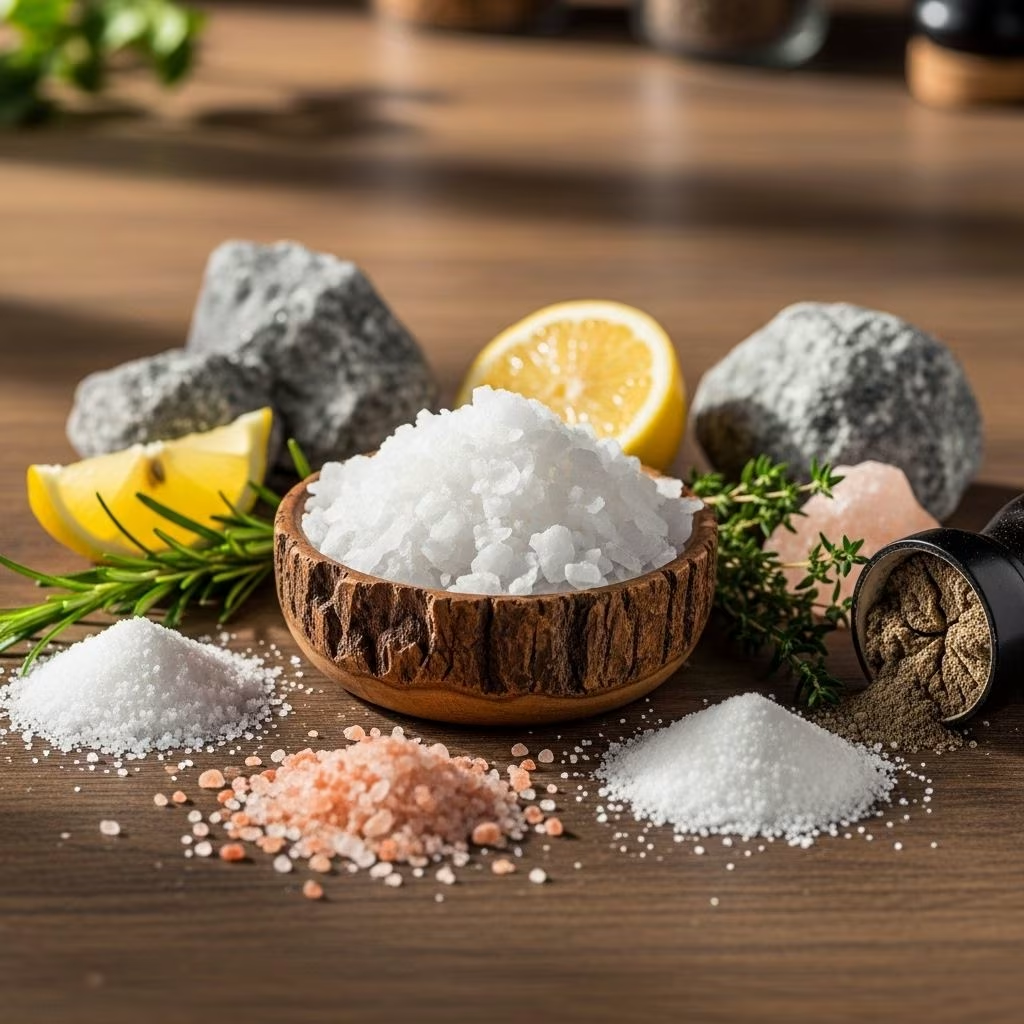
Introduction to Salt
Salt, or more specifically, table salt, is a common household item used primarily for its taste and preserving qualities. However, in the realm of chemistry, salt refers to a broad category of compounds formed by the reaction of an acid with a base. These compounds are made up of positively charged ions (cations) and negatively charged ions (anions), resulting in a neutral electric charge. In this article, we will explore the world of salt, focusing on its benefits, uses, and taste.
Chemical Composition and Structure of Salts
Salts are composed of metal cations (such as sodium or ammonium) and anions (such as chloride or acetate). For example, table salt, or sodium chloride, consists of sodium (Na+) and chloride (Cl–) ions. Salts typically form crystalline structures when solid, which are hard and brittle due to ionic bonds holding the ions together. These bonds are strong, resulting in high melting and boiling points. Salts are insulators as solids but become conductive when melted or dissolved, as the ions become mobile and free to move.
Types of Salts
Salts can be categorized based on their composition and formation process. Here are some key types:
- Simple Salts: Formed through neutralization reactions between acids and bases. These can be acidic, basic, or neutral depending on the reactants involved.
- Acidic Salts: Produced when a strong acid reacts with a weak base, resulting in a pH below 7.
- Basic Salts: Formed when a strong base reacts with a weak acid, leading to a pH above 7.
- Neutral Salts: Neither acidic nor basic, formed by the reaction of strong acids and bases.
- Double Salts: Contain more than one type of cation or anion per molecule.
- Complex Salts: Feature a central metal atom surrounded by both ions and neutral molecules.
Benefits of Salt
Salt is not just a seasoning; it has numerous benefits and uses across various industries:
- Culinary Uses: Salt enhances flavor and acts as a preservative to prevent food spoilage.
- Medical Applications: Salt solutions are used in infusion and as a disinfectant.
- Industrial Uses: Salt is essential in manufacturing processes for textiles, soaps, and dyes.
- Environmental Role: Salt is used in de-icing roads and as a water softener.
Taste and Properties of Salt
The taste of salt is primarily salty, but different types of salt can have distinct flavors and textures. For example:
- Table Salt: Refined and often contains additives like iodine to prevent iodine deficiency.
- Sea Salt: Coarser and may retain more minerals, offering a more robust flavor.
- Himalayan Pink Salt: PINK in color due to iron oxide, often considered for its perceived health benefits.
Uses of Salt Across Industries
Beyond its culinary uses, salt plays a crucial role in various industries:
- Chemical Industry: Used in the production of chlorine and caustic soda.
- Pharmaceuticals: Acts as a filler or active ingredient in some medications.
- Healthcare: Used in IV fluids and as a component of some medications.
- Environmental Management: Helps in de-icing roads during winter.
FAQs
Q: What Is the Difference Between Table Salt and Sea Salt?
A: Table salt is refined and often iodized, while sea salt is coarser and may retain more minerals, offering a more robust flavor.
Q: Is Salt Good for Health?
A: Moderate salt consumption is essential for health, but excessive intake can lead to health issues like high blood pressure.
Q: What Are the Main Uses of Salt?
A: The main uses of salt include culinary seasoning, food preservation, and industrial applications.
Q: How Is Salt Formed?
A: Salt is formed through a neutralization reaction between an acid and a base, resulting in a compound composed of positively and negatively charged ions.
Q: What Are the Benefits of Using Himalayan Pink Salt?
A: Proponents claim Himalayan pink salt offers health benefits due to trace minerals and aesthetic appeal, though scientific evidence is limited.
Q: How Is Salt Used in Medicine?
A: Salt solutions are used in medical settings for hydrating patients through IV fluids and as a disinfectant.
Conclusion
Salt is a versatile compound with a wide array of uses spanning from culinary to industrial applications. Its benefits range from enhancing flavors to providing essential health benefits when consumed in moderation. Understanding the types of salts and their unique properties can help appreciate the complexity and importance of salt in our daily lives.
References
- https://en.wikipedia.org/wiki/Salt_(chemistry)
- https://www.reagent.co.uk/blog/types-of-salts-in-chemistry-and-their-uses/
- https://www.products.pcc.eu/en/academy/salts-structure-properties-applications/
- https://saltassociation.mystagingwebsite.com/education/what-is-salt-and-its-properties/
- https://salinity.oceansciences.org/learn/nature_of_salt.pdf
- https://en.wikipedia.org/wiki/Sodium_chloride
- https://www.britannica.com/science/salt
- https://saltassociation.mystagingwebsite.com/education/chemistry-salt/


