The 15-minute city is an urban planning concept gaining worldwide attention for its promise to make cities more livable, sustainable, and resilient. Imagine reaching most of your daily needs—work, shopping, healthcare, education, and recreation—within a 15-minute walk or bike ride from your home. This vision is fueling debates about the future of cities and the agency of residents over their neighborhoods. As cities everywhere grapple with climate change, inequality, and pandemic-driven changes in how we live and work, the 15-minute city idea is having a moment both in policy circles and in the public imagination.
What Is the 15-Minute City?
The 15-minute city is based on a simple but transformative premise: all basic urban necessities should be accessible within fifteen minutes by foot or bicycle. This includes goods and services such as groceries and healthcare, as well as places for work, learning, recreation, socializing, and culture. The term was popularized by Carlos Moreno, a French-Colombian urbanist, whose model focuses on four key principles:
- Ecology: For a sustainable and healthy environment in the city.
- Proximity: Locating functions and daily needs close together.
- Solidarity: Strengthening social bonds and community participation.
- Participation: Involving residents directly in urban design and decisions.
Unlike traditional car-centric urban models, the 15-minute city reduces reliance on automobiles, shrinks the urban footprint, and centers human experience and community at the heart of planning.
The Origins and Evolution of the 15-Minute City
Though the idea has seen a modern resurgence, the roots of the 15-minute city trace back to earlier urban planning traditions. Before the rise of mass motorization, most cities and towns were naturally walkable, with neighborhoods serving as multifunctional hubs for daily life. The concept is in many ways a return to these pre-modern, pedestrian-oriented ideals, echoing mid-20th-century ideas such as Clarence Perry’s neighborhood unit and later, the New Urbanism movement in the 1980s.
What sets the current 15-minute city movement apart is its alignment with contemporary priorities:
- Tackling climate change by reducing greenhouse gas emissions from transportation
- Fostering community resilience and equity
- Embracing digital connectivity as a tool for decentralizing work and commerce
This notion has found fertile ground in cities like Paris, Melbourne, and Portland, which are reimagining policies and infrastructure to bring services and amenities closer to where people live.
How the 15-Minute City Works
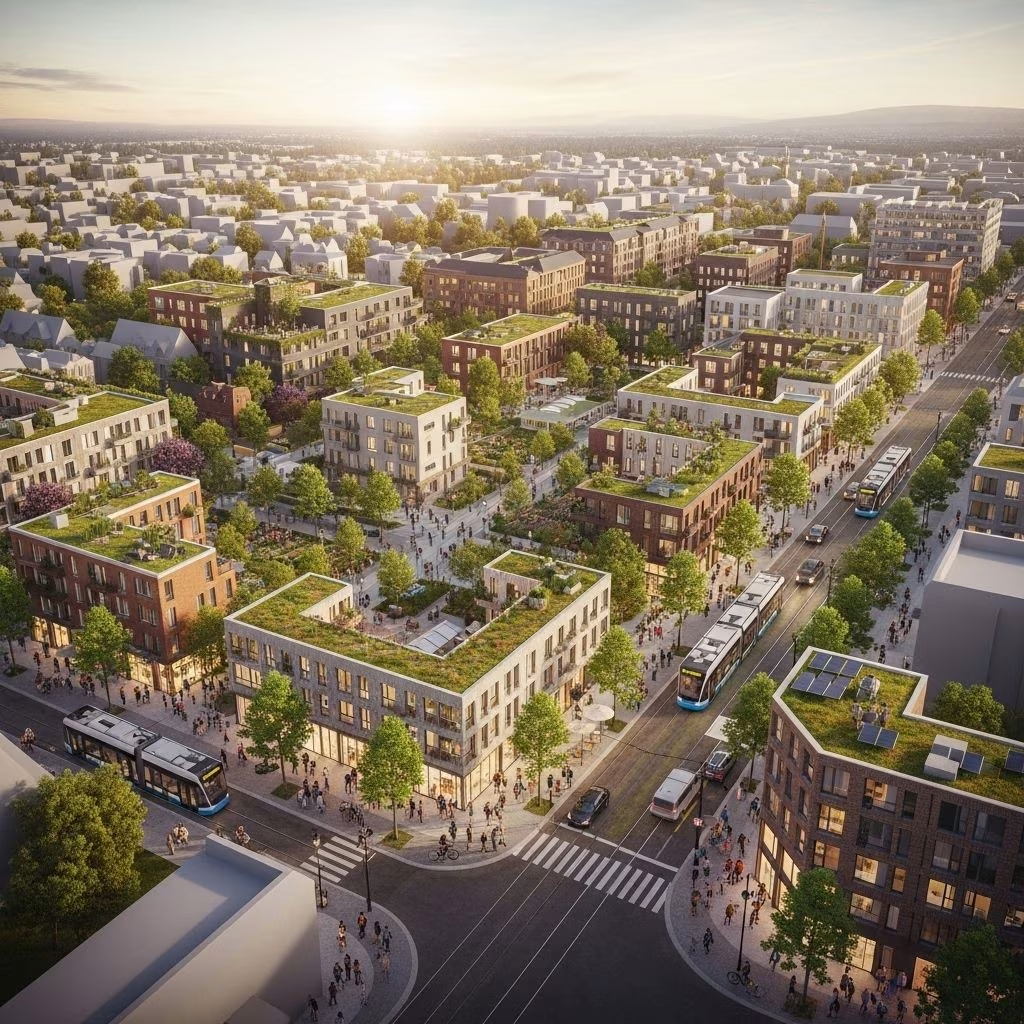
At its core, the 15-minute city makes the best use of urban density not as a source of congestion, but as a resource for vibrancy and accessibility. It isn’t a call to banish cars but to rebalance public space so that walking, bicycling, and transit are genuinely attractive alternatives. The essential components of a successful 15-minute city include:
- Mixed-use development: Blending residential, commercial, cultural, and civic functions in each neighborhood
- Walkable and bikeable networks: Safe, continuous paths that connect people to key destinations
- Accessible public spaces: Parks, plazas, and communal areas that foster social interaction
- Diverse housing: A mix of housing types, densities, and price points to support inclusivity
- Local economic opportunities: Public and private investments in local jobs, shops, education, and healthcare
A crucial insight of the 15-minute city is that time—not just distance—matters. Urbanist Carlos Moreno has called this idea “chrono-urbanism”: reclaiming time lost to commuting, thereby enhancing quality of life and sparking local economies.
| Feature | Traditional (Car-centric) City | 15-Minute City |
|---|---|---|
| Primary Transport | Private automobiles | Walking, cycling, public transit |
| Access to Amenities | Often distant, requiring travel | Local and easily reachable |
| Zoning | Single-use, separated areas | Mixed-use, multi-functional districts |
| Community Life | Fragmented; car-dependent | Connected; walkable neighborhoods |
| Environmental Impact | High carbon emissions | Lower emissions; enhanced green space |
Why Is the 15-Minute City Gaining Traction?
Interest in the 15-minute city has surged in recent years, driven by several converging factors:
- Climate Action: Cities are major sources of carbon emissions. The 15-minute city model is seen as a practical way to meet emissions targets by reducing car trips and land-use sprawl.
- Pandemic Resilience: COVID-19 restrictions highlighted the value of local parks, grocery stores, and home-based work, reinforcing the importance of proximity.
- Equity and Inclusion: Providing access to amenities within all neighborhoods addresses the systemic inequalities of urban design—reducing food deserts, improving safety, and fostering community.
- Technological Change: Remote work and digital services make decentralization both feasible and desirable, enabling people to work, shop, and access services without long commutes.
After Paris Mayor Anne Hidalgo made the 15-minute city a centerpiece of her 2020 reelection campaign, global policy circles and media began using the concept as shorthand for next-generation, people-centered urbanism.
Case Studies: Cities Embracing the 15-Minute Model
- Paris, France: Anne Hidalgo’s administration has implemented hundreds of kilometers of bike lanes, encouraged school “streets” (car-free zones), and repurposed public space to make neighborhoods more self-sufficient.
- Melbourne, Australia: The city has committed to a “20-minute neighborhood” strategy to ensure access to services and vibrant local hubs in every district.
- Portland, USA: The “Complete Neighborhoods” program aims to give every resident safe and easy access to key amenities.
Similar initiatives are now underway worldwide, from Barcelona’s superblocks to Bogotá’s cycling boom and London’s low-traffic neighborhoods. While the details vary, each experiments with some core principles of the 15-minute city—walkability, mixed-uses, local jobs, and vibrant street life.
Implementation: Pathways and Challenges
Turning the 15-minute city from vision to reality requires collaboration between city planners, policymakers, business, and communities. Common strategies include:
- Policy and Zoning Reform: Supporting mixed-use development and re-zoning rigidly separated districts
- Infrastructure Investments: Expanding cycling networks, pedestrian-friendly streets, and high-quality public spaces
- Decentralizing Services: Siting health clinics, schools, libraries, and retail closer to residents
- Affordable Housing: Ensuring a range of housing types so more people can live near where they work or study
- Community Engagement: Involving residents in decisions and design, fostering a sense of ownership
Not all urban settings are equally suited for rapid transformation; older cities with dense, walkable cores often have a head start, while sprawling or car-dependent suburbs may face greater obstacles. Yet even in challenging contexts, incremental steps—like converting a car lane to a protected bike path or supporting local markets—can initiate the shift toward a more human-scale city.
Critiques, Misconceptions, and Controversies
While the 15-minute city is widely praised, it has also sparked skepticism, misunderstanding, and in some cases, conspiracy theories. Critics worry that:
- The model could be wielded in a top-down, inflexible way, without sensitivity to local context
- It might restrict people’s freedom to travel farther afield or own and use cars
- Not all neighborhoods currently have the diversity, density, or investment needed to support such convenience
In early 2023, some unfounded conspiracy theories linked the 15-minute city to authoritarian control, sparking protests in the UK and elsewhere. Urban planners and local leaders have repeatedly emphasized that the 15-minute city expands choice and freedom by making neighborhoods more self-sufficient—rather than curbing people’s movements.
Most 15-minute city plans do not outlaw cars or mandate where people must live, but rather upgrade options for those who want to walk, cycle, or access local resources, increasing inclusion, health, and sustainability.
Benefits of the 15-Minute City
- Environmental Sustainability: Reduces carbon emissions from transport and increases green space
- Economic Vitality: Fosters thriving local businesses and creates new opportunities for work, learning, and entrepreneurship
- Social Cohesion: Encourages civic engagement, spontaneous community interaction, and diverse neighborhood life
- Health and Wellbeing: Promotes walking and cycling, helps air quality, and reduces noise and traffic accidents
- Resilience: Neighborhood self-sufficiency better equips cities to weather crises such as pandemics or energy shocks
Key Principles and Pillars
Carlos Moreno’s Four Pillars for a 15-Minute City:
- Density: Ensuring enough people and destinations in proximity
- Proximity: Focusing on time for essential journeys, not just distance
- Diversity: Fostering mixed-use districts with varied housing and cultural options
- Digitalization: Leveraging technology for flexible work and community participation
These principles are intended to work together: density supports proximity, diversity enriches opportunity, and digitalization enables flexibility in how, where, and when we use the city.
Frequently Asked Questions (FAQs)
What is the 15-minute city in simple terms?
A 15-minute city is an urban neighborhood where most essentials—like food, schools, workplaces, healthcare, parks, and shops—can be reached within a 15-minute walk or bike ride from your home.
Does the 15-minute city mean banning cars?
No. Most advocates clarify that cars will still exist, but the 15-minute city model makes alternatives like walking, cycling, and public transport safer and more attractive. Residents have enhanced choices, not fewer.
How does the 15-minute city address climate change?
By encouraging shorter trips and reducing car dependency, the 15-minute city lowers transport emissions, supports energy conservation, and often increases urban green space—key strategies for urban climate action.
Can the 15-minute city work in suburbs or smaller towns?
Yes, while challenges exist, especially in less dense areas, many principles still apply. Towns and suburbs can gradually shift toward providing more services locally, encouraging mixed use, and improving walkability.
What are the main criticisms of the 15-minute city?
Common concerns include fears about loss of freedom or car use, skepticism about whether all neighborhoods can achieve equal access, and criticism of top-down implementation. Evidence suggests these issues are manageable if the concept is tailored to local needs and not used to restrict choice.
Looking Ahead: The Future of Urban Life
The 15-minute city is more than an urban design prototype—it’s an opportunity to reshape the way we think about time, place, and belonging in cities. Whether every city can quickly become a perfect 15-minute community is debated, but the model has already spurred meaningful conversations and policy shifts toward healthier, more inclusive, and resilient urban futures. As we face overlapping crises of climate, inequity, and public health, the 15-minute city shows how local changes—making neighborhoods great places to live, work, and connect—can have global impacts.
References
- https://www.deloitte.com/an/en/Industries/government-public/perspectives/urban-future-with-a-purpose/15-minute-city.html
- https://en.wikipedia.org/wiki/15-minute_city
- https://www.nlc.org/article/2023/06/13/exploring-the-15-minute-city-concept-and-its-potential-for-communities-of-all-sizes/
- https://www.cnu.org/publicsquare/2021/02/08/defining-15-minute-city
- https://earth.org/15-minute-cities-designing-urban-spaces-for-sustainability-and-well-being/
- https://www.c40knowledgehub.org/s/article/Why-every-city-can-benefit-from-a-15-minute-city-vision?language=en_US