America’s Land Trusts: Conserving 61 Million Acres and Counting
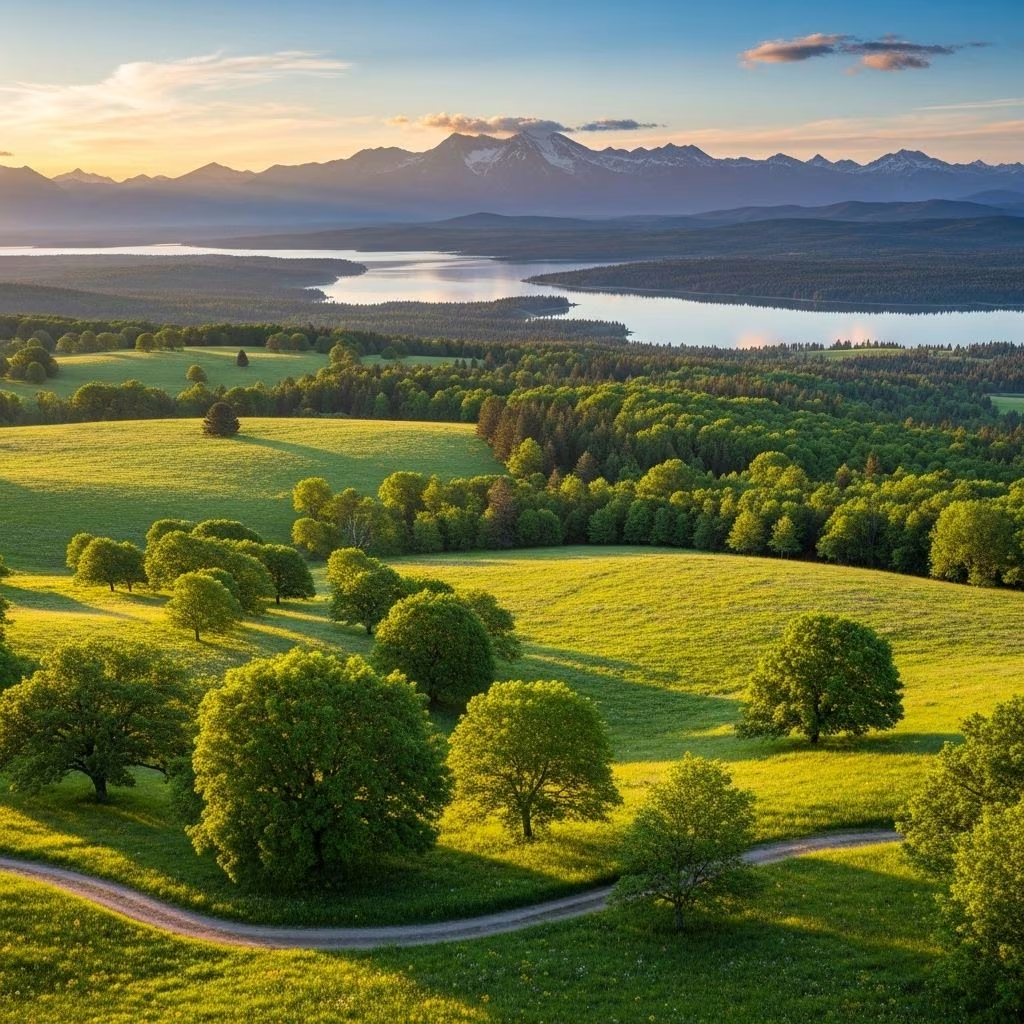
Land conservation in the United States has never been more significant—or ambitious. In 2020, America’s network of nonprofit land trusts marked a remarkable milestone: 61 million acres of privately-owned land voluntarily protected for future generations. This achievement, revealed in the 2020 National Land Trust Census, marks a gain of more than 15 million acres since 2010—a testament to the surge of support for environmental preservation among individuals, communities, and conservation organizations.
Land and People: Statistics That Tell a Story
- 61 million acres conserved as of 2020
- Increase of 15 million acres since 2010
- 16.7 million people visited land trust properties in 2020 (up from 6.25 million in 2015)
- 9,761 miles of trails managed by land trusts—over three times the width of the U.S.
- Land trusts have 6.3 million supporters and over 250,000 volunteers
The scale of land protected by U.S. land trusts now exceeds the size of all lands in the National Parks system—making private land conservation a central pillar in the nation’s environmental future.
The National Land Trust Census: Measuring a Movement
Every five years, the Land Trust Alliance undertakes a nationwide census, surveying the stewardship and impact of local, state, and national land trusts. As the most authoritative and comprehensive dataset on private land conservation in America, this census provides a vital benchmark for tracking progress and shaping policy.
This data is central to the U.S. commitment to the 30×30 goal—a push to conserve 30% of America’s lands and waters by 2030, reflecting growing scientific consensus about the urgent need for large-scale protection of ecosystems to safeguard biodiversity and climate resilience.
The Role and Impact of Land Trusts
Land trusts are nonprofit organizations dedicated primarily to land conservation through voluntary agreements—such as conservation easements—as well as direct ownership, stewardship, and partnerships. They emerge from and work within communities, often focusing on specific ecological, agricultural, recreational, or scenic values unique to each region.
Core activities of land trusts include:
- Securing voluntary conservation easements that permanently restrict development while keeping land in private hands
- Owning and managing nature preserves, farms, forests, and open space
- Restoring habitats, building trails, and providing recreational access
- Educating landowners and the public about conservation options
- Engaging diverse communities for inclusive stewardship
Trends in Private Land Conservation
The last decade has seen a transformative acceleration in the scale, diversity, and professionalism of private conservation efforts:
- Rapid expansion: Local and state land trusts accounted for 70% of all new protected acreage since 2015, highlighting community leadership.
- Growing public engagement: Land trust sites provided critical refuge during the COVID-19 pandemic, with visits more than doubling. Trails, nature preserves, and community conservation lands allowed safe outdoor access for millions during a time of isolation.
- Diversity and inclusion: 78% of land trusts are actively engaging with people of diverse racial, ethnic, age, ability, and identity backgrounds, helping broaden the relevance and reach of conservation.
- Climate action: 74% reported increasing their focus on climate change since 2015. Protected forests, wetlands, and grasslands sequester significant amounts of carbon, with the potential to deliver up to one-third of the emissions reductions required to avoid the worst impacts of global warming.
Acreage by the Numbers: A Chronology of Growth
| Year | Total Acres Conserved | Increase Since Last Census |
|---|---|---|
| 2000 | 24 million | – |
| 2005 | 37 million | +13 million |
| 2010 | 46 million | +9 million |
| 2015 | Approx. 54–56 million | +8–10 million |
| 2020 | 61 million | +5–7 million |
The original census highlighted an impressive 54% increase in acreage from 2000 to 2005, with continued, if somewhat slowing, gains as the field matured and land acquisition costs rose.
Regional Success Stories
While every region has experienced gains, local success stories illuminate the breadth of land trust impact:
- Oregon: 868,695 acres protected statewide; Deschutes Land Trust alone has conserved over 17,523 acres since 1995.
- Maine: Land trusts own or hold easements on approximately 2.94 million acres, a significant share of the state’s conservation lands.
- National growth: Notable increases across Northeast, Northwest, Pacific, and Southwest regions, with the total private lands conserved reflecting both rural and rapidly urbanizing states.
The Mechanics: How Private Land Conservation Works
Conservation easements remain the principal tool. These are legally binding agreements between landowners and a land trust ensuring that land will remain undeveloped or used in an ecologically sustainable manner while continuing private ownership. Easements can:
- Protect working farms, ranches, or forests while maintaining livelihoods
- Secure habitat for threatened species
- Preserve scenic vistas and historic landmarks
Other approaches include:
- Direct purchase or donation of land for parks, reserves, or public recreation
- Community partnerships for shared stewardship and public access
These arrangements often provide tax incentives to landowners, making conservation practical for families and communities seeking to preserve their lands for future generations.
Challenges and Innovations Ahead
Despite vast progress, land trusts face significant hurdles:
- Development pressure: Urban and suburban sprawl threaten unprotected lands, necessitating rapid response and strategic prioritization.
- Long-term stewardship: Permanent conservation means perpetual responsibility—ensuring the ecological health and legal enforcement of conserved tracts.
- Funding and resources: Land acquisition, restoration, and stewardship are costly, with competition for grants, donations, and public support intense.
- Expanding diversity: Engaging new partners in historically underrepresented or marginalized communities is crucial for equity and relevance.
- Adapting to climate change: Conservation strategies must increasingly consider resilience, connectivity, and shifting habitats.
The Path to 30×30: A National Conservation Vision
The 30×30 campaign represents a paradigm shift: conservation at the scale of entire landscapes and ecosystems rather than isolated parcels. It calls for collaboration across government, tribes, private landowners, land trusts, and communities—leveraging public and private tools alike.
Land trusts are uniquely positioned to:
- Build trust and relationships with local communities and landowners
- Triangulate conservation with agriculture, rural economies, and recreation
- Provide natural climate solutions through forest, wetland, and grassland protection
With another 60 million acres needed to meet the 30% conservation target by 2030, land trusts are set to play a decisive role.
The Human Factor: Who Supports Land Trusts?
- 6.3 million people are active supporters, members, or donors
- Over 250,000 volunteers power stewardship, restoration, and outreach projects
This groundswell of grassroots support reflects a growing mainstream recognition: the fate of land, water, wildlife, and climate is inseparably tied to people’s health, prosperity, and quality of life.
Frequently Asked Questions (FAQs)
Q: What is a land trust?
A land trust is a nonprofit dedicated to conserving land by working with willing landowners through purchase, donation, or easements, ensuring lasting protection of natural or working lands.
Q: How do conservation easements work?
A conservation easement is a legally binding agreement that restricts land development and ensures conservation, while the land remains privately owned. This can provide tax benefits and permanent environmental outcomes.
Q: How can the public visit or support land trust properties?
Many land trust lands are open to the public for hiking, nature watching, education, and volunteering. Support can also be provided through donations, membership, or volunteering with a local trust.
Q: What role do land trusts play in fighting climate change?
Land trusts protect and steward forests, wetlands, and grasslands that absorb carbon and build climate resilience, often actively restoring degraded ecosystems and supporting natural climate solutions.
Q: How do land trusts involve diverse communities?
Land trusts increasingly partner with a broad spectrum of groups—including Indigenous peoples, communities of color, veterans, and people with disabilities—to ensure more equitable access to nature and stewardship opportunities.
Taking Conservation Forward: A Call to Action
Land trusts have transformed the conservation landscape by showing that private initiative can generate public good—not just for future generations, but for every American today. As the country faces mounting environmental, economic, and social challenges, the continued growth and adaptation of the land trust movement are more vital than ever. The lessons of the last decade point toward a vibrant future for U.S. conservation, rooted in voluntary action, local leadership, and a shared mission to protect America’s irreplaceable lands forever.
References
- https://landtrustalliance.org/newsroom/press-releases/61-million-acres-voluntarily-conserved-in-america-2020-national-land-trust-census-report-reveals
- https://www.mltn.org/wp-content/uploads/2025/05/MLTN-2024-Land-Trust-Census-Report.pdf
- https://gallatincomt.virtualtownhall.net/sites/g/files/vyhlif606/f/pages/appendix_c.ltacensus05.pdf
- https://www.deschuteslandtrust.org/news/news-items/2022-news-items/61-million-acres-conserved
- https://www.youtube.com/watch?v=bquwCfql9YI
- https://landtrustalliance.org/land-trusts/gaining-ground/california
- https://ctconservation.org/a-lot-to-think-about-even-more-to-do/
- https://talltimbers.org/articles/conservation-permanence-matters-in-florida/