


Environmental Choices of Ancient Rome: Lessons from the Past
The Roman Empire stands as one of history’s great civilizations, not just for its political and military achievements, but also for its innovative approaches to environmental management. With cities like Rome reaching populations of over a million, the empire was compelled to develop technologies, laws, and practices to address environmental challenges. These decisions—sometimes ingenious, sometimes destructive—offer valuable insights into the interplay between human progress and nature.
Roman Waste Management: Innovation in Hygiene and Urban Life
Urban waste management was essential for the health and sustainability of Roman cities. As settlements grew, so did the volume of waste, necessitating solutions to maintain order and prevent disease.
The Romans developed early landfills known as puticulum, and archaeological excavations—such as those at Mérida—show evidence of waste separation. Organic wastes (animal remains, ashes, shells) were discarded, while inorganic materials like ceramics were repurposed, sometimes used for agricultural applications when burned. Marble was recycled into lime, and metals were routinely remelted due to their high value and extraction costs.
Potteries (figlinae) maintained their own dumps, allowing the reuse of clay and other materials. Remarkably, a form of garbage collection existed: residents were required to deposit refuse outside city walls, minimizing pests and foul odors.
- Landfill Innovations: Romans created dedicated dumping grounds for different waste types.
- Waste Separation: Organic and inorganic materials were managed distinctly, with reuse and recycling practices.
- Garbage Collection: The carrus estercolari system mandated removal of waste from urban centers.
Engineering the Urban Environment: Sewers, Water, and Air Quality
Sewers represented a leap forward in urban hygiene, with networks carrying waste out of cities and ending in rivers downstream. Introduced by Tarquinius the Superb around 550 BCE, these systems reduced disease and improved air quality, making dense urban populations viable.
The Romans were attuned to atmospheric pollution, using terms like gravioris caeli (heavy sky) and infamis aer (infamous air) to describe poor conditions. To address industrial needs, water mills harnessed hydraulic power, an early use of renewable energy to reduce reliance on burning wood or coal.
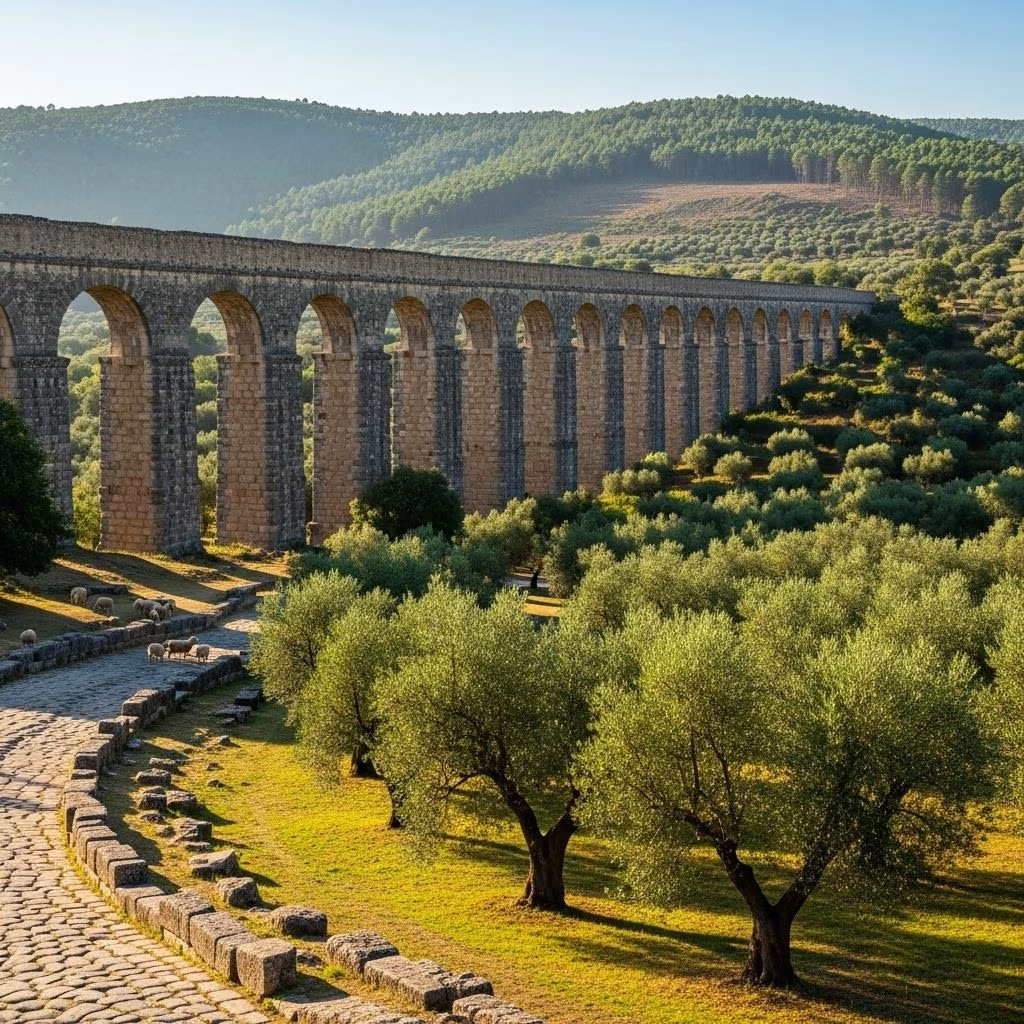
Aqueducts and water pipes were marvels of engineering, delivering fresh water across vast distances. While lead pipes were common for their malleability, concerns about water purity and health led figures like Vitruvius to recommend terracotta alternatives.
To preserve these systems, laws restricted tree planting near aqueducts, preventing root damage to critical infrastructure and ensuring uninterrupted water supply.
- Sewer Networks: Early systems transported waste away, improving living conditions.
- Air Quality Awareness: Pollution was recognized and discussed among Romans.
- Water Engineering: Aqueducts, water mills, and pipe networks secured urban hydration and industrial energy.
- Regulatory Measures: Laws were enacted to safeguard essential infrastructure from environmental harm.
Deforestation: Progress and Ecological Cost
Deforestation accompanied Rome’s expansion, driven by demands for fuel, construction, shipbuilding, and military campaigns. The consequences were significant, reshaping landscapes and diminishing natural resources.
Overgrazing exacerbated the problem. Livestock stripped hillsides of vegetation, impeding the regeneration of forests. Young trees and plants were devoured, leaving bare terrain prone to erosion. Soil, silt, and gravel tumbled downhill, causing flooding, siltation, and the creation of marshlands—sometimes spreading disease.
Military activity also intensified resource extraction. Large standing armies cleared forests for security, denying cover to enemies, and harvested timber to build fortifications, tools, and transportation infrastructure. Julius Caesar, for example, ordered the cutting of forests to prevent ambushes.
- Deforestation Drivers: Construction, fuel needs, naval expansion, and military actions cleared vast woodland areas.
- Agricultural Expansion: Increasing population and food production demands pushed land clearance and intensive farming.
- Military Consumption: Armies depleted resources in occupied and hostile lands to support expansion and security.
Consequences of Roman Resource Use
Soil Degradation and Erosion
Constant clearing and plowing exhausted soil fertility, while eroded hillsides deposited silt into rivers and agricultural lands. Crop yields fell, jeopardizing food security. The Mediterranean climate, combined with centuries of harvesting and deforestation, left land less able to retain water, increasing runoff and sediment load.
Flooding, Siltation, and Harbors
Erosion accelerated dramatically, transforming terrains into marshes and altering coastlines. Silt clogged river deltas and harbors, often necessitating the relocation or reconstruction of ports, which further strained the economy. In Rome itself, floods inundated lower city sectors and caused sewer backups. Historical records, such as the flood of 241 BCE, document increasing frequencies of such disasters over time.
Wider Ecological Impact
- Loss of timber and soil altered Mediterranean landscapes.
- Floods and marshes facilitated the spread of diseases such as malaria.
- Shifting coastlines impacted trade and strategic port placement.
Farming, Deforestation, and the Empire’s Fall
The unsustainable farming practices and relentless deforestation contributed to the decline of the Roman Empire. Heavy reliance on wood accelerated resource depletion and led to soil erosion rates up to ten times higher than natural rates,2 decreasing yields and reducing available arable land. The interconnectedness of ecological degradation and societal stability became increasingly apparent:
- Food shortages prompted social unrest and weakened military effectiveness.
- Environmentally driven disruptions compounded economic and administrative challenges.
- Extreme weather events—droughts, cold spells, crop failures—were influenced by climate changes, including volcanic activity that affected precipitation patterns.
Roman Awareness and Conservation Efforts
Although the Romans lacked modern ecological awareness, some recognized environmental issues and implemented rudimentary conservation measures. Regulations restricted the cutting of valuable trees and protected forests for future use.
Recycling was practiced, notably with glassware; architectural design sometimes incorporated passive solar heating. Ancient writers such as Plato and Cicero reflected on the relationship between humanity and the earth, lamenting the consequences of unchecked resource extraction.
The philosopher Richard Grove observed that “states will act to prevent environmental degradation only when their economic interests are shown to be directly threatened.” In Rome, this principle manifested in policies that were as much about securing future revenue and strategic advantage as about ecological stewardship.
Water Power and Renewable Energy in Ancient Rome
Romans harnessed hydraulic power through water mills, using natural energy to drive their industries. This practice reduced dependency on human labor and on burning wood or coal—an early adoption of renewable energy.
Water management extended to complex distributing systems: aqueducts, lead and terracotta pipes, reservoirs, and fountains, all requiring constant maintenance and regulation. Laws dictating planting distances from aqueducts exemplified Rome’s proactive approach to protecting vital infrastructure.
- Hydraulic Engineering: Water mills powered Roman industrial activity, demonstrating early sustainable practices.
- Infrastructure Protection: Legal frameworks defended water systems from environmental threats.
Agrarian Philosophy and Environmental Policy
Roman agrarian philosophy, captured in works such as Cato’s Agri Cultura, Varro’s Res Rusticae, and Virgil’s Georgics, emphasized thoughtful cultivation and stewardship of land. Agricultural expertise guided decisions on crop selection, soil management, and resource allocation, influencing both productivity and ecological outcomes.
Yet, as the empire expanded and pressures mounted, long-term sustainability was often sacrificed for short-term gain, resulting in cycles of exploitation and decline.
| Roman Environmental Choice | Benefit | Consequence |
|---|---|---|
| Sewer and Water Systems | Improved public health, supported urban expansion | Potential lead contamination, ongoing maintenance needs |
| Deforestation for Fuel & Construction | Facilitated growth and military mobility | Soil erosion, flooding, loss of resources |
| Recycling & Resource Reuse | Reduced waste, sustained valuable materials | Limited to high-value items, not systemic |
| Agricultural Intensification | Met food demand, enhanced economic power | Soil depletion, reduced yields over time |
| Regulation of Forests and Infrastructure | Protected vital resources, prevented some ecological harm | Largely reactive, not holistic ecological stewardship |
Lessons from Rome: Enduring Relevance for the Modern World
Roman achievements in environmental engineering and resource management continue to inspire. Their sewer systems and aqueducts remain models of longevity and utility. However, the adverse effects of deforestation, soil degradation, and unsustainable agriculture remind us of the costs of unchecked exploitation.
- Long-term planning and infrastructure maintenance are vital for sustainability.
- Legal and institutional frameworks can play key roles in protecting natural resources.
- Societal stability is tightly linked to ecological health and productive land use.
- The warning signs of environmental decline—pollution, food shortages, climate disruption—demand attentive and adaptive management.
Frequently Asked Questions (FAQs)
Q: Did the Romans care about environmental sustainability?
A: While the Romans lacked modern ecological consciousness, they developed regulations and practices to safeguard essential resources, primarily driven by practical and economic needs.
Q: What was the main ecological impact of Roman expansion?
A: Deforestation, soil erosion, and overgrazing dramatically changed Mediterranean landscapes and undermined agricultural productivity.
Q: How did Roman water systems contribute to sustainability?
A: Advanced aqueducts and sewer networks provided clean water and sanitation, supporting large populations and public health—although lead contamination posed health risks.
Q: Did resource depletion contribute to Rome’s fall?
A: Environmental factors such as unsustainable farming, deforestation, and climate events contributed to declining yields, social unrest, and the weakening of the empire.
Q: Are any Roman environmental solutions still used today?
A: Many Roman inventions, like aqueducts and basic recycling practices, influence modern infrastructure and waste management systems.
References
- https://www.biospheresustainable.com/en/blog/33/how-the-roman-empire-managed-to-be-sustainable
- https://www.green.earth/blog/key-factors-in-the-fall-of-the-roman-empire-unsustainable-farming-practices-and-deforestation
- https://en.wikipedia.org/wiki/Deforestation_during_the_Roman_period
- https://pmc.ncbi.nlm.nih.gov/articles/PMC8805493/
- https://bmcr.brynmawr.edu/2013/2013.02.03/
- https://www.hks.harvard.edu/sites/default/files/centers/mrcbg/files/180_AWP_final.pdf


