


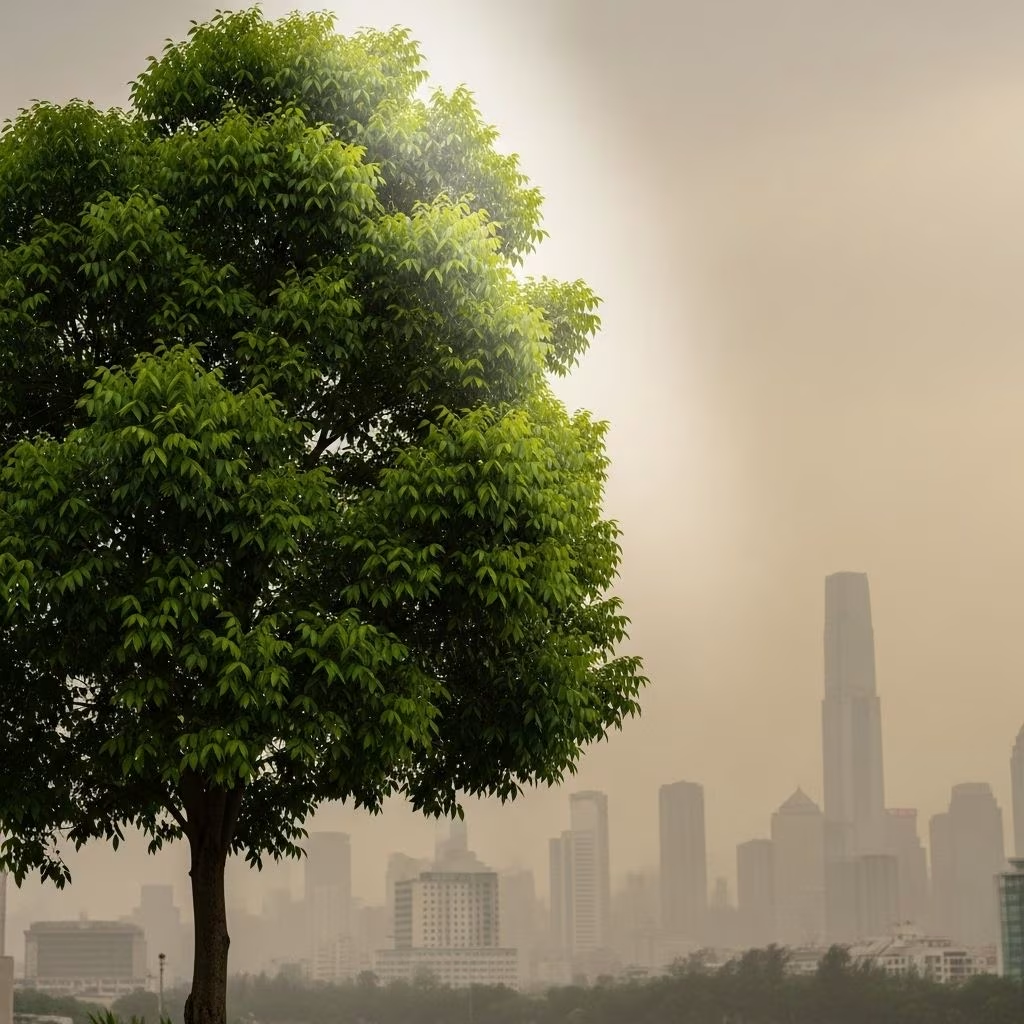
Are Small Particulates a Big Deal?
Air pollution in cities is a major concern for public health, with particulate matter (PM) recognized as one of the most dangerous pollutants. Small particles — especially those less than 2.5 micrometers (PM2.5) — can penetrate deep into the lungs and even enter the bloodstream. But how big is the problem of small particulates, and can urban trees really help clean our air? Below, we unpack the science, health impacts, environmental context, and what is being done to tackle PM pollution in urban spaces.
What is Particulate Matter?
Particulate matter (PM) refers to tiny particles suspended in the air. These particles vary in chemical composition, size, and shape, and are classified based on their diameter:
- PM10: Particles with a diameter less than 10 micrometers
- PM2.5: Fine particles less than 2.5 micrometers across
- Ultrafine particles: Less than 0.1 micrometers in diameter
Sources include vehicle emissions, industrial activity, construction dust, smoking, wildfires, and even biological particles like pollen.
Why Are Small Particulates So Dangerous?
Unlike larger particles, small particulates are not easily filtered by the nose and upper airway. Their size allows them to bypass respiratory defenses, reach deep into the lungs, and enter the bloodstream. The health impacts can be severe:
- Respiratory and cardiovascular diseases
- Asthma attacks and chronic bronchitis
- Premature death in people with heart or lung conditions
- Increased risk of stroke and heart attack
- Developmental problems in children
Scientific studies have linked exposure to PM2.5 to serious illnesses, especially in vulnerable users like children, the elderly, and those with pre-existing health issues.
How Do Particulates Move and Accumulate?
PM10 tends to settle out of the air more quickly due to gravity, while PM2.5 behaves like gaseous dust, remaining airborne for longer and traveling farther distances. Fine particulates can be dispersed efficiently in city environments, which is why they accumulate near sources like roadways, industrial sites, and dense urban cores.
Particulates also accumulate differently depending on climate and urban vegetation. Studies show:
- Evergreen trees are more effective at trapping small particulates year-round
- Deciduous trees are particularly useful for reducing PM2.5 during periods of high pollution and for protecting health-sensitive populations
- Large airborne particles tend to be affected more by gravity and therefore have shorter residence times in the air
The Role of Urban Trees in Cleaning the Air
Urban trees and forests act as natural filters, removing airborne particulate matter via their canopies. Leaves capture particles that settle on their surfaces, which are then washed off during rain or fall to the ground with leaf litter. The efficiency of PM removal depends on several key factors:
- Species-specific properties: Trees with dense foliage, rough leaf surfaces, and abundant trichomes (hair-like structures) have higher PM accumulation
- Leaf morphology: Waxy or rough surfaces hold onto particles more effectively, especially the finer fractions
- Rainfall: Low-intensity precipitation slowly washes PM off leaves, while intense rain can remove larger but not necessarily all particles
- Leaf area index (LAI): Species with high LAI, like some evergreens, accumulate more PM
Notably, some trees retain tightly-bound particulates even after heavy rain, meaning they continuously contribute to air cleaning throughout the year.
Which Trees Are Best at Trapping Particulates?
Research has highlighted certain urban species as particularly effective at removing PM. For example, Quercus ilex (Holm Oak), popular in Mediterranean cities, combines dense leaf structure, trichomes, and epicuticular waxes for enhanced PM accumulation. Deciduous species with similar structural features can target periods of high fine PM pollution and address health-sensitive sites.
| Tree Type | Key Leaf Features | Best For |
|---|---|---|
| Evergreen broadleaf | Dense foliage, trichomes, waxy cuticle | Year-round PM removal (all sizes) |
| Deciduous broadleaf | Rough or hairy leaves, variable density | Targeted PM1 & PM2.5 reduction in peak seasons |
| Coniferous | Needles with wax, high retention | Effective for coarse and some fine PM |
Tree selection for urban planting should consider not just aesthetics and shade value, but also specific traits that maximize air filtration and support healthier environments.
Seasonal Impact on Particle Capture
Tree effectiveness at capturing PM varies seasonally:
- During summer, evergreens trap more fine particles (PM1, PM2.5), while deciduous trees more efficiently collect larger particles
- In winter, both evergreen and deciduous species shift toward capturing larger particles (4μm–100μm), with a higher overall PM concentration due to environmental factors
- Leaf retention: Some species hold on to particles persistently, requiring substantial rain or leaf drop for complete removal
Understanding these patterns helps urban planners optimize the mix of species for pollution reduction throughout the year.
Challenges: Model Uncertainties and Real-World Variability
Estimating the exact amount of PM removed by trees is complex. Models like i-Tree Eco often underestimate the totals because they don’t fully account for tightly-adhered particles or those persisting after rainfall. Additional factors complicating PM removal calculations include:
- Variability in precipitation and its impact on particle wash-off
- Differences in local climate and species distribution
- Urban architectural features that affect air flow and PM dispersion
- Interaction with other air-cleaning mechanisms (soil, mosses, etc.)
Continued research is refining these models by adding morphological traits and long-term retention studies, as well as mapping PM levels around specific trees and urban neighborhoods.
Public Health Implications of PM Pollution
Fine particle pollution is strongly linked to increased rates of respiratory disease, cardiovascular events, and even developmental issues in children. Key populations at risk include:
- Children and infants
- Older adults
- Individuals with chronic heart or lung conditions
- Outdoor workers, cyclists, and pedestrians in high-traffic areas
Urban trees not only help reduce exposure but also provide shade, moderate temperatures, and foster spaces for exercise — all contributing to improved wellbeing.
Strategies for Maximizing Urban Tree Benefits
Effective urban planting schemes use a variety of species chosen for their proven ability to capture PM, matched to the specific needs and pollution patterns of each location. Strategies include:
- Prioritizing evergreens in consistently polluted sites for year-round filtration
- Mixing deciduous and coniferous trees for seasonal variation
- Focusing on streets, playgrounds, hospitals, and schools to protect the most vulnerable
- Considering leaf surface traits and canopy density in species selection
- Maintaining existing mature trees — as they provide the largest cumulative benefit
The community also benefits from investment in tree care, including irrigation, prevention of soil compaction, and protection from construction damage, which all help maximize their pollution-reducing capacity over time.
Frequently Asked Questions (FAQs)
Q: What are the main sources of small particulate matter (PM2.5) in cities?
A: Urban PM2.5 comes primarily from vehicle exhaust, industrial operations, wood burning, construction dust, and combustion of fossil fuels.
Q: Which health problems are most closely associated with PM2.5 exposure?
A: PM2.5 is linked to worsened asthma, heart attacks, strokes, chronic obstructive pulmonary disease (COPD), and increased rates of premature death, especially in vulnerable populations.
Q: Can planting trees really make a measurable difference in urban air quality?
A: Yes, research shows trees can significantly reduce PM2.5 concentrations, but effects vary by tree species, leaf traits, and urban design. Mature trees with rough or hairy leaves and dense canopies are most effective.
Q: Do seasonal changes affect tree efficiency in removing PM?
A: Tree species differ in seasonal PM removal. Evergreens trap particles consistently year-round; deciduous trees excel during peak pollution seasons when leaves are present.
Q: Are certain neighborhoods more affected by particulate pollution?
A: Yes, areas close to highways, industrial zones, and dense traffic corridors experience higher PM levels. Equity in urban tree planting can help address environmental justice concerns.
Key Takeaways
- Small particulates (such as PM2.5) are dangerous pollutants due to their ability to penetrate deep into the respiratory system.
- Urban trees are essential allies in reducing airborne particulates, with some species much more effective than others.
- Species selection and planting strategies should reflect local pollution patterns and public health priorities.
- Maintaining healthy urban forests offers cumulative benefits for air quality and community wellness.
References
- PMC11659368: Effect of seasonal changes in street canyons on particles of different sizes.
- PMC9282645: Comparing i-Tree Eco Estimates of Particulate Matter Deposition…
- Nature (s41598-017-03360-1): Variation in Tree Species Ability to Capture and Retain Airborne …


