


In the world of e-commerce, a simple click often leads to the phrase “Arriving Today.” Yet behind this promise lies a vast, intricate, and often invisible network that spans continents, ports, warehouses, highways, and homes. Drawing on the book Arriving Today by Christopher Mims, this article unpacks the labyrinthine journey every online order takes, the technological techniques that underpin its speed, the global labor that keeps it all in motion, and the profound impact these systems have on society and the planet.
The New Promise: Ultra-Fast Delivery as the Norm
Not long ago, waiting a week for delivery seemed reasonable. Today, consumers have grown accustomed to delivery within a day—or even a few hours. E-commerce titans have set a new standard: speed is now the default expectation. But such convenience masks a dramatic transformation in how goods are produced, handled, and shipped.
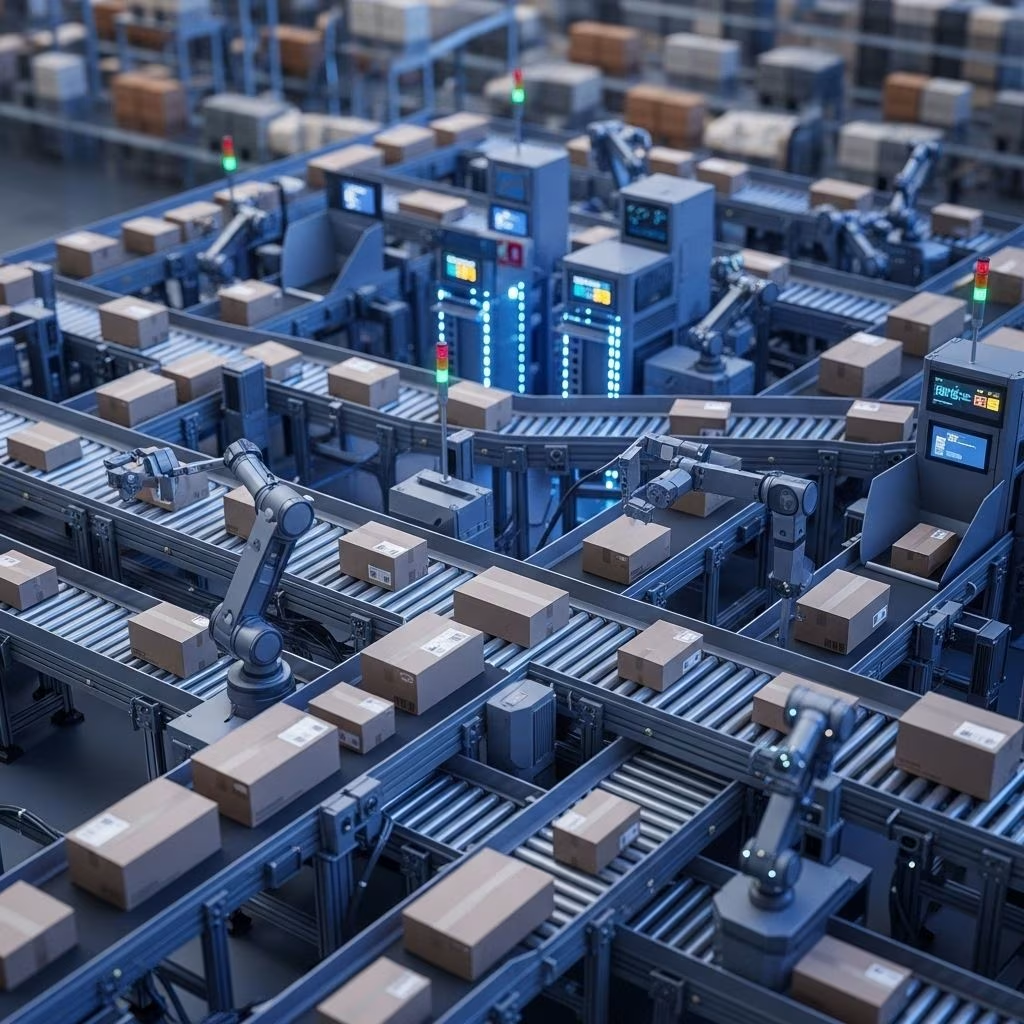
- Warehouses have evolved into high-speed hubs packed with automation, sensors, and workers moving in tight coordination.
- Ports operate around the clock to offload millions of shipping containers monthly, supplied by factories in Asia and elsewhere.
- Trucking networks form the backbone of inland delivery—reliant on thousands of drivers hauling goods cross-country under intense deadlines.
From Factory to Front Door: Mapping the Modern Supply Chain
Arriving Today traces the arc of a USB charger’s journey from its assembly in a Vietnamese factory to its eventual arrival at a customer’s doorstep. Each step is a story of human ingenuity, relentless optimization, and, often, unseen human toil.
The Global Factory Floor
Most of what you order online begins life in a sprawling factory halfway around the world. These factories, often located in Southeast Asia or China, are:
- Staffed by thousands of workers, often under tough conditions and intense pace.
- Heavily automated in some cases, with robots and machines producing goods at unprecedented scale.
- Integrated with logistics networks to ensure finished products immediately flow toward markets where demand is forecasted.
Crossing Oceans: The Shipping Container Revolution
The rise of the humble shipping container revolutionized global commerce. Each container, steel-sided and standardized, acts as a building block for the seamless movement of goods:
- Loaded at ports in Asia, containers cross vast oceans aboard colossal cargo ships.
- Upon arrival at North American ports, they are handled by unionized longshoremen skilled in moving massive volumes using cranes and automation.
- Delays at ports—whether due to labor shortages or traffic jams—can ripple through supply chains, as seen during pandemic-era bottlenecks.
Warehouses: Dark Spaces, Bright Technology
The dramatic rise of fast delivery is impossible without the modern warehouse, sometimes called a “dark warehouse” for its reliance on machines and minimal lighting:
- Robots shuttle racks of goods to human workers or sort items for shipping, reducing walking time and boosting efficiency.
- Data and AI algorithms optimize everything from picking routes to inventory placement.
- Human labor remains essential, but workers are increasingly pushed to match the pace of machines, monitored by algorithms tracking every movement.
The Invisible Workforce: Human Hands Behind the Delivery
Behind every overnight arrival is an army of workers operating out of sight and under pressure. Christopher Mims devotes significant attention to the labor conditions that enable rapid delivery and the toll it can take:
- Warehouse workers, whether employed by Amazon or third-party contractors, fulfill hundreds of orders per shift, their speed continuously tracked by software.
- Truck drivers keep supply lines flowing but face exhausting schedules, constant surveillance, and tight delivery windows.
- Gig economy drivers and independent contractors often deliver the “last mile,” further atomizing the labor force.
Table: Labor Roles in the Delivery Pipeline
| Role | Location | Main Tasks | Key Challenges |
|---|---|---|---|
| Factory Worker | Asia (VN, CN, etc.) | Assembly, packing | Long hours, low pay |
| Longshoreman | Global Ports | Unload containers | Shift work, automation |
| Warehouse Worker | Distribution Centers | Picking, sorting | Pace, injury, surveillance |
| Truck Driver | Road networks | Hauling, delivery | Fatigue, deadlines |
| Last-Mile Driver | Urban/Suburban | Direct delivery | Gig work, lack of benefits |
Algorithmic Logistics: The Science of Getting Packages Anywhere, Fast
One of the book’s key revelations is how the drive toward instant gratification is powered by algorithmic decision-making. Every stage in the journey employs software to solve immensely complex logistical puzzles:
- Route optimization ensures trucks travel the shortest, fastest, or most fuel-efficient paths.
- Inventory prediction tools pre-position popular items near customers, so orders don’t have to cross the country.
- Time-motion studies and performance tracking break down tasks to seconds, pushing people and machines toward maximum productivity.
Frequently Used Logistics Algorithms
- Traveling Salesperson Problem (TSP): Finds the most efficient route for delivery drivers covering multiple stops.
- Bin Packing: Maximizes space in shipping containers and boxes.
- Order Batching: Groups similar orders to streamline picking in large warehouses.
Technology and Automation: Machines Redefining Delivery
Warehouses hum with synchronized movements of robots and humans working side by side. Self-guided vehicles ferry goods between stations, while hand-held devices direct human workers with precise instructions. Key trends include:
- Autonomous Mobile Robots (AMRs): Carry goods inside warehouses, minimizing human walking.
- Automated sorting systems: Send packages onto the correct trucks and routes in seconds.
- Drone and autonomous vehicle delivery: Experimental, but hinting at a future where delivery is even faster and less labor-intensive.
The Myth of Frictionless Shopping: Hidden Costs and True Impacts
Next-day delivery appears simple and seamless to the consumer. But the process is rife with externalized costs—to humans, communities, and the environment.
- Impact on workers: Constant pressure to perform, risk of physical injury, diminished job security, and, for many, a lack of career progression.
- Environmental consequences: Increased emissions from rapid, small batch shipping; excess packaging waste; and sprawling logistics infrastructure.
- Societal change: Local retailers are pressured or displaced, urban spaces become dominated by logistics facilities and delivery vans, and shopping habits change rapidly.
Table: Environmental Trade-Offs of Quick Delivery
| Factor | Conventional Delivery | Ultra-Fast Delivery |
|---|---|---|
| Emissions | Lower (fewer trips, consolidated shipping) | Higher (frequent, less full vehicles) |
| Packaging | Bulk, less waste per item | More, single-use packaging |
| Infrastructure | Centralized warehouses | Multiple local hubs, more urban traffic |
| Labor | Stable jobs, less surveillance | Gig work, constant tracking |
Changing the Game: Who Benefits—and Who Bears the Cost?
The new delivery economy has clear winners and losers. Consumers, accustomed to instant convenience, rarely see the struggles beneath the system. Tech and retail giants reap profits and dominate markets. Meanwhile, the pressure falls on:
- Workers, who face unpredictable hours, algorithmically enforced quotas, and job insecurity.
- Communities, which grapple with changing retail landscapes, increasing road traffic, and environmental burdens.
- Small businesses, who struggle to compete with “free” and immediate shipping promises.
Evolving Solutions: Can Greener and Fairer Delivery Systems Emerge?
Growing awareness of these issues has spurred conversation and innovation:
- E-commerce firms are investing in renewable energy for logistics and experimenting with more efficient packaging and delivery consolidation.
- Labor advocates push for better workplace standards, fair pay, and humane conditions in warehouses and for delivery drivers.
- Policymakers and urban planners consider ways to manage the logistics boom so it supports rather than strains local economies and environments.
Frequently Asked Questions (FAQs)
Q: What makes today’s supply chains so different from those of the past?
A: Historically, supply chains moved at the pace of bulk freight, prioritized efficiency, and focused on cost. Today’s systems are engineered for speed, using predictive algorithms, local warehouses, and real-time data to promise deliveries within hours or days, shifting the balance toward near-instant gratification.
Q: How does automation affect workers in the delivery ecosystem?
A: Automation can boost productivity and reduce costs, but it also puts intense pressure on human workers to keep up with machines, often tracks their every movement, and can lead to job displacement or altered roles.
Q: Are fast deliveries necessarily worse for the environment?
A: Speeding up delivery often leads to more emissions due to fragmented loads, less efficient routing, and increased packaging. There are efforts to mitigate these impacts—such as optimizations for fuller vans and renewable-powered fleets—but the overall environmental footprint of ultra-fast delivery is significant.
Q: Can consumers help create more sustainable supply chains?
A: Yes. Simple choices—opting for slower shipping, consolidating purchases, and supporting companies that value sustainable practices—can reduce environmental impacts and signal to retailers the importance of responsible supply chain management.
Q: What does the future of delivery look like?
A: The delivery landscape is primed for further automation, smarter logistics tech, and perhaps more attention to sustainability and labor issues as awareness spreads. The fundamental challenge will be balancing speed, cost, worker well-being, and environmental health.
Further Reading
- “Arriving Today: From Factory to Front Door – Why Everything Has Changed About How and What We Buy” by Christopher Mims
- Reports on logistics, labor, and sustainability in global e-commerce from reputable business and environmental publications
- Research on automation, workforce transformation, and urban planning for delivery infrastructure


