


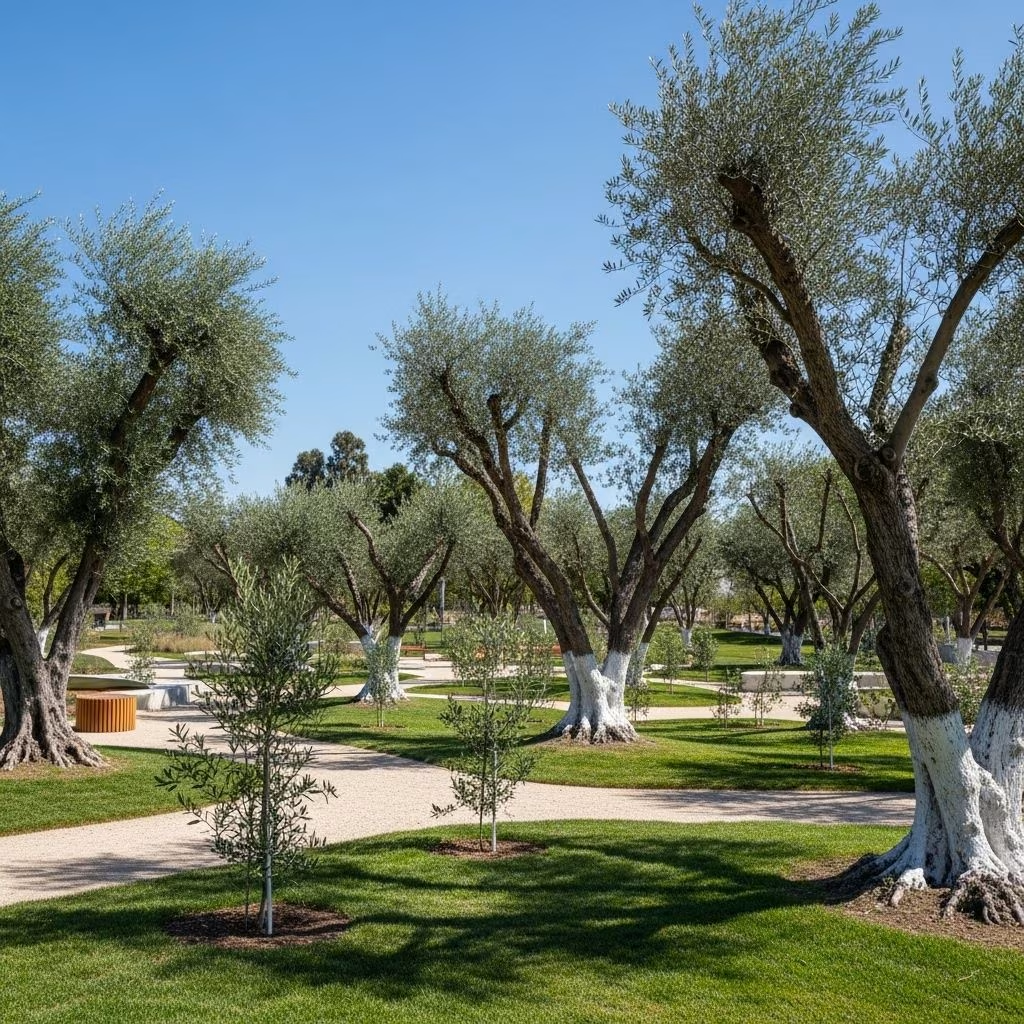
Revitalizing Los Angeles’ Historic Olive Grove: The Barnsdall Park Transformation
The heart of East Hollywood is now home to a rejuvenated olive grove—the Barnsdall Art Park Olive Grove—that stands as a vital testament to Los Angeles’ history, resilience, and commitment to a greener future. Over more than a century, this hillside landscape has evolved from a pioneering orchard to an iconic public park that enriches the community, provides essential green space, and preserves an enduring cultural legacy.
The Origins of Olive Hill: A Historical Overview
When developer Joseph H. Spires purchased a 36-acre parcel in the late 1890s, his vision was both ambitious and agriculturally innovative for the region. Spires hoped to fund a grand hotel by cultivating a commercial olive orchard—an unusual alternative to the area’s prevalent lemon and orange groves.
- 1890s: Spires plants 1,225 olive trees, neatly aligned in a 20-foot grid along a prominent hill that would become known as Olive Hill.
- 1913: Spires’ hotel dream dies with him, and his widow sells the land in 1919 to Aline Barnsdall, a forward-thinking oil heiress and philanthropist.
- Barnsdall commissions Frank Lloyd Wright to develop her new residence (the famed Hollyhock House), a theater, and an arts complex nested within the olive-studded hillside.
The centerpiece, Hollyhock House, was completed in 1921 and would eventually be memorialized as Los Angeles’ first and only UNESCO World Heritage Site. Barnsdall donated the house and much of her land to the city in 1927, setting the stage for what is now Barnsdall Art Park.
Decline and Preservation: Navigating Decades of Change
The olive grove weathered numerous challenges over time. Urban development and changing land ownership resulted in the subdivision and loss of hundreds of trees, with only 90 of the original 1,225 trees remaining by 1992. Although the park continued to serve as a cultural cornerstone, the olive landscape faced deteriorating health and neglect:
- Urban development replaced much of the historic orchard with homes and businesses.
- Mid-1990s: A master plan introduced 315 new olive trees, but health and maintenance challenges persisted into the 21st century.
- By late 2010s, tree die-off and drought stress had sharply reduced the number and vitality of the grove’s remaining trees.
The Birth of the Barnsdall Olive Grove Initiative
With the onset of the COVID-19 pandemic, the closure of Barnsdall Art Park’s public programs prompted the Barnsdall Art Park Foundation (BAPF) to focus inward and address critical landscape renewal. Thus began the Barnsdall Olive Grove Initiative, an ambitious, collaborative project between BAPF, the Los Angeles Parks Foundation (LAPF), city agencies, and community partners.
Objectives of the Initiative
- Conduct a comprehensive horticultural survey and soil analysis to determine the grove’s health and needs.
- Repair and update the existing irrigation system to address drought-related stress and promote sustainable water use.
- Prune existing olive trees and remove dead or hazardous stumps, with a focus on preserving heritage stock.
- Develop a plan for planting new, healthy, fruiting olive trees that seamlessly integrate into the park’s ecological and historic fabric.
In 2021, a $25,000 contribution from BAPF to LAPF’s Adopt-a-Park program funded much of the initiative’s groundwork, bolstering a total restoration budget that reached $58,000.
Restoration in Action: Science, Sustainability, and Community
The revitalization of the olive grove is an exemplary convergence of science-driven horticulture, environmental stewardship, and community engagement:
1. Diagnosing the Problem: The Water Factor
The LAPF conducted rigorous analysis—including soil testing—and discovered that the grove’s distress stemmed not from disease, as initially suspected, but from chronic underwatering exacerbated by local drought and city water restrictions.
- Solution: Replace frequent shallow watering with a single, deep weekly 30-minute soak to ensure water reached deep roots, in compliance with municipal guidelines.
- Result: Trees showed rapid improvement, with new growth and revitalized canopies visible within weeks.
2. Pruning, Removal, and Upcycling
Mariposa Tree Management’s landscape team undertook the painstaking task of pruning 400 olive trees and removing 20 dead stumps. To honor sustainability and heritage:
- Larger wood pieces were donated to local artists and craftspeople for original art projects—including items auctioned to raise additional restoration funds.
- Result: This approach transformed necessary pruning into a celebration of local artisanship and park legacy.
3. Planting for the Future: New Olive Trees
In June 2021, under the direction of BrightView Landscapes, the initiative planted 40 new Olea europaea “Wilsonii” olive trees, a variety well-suited to Southern California’s warm, arid climate. These plantings filled gaps in the original grid, restoring a sense of historical continuity and bolstering the local ecosystem.
- The restored and expanded grove supports wildlife habitats for numerous species of birds and insects.
- LAPF committed to two years of follow-up care to ensure new trees flourish.
Environmental & Community Impact
The rejuvenated olive grove transcends its historical roots, offering concrete benefits to East Hollywood’s densely built environment and supporting the City of Los Angeles’ Green New Deal efforts:
- Contributes to the city’s goal of planting 90,000 new trees to combat urban heat and improve air quality.
- Provides essential open space, directly impacting the health and wellbeing of residents and visitors.
- Serves as an ecological resource, fostering biodiversity and climate resilience in the neighborhood.
- Acts as a vital community gathering space—especially crucial for mental and social health in a “pandemic-battered world”.
Olive Grove, Hollyhock House, and Cultural Heritage
Preservation efforts highlight the deep relationship between the olive grove and Frank Lloyd Wright’s Hollyhock House. The Art Deco-modernist landmark was designed to harmonize with the orchard’s grid, blending built environment with the living landscape. The ongoing restoration ensures that both the grove and the house continue to inspire visitors as integral components of Los Angeles’ first UNESCO World Heritage Site.
Inspiration for Art & Education
The restored olive grove has inspired:
- Artist collaborations: Using upcycled olive wood from removed stumps and branches, local artists created original works that both memorialize the grove and support continued funding through auctions.
- Community workshops: Future plans include olive-picking days and olive-curing workshops, encouraging residents to actively participate in park stewardship and heritage.
- Educational programming: The site serves as an open-air classroom for sustainable landscaping, local history, and horticulture.
Frequently Asked Questions (FAQs)
Q: What makes the Barnsdall olive grove historically significant?
A: The grove was one of the earliest large commercial olive plantings in Southern California, established in the 1890s by Joseph H. Spires and later incorporated into Frank Lloyd Wright’s plans for the city’s first UNESCO World Heritage Site.
Q: How were the trees selected for replanting?
A: The restoration initiative selected Olea europaea “Wilsonii”—a disease-resistant, vigorous olive cultivar especially suited to Los Angeles’ climate—for their resilience and compatibility with the historical landscape.
Q: What role does the olive grove play in Los Angeles’ Green New Deal?
A: By revitalizing and expanding the historic grove, Barnsdall Art Park is helping the city achieve its ambitious goal of planting tens of thousands of trees for urban greening, carbon sequestration, and biodiversity support.
Q: Are there opportunities for public involvement?
A: Yes. The initiative has fostered collaborations with local artists, and plans are in place for future public olive-picking and educational workshops, encouraging broad community participation and park stewardship.
Q: What is the Barnsdall Olive Grove Initiative’s legacy?
A: The Initiative not only preserves a rare living historical resource and a key feature of a UNESCO site, but also exemplifies urban restoration through adaptive management, community engagement, and sustainability in action.
The Future of Olive Hill: Sustaining Growth and Heritage
As the olive trees continue to thrive under renewed care, Barnsdall Art Park embodies Los Angeles’ broader aspirations: celebrating historical legacy, supporting ecological health, and fostering inclusive urban communities. By reviving Olive Hill’s orchard roots, stakeholders have ensured that its shade, beauty, and inspiration will be enjoyed by generations to come.
- Continued monitoring and adaptive landscape management will be key to the grove’s lasting health.
- Expanded educational and community programming will reinforce bonds between the park, local residents, and the city at large.
- The grove’s transformation stands as a beacon for similar urban renewal projects throughout Los Angeles and beyond.
In transforming a forgotten landscape into a vibrant public treasure, the Barnsdall Olive Grove Initiative demonstrates how innovative partnerships and dedication can restore not just trees, but the roots of cultural and ecological vitality in the heart of the city.
References
- https://www.barnsdall.org/olive-grove-initiative
- https://savingplaces.org/stories/a-key-piece-of-las-barnsdall-art-park-thrives-again
- https://patch.com/california/hollywood/olive-trees-planted-barnsdall-park-olive-grove-restoration-project
- https://cjacreativecollaborations.com/barnsdall-olive-grove-initiative
- https://www.deeproot.com/case-studies/silva-cell/the-broad/
- https://www.latimes.com/california/story/2025-09-25/woodland-hills-nursery-is-turning-into-a-cemetery-some-locals-are-fighting-it
- https://dsrny.com/project/the-broad-plaza
- https://citizenportal.ai/articles/3131482/Los-Angeles-City/Los-Angeles-County/California/Los-Angeles-Council-approves-Orange-Grove-preservation-project-with-new-housing-development
- https://www.burbankca.gov/web/community-development/east-olive-avenue-reconfiguration-project
- https://beverlypress.com/2021/05/barnsdall-parks-historic-olive-grove-to-be-restored/


