


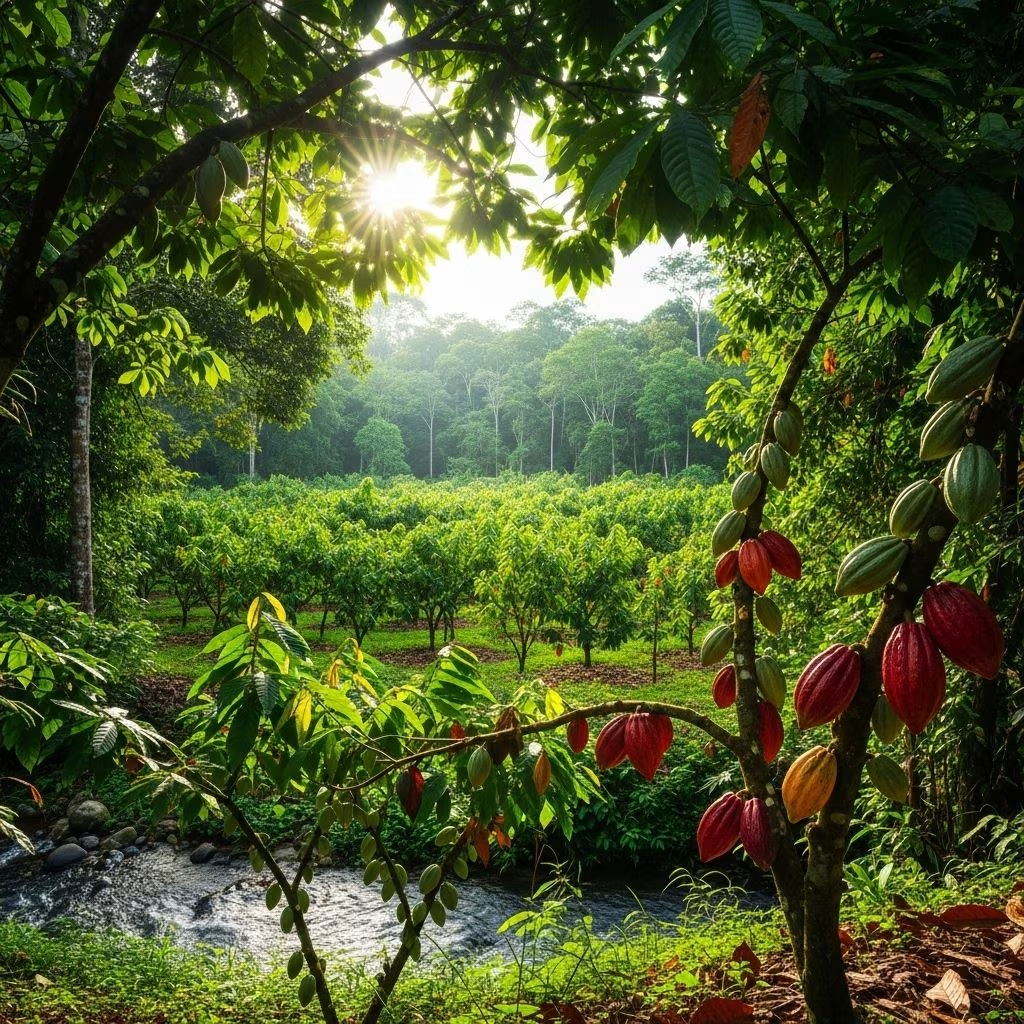
Beyond Good: Halting Deforestation One Chocolate Bar at a Time
\n
Chocolate, a beloved treat around the globe, often comes at a hidden cost. The industry has long been associated with deforestation, particularly in tropical regions like West Africa. However, Beyond Good, a chocolate company sourcing directly from Madagascar and Uganda, is blazing a new trail. It demonstrates that chocolate can be an engine for forest restoration, biodiversity, and economic empowerment — rather than destruction. This article explores how Beyond Good challenges industry norms, partners with small farmers, and proves that ethical chocolate is not just possible but scalable.
\n\n
Chocolate and the Problem of Deforestation
\n
Historically, most of the world’s cacao — the core ingredient in chocolate — is grown in West Africa, especially in the Ivory Coast and Ghana. These countries produce more than 75% of the world’s cocoa, but this boom has often come at the expense of their forests. Since 1960, the Ivory Coast has lost more than 80% of its forest cover, much of it cleared illegally for cacao plantations
\n
- \n
- 40% of Ivory Coast’s cocoa is grown illegally inside protected government forests.
- The majority of big chocolate brands rely on commodity cacao, making it difficult to trace — and virtually impossible to sever ties to deforestation completely.
- Monoculture farming — the dominant model — requires clearing forests, decreasing both local biodiversity and soil health.
\n
\n
\n
\n
Environmentalists estimate that “every time you bite a chocolate bar in the United States, a tree is being cut down” in places like Ivory Coast.
\n\n
The Domino Effects of Chocolate-Driven Deforestation
\n
- \n
- Loss of habitat for threatened wildlife, including primates in West Africa and lemurs in Madagascar.
- Disrupted water cycles and increased risk of soil erosion.
- Reduced carbon sequestration, exacerbating global climate change.
- Increased poverty and instability for local communities, as forests and soils become degraded over time.
\n
\n
\n
\n
\n\n
Beyond Good’s Approach: Direct, Transparent, and Regenerative
\n
Unlike most major chocolate makers, Beyond Good has embedded itself at origin. Rather than sourcing anonymous beans pooled by middlemen, Beyond Good establishes relationships with individual farmers and processes beans locally in Madagascar — a rare approach in the industry. This model allows them to:
\n
- \n
- Pay premium prices directly to farmers, bypassing exploitative commodity markets.
- Support agroforestry rather than clear-cutting — integrating cocoa trees with trees like banana, jackfruit, citrus, and native species.
- Invest in chocolate processing at origin, creating good jobs and retaining more wealth in producing countries.
- Promote transparency in supply chains and traceability for consumers.
\n
\n
\n
\n
\n\n
Agroforestry vs. Monoculture: A Table of Contrasts
\n
| Agroforestry | Monoculture |
|---|---|
| Mimics natural forests, integrating multiple crops and tree species | Single crop (cocoa), often with all other vegetation removed |
| Supports wildlife such as birds and primates, including lemurs | Destroys most wildlife habitat, driving species loss |
| Improves soil health, moisture retention, and long-term yields | Leads to soil degradation and higher risk of crop failure |
| Shields crops from climate extremes, reducing farmer risk | Increases vulnerability to drought and pests |
\n\n
Lemur Conservation: Chocolate as a Catalyst for Biodiversity
\n
In Madagascar, deforestation for vanilla and other cash crops has devastated forests, imperiling lemur populations found nowhere else on Earth. Beyond Good’s agroforestry approach turns this model on its head. The company partnered with the Bristol Zoological Society to survey biodiversity on farmer plots. Remarkably, scientists documented multiple lemur species living in canopy habitats on Beyond Good’s cocoa farms. This underscored that:
\n
- \n
- Well-managed cocoa farms can serve as functioning wildlife corridors.
- Farmers, without top-down mandates, voluntarily plant and protect trees when incentivized through premium pricing and partnership.
- Sustainable chocolate can become part of the solution to Madagascar’s biodiversity crisis.
\n
\n
\n
\n\n
Farmers at the Center
\n
Beyond Good has grown its network to over 90 Madagascan farmers, expected to expand to 120. Unlike traditional models, farmers:
\n
- \n
- Invest in shade trees and diverse crops, boosting resilience and family income.
- Own some of the region’s only plots where forests are expanding, not shrinking.
- Have greater control over their livelihoods because they are not beholden to volatile commodity prices.
\n
\n
\n
\n\n
Chocolate Scorecards: Who’s Leading and Who’s Falling Behind
\n
Industry watchdogs, such as the Chocolate Scorecard, have highlighted Beyond Good as a leader. According to the 2023 Scorecard, Beyond Good is one of a handful of brands awarded top marks for efforts to stop deforestation and advance regenerative practices.
\n
- \n
- Companies like Original Beans and Tony’s Chocolonely also rank highly for transparency and forest-friendly sourcing.
- Others, including global giants like Mondelez, Unilever, and General Mills, score poorly for refusing to disclose supply chain impacts or slow progress on commitments.
\n
\n
\n
Consumer demand for ethical chocolate is rising, but meaningful change demands real transparency and accountability across the entire industry.
\n\n
A Model for Systemic Change
\n
Beyond Good is more than a niche ethical brand — it demonstrates a scalable business model that bridges conservation, economic empowerment, and confectionery. Key strategies include:
\n
- \n
- Direct Sourcing: Cutting out intermediaries to empower farmers and ensure transparent practices.
- Origin Production: Building local capacity for chocolate making in Madagascar, multiplying the economic benefits kept in-country.
- Agroforestry and Forest Restoration: Turning former rice paddies and degraded lands into productive, tree-canopied farms.
- Biodiversity Monitoring: Collaborating with scientists to track real outcomes for species like lemurs.
\n
\n
\n
\n
\n
This holistic approach undermines the argument that economic progress must come at nature’s expense.
\n\n
Major Barriers to Scaling Change
\n
- \n
- Most chocolate consumed is still produced via highly fragmented, opaque supply chains.
- Farmer poverty and weak enforcement continue to drive illegal forest clearance in regions like West Africa.
- Transparency is hampered when companies rely on international commodity exchanges, with beans from countless farms mixed together.
\n
\n
\n
\n
Yet, as global regulations like the European Union Deforestation Regulation (EUDR) come online, companies are being pressured to fully trace their raw ingredients — or risk exclusion from major markets.
\n\n
How Consumers Can Be Part of the Solution
\n
If either companies or consumers want to make a difference:
\n
- \n
- Choose brands committed to transparency, agroforestry, and forest-positive farming — like Beyond Good.
- Ask questions: Where is the cocoa grown? Are farmers receiving a fair price? Are the impacts on forests disclosed?
- Support origin-made chocolate that shares more value with producing communities.
- Educate others about the environmental and social costs of conventional chocolate.
\n
\n
\n
\n
\n
By supporting change at the checkout, consumers wield influence over industry norms and the future of global forests.
\n\n
Frequently Asked Questions (FAQs) About Ethical Chocolate and Deforestation
\n\n
Q: What sets Beyond Good apart from other chocolate companies?
\n
A: Beyond Good’s direct trade model builds direct relationships with farmers in Madagascar, incentivizing agroforestry and in-country chocolate production, which both halt deforestation and empower local communities.
\n\n
Q: How does chocolate production destroy forests?
\n
A: In most regions, expanding cocoa farms often involves cutting down rainforest and other native vegetation to plant monocultures, leading to habitat loss, soil degradation, and higher carbon emissions.
\n\n
Q: Is all chocolate from West Africa tied to deforestation?
\n
A: The majority of globally traded cocoa from West Africa is linked to significant deforestation, especially where supply chains lack full traceability. However, some co-ops and small brands are working toward forest-friendly models.
\n\n
Q: Why does agroforestry matter for the environment?
\n
A: Agroforestry systems imitate features of natural forests by mixing different tree and plant species, protecting habitats, improving soil quality, and sequestering carbon—all crucial for climate resilience.
\n\n
Q: What can I do to support ethical chocolate?
\n
A: Choose chocolate from brands that provide transparent sourcing, prioritize farmer welfare, and use agroforestry methods—such as Beyond Good, Original Beans, or Tony’s Chocolonely.
\n\n
Conclusion: Redefining Chocolate for a Regenerative Future
\n
The story of Beyond Good illustrates that chocolate does not have to be a driver of deforestation. In fact, when done right, chocolate farming can become a tool for regeneration — benefiting farmers, forests, and flavor alike. As the conversation around ethical consumption and sustainability grows, businesses that center environmental and social stewardship, like Beyond Good, light the way toward a future where indulgence and integrity go hand in hand.
\n
References
- https://ethicalbargains.org/2022/12/17/beyond-good-chocolate-review-and-ethical-rating/
- https://greenstarsproject.org/2022/12/25/chocolate-and-deforestation/
- https://triplepundit.com/2021/chocolate-beyond-good/
- https://mightyearth.org/article/2023-chocolate-scorecard/
- https://www.idhsustainabletrade.com/initiative/beyondchocolate/
- https://now.tufts.edu/2024/03/07/chocolate-and-emerging-science-protecting-rainforests
- http://diplomatie.belgium.be/en/policy/policy-areas/highlighted/beyond-chocolate-cacao-farmers-should-also-be-able-be-happy


