Biden Administration Commits Millions for Tribal Climate Relocation
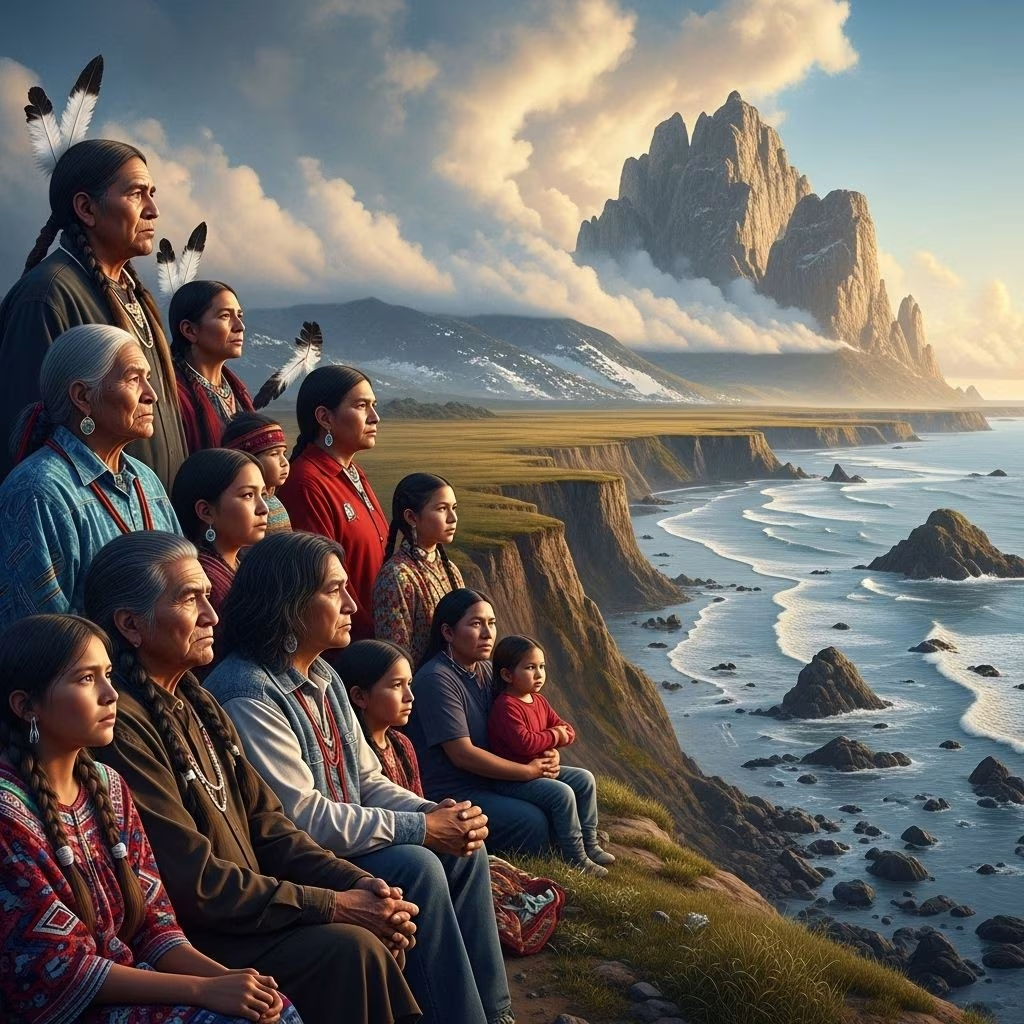
Climate change is reshaping landscapes across the United States, but few American communities have felt its effects more acutely and urgently than Indigenous and tribal nations. The Biden administration has announced a historic wave of federal funding and interagency support aimed at helping vulnerable tribal communities—especially those facing existential threats from rising seas, extreme weather, and coastal erosion—begin the difficult process of relocating to safer ground.
Why Are Tribal Communities at the Forefront?
Native American tribes and Alaska Native villages are located in some of the most environmentally fragile regions. Facing rising sea levels, rapidly eroding coastlines, drought, wildfires, and shifts in traditional food sources, these communities stand to lose not only homes, but cultures, sacred sites, and ways of life intimately tied to the land.
- Alaska Native villages are particularly at risk from coastal erosion, melting permafrost, and increased storms that threaten infrastructure and habitability.
- Tribes in the Pacific Northwest, Southwest, and Gulf Coast endure intensifying droughts, riverine flooding, extreme heat, and wildfires.
According to tribal leaders and federal reports, these shifts mean some communities are at risk of literally being “washed away,” forcing difficult decisions about managed retreat and the future of Indigenous homelands.
Federal Aid: Landmark Funding for Climate Relocation
The rapid advance of climate threats has driven unprecedented levels of federal funding into tribal climate adaptation and relocation programs:
- $135 million committed in November 2022 for 11 severely affected tribal communities, covering states such as Alaska, Arizona, California, Louisiana, Maine, and Washington.
- $120 million announced in 2023 as the largest annual funding yet through the Tribal Climate Resilience Program.
- Sources of funding include the Bipartisan Infrastructure Law, the Inflation Reduction Act, and annual federal appropriations.
The funding aims to support both immediate relocation needs and long-term planning, as well as a wide range of climate adaptation measures.
Types of Federal Grants: Relocation and Planning
- Relocation grants: Target tribal communities ready to undertake the physical relocation of infrastructure and people to safer sites.
- Planning grants: Assist communities in developing strategies for managed retreat, climate risk assessments, and adaptation planning before relocation is necessary.
Demonstration Projects
Three communities were selected for large-scale demonstration relocation grants (each receiving $25 million):
- Newtok Village (Alaska)
- Native Village of Napakiak (Alaska)
- Quinault Indian Nation (Washington)
These initial projects will serve as models for future adaptation and relocation efforts across Indian Country and beyond.
Key Agencies and Partnerships
The U.S. government recognizes that effective relocation and resilience efforts require close coordination between federal, tribal, state, and local entities. Major actors include:
- Department of the Interior: Leads the Voluntary Community-Driven Relocation program and manages large funding streams.
- Federal Emergency Management Administration (FEMA): Supports logistical planning and community-driven responses.
- The Denali Commission: Focused on Alaska, offers infrastructure expertise for remote villages.
- Bureau of Indian Affairs (BIA): Facilitates adaptation planning and grant workshops for tribes applying for aid.
These agencies also established an interagency Community-Driven Relocation (CDR) Subcommittee as part of the White House National Climate Task Force to develop best practices and coordinate funding, legal, and practical supports.
Tribal Sovereignty at the Center
Federal officials—including Interior Secretary Deb Haaland, herself an enrolled member of the Laguna Pueblo—emphasize that relocating tribal communities must always respect tribal sovereignty, treaty rights, and self-determination. Relocation and adaptation efforts will be community-driven and voluntary, with tribal governments leading every stage of planning, decision-making, and implementation.
Environmental Threats Facing Communities
The direct threats compelling relocation and resilience investments include:
- Sea-level rise and coastal erosion—Alaska Native villages must grapple with vanishing coastlines, worsened by thawing permafrost and storm surges.
- Flooding—Increasing riverine floods threaten infrastructure and habitability across the Pacific Northwest, Midwest, and Gulf Coast.
- Wildfires and drought—Tribes in the Southwest and West face longer fire seasons, lower water tables, and depleted traditional food sources.
- Extreme weather events—More frequent storms and unpredictable seasonal changes challenge food gathering, cultural practices, and economic security.
These threats often disproportionately impact Indigenous communities because their lands, economies, and traditions are closely tied to the local environment—and many reservations were established in historically disadvantaged locations.
Economic and Cultural Consequences
- Loss of housing and community infrastructure.
- Threats to sacred sites, burial grounds, and places of spiritual significance.
- Disruption of traditional hunting, fishing, and gathering needed for food sovereignty.
- Potential erosion of language, culture, and identity if forced migration breaks up community cohesion.
The Federal Response: Community-Driven Relocation Program
The Biden-Harris Administration’s climate resilience agenda aims to:
- Safeguard the lives, cultures, and economies of tribal nations.
- Build long-term resilience into tribal infrastructure to withstand ongoing climate impacts.
- Launch demonstration projects to serve as templates for other communities at risk.
The Voluntary Community-Driven Relocation program, as unveiled, coordinates directly with tribal governments to prioritize projects that tackle imminent threats. The program’s broader goals include gathering critical data, developing best practices, and shaping future funding efforts for tribal relocation and resilience.
Relocation: Cost, Complexity, and Challenges
The magnitude of the relocation task is immense—moving entire villages or communities, re-building infrastructure, and re-establishing a sense of place and purpose. A 2020 Bureau of Indian Affairs study estimated that up to $5 billion will be required over the next 50 years for infrastructure needs related to tribal climate relocation.
- Securing land and building new homes, schools, medical clinics, and cultural centers will require sustained funding and partnership.
- Legal and jurisdictional complexities arise in relocating trust lands, water rights, and resource allocations.
- Preserving cultural continuity is key; communities wish to remain intact and maintain relationships with ancestral lands whenever possible.
Programs Helping Tribes Adapt In Place
Not every tribe is seeking to relocate—all are considering a broad toolkit of adaptation strategies:
- Protect-in-place efforts—Investing in infrastructure like seawalls, water management, fire protection, and flood defenses.
- Ocean and coastal management—Learning from traditional ecological knowledge to manage fisheries, shoreline protection, and natural buffers.
- Climate adaptation planning—Developing community emergency response, food sovereignty initiatives, and sustainable resource management.
- Wildland fire and drought mitigation—Harnessing federal, tribal, and technical support to reduce risks.
Accessing Federal Funds: Grant Workshops and Technical Support
To help tribal communities prepare to apply for funds, agencies like the BIA host grant writing workshops and educational webinars, teaching best practices and explaining the nuances of federal grant competitions. An online Climate Resilience Annual Awards Program resource guide also helps tribes identify which programs and agencies match their needs.
Beyond Money: Partnerships and Policy Changes
Funding alone is insufficient—many recent federal actions focus on empowering tribes, restoring sacred lands, and expanding interagency collaboration:
- Historic progress on tribal rights—Including preservation and revitalization of Native languages, restoration of sacred sites, and protection of treaty land.
- New national monuments—Biden’s designation of treasured places like Avi Kwa Ame and restoration of Bears Ears boundaries signals respect for Native heritage.
- Community-driven relocation reports and guides—Sharing lessons learned and templates for other at-risk communities.
Table: Federal Funding for Tribal Climate Relocation (Recent Years)
| Year | Major Program/Funding | Amount | Source |
|---|---|---|---|
| 2022 | Voluntary Community-Driven Relocation grants | $135 million | Infrastructure Law, IRA, Annual Appropriations |
| 2023 | Tribal Climate Resilience Program | $120 million | Bipartisan Infrastructure Law, Inflation Reduction Act |
| 1964–2020 | Projected 50-year relocation needs | $5 billion | Bureau of Indian Affairs study |
Frequently Asked Questions (FAQs)
Q: Why are some tribal communities being relocated?
A: Due to severe environmental threats—including sea-level rise, coastal erosion, flooding, and wildfires—some tribal communities are unable to remain safely on their ancestral homelands without significant risk or loss.
Q: Is relocation mandatory for affected tribes?
A: No. All relocation efforts are voluntary and community-driven, respecting tribal sovereignty and decisions made by tribal governments. Some tribes choose adaptation strategies to stay in place.
Q: How is federal funding helping tribes?
A: The Biden administration has allocated unprecedented funds for planning, adaptation, and direct relocation, supporting infrastructure projects, resilience building, and demonstration initiatives in severely affected communities.
Q: What are the biggest challenges of tribal relocation?
A: The challenges include securing suitable new lands, navigating complex land and treaty laws, preserving cultural heritage, and ensuring communities remain intact through the process.
Q: Is this funding a one-time commitment?
A: No. The initial investment is seen as a down payment, with a long-term strategy and future funding necessary to meet the full scale of need—estimated at $5 billion over 50 years.
The Road Ahead: Building Lasting Resilience
The federal push to support tribal climate relocation is only the start of what will likely be a decades-long effort. Ongoing steps include:
- Expanding interagency collaboration and technical support.
- Updating federal laws to ease land transfers and trust land changes.
- Empowering tribal governments to lead in climate adaptation and cultural preservation.
- Continuing research and data gathering to inform best practices in community-driven relocation.
This unprecedented mobilization illustrates the urgent reality faced by many Indigenous peoples and the high stakes involved in the battle against climate change, not just for land—but for histories, cultures, and the shared American future.
References
- https://climateprogramportal.org/wp-content/uploads/2025/01/A_Division-J—Title-VI—1a.pdf
- https://www.klcc.org/environment/2023-07-19/biden-administration-announces-120m-for-tribes-hit-by-climate-changes-effects
- https://www.presidency.ucsb.edu/documents/fact-sheet-biden-harris-administration-announces-new-actions-and-historic-progress-0
- https://www.delawarenation-nsn.gov/biden-pledges-new-commitments-respect-for-tribal-nations/
- https://earthjustice.org/article/the-biden-administrations-record-on-tribal-rights
- https://www.doi.gov/pressreleases/biden-harris-administration-invests-120-million-help-tribes-build-climate-resilience