


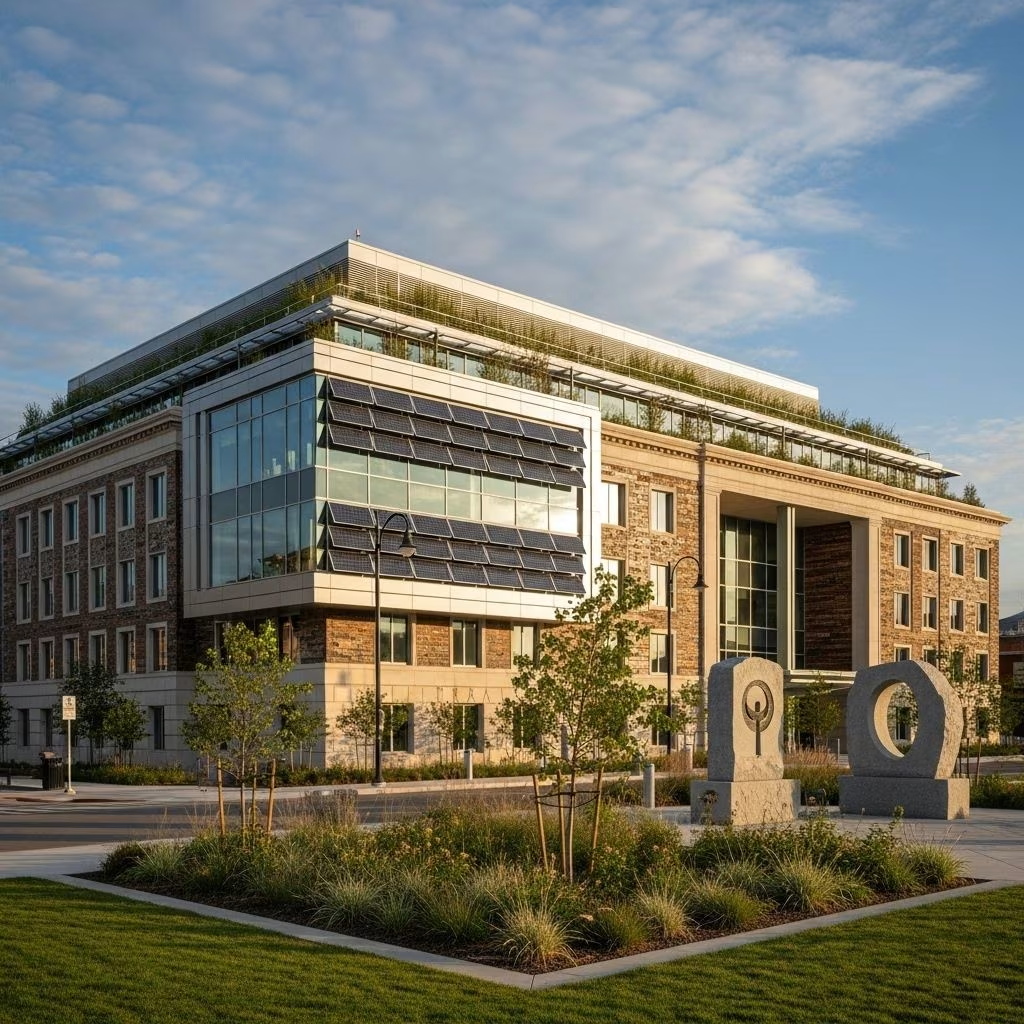
Biden’s Redefinition of Federal Architecture: Promoting Sustainable Design at the Commission of Fine Arts
The Biden administration has signaled a fundamental shift in federal architecture and design with the appointment of new members to the Commission of Fine Arts (CFA)—the government’s influential design review board overseeing Washington D.C.’s monuments, memorials, and federal buildings. This change not only disrupts recent trends in favoring neoclassical forms but also prioritizes sustainability, climate resilience, and diversity in public spaces. As the climate crisis intensifies and demands on the built environment evolve, Biden’s new committee represents both a pivotal opportunity and a test for how federal architecture responds to critical ecological, technological, and social needs.
- Federal Buildings are being positioned as active contributors to climate solutions rather than mere symbols of power.
- Diversity and Sustainability emerge as guiding principles for design review and public works decisions.
- The new composition prompts debate about the future of architectural tradition, landscape stewardship, and national identity.
Why the Commission of Fine Arts Matters
The CFA, established in 1910, holds authority over the appearance and character of much of the nation’s capital. Its decisions affect not only iconic monuments and memorials but also the design standards for federal buildings and landscapes across Washington, D.C.
- Design Review: Approves or modifies proposals for public architecture and memorials.
- Landscape Oversight: Influences the stewardship and evolution of historic parks, green spaces, and the city’s unique landscape legacy.
- Public Symbolism: Sets the visual tone for the national government, affecting how federal power and ideals are perceived through built form.
Under the Trump administration, the CFA shifted toward a rigid preference for neoclassical architecture, reflecting executive orders that emphasized historical styles as synonymous with American ideals. The Biden administration, in contrast, is reframing those ideals to address climate change, inclusion, and innovation—reflecting the urgent need for buildings and landscapes that can adapt and lead toward a carbon-neutral future.
The Climate Imperative: Sustainable Architecture at Center Stage
Jonathan Bean, a sustainable design expert, asserts that rethinking how federal buildings are designed and managed is critical to achieving Biden’s ambitious climate goals—including cutting greenhouse gas emissions by 50% by 2030. Buildings are currently the leading pathway to impact these goals, and incremental changes are no longer sufficient given the short timeline to carbon neutrality.
- Every new building should function as its own power plant, maximizing energy efficiency and integrating renewable energy sources.
- Existing structures, millions in number, require comprehensive retrofits to cut operational emissions and improve climate resilience.
- Regulatory change needs to accelerate beyond the conventional three-year building code cycle to meet climate deadlines.
Achieving these targets requires collective action from architects, engineers, contractors, policy-makers, and especially from bodies like the CFA, which set national standards and expectations for federal property.
From Neoclassicism to Climate-Positive Innovation: Controversies and Perspectives
Not all reactions to Biden’s new committee have been positive. Some experts and advocates express concern that the new appointments may dilute historic landscape expertise, as none of the four proposed commissioners are landscape architects despite the CFA’s significant role in overseeing capital city landscapes. Charles Birnbaum, president of The Cultural Landscape Foundation, highlights the legacy of landscape architects such as Frederick Law Olmsted, Jr., Gilmore Clarke, and Diana Balmori, arguing that landscape stewardship is neglected at a time when climate change and ecological health are pressing concerns.
- Landscape Legacy: Many of Washington’s parks, memorials, and green spaces reflect deep design heritage requiring careful management.
- Lack of Landscape Architects: The new committee’s absence of these specialists signals a potential gap in oversight for climate-adaptive and ecologically sensitive design.
- Architecture vs. Ecology: The debate highlights tensions between aesthetic heritage and the urgent need for sustainable transformation.
Proponents of the committee’s new direction argue that the climate crisis and social inequality demand a fresh approach—one that balances historic integrity with ecological innovation, resilience, and inclusion in public works.
Policy Context: Federal Actions Reflecting the Shift
- Executive Orders: Biden reversed Trump-era mandates prioritizing neoclassical architecture and took steps to promote climate-positive design, public space equity, and expanded representation.
- America the Beautiful Initiative: This agenda commits to conserving 30% of U.S. lands and waters by 2030, re-aligning public land management goals toward climate action and ecological health.
- Federal Building Codes: A push for updated codes and standards accelerates requirements for energy performance, building electrification, and reduced carbon impact.
These moves aim to align the aesthetic, functional, and ecological dimensions of public architecture with pressing climate needs and broader social values.
Training for Climate-Positive Buildings: Preparing the Next Generation
The university’s Climate-Positive Building Lab, as described by Jonathan Bean, exemplifies the educational response needed to achieve federal goals. The training focuses on:
- Teaching emerging architects to design buildings that generate their own power, minimize grid reliance, and respond to local environments for maximum efficiency.
- Ensuring that building professionals understand codes, policy changes, and best practices for future-ready structures.
- Engaging engineers, contractors, and policy-makers alongside architects to drive rapid, collaborative transformation.
Only by integrating climate science, ecological design, and community input into architectural practice can the built environment meet its new responsibilities.
Social Equity and Representation in Federal Design
Biden’s committee pivots toward expanding representation and inclusion in federal design decisions. The CFA’s new members bring diverse backgrounds, expertise in sustainable design, social impact, and urban planning, though the lack of landscape architects remains contentious.
- Federal design impacts communities disproportionately affected by climate change, pollution, and infrastructure neglect.
- Equity-focused design can foster civic pride, promote accessibility, and counteract the systemic inequalities embedded in public works.
- Public participation and transparency in design review are increasing as part of this shift.
Challenges Ahead: Balancing Tradition, Innovation, and Accountability
The transition to sustainable federal architecture faces several obstacles:
- Regulatory inertia: Building codes and standards change slowly, often reflecting established industry practices instead of climate urgency.
- Political polarization: Architectural style and sustainability are sometimes politicized, entangled in debates about national identity or regulation.
- Expertise gaps: Lack of landscape architects on the CFA may risk gaps in ecological knowledge and stewardship.
- Broad buy-in: Fundamental progress requires coordinated action across agencies, professions, and contractors, as well as public support.
Table: Federal Architecture—Neoclassicism Versus Sustainable Design
| Aspect | Neoclassical Focus (Pre-Biden) | Sustainable Focus (Biden Committee) |
|---|---|---|
| Main Values | Historic symbolism, permanence, authority | Climate resilience, innovation, inclusivity |
| Architects Involved | Traditionalists, preservation specialists | Sustainable, social impact, urban planners |
| Landscape Expertise | Legacy landscape architects prominent | Currently lacking landscape architects |
| Policy Alignment | Executive orders favor established styles | Executive orders emphasize climate, equity |
| Main Criticism | Outdated, exclusive, ecologically unaware | Potential gaps in landscape stewardship |
The Role of Public Advocacy and Expert Input
The change in committee membership has galvanized discussions among civic groups, professional organizations, and advocacy coalitions. As design review becomes more interdisciplinary and climate-conscious, stakeholders push for:
- Greater representation of landscape architecture experts on decision-making bodies.
- Broad public input in review processes for major projects affecting communities, ecosystems, and heritage.
- Stronger mechanisms for accountability and transparency in federal design investments.
As the Biden administration’s committee starts its work, public pressure is likely to shape future appointments, priorities, and project evaluations.
Looking Forward: Implications for Cities and Public Spaces Nationwide
The CFA’s decisions set precedent for federal projects far beyond Washington D.C. They influence standards for federal courthouses, agency headquarters, libraries, and parks across the country. If the committee sustains a climate-positive, equity-driven agenda, American cities could see:
- Accelerated retrofitting of existing government buildings for energy and water efficiency.
- Expanded investment in resilient public parks, green infrastructure, and community assets.
- Designs that foreground accessibility, health, and social cohesion alongside aesthetics.
- Stronger support for innovation, local materials, and environmental stewardship at all scales.
Policy and Practical Steps to Advance Sustainable Federal Design
Experts recommend several urgent steps for the federal government:
- Adopt performance-based metrics for energy, emissions, and ecological value in all design reviews.
- Strengthen partnerships with universities, research organizations, and professional societies to support climate education and cross-sector collaboration.
- Ensure future CFA appointments include landscape architects and ecological design expertise to safeguard historic landscapes and ecosystems.
- Encourage transparent, participatory design processes that reflect community needs and environmental realities.
Frequently Asked Questions (FAQ)
Q: What is the Commission of Fine Arts, and why is it important?
A: The CFA is a federal body charged with overseeing the design of public buildings, monuments, and landscapes in Washington, D.C. Its decisions affect the appearance, sustainability, and symbolism of national spaces.
Q: How does Biden’s new committee differ from past ones?
A: The new committee prioritizes sustainable design, climate adaptation, and social equity, departing from previous preferences for neoclassical architecture and emphasizing broader expertise, though currently lacks landscape architects.
Q: What are the major criticisms of the current committee composition?
A: Critics argue that the absence of landscape architects could undermine the stewardship of Washington’s historic parks and gardens, especially as climate change heightens ecological vulnerabilities.
Q: How does federal architecture influence climate action?
A: Buildings are a major source of emissions. Federal design standards and retrofits directly impact energy use, resilience, and climate outcomes nationally.
Q: What steps can be taken to improve federal sustainable design?
A: Leaders advocate adopting ambitious performance metrics, increasing landscape and ecological expertise in decision-making, and involving communities in the design review process.
Conclusion: Navigating the Future of Federal Design
The Biden administration’s reorganization of the Commission of Fine Arts sets a transformative—and contested—new direction for sustainable design in America. Tasked with balancing tradition, climate urgency, and public good, the committee must chart a course that supports national priorities for resilience, inclusion, and ecological health, while respecting the capital’s rich landscape heritage. As cities look to federal leadership for inspiration, the choices made today will shape the public face and environmental impact of government architecture for generations to come.
References
- https://news.arizona.edu/news/sustainable-design-expert-building-youre-sitting-elephant-room
- https://envirodatagov.org/project-2025-department-of-the-interior-annotated/
- https://oversight.house.gov/release/oversight-committee-releases-report-exposing-bidens-green-new-deal-scam-benefitting-democratic-allies/
- https://www.archpaper.com/2024/07/heritage-foundation-project-2025-architects-planners-climate-activists/
- https://www.tclf.org/biden-dumps-committee-favoring-neoclassical-architecture-over-sustainable-design
- https://drupal.nibs.org/news/president-joe-biden-nominates-two-national-institute-building-sciences-board
- https://bidenwhitehouse.archives.gov/briefing-room/presidential-actions/2025/01/14/executive-order-on-advancing-united-states-leadership-in-artificial-intelligence-infrastructure/
- https://www.globalpolicywatch.com/2025/01/blog-post-biden-administration-releases-executive-order-on-ai-infrastructure/


