


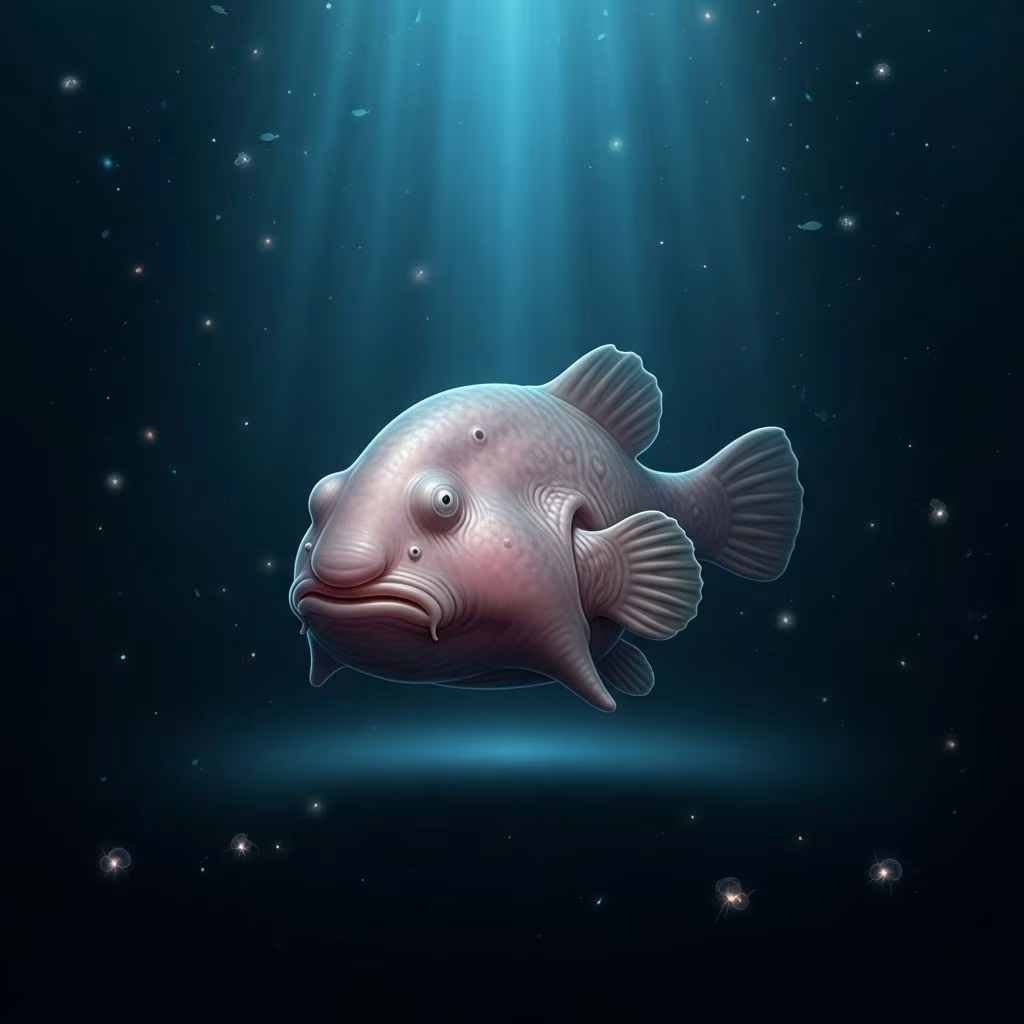
Blobfish: From ‘Ugliest Animal’ to Deep Sea Ambassador
In the shadowy depths of the world’s oceans lives one of the animal kingdom’s most unexpected icons: the blobfish. Once dismissed as an oddity for its gelatinous, drooping appearance, the blobfish has become a household name—thanks largely to the notorious honor of being dubbed the “World’s Ugliest Animal.” However, beneath the viral photos and memes lies a deeper tale of adaptation, misunderstood beauty, and environmental peril facing this peculiar fish.
What Is a Blobfish?
The blobfish refers primarily to Psychrolutes marcidus, a deep-sea fish found off the coasts of Australia and New Zealand, as well as its close relatives, such as Psychrolutes microporos. These fish inhabit depths of 600 to 1,200 meters, where sunlight cannot penetrate and water pressure is up to 120 times greater than at the surface.
- Habitat: Deep waters of the Pacific, Atlantic, and Indian oceans, especially around Australia and New Zealand.
- Appearance: In their natural state, blobfish possess a slightly lumpy, almost nondescript anatomy. Their infamous squishy look only appears when brought to the surface (see Misunderstood Appearance).
Biology & Adaptations
The blobfish’s anatomy is a marvel of adaptation to the crushing pressures of the deep sea. Unlike most fish that rely on gas bladders for buoyancy, blobfish are largely gelatinous with bodies less dense than water. This remarkable structure allows them to hover just above the ocean floor with little energy expenditure.
- Jelly-like flesh: Maintains buoyancy in deep water.
- Lie-in-wait predator: Blobfish spend most of their time motionless, ready to consume passing mollusks, crustaceans, and organic particles—maximizing energy conservation.
- Slow growth and long lifespan: As is common among deep-sea fish, blobfish likely mature slowly and may live for decades.
The Blobfish’s “Ugly” Reputation: Misunderstood Above Water
The blobfish’s notoriety exploded in 2013, when it was voted the “World’s Ugliest Animal” in a competition held by the Ugly Animal Preservation Society. This distinction wasn’t only about appearance—it was a campaign to highlight often-overlooked species that play vital roles in their ecosystems but are overshadowed by charismatic wildlife.
- Why is it so ‘ugly’? The appearance most people recognize is the result of rapid depressurization. When hauled to the surface, the blobfish’s delicate tissue expands and collapses, turning it into the infamous gelatinous mass. In its natural habitat, it looks more like a typical fish.
- Mascot for the overlooked: The blobfish’s popularity helped spark conversations about conservation efforts for less conventionally attractive species and raised its profile as an environmental ambassador.
Are Blobfish Endangered?
Blobfish are not currently classified as endangered on the IUCN Red List. However, this lack of formal recognition stems largely from the enormous difficulty of studying animals that live at such profound oceanic depths, rather than a lack of concern for their wellbeing. Most conservationists, deep-sea biologists, and marine organizations agree that significant threats loom over blobfish populations.
- Unknown numbers: Precise population data is unavailable due to the inaccessibility of their habitat and limited direct observations.
- Assigned as ‘vulnerable’: Many conservation groups now consider blobfish – along with much of New Zealand’s deep sea fauna – as vulnerable.
Threats to the Blobfish’s Survival
- Bottom trawling: The gravest direct threat is deep-sea bottom trawling. Fishing vessels targeting species like orange roughy and other economically valuable deep-sea fish drag heavy nets across the seabed, which incidentally capture blobfish. Because blobfish mature slowly and are likely to be long-lived, their populations recover extremely slowly from any losses.
- Climate change: As cold-water specialists, blobfish are at risk from sea temperature increases and ocean acidification, both of which threaten to destabilize their already fragile ecosystem.
- Collateral damage: The blobfish is often unintentionally caught as bycatch during trawling for other deep-sea species like orange roughy – another species under significant population strain.
Conservation Efforts and Public Awareness
The blobfish’s strange popularity has had an upside for conservation:
- Symbol of overlooked animals: The blobfish’s fame made it a mascot for lesser-loved animals, which has helped shift public and scientific focus toward preserving whole ecosystems, not just photogenic species.
- Conservation campaigns: Contests like New Zealand’s Fish of the Year have brought renewed attention to the challenges faced by deep-sea creatures, with the blobfish emerging as the 2025 winner thanks to passionate public support.
- Education and advocacy: Environmental groups use the blobfish’s story to warn about the devastating ecological impact of bottom trawling and the necessity of more robust protection for vulnerable marine habitats.
Blobfish Wins Fish of the Year 2025
In 2025, the blobfish triumphed in New Zealand’s high-profile Fish of the Year competition, highlighting its role as both a conservation icon and an ecological underdog:
- Received 1,286 votes, surpassing the orange roughy by nearly 300 votes.
- Competition aims: To raise awareness about the beauty and struggles of native fish species and encourage protection for threatened marine environments.
| Rank | Species | Votes | Status |
|---|---|---|---|
| 1 | Blobfish | 1,286 | Vulnerable (est.) |
| 2 | Orange roughy | 1,009 | Endangered |
| 3 | Longfin eel / Tuna | 646 | Endangered |
| 4 | Whale shark | 596 | Vulnerable |
| 5 | Big-bellied seahorse | 386 | Vulnerable |
| 6 | Great white shark | 344 | Vulnerable |
| 7 | Lamprey | 312 | Near threatened |
| 8 | Spine-tailed devil ray | 284 | Vulnerable |
| 9 | Basking shark | 280 | Endangered |
| 10 | Blue cod | 260 | Least concern |
Ecological Role of the Blobfish
Though it may appear unremarkable, the blobfish fills an important ecological niche as a “lie-in-wait” predator. By consuming invertebrates and organic matter, it contributes to the delicate balance of the deep-sea food web. Its abundance (or scarcity) may influence the populations of species lower in the food chain and reflect the health of the benthic ecosystem overall.
The Challenge of Deep-Sea Conservation
Protecting the blobfish underscores the broader challenges of deep-sea conservation:
- Lack of research access: Extreme depth, pressure, and darkness make field studies costly and technologically demanding.
- Data deficiency: Most deep-sea animals are difficult to monitor, so decline or extinction events may go unnoticed for years.
- Slow recovery: Deep-sea species often take decades or more to recover population losses due to their long maturation rates.
What Can Be Done?
- Regulating bottom trawling: Limiting or banning destructive fishing practices in key deep-water habitats would eliminate major threats to blobfish and countless other deep-sea life forms.
- Marine protected areas: Expanding deep-sea reserves can safeguard entire ecosystems, allowing vulnerable species a chance to rebound.
- Continued scientific research: Funding remote submersibles, genetic surveys, and population assessments will improve our understanding and enable evidence-based conservation policy.
- Education and advocacy: Leveraging the cultural popularity of the blobfish can help shift public opinion, mobilize resources, and pressure governments for action.
Frequently Asked Questions (FAQs)
Q: Why does the blobfish look so ugly when brought to the surface?
A: Its ‘ugly’ appearance is due to rapid depressurization. In the deep sea, blobfish are maintained by immense pressure; at the surface, their bodies lose structure, giving them a gelatinous, droopy look not seen in their normal habitat.
Q: Is the blobfish endangered?
A: It is not officially listed as endangered due to a lack of precise data, but marine biologists consider it vulnerable. Deep-sea trawling and climate change threaten their already limited populations.
Q: How long do blobfish live?
A: While precise lifespans are unknown, deep-sea fish typically mature slowly and can live for many decades, potentially over 100 years in some related species.
Q: What do blobfish eat?
A: Blobfish are opportunistic predators and scavengers, consuming mollusks, crustaceans, and organic matter drifting from above.
Q: How do blobfish reproduce?
A: Blobfish gather to spawn and lay large clutches of eggs (up to 100,000 per nest). Parents remain near the nest to protect developing young.
Q: How can people help protect blobfish?
A: Supporting sustainable seafood choices, advocating for marine protected areas, and raising awareness about the impact of industrial fishing all help protect blobfish and their habitat.
Blobfish: The Face—and Fate—of the Deep Sea
The blobfish’s journey—from a rarely seen deep-sea resident to a viral sensation and unlikely symbol for conservation—reflects the complex relationship humans have with marine life. Though mocked for its looks, the blobfish has brought crucial attention to the need for greater stewardship of the world’s most mysterious habitats. The real risk for the blobfish is not being ugly, but being pushed into oblivion by human activities before we truly understand its role in our ocean’s future.
References
- https://www.aol.com/blobfish-remarkable-comeback-story-world-122712052.html
- https://www.times.co.nz/news/environment/blobfish-crowned-fish-of-the-year-2025/
- https://www.sciencefocus.com/nature/the-blobfish-a-bloated-guide-to-the-worlds-ugliest-animal
- https://www.usatoday.com/story/news/world/2025/03/19/blobfish-worlds-ugliest-animal-fish-of-the-year/82541938007/
- https://endangeredtigers.org/blobfish-conservation-hero/


