Can Nexii Building Solutions Save the Planet?
The built environment is responsible for a staggering portion of global carbon emissions, waste, and resource depletion. Green construction company Nexii Building Solutions has set out to change this narrative by reimagining how we design and assemble buildings. By introducing remarkably fast, low-waste, and low-carbon construction materials and processes, Nexii aims not only to lessen the environmental footprint of the construction sector, but also to demonstrate a new path forward for an industry facing urgent pressure to decarbonize.
This article explores the origins, technologies, sustainability claims, industry challenges, and future prospects for Nexii, critically examining if its innovations can truly catalyze a global shift in green building.
Introduction: Why Green Construction Matters
The construction industry is a leading generator of carbon emissions and waste worldwide. Cement alone is responsible for more than 2 billion tons of CO2 annually. The sector must tackle both embodied carbon (from material production and construction) and operational carbon (from energy use in buildings) in order to meet climate targets. Innovative solutions are critical—ones that reduce material intensity, energy use, and waste, while speeding construction and making high-performance building affordable and scalable.
The Nexii Story: From Invention to Industry Disruption
Nexii Building Solutions, founded in 2019 by brothers Ben and Michael Dombowsky, emerged from decades of frustration with the inefficiency, waste, and environmental impact endemic to conventional construction. Michael, an inventor, began experimenting with alternative building materials and assembly methods years before sustainability became a mainstream priority.
Through these pursuits, the Dombowsky brothers developed a new approach: a patented system centered around a proprietary building material, Nexiite, and prefabricated wall and roof panels. When serial entrepreneur Stephen Sidwell joined as CEO, Nexii rapidly expanded, reflecting both an urgent demand for green construction and investor enthusiasm for planet-saving innovation.
Nexii quickly reached ‘unicorn’ status, drawing investments, partnerships with industry giants, and high-profile projects across North America.
Key milestones in Nexii’s growth:
- Became the fastest Canadian company on record to hit a $2 billion valuation
- Brought to market by major brands including Walmart, Popeyes, Starbucks, Scotiabank, and Marriott
- Achieved B Corp certification, a North American first in manufacturing for its sector
Inside Nexiite: What Makes This Material Revolutionary?
The heart of Nexii’s system is Nexiite, a proprietary, patent-protected alternative to traditional concrete. Concrete, the world’s second most consumed resource after water, is highly carbon-intensive, requires significant energy to produce, and is a principal culprit in construction waste and emissions.
Nexiite is produced using a lower-carbon formulation and incorporates supplementary materials that lighten its footprint. Although closely guarded by the company, public disclosures indicate several distinguishing features:
- Much lower embodied carbon than concrete, reducing lifecycle emissions
- Exceptional strength-to-weight ratio, enabling thinner, lighter panels
- Greater durability and fire, water, and pest resistance
- No harmful off-gassing toxins—improving indoor air quality
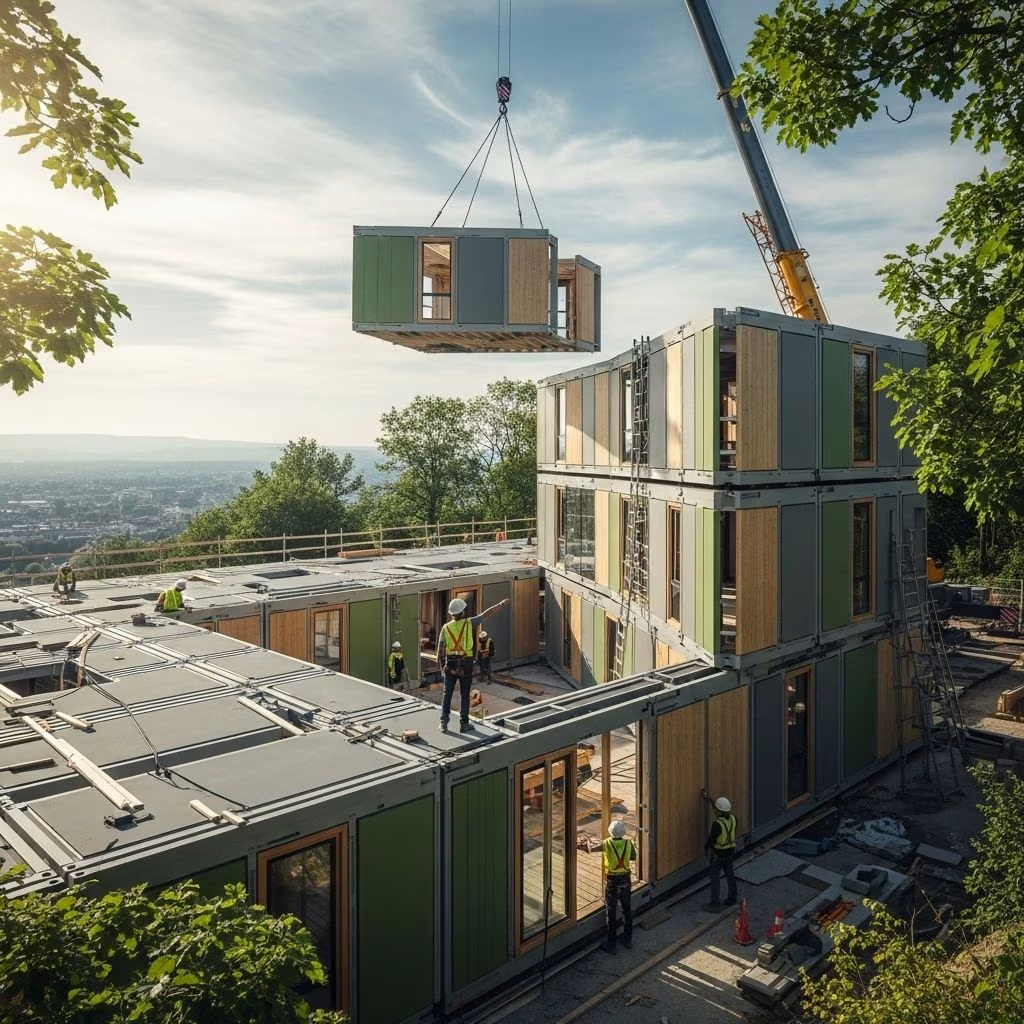
How do Nexii panels work? They are manufactured offsite in controlled facilities, combining Nexiite with layers of insulation, steel reinforcement, and protective finishes. The panels are delivered finished and ready to install, enabling fast, precise, and less disruptive assembly on-site. This optimizes both quality control and material use.
Rapid Assembly: Speed, Efficiency, and Low Waste
Speed is central to Nexii’s advantage. Conventional construction is notoriously inefficient, often subject to delays, cost overruns, and project site waste generation. Nexii claims to cut on-site build times by up to 75% compared to traditional methods, a transformative leap for developers with tight schedules and budgets.
This is accomplished through:
- Precision prefabrication: Major building elements are made at Nexii plants, with minimal waste
- Just-in-time logistics, which ensure panels arrive as needed
- Rapid onsite assembly, with panels designed for “plug-and-play” connection
- Elimination of many sequential trades, reducing project complexity and error
The result is less material waste (often near zero at the build site), less noise and disruption for communities, and faster occupancy—key benefits for both developers and tenants.
Nexii vs. Traditional Concrete: Key Environmental Metrics
| Aspect | Nexii (Nexiite Panels) | Traditional Concrete |
|---|---|---|
| Embodied Carbon | ≈ 33% less | High (cement production is carbon-intensive) |
| Build Speed | Up to 5x faster assembly | Often slow, subject to delays |
| Onsite Waste | Near zero | High (cutting, rework, packaging waste) |
| Operational Energy Use | Up to 30% less energy consumption | Dependent on design and insulation; often less efficient |
| Toxins Off-Gassed | None claimed | Possible, depending on additives and materials |
Collaborations and Industry Influence
To drive adoption and spur further innovation, Nexii has formed partnerships with several global technology leaders through its Integrated Technology Partnership (ITP) program, including:
- Honeywell
- Siemens
- Trane Technologies
- Pella (windows and building products)
- Solar Earth (solar panels)
These alliances not only support the development of specialties such as ultra-efficient windows and integrated solar solutions, but also reinforce Nexii’s vision of net-positive buildings: structures that produce more energy than they consume, all while minimizing material consumption and waste.
Nexii-built structures are now occupied by brands such as:
- Popeyes
- Starbucks
- Walmart
- Marriott
- Scotiabank
- Applegreen
Sustainability Commitments and Third-Party Validation
Sustainability is at the core of Nexii’s identity. The company is a member of both the Canadian and U.S. Green Building Councils and has:
- Set targets to power all operations with 100% renewable energy by 2025
- Committed to net zero operational emissions by 2030, including major renovations and new developments
- Annually reports on energy use, carbon emissions, and impact
- Invests in ongoing improvements to the lifecycle carbon of its products
Its B Corp status signals a verified dedication to environmental performance, transparency, and social responsibility not common in heavy industry. However, external scrutiny and performance data over time will be necessary to confirm Nexii’s climate impact at scale.
Challenges: Can Nexii’s Solutions Scale?
No innovation is immune from scrutiny or risk. As Nexii’s story illustrates, the leap from promising tech to global scale is daunting, especially for capital-intensive industries like construction. At its height, Nexii operated three major factories and a workforce of over 400. Yet rapid expansion— paired with the cost and complexity of manufacturing—led to overextension.
Adapting to market realities, Nexii has since streamlined operations, re-engineered production, and focused strategically on high-value partnerships and performance delivery. Recent relaunch efforts aim for sustainable growth, but the company’s journey offers cautionary lessons on the razor-thin margins and risk exposure facing disruptive manufacturing startups.
Obstacles to Industry Transformation
- Capital Intensity & Risk: Building and operating manufacturing plants is costly and complex, with failure to scale jeopardizing viability.
- Market Adoption: Shifting entrenched industry practices takes time and sustained demonstration of value.
- Lifecycle Assessments: Independent third-party validation of emissions and performance claims is crucial for credibility.
- Policy & Regulation: Widespread adoption often depends on building codes, procurement rules, and customer incentives aligning with new technologies.
The Future: Moving Towards Net Positive Building
Nexii’s leadership argues that only by reimagining every aspect of construction—from material innovation, prefabrication, and supply chains to energy, circularity, and building design—can we achieve a world of net positive buildings.
With continued innovation, strong industry partnerships, and transparent reporting, prefab modular building systems like Nexii’s could sharply lower the sector’s environmental burdens and set new standards. If it succeeds at larger scale, Nexii has the potential to:
- Significantly cut both embodied and operational carbon emissions across the built environment
- Reduce construction waste to near-zero and minimize site disruption
- Enable more rapid, affordable rollout of high-performance building stock worldwide
Frequently Asked Questions (FAQs)
Q: What is Nexiite and how is it different from concrete?
A: Nexiite is a proprietary, low-carbon building material engineered by Nexii to provide the strength and versatility of concrete but with significantly reduced embodied carbon and weight. It’s paired with prefabricated insulated panels for faster, greener construction.
Q: How much faster is Nexii construction compared to traditional building methods?
A: Nexii claims construction projects can be completed up to five times faster than with conventional methods, thanks to factory manufacturing and rapid onsite assembly of custom-designed panels.
Q: What environmental benefits does Nexii claim for its buildings?
A: Nexii’s buildings reportedly offer up to 33% lower embodied carbon, 30% less operational energy consumption, and near-zero construction waste compared to standard buildings—all while eliminating toxins and off-gassing commonly associated with building materials.
Q: Has Nexii’s approach been independently verified?
A: Nexii is a B Corp and member of Green Building Councils, providing third-party validation of its sustainability practices. Annual reporting, partnerships, and public disclosures add scrutiny, but widespread third-party lifecycle assessments and long-term data are still needed for independent verification at global scale.
Q: Can Nexii’s technology be used for residential homes?
A: Yes, Nexii’s panel systems are being adapted for a range of building types, including residential, commercial, industrial, and even infrastructure such as EV charging stations. The focus is currently on projects that benefit most from rapid, low-carbon assembly.
Conclusion
Construction’s climate impact is enormous, and meaningful solutions must address resource efficiency, speed, and emissions simultaneously. Nexii Building Solutions, through its unique Nexiite panels and rapid assembly methods, presents a compelling, science-backed contender for a lower-carbon built environment. As the industry evolves, the critical question will be whether Nexii and similar innovators can overcome scaling barriers and lead the urgent transformation construction so badly needs.
References
- https://www.nexii.com/about
- https://carbonleadershipforum.org/nexii-offsite-construction-rapid-assembly/
- https://worldgbc.org/signatory/nexii/
- https://construction-today.com/news/nexii-building-solutions-a-guide-to-green-building-breakthroughs/
- https://bricks-bytes.com/startups/nexii-construction-tech-unicorns-fall-and-potential-resurrection/
- https://www.nexii.com
- https://www.nexii.com/resource/2024-nexii-corporate-overview
- https://www.zoominfo.com/c/nexii/348458721