


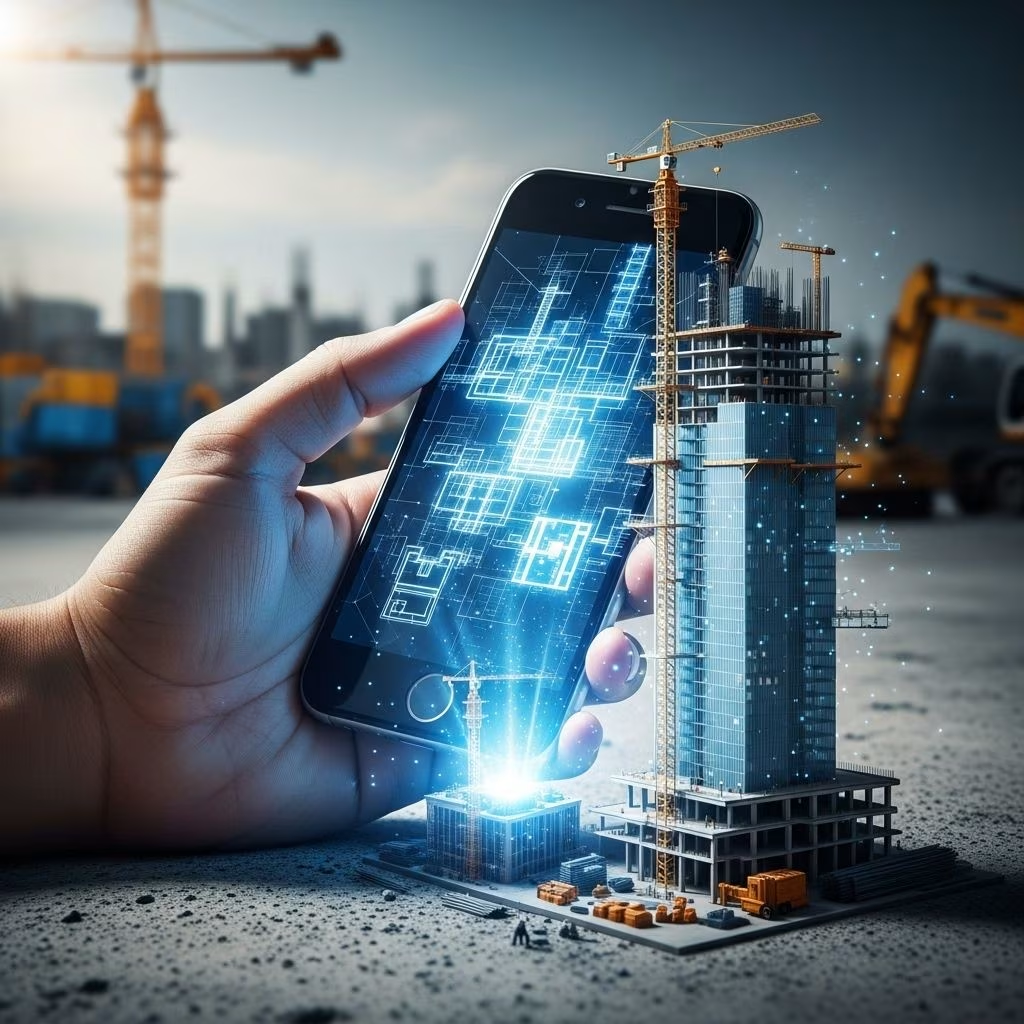
Can You Really Build a Building With Just an iPhone?
With the pervasive role of smartphones in our lives and Apple’s bold marketing about the power, intelligence, and environmental ethos behind the iPhone, a curious question emerges: Could you actually build a building with just an iPhone? The idea seems both whimsical and illustrative of bigger questions around materials, energy, and the intersection of technology and sustainability.
This article explores the feasibility, the science, and the environmental consequences of replacing the raw materials, traditional tools, and specialized know-how of construction with the resources found in a single iPhone. It also investigates whether our phones can—or should—play a deeper role in redefining sustainable building practices.
What Is a Building — and What Is an iPhone?
To address the core question, we first need to clarify what constitutes a building and what comprises an iPhone:
- Buildings are structures made for shelter or use, typically composed of concrete, wood, steel, glass, insulation, wiring, and plumbing. They serve practical and structural purposes over many decades or even centuries.
- The iPhone is a highly miniaturized device engineered for communication, computation, and entertainment. It is made up of a complex mix of metals (aluminum, copper, gold, silver, rare earths), glass, specialized plastics, and microelectronic components.
While an iPhone is tangibly a piece of physical hardware, it is not readily equipped to substitute for the bulk, strength, or flexibility needed in construction materials.
On a Material Level: The Limits of Smartphone Ingredients
The iPhone contains a fascinating array of advanced materials, many of which are more valuable per gram than almost anything in a typical building. However, consider the following limitations:
- Aluminum is a crucial structural metal used in both iPhones and buildings. In the iPhone, aluminum forms a thin shell or body, amounting to just a few tens of grams—not enough for any substantial support beam or frame.
- Glass, in the form of Corning’s specialized Gorilla Glass, covers the iPhone’s display. This high-strength glass is chemically toughened, but not engineered for the size, thickness, and insulation requirements of windows—or structural panels.
- Copper, gold, and silver exist in minuscule quantities. They facilitate fast data transfer and reliable electrical contacts within the device, but would offer negligible contribution to the massive wiring systems in a modern building.
- Rare earth elements are important for magnets, speakers, and display technology, but are present in trace amounts nowhere near building scale quantities.
- Plastic and adhesives are used for sealing, insulation, and micro-assemblies in the iPhone. They are intricately manufactured and would be impossible to re-purpose as insulation, weather barriers, or structural supports without complete reprocessing.
Conclusion: While the iPhone is a marvel of material science, there is no way to physically construct a meaningful structure using just one device—or even hundreds, unless melted and reprocessed extensively. Even then, the tiny total material mass falls far short of what is required.
From Hardware to Software: The iPhone as a Tool, Not a Material
If deconstructing an iPhone won’t yield enough building material, could the device still play a pivotal role in the act of building itself? Here the story gets more interesting:
- Design and Planning: Modern architectural CAD and BIM (Building Information Modeling) apps enable site modeling, floor planning, and visualization on smartphones. The iPhone can connect professionals globally and streamline the conceptual stages of a project.
- Site Measurement and Analysis: With augmented reality (AR), LIDAR-equipped iPhones can scan real-world spaces, assess environmental factors, and measure dimensions to remarkable accuracy. Surveyors and architects employ these features for feasibility studies and rapid prototyping.
- Project Management and Logistics: Scheduling, procurement, delivery tracking, and communication are all handled seamlessly on mobile devices, drastically improving efficiency and accountability on construction sites.
- Sustainability Tracking: Specialized apps can monitor energy use, optimize building orientation for sunlight, and track embodied carbon—tools inconceivable without the computing and sensing power of a modern smartphone.
Thus, while you can’t substitute iPhone parts for beams or bricks, the collective intelligence and communication that one iPhone enables may drive smarter, greener construction outcomes—with profound influence on what gets built, how, and at what cost to the planet.
Sourcing the Resources: Environmental Impact of iPhone Materials
When we ponder using just an iPhone to build something, it invites discussion of not just possibility, but sustainability:
- Mining and Extraction: The metals and rare elements in each iPhone require intensive mining, often in ecologically sensitive areas. Extracting and refining these materials can be highly polluting and energy-intensive, contributing to habitat loss and toxic waste.
- Energy Use: Manufacturing a single smartphone demands energy to refine metals, produce glass, and assemble parts. Even though Apple touts renewable energy use in final assembly, much of the supply chain remains dependent on fossil fuels—meaning each phone has a significant carbon and resource footprint.
- End-of-Life and Recycling: E-waste is one of the fastest-growing waste streams. Apple has introduced recycling initiatives, but dismantling and recovering rare metals from old phones remains a major challenge. Many components, especially plastics, persist in landfills or are improperly recycled, raising contamination risks.
- Apple’s Response: Apple has started using more recycled materials. For instance, the Taptic Engine in the iPhone 11 uses 100% recycled rare earth elements. Yet, this is only a fraction of the total rare earths in a product, marking incremental but insufficient progress toward true resource circularity.
| Material | Typical Use in iPhone | Environmental Concern |
|---|---|---|
| Aluminum | Chassis, body | High energy to refine, carbon emissions |
| Glass | Display cover | Silica mining, chemical waste |
| Rare earth elements | Magnets, display, haptics | Intensive extraction, toxic byproducts |
| Copper, gold, silver | Circuitry, connectors | Scarcity, mining pollution |
Attempting to amass the materials in enough iPhones to build even a simple shed would escalate these environmental impacts dramatically—a cautionary tale in resource limits and sustainability.
Packaging Innovation: Setting the Example for Sustainable Materials
Apple’s recent packaging redesign for the iPhone 16 Pro and 16 Pro Max offers a real-world example of how tech companies can demonstrate environmental responsibility in materials management:
- Plastic-Free Packaging: Apple transitioned to 100% fiber-based packaging for its latest iPhones, nearly eliminating plastics with the exception of minor amounts in inks and adhesives. The wood fiber is sourced from recycled or responsibly managed forests, combining end-of-life recyclability with biodiversity benefits and promoting carbon capture.
- Reduced Shipping Footprint: By making its packaging more compact (6% reduction in box volume), Apple can ship significantly more units per pallet, decreasing the per-phone transportation carbon footprint by about 3%.
- Indirect Environmental Impact: These steps set a higher bar for the industry and illustrate that even incremental design changes in accessories and packaging can yield outsized reductions in resource consumption and emissions.
While product packaging is a small part of the total environmental picture, Apple’s move demonstrates how rethinking materials on a global scale helps shift entrenched industry norms.
Technology and Nature: Can the iPhone Help Restore, Not Just Extract?
Amidst the extractive impacts, some forward-looking uses truly point toward technology as a restorative force:
- Forestry and Conservation: Apple is investing in ecosystem restoration, such as supporting the regrowth of the Atlantic Forest in Brazil. By using the iPhone’s LIDAR and image processing, forestry workers map, monitor, and track restoration with high precision—optimizing seed planting and verifying carbon sequestration.
- Remote Environmental Sensing: Smartphones with advanced sensors and internet connectivity provide real-time monitoring of weather, air quality, and environmental conditions—aiding both research and rapid response to hazards.
- Education and Transparency: Apple and other industry leaders have emphasized transparent disclosure of environmental impacts—challenging themselves to accelerate renewable energy sourcing, closed-loop materials management, and support for conservation partners.
If the iPhone can’t literally become a building, it might still make a powerful difference in how and why we build, promoting less harmful supply chains, greener urban designs, and more responsible materials use worldwide.
Frequently Asked Questions (FAQs)
Q: Why can’t you simply use iPhones as construction material?
A: The total mass, structure, and properties of iPhones are unsuitable for even the simplest building components. Their advanced parts cannot provide strength, insulation, or volume needed for construction.
Q: What environmental issues are associated with smartphone production?
A: Smartphone production is energy-intensive, involves extraction of scarce metals from sensitive regions, and generates e-waste. Even with improvements, recycling rates remain low and resource use high.
Q: How does Apple address these concerns?
A: Apple commits to renewable energy in assembly, increases recycled content (e.g., rare earths), and pioneers sustainable packaging. However, the majority of raw material extraction and some supply chain stages remain carbon-intensive.
Q: Can iPhones make construction greener?
A: Not as raw materials, but as powerful digital tools for design, measurement, management, and monitoring, iPhones help find efficiencies and minimize environmental impact in building processes.
Q: What could a truly sustainable tech device look like?
A: Ideal future devices would use only renewable or recycled materials, be powered and manufactured with clean energy, support complete circularity, and actively contribute to restoration projects—benchmarks the industry is only beginning to frame.
Final Thoughts: Lessons for a Circular, Tech-Driven Future
The idea of literally erecting walls and rafters from iPhone scraps is physically and environmentally preposterous. But perhaps what matters most is how the iPhone exemplifies both the promise and peril of applying advanced resources and intelligence to our built environment:
- We must acknowledge the environmental limits of high-tech devices and campaign for true resource circularity—minimizing mining and maximizing recoverability.
- Global companies like Apple are uniquely positioned to shift the supply chain by demanding higher sustainability standards, more recycled content, and transparent reporting.
- As smartphones become essential tools of environmental monitoring and management, their positive leverage in smarter, greener cities grows.
So, while you can’t build a building with just your phone, you might use your phone to help build a future that preserves what matters most—a healthy, sustainable Earth.
References
- https://www.youtube.com/watch?v=1OjlzJ8v9CA
- https://www.plasticsengineering.org/2024/11/apples-new-iphone-packaging-a-sustainable-shift-007289/
- https://www.youtube.com/watch?v=LRDJU8VjL8k&vl=en
- https://www.faronics.com/news/blog/is-the-iphone-5-a-green-device
- https://www.apple.com/environment/pdf/Apple_Environmental_Progress_Report_2025.pdf


