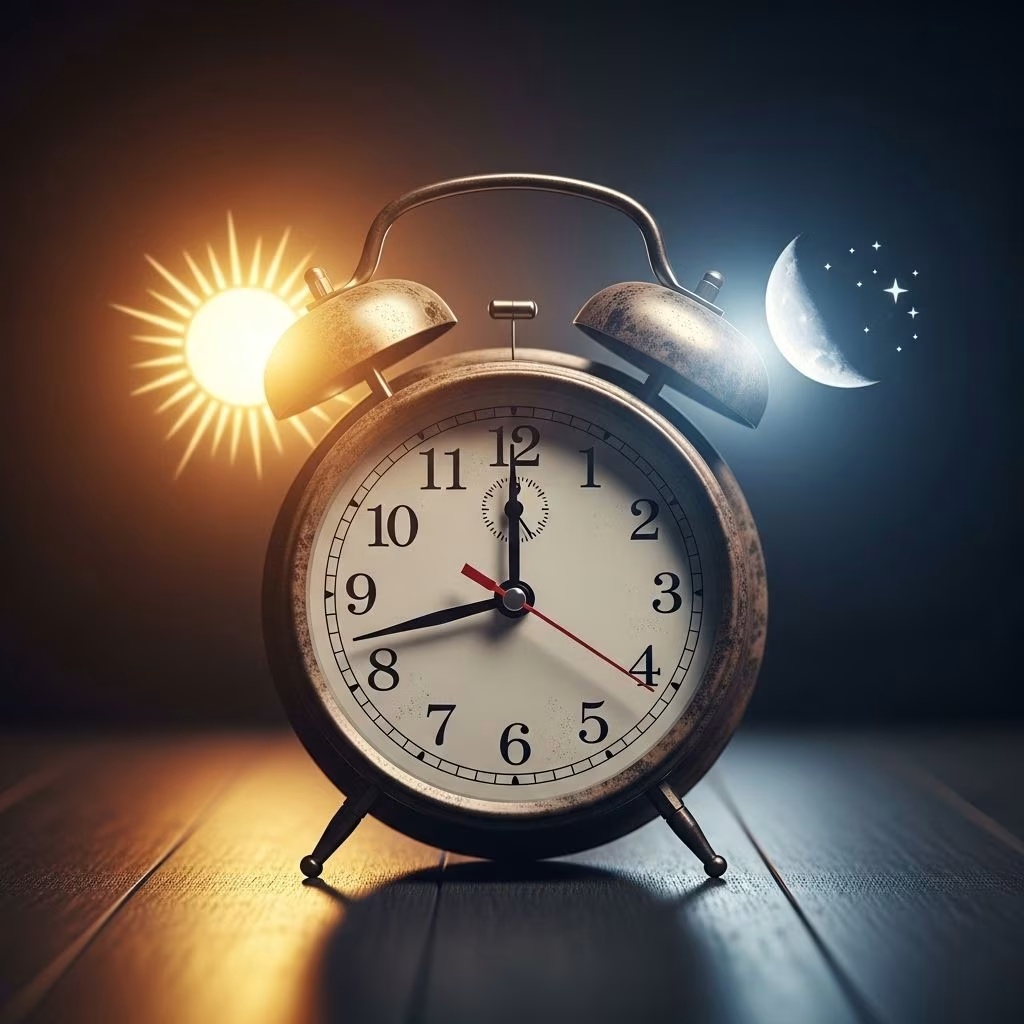
Why the Daylight Saving Time Debate Still Isn’t Settled
The practice of moving clocks forward and backward each year remains a source of persistent controversy in the United States and around the globe. The debate over whether to stick with daylight saving time (DST), adopt permanent standard time, or simply leave clocks alone has intensified in recent years as lawmakers, health experts, and the public weigh the benefits and drawbacks. This article explores the origins, societal impacts, health and economic concerns, and legislative battles that keep the time-change issue unresolved.
How Did Daylight Saving Time Start?
Daylight saving time first gained a popular foothold during World War I, as countries sought to conserve energy by extending evening daylight hours. The United States adopted the practice nationally during both World Wars, but it wasn’t until the Uniform Time Act of 1966 that DST became a standardized, recurring part of American life. The law mandated coordinated start and end dates for states that chose to observe the practice, but granted states the ability to opt out, resulting in a patchwork of time observance across the nation.
Currently, most of the United States begins daylight saving in March (“springing forward”) and reverts to standard time in November (“falling back”). However, states like Arizona (except the Navajo Nation) and Hawaii, along with several U.S. territories, continue to opt out of DST altogether.
Notable Points:
- Daylight saving time was initially introduced to reduce energy consumption.
- The Uniform Time Act of 1966 established a unified framework for DST in the U.S., allowing states to individually opt out.
- Recent years have seen federal and state calls to eliminate these twice-annual clock shifts, though little consensus exists.
Recent DST Dates in the U.S.:
| Year | Start | End |
|---|---|---|
| 2022 | March 13 | November 6 |
| 2023 | March 12 | November 5 |
| 2024 | March 10 | November 3 |
| 2025 | March 9 | November 2 |
The Push for Permanent Time
Calls for reform have grown louder in the 21st century, as critics from both scientific and business communities question whether the original energy-saving purpose of DST holds true today. Critics argue that the disruption caused by changing clocks each spring and fall causes more harm than good, impacting well-being, economic productivity, and health. Legislators have responded with a wave of proposals—some to make daylight saving time permanent year-round, others advocating a return to permanent standard time.
In March 2022, the U.S. Senate passed the Sunshine Protection Act, which would have locked the nation into daylight saving time year-round—but the measure stalled in the House and did not become law. This legislative impasse reflects a deeper lack of consensus among states and stakeholders: while some regions prefer the longer evening daylight of DST, others cite the value of standard time for maintaining natural circadian rhythms and morning light for children heading to school.
Arguments for Permanent DST:
- More daylight in evening hours, supporting outdoor activities and retail.
- Potential reduction in traffic accidents due to lighter evenings.
- Public support in some regions for longer, brighter evenings.
Arguments for Permanent Standard Time:
- Aligns better with sunrise, benefiting sleep health and children’s school routines.
- Supported by many health organizations and sleep researchers.
- Less disruption to circadian rhythms, potentially improving overall wellbeing.
How Does the Clock Change Affect Health?
A growing body of research highlights the health risks associated with the twice-yearly shift in time. According to health experts, especially those specializing in sleep and public health, even a one-hour change to our schedule can trigger negative consequences, particularly during the “spring forward” to DST:
- Disrupted sleep patterns: The sudden shift leads to sleep deprivation and misalignment between the body’s internal clock and the external environment.
- Increased risk of heart problems: Studies have identified a spike in heart attacks in the days following the switch to daylight saving time.
- Mental health impacts: The clock change is linked with increased feelings of fatigue, time stress, and a general decline in well-being.
- Economic productivity: The fatigue and reduced alertness following clock changes are associated with a temporary dip in workforce productivity, and increased accidents.
Though proponents point to minor benefits—such as reduced crime in well-lit evenings and increased commercial activity—the evidence for significant health advantages to DST is thin compared to the documented risks of the biannual transition.
Who Benefits from DST, and Who Loses?
The practical effects of daylight saving time are not distributed equally throughout the year or among different populations. Key factors influencing whether DST is helpful or harmful include geographic location, demographic variables (children, shift workers, older adults), and lifestyle.
Groups that may benefit from DST:
- Retailers and the tourism industry: Longer evenings can drive spending and recreational activities.
- Outdoor enthusiasts: Evening daylight extends opportunities for after-work exercise and leisure.
- Some adults: Many people prefer getting home from work while it is still light outside.
Groups that may be negatively affected:
- Children and students: Dark mornings can complicate school schedules and safety.
- People with pre-existing health conditions: Susceptibility to sleep deprivation, mood changes, and cardiovascular incidents.
- Shift workers: May experience pronounced physiological impacts due to misaligned social and biological clocks.
Why States Struggle to Pick a Time
Despite widespread criticism of the time-change ritual, shifting to a permanent solution is challenging for several reasons:
- Federal restrictions: Under current law, states can opt out of DST in favor of permanent standard time but cannot independently institute permanent daylight saving time. Congressional approval is required.
- Regional preferences: Different regions see daylight and darkness at different times due to their location in time zones, leading to divided opinions on which time should be “permanent.”
- Cross-border consistency: Neighboring states are reluctant to adopt different time standards, fearing confusion for commuters, schools, and commerce.
- National inertia and politics: Despite support for change, legislative action has been slow due to competing interests and lack of agreement on which system is best.
Countries and states that have experimented with permanent DST or standard time often revert back to clock changes, suggesting that no single arrangement pleases everyone. The decision involves a complex trade-off between health, economic, and social priorities.
Frequently Asked Questions (FAQs)
What is the difference between daylight saving time and standard time?
Daylight saving time refers to the period when clocks are set one hour ahead of standard time, usually from spring to fall. Standard time is the “normal” time based on the position of the sun relative to a region’s time zone. In the U.S., most regions observe DST from March through November and standard time the rest of the year.
Which states do not observe daylight saving time?
Currently, Arizona (except for the Navajo Nation) and Hawaii do not observe daylight saving time. Several U.S. territories, such as Puerto Rico, Guam, and the U.S. Virgin Islands, also stay on standard time year-round.
Is there any movement to abolish the clock changes?
Yes. Many state legislatures have passed bills supporting a switch to permanent daylight saving or standard time, but need federal approval to put these into effect. The federal Sunshine Protection Act would establish permanent DST but has yet to be approved by the House of Representatives.
Does daylight saving time save energy?
Recent analyses suggest that any energy savings from DST are marginal at best. Modern energy use patterns have changed, and reductions in lighting energy may be offset by increases in heating, cooling, and electronics use. The original purpose of energy savings is thus largely considered obsolete.
How does the transition affect children and teens?
Sleep experts warn that the loss of morning light and sudden schedule change can negatively impact school-aged children and teenagers, making them groggier and more prone to slow reaction times and learning difficulties in the days following the transition.
Conclusion: Where Does the Time Debate Stand?
Despite decades of debate and mounting evidence that the biannual time change is disruptive, the United States remains unable to settle on a single policy. While momentum exists for ending the clock changes—be it through permanent DST, standard time, or a hybrid solution—the issue remains mired in a blend of scientific, social, and political complexities. Until a final decision is made, Americans can expect to keep changing their clocks each spring and fall, navigating the uncertain landscape of time itself.