


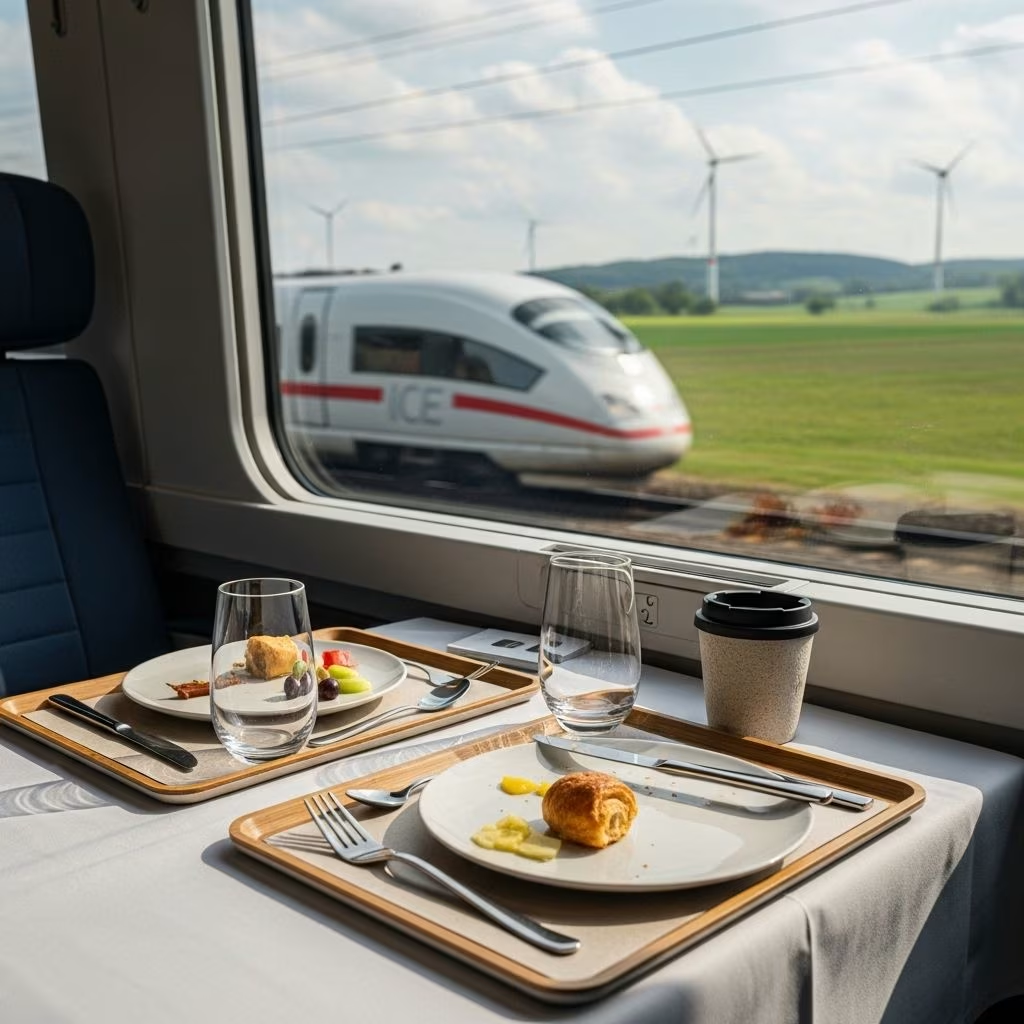
German Railways Lead Sustainability Push with Reusable Tableware
In a transformative move for sustainable travel, Deutsche Bahn, Germany’s national railway operator, has introduced reusable cups, plates, and bowls on all its long-distance and high-speed services. This change, in effect since January 1, 2023, is part of a broader national push to minimize single-use packaging and promote sustainable consumption in public transportation and food services.
Why Deutsche Bahn Switched to Reusable Tableware
The widespread use of single-use plastics—especially cups and food containers—generates staggering waste across Germany. According to the Federal Environmental Agency, Germany produced 18.7 million tons of packaging waste in 2017. Disposable cups alone see an average lifespan of only 15 minutes, contributing significantly to environmental pollution as they are discarded en masse after brief use. Deutsche Bahn recognized both the scale and the environmental impact of this waste, describing it as “an unimaginable amount of waste every day”—with estimates from the German environmental association Deutsche Umwelthilfe noting around 7.6 million disposable cups used daily in Germany. This insight spurred the company to overhaul its onboard catering practices, aiming for meaningful ecological change.
Green Revolution on the Rails
Onboard dining on Deutsche Bahn trains is now a markedly greener experience:
- Reusable porcelain cups, plates, and bowls are available for all food and hot drink orders in the onboard bistro and at-seat dining service.
- Glassware serves all cold drinks, completing the replacement of single-use items.
- There is no extra charge or returnable deposit for using these items—access is free and simple for all passengers.
- Passengers bringing their own reusable cup receive a 20 cent discount on hot drinks.
- For those who prefer, disposable options are still available upon request, ensuring flexibility and passenger comfort.
This initiative aligns with Germany’s larger legislative and cultural movement toward sustainability. As of 2023, new regulations require all restaurants, cafes, and catering businesses to offer reusable packaging alternatives for food and drink, though single-use options are not outright banned—the key is providing a free, sustainable choice to every consumer.
Key Benefits of the Reusable System
- Significant reduction in packaging waste from millions of passengers annually.
- Resource conservation: Reusable tableware can endure 500 to 1,000 wash cycles, dramatically lowering the demand for new materials over time.
- Climate impact: Deutsche Bahn has set an ambitious goal of climate neutrality by 2040, aiming to cut carbon emissions in half by 2030. The reusable tableware initiative is a high-visibility part of this larger strategy.
- Enhanced passenger experience with high-quality, home-like dining even while traveling.
Environmental Impact of Single-Use Cups and Plates
The environmental cost of single-use packaging extends far beyond the convenience it brings. Disposable cups and containers are produced from resources such as wood, water, and petroleum-based materials, generating not only waste but also contributing to carbon emissions during manufacturing and disposal. Even when these products break down, they often leave microplastics in the environment, harming wildlife and entering food chains. In Germany, this issue is acute—the equivalent of 320,000 disposable cups are discarded every hour, many of which end up polluting land, water, and urban spaces. By replacing these with durable porcelain and glassware, Deutsche Bahn addresses both upstream resource consumption and downstream waste management challenges.
Resource Savings with Reusable Tableware
| Aspect | Disposable Items | Reusable Porcelain/Glass |
|---|---|---|
| Lifespan | 15 minutes (avg) | 500–1000 uses |
| Production Impact | High (single-use resources every time) | Distributed over multiple years/uses |
| Waste Generation | Massive (millions daily) | Minimal (eventual recycling) |
| Recycling Potential | Low (often contaminated, not recycled) | High (fully recyclable at end of life) |
Aligning with National Policy and the Supply Chain Act
Deutsche Bahn’s initiative dovetails with the enforcement of Germany’s Supply Chain Act (adopted in June 2021), which holds larger companies accountable for environmental and social impacts throughout their supply chains. From January 2023, the act requires food service businesses and caterers to present reusable options for offsite consumption. The approach is pragmatic—a ban on single-use packaging is not enforced, but every consumer must have access to a sustainable alternative at no extra cost. This sets the stage for widespread behavioral change at the point of purchase and consumption, nudging passengers toward greener choices via convenience rather than compulsion.
Sustainability at the Core of Deutsche Bahn
“Deutsche Bahn is driving forward its green transformation in onboard catering,” said Michael Peterson, the company’s passenger services chief. The decision to introduce porcelain and glass tableware is just one piece of a comprehensive environmental strategy that prioritizes both technological innovation and customer experience. The company’s broader ‘This is green’ messaging signals ongoing climate protection commitments:
- Switch to 100% renewable power for train operations.
- Transition away from diesel fuel and toward alternative, low-emission propulsion.
- Innovative heat management for infrastructure and vehicles.
- Recycling more than 95% of operational raw materials already.
This sustainability framework extends to food options as well: over half of onboard meal choices are now vegetarian or vegan, reflecting a holistic approach to environmental stewardship.
Engaging Travelers in Sustainability
The transition to reusable tableware makes sustainable practices visible and tangible to millions of travelers annually. Passengers can play an active role by choosing (or bringing) reusable containers, enjoying discounts, and directly contributing to waste reduction measures. The focus on high-quality tableware—porcelain and glass—also enhances the traveler’s onboard dining experience, turning sustainable behavior into a mark of hospitality and service excellence.
Broader Impact and the Future of Sustainable Transport
This major shift in Germany’s rail sector sends ripples through Europe and beyond, as public transport operators and hospitality businesses weigh the environmental benefits—and challenges—of massive reductions in single-use plastics. A few notable trends and wider possible benefits emerge:
- Encouragement for event organizers: Other cities in Germany have started renting out reusable cups and dishware for private parties, signaling the scalability of such solutions beyond rail travel.
- Positive climate impact: The move helps Deutsche Bahn progress toward its climate-neutral 2040 target, serving as a model for other major transport and service providers.
- Behavioral change: Making sustainable choices the default option helps reshape customer habits and expectations around packaging and waste, not just on trains, but in daily life.
Germany’s pioneering rail policy also coincides with wider efforts, such as the introduction of affordable train passes (€9 unlimited travel offers), encouraging more citizens to choose train travel over higher-emission transportation options. Rail analysts noticed a surge in short-distance train use, a trend likely supported by improvements in both cost and sustainability of travel experiences.
Frequently Asked Questions (FAQs)
Q: What prompted Deutsche Bahn to switch to reusable tableware?
A: The move was driven by the immense environmental impact of single-use plastics. Millions of disposable items used annually end up as waste. The switch cuts resource use, reduces carbon emissions, and helps the company move toward its climate neutrality objectives.
Q: Are the reusable cups, plates, and bowls free to use?
A: Yes, all reusable porcelain and glass tableware is provided at no additional cost and without requiring a deposit.
Q: Will passengers still be able to use disposable cups or plates?
A: Yes, disposable packaging is still available upon request, but the default and strongly encouraged option is now reusable tableware.
Q: How many times can the reusable tableware be used?
A: The cups and bowls can be washed and reused between 500 and 1,000 times.
Q: What other sustainability measures has Deutsche Bahn taken?
A: Beyond tableware, Deutsche Bahn offers more vegetarian and vegan food choices, is increasing the share of renewable energy in train operation, and is committed to recycling more than 95% of its raw materials.
Travel Smart, Travel Green
This step by Deutsche Bahn shows how bold sustainability choices at scale can transform not just company operations, but the habits of millions of people. As more transport providers shift to reusable options—supported by both customer incentives and government policy—the vision for a circular, low-waste economy becomes ever more achievable.
Travelers can support these efforts by choosing reusable options, bringing their own cups or containers, and spreading the message: sustainable, eco-friendly dining is not only possible, but now the norm on German rails. The future of travel—and the planet—depends on it.
References
- https://www.thecooldown.com/green-business/deutsche-bahn-single-use-plastic-ban/
- https://nachhaltigkeit.deutschebahn.com/en/measures/tableware
- https://www.the-independent.com/travel/news-and-advice/deutsche-bahn-trains-reusable-porcelain-cups-plates-b2240628.html
- https://www.globaltimes.cn/page/202212/1281325.shtml
- https://www.themayor.eu/en/a/view/this-german-city-will-rent-out-reusable-cups-to-private-parties-in-the-whole-country-12669


