


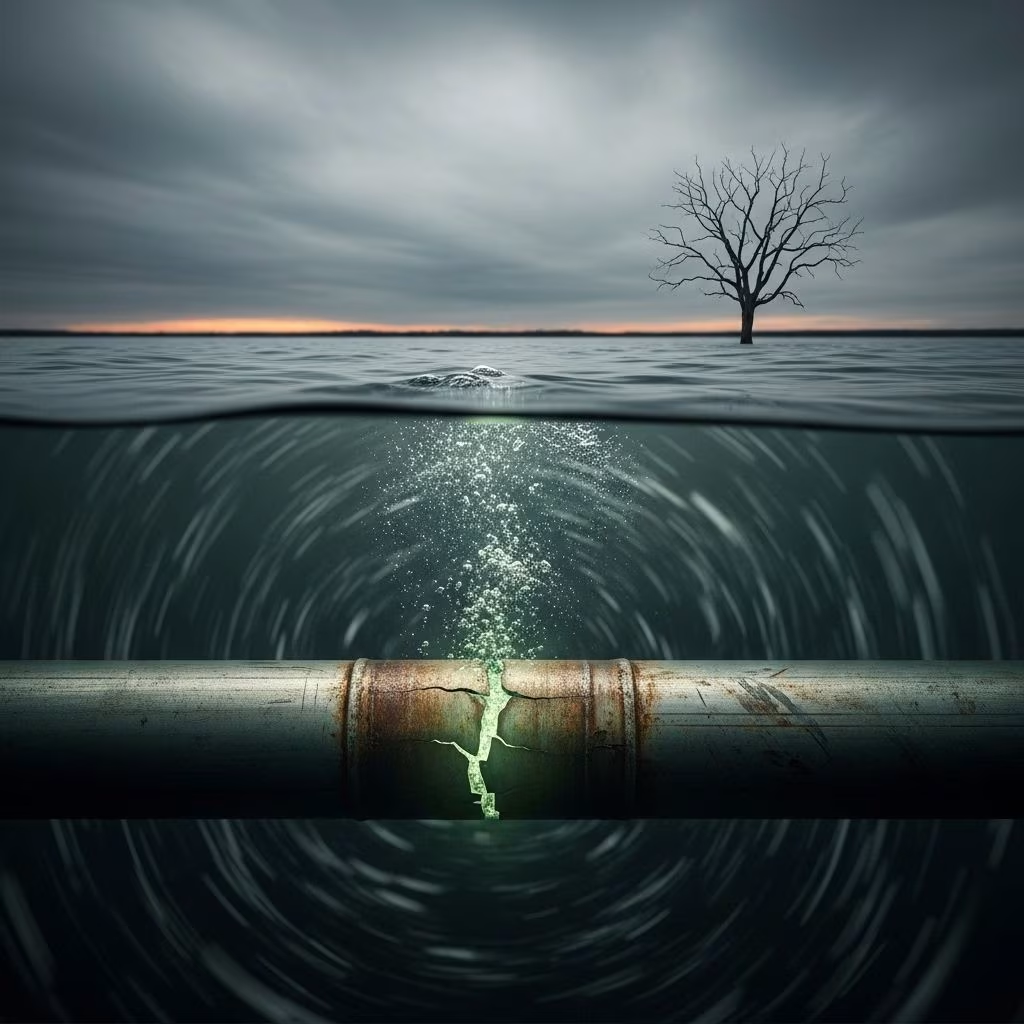
Drilled Climate Podcast Season 6: Bridge to Nowhere
Drilled, often dubbed the most listened-to climate change podcast, returns for its sixth season titled Bridge to Nowhere, hosted by investigative journalist Amy Westervelt. This season unravels the complex history and present-day impact of the natural gas industry, splitting the investigation into three distinct chapters: “Pipelines to Plastic,” “Gas Bubble,” and “Frackalachia.” Each part exposes layers of industry influence, climate misdirection, and community struggles resulting from natural gas expansion.
The season brings fresh reporting, tackling the misconception that natural gas is a ‘clean’ or ‘bridge’ fuel to renewables. Through in-depth journalism, firsthand accounts, and strategic historical investigation, listeners are invited to reconsider everything they think they know about natural gas.
Contents
- Introduction
- Pipelines to Plastic: The Hidden Fracking-Plastics Link
- Gas Bubble: Manufacturing the “Clean” Reputation
- Frackalachia: Communities on the Frontline
- The New Climate Villains
- Industry Spin vs. Environmental Reality
- Frequently Asked Questions
Introduction: The Natural Gas Narrative Exposed
For decades, the fossil fuel industry, supported by well-crafted PR campaigns, advanced the narrative of natural gas as a “low-carbon” or “clean” alternative to coal and oil. Promoted as a temporary solution or “bridge” to a renewable future, natural gas flooded energy markets globally. Even environmental groups once accepted the role of natural gas in climate solutions, largely focusing their opposition on coal rather than gas.
Amy Westervelt explains the urgency of dispelling these myths: “We’re at this moment once again where the fossil fuel industry is pushing the idea of natural gas as a ‘low carbon’ alternative fuel, a bridge to renewables, an integral part of the clean energy transition. So it’s really important that people understand the immediate environmental concerns and long-term climate impacts of this stuff.”
Pipelines to Plastic: The Hidden Fracking-Plastics Link
Part 1 of Drilled Season 6, “Pipelines to Plastic,” explores how the fracking boom in America created not only more access to cheap gas but an abundance of raw materials essential for plastic production. The natural gas supply chain is closely tied to petrochemicals, especially ethylene and propylene, which are used to manufacture plastics.
- Shale gas extraction provides feedstocks for plastics, fueling the multi-billion dollar petrochemical industry.
- Pipelines don’t just transport fuel for power plants; they also carry critical ingredients for chemical factories, amplifying plastic production globally.
- Investments in new pipeline infrastructure often coincide with plans for new plastic plants, especially in regions like Appalachia.
- This relationship increases extractive pressure on communities and ecosystems, linking climate change concerns to ocean pollution and toxic chemical exposure.
While natural gas did help the U.S. reduce CO2 emissions by displacing coal, it simultaneously accelerated the growth of plastics, which have their own persistent environmental challenges.
Gas Bubble: Manufacturing the “Clean” Reputation
Part 2, “Gas Bubble,” investigates the powerful media and political efforts that forged the image of natural gas as a solution to climate change. The season details how, through strategic dissemination and scientific cherry-picking, fossil fuel interests successfully positioned gas as a climate-friendly alternative:
- Lobbying efforts targeted politicians, regulators, and even environmentalists, convincing many to back gas expansion in the name of climate progress.
- The notion of gas as a “clean transition” emerged in policy documents, utility-level planning, and global investment strategies.
- Natural gas was presented as producing fewer greenhouse gases than coal, but the climate costs of methane leakage were consistently downplayed or ignored.
- Investigative reporting reveals many greenwashing tactics, including paid “studies” and partnerships with environmental NGOs.
In this chapter, Drilled highlights the widespread impact of misinformation and how purposeful framing allowed natural gas to sidestep critical scrutiny for years—even from those fighting climate change.
Frackalachia: Communities on the Frontline
Part 3, “Frackalachia,” moves from the national narrative to real-world consequences, following an Ohio community impacted by the petrochemical industry’s expansion. Appalachia has become ground zero in the battle over fracking and plastics:
- Environmental Health: Residents face water contamination, increased respiratory illnesses, and other health risks due to proximity to fracking rigs and chemical plants.
- Economic Promises: Many communities were promised jobs and economic growth, but the reality often falls short, with boom-and-bust cycles and persistent environmental damage.
- Social Consequences: Local activism has intensified in response to visible harms, but legal and political barriers make community defense difficult.
- Underreported Struggles: Drilled gives voice to impacted residents, foregrounding grassroots resistance and the struggle for environmental justice.
This part personalizes the story, demonstrating how global fossil fuel economics manifest as tangible challenges for ordinary people living on the edges of the shale boom.
The New Climate Villains
The final segment places responsibility not just on corporations but on a broader set of actors—utilities, PR firms, and policymakers—who help perpetuate dependence on fossil gas. Even those who once heralded gas as beneficial are now forced to contend with its significant downsides:
| Villain | Role in Climate Narrative | Impact |
|---|---|---|
| Fossil Fuel Corporations | Manufacture, distribute, and market gas | Greenwashing, lobbying, misinformation |
| Petrochemical Companies | Expand plastic manufacturing | Environmental contamination, plastic plague |
| PR Firms | Shape public and political opinion | Deflect scrutiny, reframe narratives |
| Utilities | Embed gas in infrastructure and policy | Slow energy transition, invest in pipelines |
Drilled explores how these players sustain the status quo, and why dismantling their influence is critical for genuine climate progress.
Industry Spin vs. Environmental Reality
- Industry Messaging: Natural gas is promoted as reliable, scalable, and necessary for the energy mix.
- Reality Check: Methane leaks from extraction and transport undermine climate advantages, as methane is 80x more potent than CO2 over 20 years.
- Health and Safety: Gas extraction and plastic production cause pollution-related health risks, with communities downwind suffering disproportionately.
- Long-Term Solution?: Investments in gas delay real adoption of renewables and may lock-in emissions for decades.
Season 6 of Drilled pulls back the curtain on how complex and interconnected the issues truly are, challenging listeners to avoid simple solutions and demand authentic change.
Key Takeaways
- Natural gas is not the climate solution it is often portrayed to be; its production and use have significant hidden environmental and health costs.
- The petrochemical industry’s growth is directly enabled by natural gas extraction and transportation.
- Community impacts are severe and widespread, but frequently dismissed in broader policy debates.
- Corporate and political spin masks the true risks; transparency and grassroots activism are needed.
Frequently Asked Questions (FAQs)
Q: What makes Drilled Podcast different from other climate podcasts?
A: Drilled uniquely applies a “true crime” lens to climate change, investigating the systemic obstacles—from misinformation to policy failures—that allow climate issues to persist.
Q: Why is natural gas called a ‘bridge fuel’?
A: Natural gas was labeled a ‘bridge fuel’ because it produces less CO2 than coal, but this narrative ignores methane leakage and petrochemical impacts, making it a questionable climate solution.
Q: How are fracking and plastics connected?
A: Fracking extracts shale gas, which yields feedstocks for plastic production; expanded pipelines serve both energy and chemical industries, resulting in increased plastic pollution.
Q: What are some community impacts highlighted by Drilled?
A: Residents near fracking sites face health risks, water contamination, and economic instability; industry promises of prosperity often fail to materialize.
Q: What should listeners expect from Season 6?
A: Listeners will hear investigation-based reporting, interviews with experts and affected residents, and analysis exposing the full scope of natural gas’s environmental and social cost.
Conclusion: Redefining the Climate Conversation
Season 6 of Drilled is a clarion call for reevaluating the role of natural gas in climate strategy. By exposing the intertwined truth of fracking, plastics, and petrochemicals, and by highlighting both the industry’s misinformation campaigns and the experiences of impacted communities, Drilled urges listeners and policymakers alike to question the simple solutions and commit to an energy transition that is truly clean, just, and transparent.
References
- https://shorefire.com/releases/entry/climate-podcast-drilled-season-6-exposes-the-natural-gas-industry
- https://drilled.media/podcasts/drilled/6/drilleds06-ep07
- https://open.spotify.com/show/6zrL0QQWBhlVFsCveE2mtE
- https://www.outrageandoptimism.org/episodes/drilled-baby-drilled
- https://www.treehuggerpod.com/episodes/climate-ready-forests
- https://drilled.media/podcasts/drilled
- https://podcasts.apple.com/us/podcast/drilled/id1439735906
- https://podcasts.apple.com/gw/podcast/drilled/id1439735906
- https://www.podbean.com/podcast-detail/966d4-214118/Drilled-Podcast


