


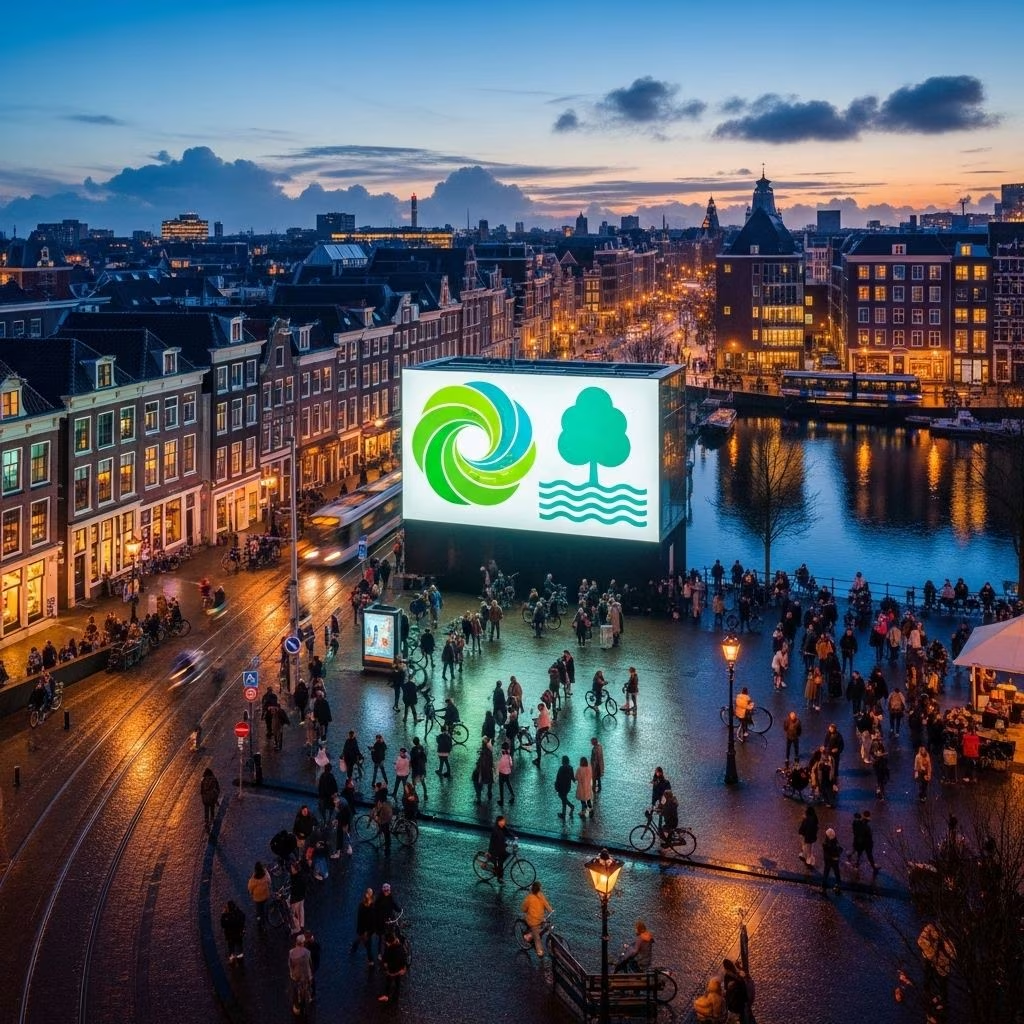
Introduction: Dutch Cities Take Bold Climate Action
Across the Netherlands, a transformative movement is taking shape. In response to mounting evidence tying animal agriculture to climate change, several Dutch municipalities have begun banning advertisements for intensively farmed meat in public spaces. This innovative policy not only aims to reduce greenhouse gas emissions but also encourages residents to embrace healthier, more sustainable diets. With cities like Haarlem, Nijmegen, and Utrecht at the forefront, the Netherlands is establishing itself as a global leader in municipal efforts to combat climate change through local food policy.
Why Ban Meat Advertisements? The Rationale and Context
The decision to restrict adverts for intensively farmed meat stems from a growing recognition of how marketing shapes consumption habits. Research has repeatedly shown that food advertisements can drive demand for unhealthy or unsustainable options, just as they have with junk food. By removing these ads from bus shelters, train stations, and other public spaces, Dutch cities hope to lessen the societal push towards conventional meat consumption and its negative impacts.
- Environmental Concerns: Meat production is a major driver of deforestation, water pollution, and greenhouse gas emissions.
- Public Health: High meat consumption is associated with various chronic health conditions.
- Climate Vulnerability: As a low-lying country, the Netherlands is particularly threatened by climate-related sea level rise, making emission reductions urgent.
The move to ban meat ads is not just symbolic. It reflects a serious commitment to altering the public narrative around food, health, and the environment—leveraging local government powers to accelerate cultural change.
Haarlem: A Pioneer in Sustainable Urban Policy
Haarlem’s announcement in 2022 marked a world first: it became the first city globally to ban meat advertising from its public spaces. The city council, led by GroenLinks councillor Ziggy Klazes, targeted industrial and intensively farmed meat—putting it on a list of prohibited advertised products alongside fossil fuels and leisure air travel.
- Policy extends to public buses, shelters, and billboards within city limits.
- Coverage includes meat, fish, fossil fuels, and leisure flights—reflecting a consistent approach to climate-threatening industries.
- Strong public support: Councillor Klazes noted that despite some backlash, the majority of Haarlem’s residents understood and backed the climate rationale.
The ban is set to take effect following council approval and emphasizes municipal autonomy in climate action. As Klazes puts it, “regional politics is immensely important, creating rapid change without waiting for national governments.”
Policy Extension: Inclusion of Fish Products
Beyond meat, Haarlem went a step further by outlawing adverts for fish products as well. This expansion reflects a nuanced understanding of sustainability, acknowledging the ecological footprint of fishing and aquaculture alongside land-based livestock production.
Nijmegen and Utrecht Join the Movement
Inspired by Haarlem, other Dutch cities have adopted or are planning similar bans, with Nijmegen and Utrecht being especially prominent.
- Nijmegen: As the third Dutch city to implement such a ban, Nijmegen’s city council integrated the policy into its broader endorsement of the internationally recognized Plant Based Treaty. This treaty encourages the transition away from animal-based food systems globally.
- Utrecht: Announced its own ban on meat advertisements in public spaces, aligning with national sustainability ambitions and following Haarlem’s lead.
These developments underscore a momentum: Dutch municipalities are using local authority to set ambitious standards on sustainability—creating policies that national governments may be too slow or conflicted to enact.
Embracing the Plant-Based Treaty
The Plant Based Treaty is a grassroots global campaign urging governments to transition away from animal-based food systems. By signing the treaty, cities pledge to:
- Promote plant-based foods in public institutions and procurement.
- Reduce or eliminate advertising and promotion of animal-based foods.
- Support local plant-based businesses and shorten food supply chains.
Nijmegen’s commitment includes practical initiatives, such as increasing plant-forward options in city canteens and launching foods like the Nimma Sandwich—a vegan sandwich showcasing locally sourced, plant-based ingredients and created collaboratively with academics and top chefs. The sandwich aims to demonstrate that plant-based cuisine can be appealing, nutritious, and eco-friendly.
Wider Implications: Marketing, Policy, and Social Change
Advertising is a powerful shaper of social norms and consumer behaviour. The Dutch approach recognizes that “free choice” is rarely unmediated; repeated exposure to persuasive messaging can normalize products high in carbon and health costs.
Banning specific ads in public space joins a growing movement—seen previously in restrictions for tobacco, alcohol, and fossil fuels—where governments curb promotional messaging for the public good. Critics may frame this as “nanny state” overreach, but supporters argue that planetary health justifies targeted interventions, especially when the cost of inaction is so high.
- Societal Reframing: Removing meat ads is intended to reduce default dietary choices and rebalance the perception of plant-based eating as normal, accessible, and desirable.
- Local Action, Global Impact: Municipal bans send strong signals that reverberate beyond city borders, encouraging discussion, innovation, and emulation by other jurisdictions worldwide.
Challenges and Criticisms
The advertisement bans have not been without controversy. Industry representatives, including Dutch meat sector advocates, argue that such actions unfairly single out a legal product and could harm local agriculture. Some concerns commonly cited include:
- Freedom of Expression: Opponents claim the measures restrict commercial speech and consumer choice.
- Economic Impact: Critics believe the bans could disadvantage local businesses dependent on animal agriculture and related advertising revenue.
- Enforcement Complexity: Cities must establish clear definitions for which advertisements are prohibited, and develop processes to address violations within public and sometimes semi-public spaces.
Nonetheless, the Dutch experience so far demonstrates a broad degree of public support and shows that, when thoughtfully crafted, such policies can weather pushback. The need for urgent action on climate change and public health is cited as overriding rationale.
Positive Outcomes and Early Indicators
Although these bans are still in the early stages of implementation, proponents forecast several benefits:
- Reduced Meat Consumption: By lowering exposure to promotional messaging, meat-heavy diets may decline, aligning with dietary recommendations for both health and sustainability.
- Increased Visibility for Plant-Based Options: Less advertising for meat creates new space for campaigns promoting legumes, grains, and plant-derived proteins, fostering greater acceptance of plant-forward lifestyles.
- Enhanced Community Engagement: Local campaigns like the launch of the Nimma Sandwich help foster excitement and pride in sustainable, health-first innovations.
- Policy Replication: Other municipalities and international organizations are watching closely, considering similar approaches in their jurisdictions as climate imperatives grow more urgent.
Global Relevance: Could This Become a Worldwide Movement?
The Dutch initiative has sparked international interest. Cites such as Amsterdam and Zwolle are considering or planning analogous bans, and the successful implementation in Haarlem, Utrecht, and Nijmegen may provide a playbook for global urban policymakers. With climate change, biodiversity loss, and resource constraints accelerating worldwide, the question is not if, but when, more cities will pursue comparable interventions.
Moreover, activists argue that cities—where over half the world’s population now lives—are perfectly placed to pioneer bold policies that larger governments may be too slow to adopt. Municipal-level bans provide proof of concept, demonstrate public appetite for sustainability, and catalyze higher-level changes by showing what’s possible.
Table: Dutch Cities Implementing Meat Advertisement Bans
| City | Year Policy Introduced | Key Features |
|---|---|---|
| Haarlem | 2022 | First in the world; covers meat, fish, fossil fuels, and leisure flights |
| Utrecht | 2023 | Banned ads for industrial meat in public transport and spaces |
| Nijmegen | 2023 | Tied to endorsement of Plant Based Treaty; policy includes fossil fuels |
| Amsterdam (planned) | 2024 (planned) | Policy drafting/planning stages; expected to include meat and fossil fuels |
| Zwolle (planned) | 2024 (planned) | Considering similar measures to Haarlem and Utrecht |
Frequently Asked Questions (FAQs)
Q: Why target meat advertisements instead of just educating people?
A: Research shows that advertising works powerfully to shape choices, especially for food. Banning ads limits exposure to persuasive marketing, complementing educational efforts and policy incentives to drive dietary change toward sustainability.
Q: Do these bans cover all meats or only certain kinds?
A: The bans specifically target intensively farmed or industrial meat products, which have the largest carbon footprint. Some cities, like Haarlem, have also included fish and fossil fuel-related products in their advertising restrictions.
Q: How do residents react to these bans?
A: While there is some pushback, particularly from the meat industry, public sentiment in places like Haarlem and Nijmegen tends to be supportive—seeing the policy as a positive step for health and climate action.
Q: Are similar policies being considered elsewhere?
A: Yes. Other Dutch cities, such as Amsterdam and Zwolle, are drafting or considering similar measures, and there is growing international discussion about curbing high-carbon advertising, inspired by the Dutch example.
Q: What practical steps accompany the ban?
A: Alongside ad bans, cities are increasing plant-based options in cafeterias, promoting local, sustainable products (like the Nimma Sandwich), and running public awareness campaigns to encourage plant-forward diets.
Conclusion: Leading Toward a Sustainable Food Future
The Dutch experience demonstrates how local policy can lead global change. By banning intensive meat advertisements, Dutch cities are signaling a serious commitment to climate action, public health, and ethical food systems. As more urban areas around the world pay attention, these pioneering policies may well set new global norms for sustainable living—and perhaps inspire a worldwide shift toward a more plant-based future.
References
- https://www.nomeatmay.org/blog/dutch-banning-meat-ads
- https://citychangers.org/notable-city-haarlem/
- https://www.speciesunite.com/news-stories/city-in-the-netherlands-bans-meat-ads-and-endorses-plant-based-treaty
- https://plantbasednews.org/lifestyle/nijmegen-ban-meat-ads-embraces-plant-based-treaty/
- https://vegconomist.com/society/nijmegen-bans-meat-ads-endorses-plant-based-treaty/
- https://plantbasedtreaty.org/nijmegen/
- https://www.foodmanufacture.co.uk/Article/2025/03/31/dutch-city-bans-meat-and-fossil-fuel-adverts-in-public-spaces/
- https://www.worldwithoutfossilads.org/listing/haarlem-bans-fossil-ads-and-ads-for-meat-from-industrial-agriculture/


