


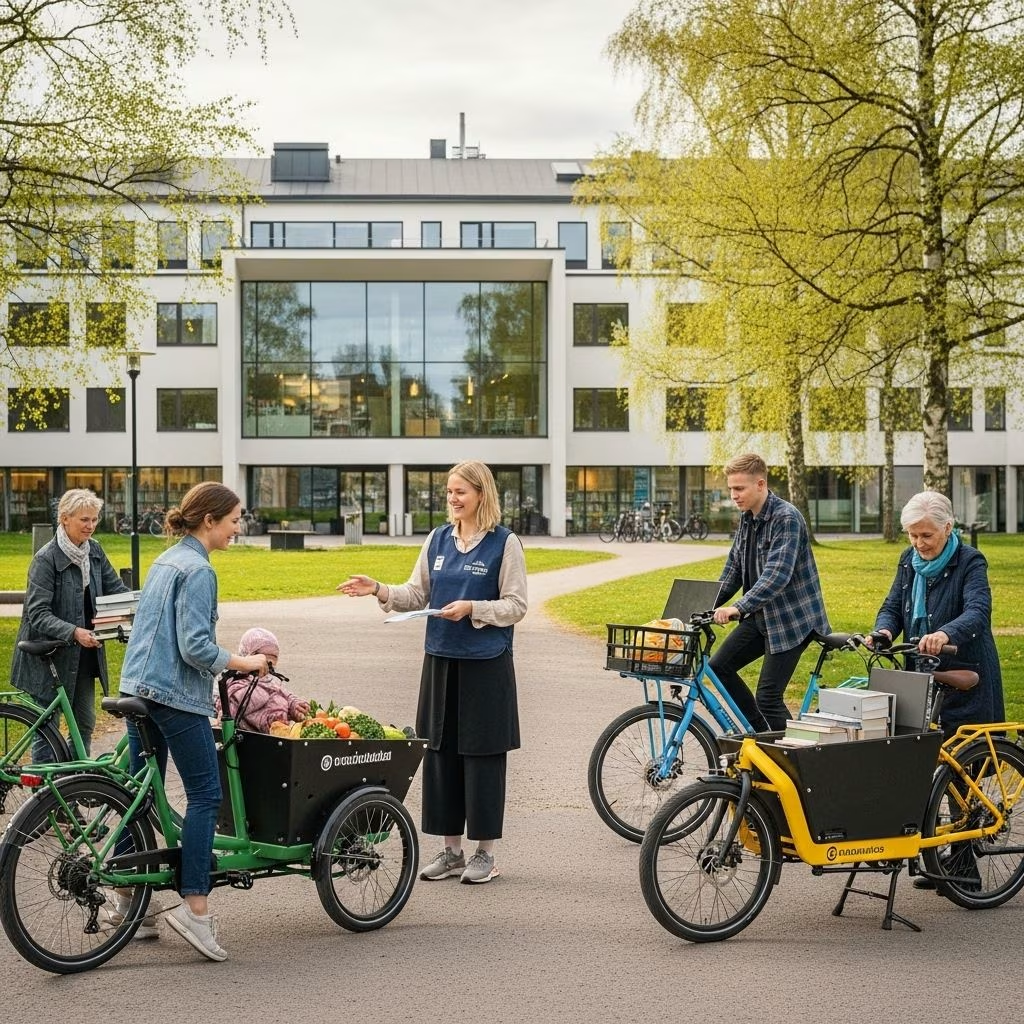
Libraries in Finland: Pioneering Sustainable Urban Mobility with Free E-Cargo Bike Lending
Public libraries in Finland have evolved far beyond being just repositories for books—they have transformed into community hubs fostering inclusion, sustainability, and innovation. Among their latest and most groundbreaking initiatives is lending electric cargo bikes (e-cargo bikes) for free to residents. This service, initially launched as a trial, is making waves for its blend of environmental consciousness, accessibility, and support for everyday urban living.
Introduction: Why E-Cargo Bikes?
E-cargo bikes are specially designed bicycles equipped with electric assist motors and spacious cargo areas for hauling goods, children, groceries, and more. As cities around the globe grapple with traffic congestion, air pollution, and the need for sustainable alternatives to car-based urban transport, e-cargo bikes have gained popularity among families and small businesses alike.
Traditional cycling, while healthy and eco-friendly, can fall short when significant loads or longer distances are involved—particularly in hilly cities or among users with mobility limitations. E-cargo bikes address these gaps by offering:
- Electric assist that eases pedaling even with heavy loads
- Spacious racks or bins for children, groceries, or packages
- Reduced emissions and traffic congestion
However, significant barriers remain, such as the high cost of purchase and limited trials before buying. This is where public libraries, with their inclusive ethos and established lending systems, step in as uniquely placed vehicles of change.
How Library E-Cargo Bike Lending Works
Several Finnish cities, including Kuopio and Vaasa, have launched e-cargo bike lending as part of broader efforts to foster sustainable lifestyles and social equity.
Step-by-Step: Borrowing an E-Cargo Bike
- Eligibility: Typically, the borrower must be an adult library card holder or have the necessary identification.
- Booking: E-cargo bikes can usually be reserved in advance by phone, online, or in person at the library’s service desk .
- Loan Duration: Most libraries offer e-cargo bikes for a period ranging from 1 to 7 days, with 3-day loans being common (e.g., in Kuopio and Vaasa) .
- Collection and Return: Users collect and return bikes at designated library locations. A loan agreement or brief form is typically signed at pickup. Return times are often fixed to library opening hours .
- Accessories: Helmets, locks, and sometimes additional cargo accessories are included. In some cases, unique features (like a portable sound system in Vaasa) supplement the core cargo bike service .
The lending process is designed for simplicity, echoing the ease of checking out any library item, yet is supported by additional safety and responsibility measures given the value and operational requirements of the bikes.
Technical Features of Loaned E-Cargo Bikes
- Brands: High-quality models like Kona Electric Ute (Kuopio) and Babboe Transporter (Vaasa)
- Battery Life: Typical range is between 30–60 km per charge, depending on load and conditions
- Speed: Motor assistance is active up to 25 km/h to comply with EU regulations
- Capacity: Weight limits vary; racks and bags often allow loads up to 25–30 kg in addition to the rider
- Safety: Nine gears, efficient handbrakes, and included helmets
- Accessibility: Step-through frames and adjustable seats make usage accessible for a variety of ages and body types.
Benefits and Typical Uses
Library e-cargo bike loans are heavily utilized for a diverse set of everyday activities:
- Grocery shopping—users can comfortably transport multiple bags, reducing car trips
- Family outings—parents can carry children safely, encouraging active lifestyles
- Errands and moving goods—from furniture runs to picking up parcel deliveries
- Community events—Vaasa’s library cargo bike even features a PA system, powering pop-up concerts, festivals, or street meetings
- Small business support—vendors and local shop owners can trial sustainable delivery or hauling solutions without upfront investment
Typical User Experiences
Feedback from borrowers highlights a range of positive outcomes, including increased willingness to cycle with children, positive discoveries about e-bike utility, and a sense of community ownership over shared resources. For many, the opportunity to try an expensive item before considering purchase reduces financial reluctance, encouraging wider adoption of sustainable technology.
Expanding Access: Inclusivity and Innovation
Unlike commercial rental schemes that often require payment and come with user restrictions, library-based bike lending prioritizes:
- Zero cost—removing price barriers to sustainable transport
- Low-threshold access—easy sign-up, minimal bureaucracy, and extended outreach
- Broad eligibility—open to all adult residents or library card holders; some libraries permit younger riders with parental supervision
- Trial-and-learn approach—users can experiment with different models and accessories, building confidence and skills
Partnerships and Community Involvement
Many of Finland’s e-cargo bike lending schemes are run in partnership with city governments, urban innovation agencies, and local businesses. This collaborative approach enhances service reliability and encourages broader participation.
Table: Comparison of Finnish Library Cargo Bike Lending Features
| Library/City | Bike Type | Loan Duration | Accessories | Cost | Unique Features |
|---|---|---|---|---|---|
| Kuopio | Kona Electric Ute | 1–3 days | Helmet, cargo bags | Free | Citywide urban mobility partnership |
| Vaasa | Babboe Transporter | Up to 3 days | Helmet, sound system | Free | Mobile stage for events |
Environmental and Social Impact
The introduction of e-cargo bikes into public lending systems brings several key social and environmental benefits:
- Reduced emissions—incentivizing active transport and reducing car dependency
- Less traffic congestion—encouraging residents to switch journeys from cars to bikes, especially in city centers
- Enhanced public health—facilitating active lifestyles through practical, accessible options
- Social inclusion—ensuring that access to sustainable mobility is not limited by income or individual circumstance
- Resource optimization—shared use of high-value assets increases utilization rates and supports circular economy objectives
Through pilot feedback and city-level evaluations, it is clear that even short-term access motivates behavioral change, making residents more likely to invest in or prioritize active travel options long after their loan period ends.
Challenges and Lessons Learned
Despite the overwhelmingly positive impact, the programs are not without hurdles:
- Maintenance and repairs: Ensuring that high-demand, complex equipment remains in good condition requires ongoing investment and expertise.
- Charging logistics: Borrowers are asked to return bikes fully charged, yet varied user habits may complicate battery management .
- Demand management: With only a small fleet of bikes per location, reservations fill quickly during peak seasons, limiting access for some would-be users .
- Awareness and education: Library staff invest in providing guidance, safety advice, and troubleshooting support to users unfamiliar with e-cargo bikes.
- Insurance and liability: Libraries develop clear user agreements, liability clauses, and damage caps to mitigate risks .
Feedback from both users and library staff supports the view that these are learnable challenges: improved maintenance partnerships, larger fleets, and broader public outreach all help grow the program’s long-term sustainability.
Finnish E-Cargo Lending in a Global Context
Finland’s library-led e-cargo bike program forms part of a growing international movement to use shared mobility for urban sustainability. Similar programs exist in cities across Europe and North America, but the Finnish approach is distinguished by its deep integration with public libraries—a uniquely trusted and inclusive local resource.
Key elements adopted internationally include:
- E-bike lending libraries—found in cities like Elk Grove (California, USA) and communities in Massachusetts, with some models requiring minimal fees or focusing on low-income users
- Collaborations with local governments and nonprofits to expand fleets, streamline bookings, and ensure equitable access
- Integrated urban transport planning—linking bike lending to public transit, car share, and other multimodal schemes
What sets Finland apart is its clear demonstration that the public library can be a hub not only for culture and information, but also for sustainable community mobility.
Frequently Asked Questions (FAQs)
Q: Who can borrow an e-cargo bike from a Finnish library?
A: Any adult resident or library card holder—some libraries may require you to be 18 or older, while others permit teenagers with parental consent.
Q: How long can I borrow the bike for?
A: Typically, loan periods range from 1 to 3 days for cargo bikes, and up to a week for standard bikes, depending on the library and city.
Q: What do I need to bring when picking up the bike?
A: You should bring a library card or valid ID, and it’s recommended to bring your own helmet if required. The library will have the rest of the accessories and user instructions available.
Q: Is there a cost involved?
A: No—the service is completely free for local residents, reflecting the public-good mission of the library.
Q: What happens if something is damaged or lost?
A: Borrowers are responsible for the bike and accessories during the loan. Damages, theft, or loss may incur repair or replacement fees, but these are clearly spelled out in the loan agreement.
Q: Can I reserve an e-cargo bike in advance?
A: Yes, most libraries allow reservations by phone, online, or at the service desk. Due to high demand, especially in spring and summer, it’s recommended to book ahead.
Conclusion: Libraries Driving Change
By placing e-cargo bikes in the hands of everyday residents free of charge, Finnish public libraries are pioneering a model for sustainable urban mobility that is inclusive, practical, and community-driven. The service not only makes sustainable transport accessible to all, but also augments the social and cultural role of libraries as engines for innovation and well-being.
Other cities and countries seeking to lower transport emissions and strengthen communities can look to the Finnish example for inspiration—a blueprint where borrowing a bike can be as routine as borrowing a book.
References
- https://www.kuopio.fi/en/environment-and-housing/viksu-kuopio/easy-and-sustainable-transportation-throughout-kuopio/cargo-bike-for-loan/
- https://vaasankirjasto.finna.fi/Content/laitteita-ja-elamyksia?lng=en-gb
- https://elkgrove.gov/civic-innovation-and-sustainability/e-bike-lending-library
- https://nextcity.org/urbanist-news/self-charging-e-bike-libraries-metro-mobility-massachusetts
- https://directory.libraries.fi/services/cargo-bikes
- https://streets.mn/2024/02/06/an-ode-to-electric-cargo-bikes/
- https://avaenergy.org/from-the-ceos-desk/e-bikes-are-on-a-roll/
- https://www.turku.fi/en/traffic-streets-and-maintenance/rental-city-bikes
- https://www.peopleforbikes.org/news/electric-bicycles-for-all


