


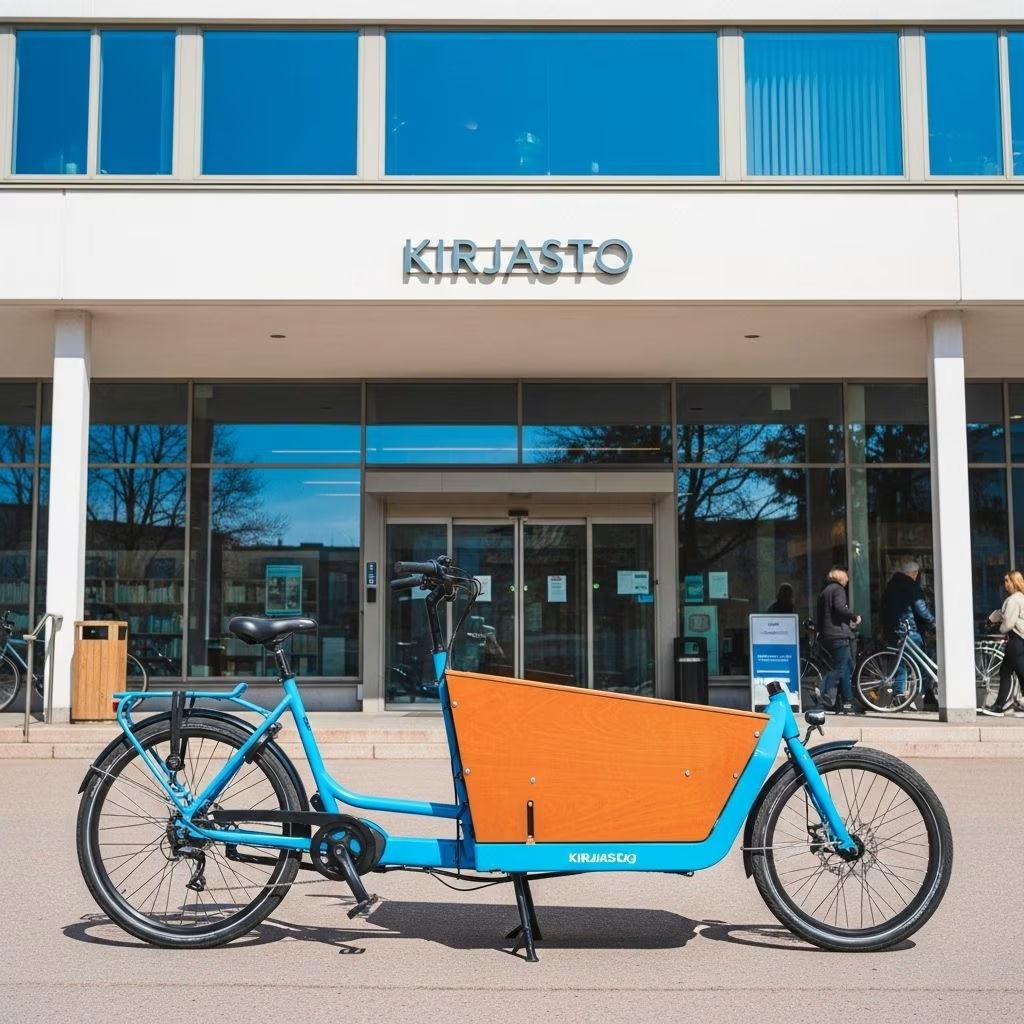
Finnish Libraries Offer Free E-Cargo Bike Loans: A Sustainable Mobility Revolution
With urban sustainability at the forefront of global city initiatives, Finland’s libraries have taken a bold step by introducing free electric cargo bike lending programs for residents. These initiatives transform municipal libraries from traditional book lenders into accessible hubs for sustainable mobility. The pilot programs, offering e-cargo bikes for short-term use, empower communities to experience the benefits of eco-friendly transport without financial risk, fostering a broader cultural shift away from car dependency.
Background: The Rise of E-Cargo Bikes in Urban Finland
Electric cargo bikes, equipped with pedal-assisted motors and substantial load capacity, are gaining traction across Europe as versatile alternatives to cars for short urban trips. In Finland, cities like Kuopio have pioneered schemes allowing residents to borrow e-cargo bikes for free up to three days at a time, with libraries and urban agencies collaborating to administer the program.
- Trial program launched: Operations began in July 2020 as part of a shared-use mobility experiment.
- Collaborative effort: Led by municipal service departments, with support from national transport authorities and sustainability consultants.
How Does the E-Cargo Bike Loan Service Work?
The loan process for e-cargo bikes is structured to be transparent and accessible to all adult residents. The borrowing procedure involves contacting the library or city service area, reserving the bike, and agreeing to a set of user instructions designed to maximize safety and shared responsibility.
- Eligibility: Only adults can borrow a bike.
- Loan duration: Minimum one day, maximum three days, including weekends.
- Reservation system: Residents must book in advance, confirming availability via phone or online.
- Documentation: Borrowers complete a rental form and present photo ID at pick-up.
- Return: Bikes are to be returned fully charged before closing.
- Safety: Users provide their own helmets and are responsible for following traffic laws and service rules.
Main Features of the E-Cargo Bikes
The e-cargo bikes provided by Finnish libraries are robust, adaptable, and designed for urban utility. Key specifications include:
- Model example: Kona Electric Ute bike with nine gears and handbrakes.
- Load capacity: Up to 30 kg, excluding rider weight; equipped with racks and cargo bags.
- Electric assist: Motor support operates only during pedaling and disables above 25 km/h.
- Range: Battery lasts between 30–60 km depending on use, with detachable battery for indoor charging.
Why E-Cargo Bikes Make Sense for Urban Residents
Electric cargo bikes present an attractive solution to urban transportation challenges by making it easier to navigate city streets, carry groceries or equipment, and even transport children or other family members. Their increasing popularity is driven by several interlinked benefits:
- Cost savings: Far less expensive to acquire and operate compared to cars.
- Environment: Zero tailpipe emissions and reduced traffic congestion.
- Health: Users remain physically active thanks to pedal-assist nature.
- Versatility: Capable of carrying significant loads, replacing many short car trips.
Adoption and User Experience
Residents who participate in the library e-cargo bike programs report significant positive experiences. Many discover unexpected advantages beyond mere transportation, including the opportunity to enjoy shopping locally or exploring their neighborhoods in new ways.
- Carrying grocery bags, crates, and large packages becomes effortless.
- Transporting family members, including children or companions, especially on safe cycling routes.
- Frequent use for short trips leads to lower reliance on cars.
- Battery range is sufficient for multiple errands or daily commutes.
Operational Details and Practical Guidance
The success of the library e-cargo bike lending initiative depends on a clear set of operational guidelines shared with participants. Proper use and prompt return ensure the system’s efficiency and accessibility for all. Borrowers are advised to:
- Read user instructions and service rules prior to borrowing.
- Wear a helmet and comply with all local traffic laws.
- Charge the battery before returning and never exceed the maximum load.
- Bring photo ID and arrive early for pickup.
- Return bike promptly and in good condition.
Collaborators and Stakeholders
Key partners in the Finnish e-cargo bike lending programs include municipal urban environment agencies, national transportation authorities (Traficom), engineering consultancies (e.g., Sitowise Oy), and mobility solution innovators (PlanBil). This collaborative approach enables efficient administration and ongoing evaluation of the program’s effectiveness.
Wider Impact: Shaping Sustainable Cities
The e-cargo bike lending model is part of a broader movement toward shared mobility in urban environments. By lowering barriers to entry and directly involving libraries—a trusted public asset—cities can influence transportation habits and encourage more sustainable choices. Notable impacts include:
- Reduction in car trips: Residents opt for biking over driving for short errands.
- Community engagement: Fosters local involvement, experimentation, and skill-sharing.
- Data collection: Enables cities to track demand and shape future transportation policy.
- Environmental benefits: Decreases local air pollution and greenhouse gas emissions.
Comparative Table: E-Cargo Bike vs. Car for Urban Mobility
| Feature | E-Cargo Bike | Car |
|---|---|---|
| Upfront Cost | Low–Moderate | High |
| Running Costs | Minimal | High (fuel, insurance) |
| Environmental Impact | Very Low | High |
| Physical Activity | Promotes Exercise | Sedentary |
| Cargo Capacity | Up to 30 kg (+ rider) | High |
| Accessibility | Requires Bike Skills | Universal |
| Parking/Storage | Easy | Hard/Expensive |
Finland’s Broader Vision for Sustainable Transport
The Finnish library cargo bike lending initiative aligns with national and local strategies aiming to reduce transport emissions, increase active mobility, and support sustainable urban development. As cities face population growth and infrastructure strain, innovative shared-use solutions are increasingly recognized as vital to future mobility. Key goals include:
- Reducing fossil fuel reliance and car ownership.
- Creating healthy, walkable neighborhoods.
- Supporting equitable access to sustainable transportation.
- Building community and social capital through shared resources.
Challenges and Opportunities for Expansion
While the pilot projects have been met with enthusiasm and early success, several challenges remain for scaling and replicating the program:
- Capacity: A single bike cannot meet all demand; expansion is necessary.
- Seasonality: Finnish winters present barriers to year-round cycling.
- Infrastructure: Safe cycling routes and secure storage are essential.
- User training: First-time users need clear instructions and confidence building.
- Maintenance: Ongoing service and repairs must be budgeted.
Despite these hurdles, the underlying principle is clear: making active, shared mobility accessible encourages a shift in travel habits that can transform how residents engage with their city.
Looking Abroad: E-Bike Lending Libraries in Other Regions
Other cities worldwide, from Elk Grove in the US to experimental e-bike libraries in the UK and across Europe, are embracing free or low-cost e-bike lending solutions. They share critical similarities:
- Focus on short-term loans to introduce new users to e-biking.
- Partnerships among municipal agencies, transport authorities, and local businesses.
- Promotion of sustainable alternatives to driving and reducing urban congestion.
Common Questions About E-Cargo Bike Library Lending in Finland
How do I borrow an e-cargo bike from a Finnish library?
Residents must contact the relevant service area or library, confirm the bike’s availability, and schedule a reservation. The bike can be borrowed for one to three days, and paperwork, including photo ID, is required at pick-up.
Who is eligible to borrow?
You must be an adult to qualify for the program, and only one loan is permitted at a time.
What are the terms of use?
Borrowers agree to follow user instructions, wear a helmet, and return the bike charged and undamaged. Maximum loads and trip lengths are specified for safety and reliability.
Can the bikes be used for overnight or weekend trips?
Yes. Bikes can be booked and used over weekends, which allows for flexibility in errands and family trips.
What happens if the bike is damaged?
Borrowers are responsible for reporting issues, returning the bike promptly, and may incur costs if there is neglect or misuse. The program requires adherence to service rules.
What accessories are included?
The bikes are equipped with racks and bags suitable for carrying substantial cargo, and chargers for the battery. Helmets must be provided by users.
Conclusion: The Transformative Power of Library E-Cargo Bike Lending
Finland’s library e-cargo bike programs are redefining the role of public institutions, making sustainable travel the new norm in urban life. By offering practical access, sharing knowledge, and fostering an inclusive cycling culture, libraries promote a greener, healthier, and more connected city for all residents.
References
- https://www.kuopio.fi/en/environment-and-housing/viksu-kuopio/easy-and-sustainable-transportation-throughout-kuopio/cargo-bike-for-loan/
- https://elkgrove.gov/civic-innovation-and-sustainability/e-bike-lending-library
- https://streets.mn/2024/02/06/an-ode-to-electric-cargo-bikes/
- https://rosap.ntl.bts.gov/view/dot/83378/dot_83378_DS1.pdf
- https://directory.libraries.fi/services/cargo-bikes


