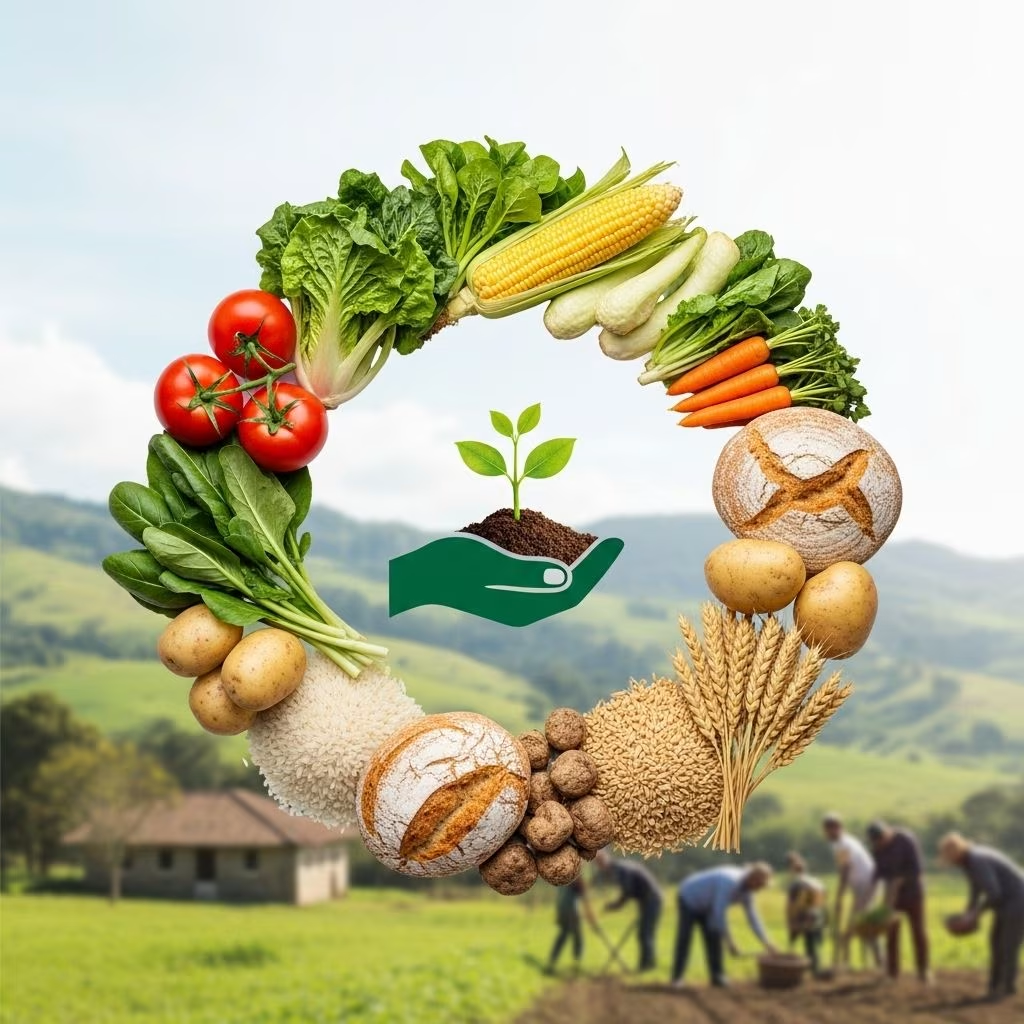
Food sovereignty champions the right of people and communities to define, control, and develop their own food systems in ways that are healthy, culturally appropriate, ecologically sound, and socially just. As threats to local food cultures and environments from industrial agriculture and global markets intensify, the concept of food sovereignty has emerged as both a rallying cry and a guiding framework for sustainable, people-centered food systems.
Defining Food Sovereignty
The concept of food sovereignty was first formally introduced in 1996 by La Via Campesina, an international farmers’ movement. They define food sovereignty as “the right of peoples to healthy and culturally appropriate food produced through ecologically sound and sustainable methods, and their right to define their own food and agriculture systems.” This approach goes far beyond simply providing communities with enough to eat; it empowers them to make decisions regarding their food, agriculture, land, water, and natural resources, centering food providers and consumers over corporate and market interests.
Core Principles of Food Sovereignty
- Food for People: Prioritizes the right to sufficient, healthy, and culturally appropriate food for all, above profits or market demands.
- Valuing Food Providers: Recognizes and honors the contributions of those who grow, harvest, and process food, including small-scale farmers, fishers, indigenous peoples, and farm workers.
- Localizing Food Systems: Brings food producers and consumers closer together, emphasizing local markets and supply chains that foster mutual benefit rather than distant, anonymous transactions.
- Local Control and Democratic Decision-Making: Asserts community control over resources such as land, seeds, and water; resists corporate and state imposition.
- Building Knowledge and Skills: Promotes the exchange and preservation of traditional knowledge and innovations, supporting locally adapted, sustainable food systems.
- Working with Nature: Advocates for agroecological practices that enhance biodiversity and ecosystem resilience, reducing reliance on industrial inputs.
Food Sovereignty vs. Food Security
While often discussed together, food sovereignty and food security have distinct emphases.
| Aspect | Food Security | Food Sovereignty |
|---|---|---|
| Definition | Ensures all people have access to sufficient, safe, nutritious food for a healthy life. | Centers people’s rights to define and control food and agriculture systems themselves. |
| Main Focus | Availability and access to food | Power, local control, and cultural appropriateness |
| Key Actors | Often governments, markets, corporations | Communities, indigenous groups, smallholder farmers |
| Methods | May rely on industrial agriculture or global trade | Emphasizes agroecology, local knowledge, and resource rights |
| Limitations | Doesn’t question how food is produced or who controls resources | Addresses systemic issues; focuses on justice, equity, and sustainability |
The Origins of Food Sovereignty
The modern food sovereignty movement was catalyzed by the organization La Via Campesina at the World Food Summit in 1996. The term quickly gained traction among farmers, indigenous peoples, and activists worldwide, culminating in the Declaration of Nyéléni in 2007 during the first global forum on food sovereignty held in Mali. This declaration remains a cornerstone statement outlining the vision and principles of the movement.
Food sovereignty is deeply rooted in the struggles of people most impacted by hunger, dispossession, environmental degradation, and corporate-driven agriculture—namely small-scale farmers, fishermen, landless workers, and indigenous communities. These groups have historically experienced loss of land, cultural erasure, and poverty due to top-down, market-centric food policies. The food sovereignty movement is thus an assertion of rights, a reclamation of land and traditions, and a demand for justice and dignity.
Core Pillars and Practices of Food Sovereignty
The following are the primary pillars that underpin the philosophy and practice of food sovereignty:
- Focus on Food for People
Policy and practice must guarantee access to adequate, nutritious, and culturally relevant food for all, addressing hunger and malnutrition at their roots. - Valuing Providers
Food providers—farmers, fishers, herders, indigenous people—are acknowledged as central to the food system and respected for their expertise. - Building Local Food Economies
Efforts are made to strengthen local production, markets, and networks, reducing dependency on imports and enabling community self-reliance. - Protecting Natural Resources
Communities have the right to control and sustainably manage land, water, biodiversity, and seeds, resisting privatization and corporate capture. - Upholding Diversity
Cultural, ecological, and economic diversity are promoted through the protection of local seed varieties, farming practices, and food traditions. - Agroecology and Sustainable Practices
Food sovereignty advocates for agroecology—farming that works with ecosystems, minimizing harmful inputs and fostering natural resilience to climate change. - Empowering Communities
Decision-making is democratic and inclusive, with policies shaped by those who are directly involved in food production and distribution.
Food Sovereignty in Practice: Community Examples
Food sovereignty manifests differently across contexts but commonly includes:
- Community-managed seed banks facilitating exchange and preservation of traditional crop varieties
- Local food cooperatives that strengthen producer-consumer relationships and keep food dollars circulating locally
- Urban agriculture and community gardens reclaiming unused land for food production
- Fisheries managed by indigenous nations using traditional stewardship knowledge
- Legal movements to secure land tenure for smallholders and to resist land grabs or extractive industries
Benefits of Food Sovereignty
Food sovereignty offers a variety of social, ecological, and health benefits, although empirical evidence of its direct health impact remains an area needing further research:
- Improved Nutrition: Localizing food systems can offer fresher, more nutrient-dense foods, often with less chemical processing and transport loss.
- Environmental Sustainability: Agroecological methods promote ecosystem health, biodiversity, and soil regeneration, while reducing dependence on fossil fuels and agrochemicals.
- Economic Security: By prioritizing small-scale farmers and local markets, food sovereignty helps stabilize rural livelihoods and reduces the risks associated with global market fluctuations.
- Cultural Preservation: Emphasizing traditional foodways and local varieties strengthens cultural identity and intergenerational knowledge transmission.
- Social Justice: Community self-determination over resources addresses issues of inequity, land dispossession, and marginalization.
Challenges and Criticisms of Food Sovereignty
The road to food sovereignty is complex, facing significant social, political, and economic obstacles:
- Corporate Power and Policy Barriers: Large agribusiness, land consolidation, and the political influence of multinational food corporations can undermine community-driven food systems.
- Limited Access to Resources: Smallholder farmers and indigenous groups often lack secure land rights, financial resources, or access to policy channels.
- Lack of Infrastructure and Market Access: Local producers may struggle to compete with industrial-scale operations when infrastructure for processing and distribution is inadequate.
- Empirical Evidence Gap: Although the theoretical link between food sovereignty and improved health outcomes is strong, comprehensive research confirming these benefits remains limited and is an important area for future study.
- Climate Change: Communities most invested in food sovereignty are often also those most vulnerable to the impacts of climate disruption, necessitating additional resilience strategies.
Global Movement and Advocacy
The food sovereignty movement has grown into a worldwide coalition of farmers, indigenous peoples, policy advocates, and grassroots organizations. Through mass mobilizations, international forums (including the Nyéléni Forum), and local initiatives, the movement has shaped food policy discussions from the grassroots to the United Nations. Notable organizations leading food sovereignty advocacy include La Via Campesina, the US Food Sovereignty Alliance, Grain, and more.
How Individuals and Communities Can Support Food Sovereignty
- Support Local Farmers: Purchase food from farmers’ markets, join community supported agriculture (CSA) programs, and opt for local produce when possible.
- Preserve and Promote Seed Diversity: Participate in local seed swaps or contribute to community seed banks.
- Advocate for Policy Change: Get involved in campaigns supporting farmworkers’ rights, local land tenure, and community food initiatives.
- Educate and Share Knowledge: Help spread awareness about traditional food systems, agroecological practices, and the value of local food cultures.
- Respect Indigenous Foodways: Listen to and support the leadership of Indigenous peoples and traditional owners of food and land knowledge.
Frequently Asked Questions (FAQs)
Q: What is the main difference between food sovereignty and food security?
A: Food security ensures people have enough food, but does not consider who produces the food or how. Food sovereignty, however, emphasizes the rights of communities to control their own food systems in ways that are culturally appropriate and ecologically sound, prioritizing justice, democracy, and sustainability.
Q: Who started the food sovereignty movement?
A: The term was first articulated by the peasant movement La Via Campesina during the World Food Summit in 1996, representing millions of small-scale producers worldwide.
Q: What are some examples of food sovereignty in practice?
A: Examples include indigenous-managed fisheries, smallholder seed banks, community gardens, local food cooperatives, and farmer-led resistance to land grabs.
Q: Why is food sovereignty important?
A: It empowers communities to address hunger, preserve culture, foster environmental stewardship, and resist exploitation by large corporate interests, creating fairer and more sustainable food systems.
Q: How does food sovereignty address environmental concerns?
A: By promoting agroecology and traditional practices, it reduces reliance on chemical inputs, enhances biodiversity, and builds resilience to climate change.
Q: Can anyone participate in food sovereignty?
A: Yes. While it centers producers and marginalized groups, anyone can support food sovereignty through purchasing local food, supporting land rights movements, advocating for fair food policies, and respecting traditional knowledge.
References
- https://pmc.ncbi.nlm.nih.gov/articles/PMC4655424/
- https://usfoodsovereigntyalliance.org/what-is-food-sovereignty/
- https://pmc.ncbi.nlm.nih.gov/articles/PMC4559116/
- https://weseedchange.org/food-sovereignty/
- https://www.sbs.com.au/nitv/article/what-is-food-sovereignty-and-what-does-it-look-like-in-our-communities/edh50gg79
- https://www.nicoa.org/the-importance-of-food-sovereignty/
- https://www.tabledebates.org/building-blocks/food-sovereignty
- https://ucanr.edu/blog/food-blog/article/principles-indigenous-food-sovereignty