


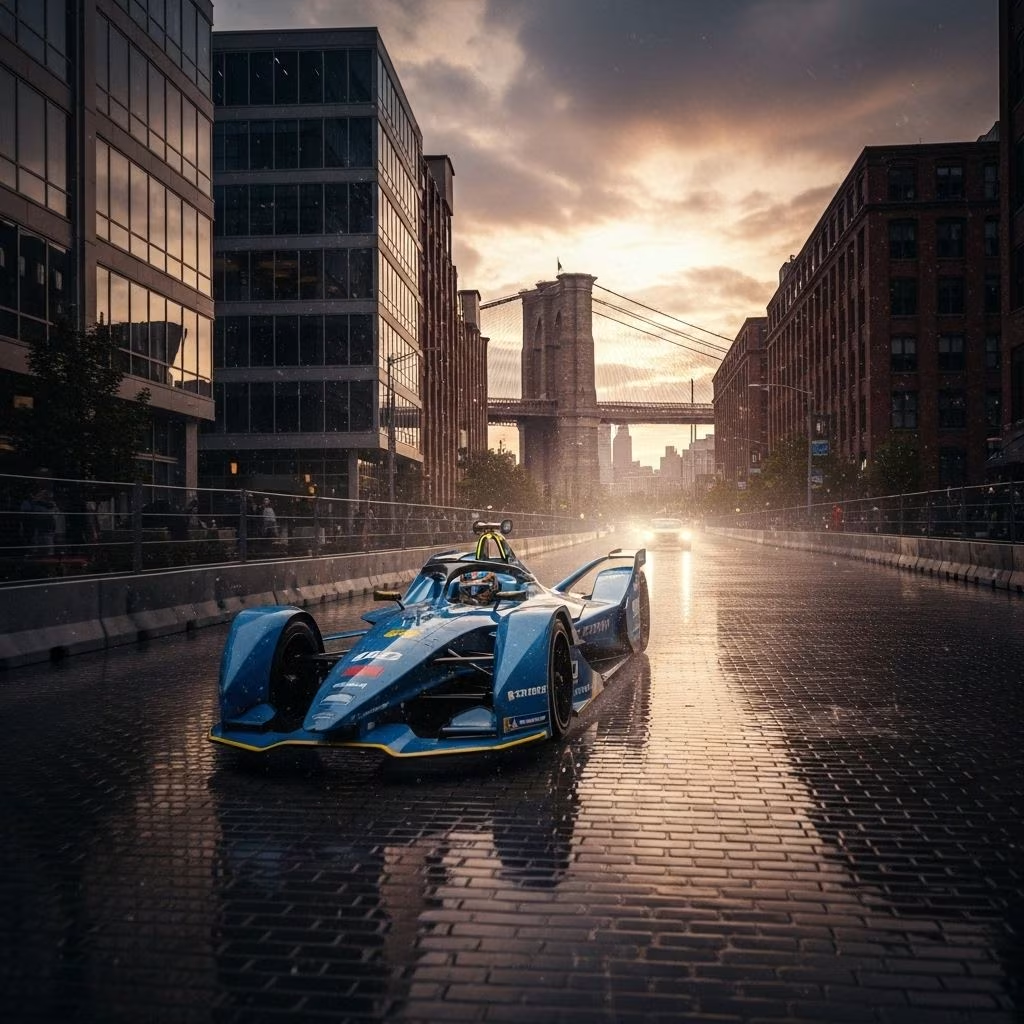
Electric Vehicles Hit Top Gear: Formula E’s Arrival in Brooklyn
Once a futuristic concept, electric vehicle racing has become a global spectacle. In a city renowned for its hustle, the ABB FIA Formula E World Championship brought electrifying energy to the heart of Brooklyn. This urban race didn’t just challenge motorsport norms—it paraded the capability, excitement, and environmental promise of next-generation transport through the borough’s iconic streets.
What Is Formula E? The Making of an Electric Street Race
Formula E is the world’s leading electric car racing series, featuring single-seater, battery-powered race cars that compete on tight, urban circuits set against dramatic city backdrops. Launched with the dual goal of promoting clean mobility and thrilling racing, Formula E pushes boundaries for both engineering and sustainability, all while delivering compelling entertainment.
- Founded: 2014
- Car type: Fully electric, single-seat racing cars (current “Gen3” cars hit 200 mph with instant, silent acceleration)
- Purpose: To advance EV technology, shrink motorsport’s environmental impact, and inspire global EV adoption
Unique for its temporary city-center circuits, Formula E replaces traditional racetracks with the concrete canyons of major urban areas, transforming ordinary city streets into high-tech, high-stakes arenas.
The Brooklyn Course: The City as a Racetrack
The Brooklyn Street Circuit is among Formula E’s most recognizable venues. Staged in the Red Hook neighborhood and snaking past the New York Harbor, racers are treated to panoramic views of Lower Manhattan—a stark backdrop underscoring the contrast between next-gen automotive tech and historic cityscape.
- Circuit Length: 2.374 kilometers (1.475 miles)
- Lap Count: 39
- Key features: Tight corners demanding precision, a sweeping straight for electric acceleration, grandstands overlooking the waterfront, and Allianz Village for fans
This challenging course not only tests driver skill and team strategy, but also dramatically demonstrates how electric racing can adapt to—and even enhance—the pulse of a metropolis.
Memorable Moments: Race Results and Standout Drivers
Since its debut in 2017, the New York City ePrix has been a highlight of the Formula E calendar, drawing international teams and spectators. Over its five-year run (2017-2022), it hosted dramatic on-track battles and crowned a diverse set of champions.
| Year | Race Winner(s) | Team | Repeat Winner |
|---|---|---|---|
| 2017 (R1 & R2) | Sam Bird | Virgin-Citroën | ✔️ |
| 2018 (R1 & R2) | Lucas Di Grassi, Jean-Éric Vergne | Audi, Techeetah-Renault | |
| 2019 (R1 & R2) | Sébastien Buemi, Robin Frijns | e.Dams-Nissan, Virgin-Audi | |
| 2021 (R1 & R2) | Maximilian Günther, Sam Bird | Andretti-BMW, Jaguar | ✔️ |
| 2022 (R1 & R2) | Nick Cassidy, António Félix da Costa | Envision-Audi, Techeetah-DS |
- Sam Bird became the standout repeat champion, earning three victories across two teams.
- Races often featured dramatic overtakes, championship showdowns, and weather-affected drama.
The competition at Brooklyn consistently showcased the razor-thin margins separating elite drivers and teams in this evolving sport.
Formula E vs. Formula 1: What Sets Electric Racing Apart?
While Formula 1 remains the gold standard for speed and tradition, Formula E’s high-octane city racing and commitment to sustainability have redefined motorsport’s appeal. A critical comparison reveals why Formula E is far more than just a “greener” alternative:
| Feature | Formula E | Formula 1 |
|---|---|---|
| Powertrain | Fully electric | Hybrid (internal combustion + electric) |
| Circuit | Temporary city streets | Dedicated racetracks |
| Noise | Minimal, high-pitched electric sound | Loud, roaring engines |
| Top Speed | ~200 mph (Gen3 Evo) | ~220-230 mph |
| Environmental Impact | Zero tailpipe emissions during race | Reduced, but not zero |
| Fan Experience | Accessible urban venues, immersive fan zones | Traditional grandstands, trackside exclusivity |
Sustainability Front and Center: Formula E’s Green Legacy
Formula E isn’t just about electric cars—it’s built around sustainability in every aspect. From how the event is staged to the technology on display, the championship aims to set new benchmarks for the entire motorsport industry.
- 100% renewable energy is used for every race event.
- All tires are recycled post-race; race batteries are refurbished or recycled.
- Events prioritize low-impact logistics and carbon-neutral practices.
This commitment goes beyond racing: Formula E’s innovations in battery tech, energy management, and smart urban mobility have rippled through the consumer electric vehicle (EV) market and city planning worldwide.
Behind the Wheel: Tech Innovations That Define Formula E
Formula E’s racing machines push technological boundaries, directly influencing how future road cars will perform.
- Instant electric torque delivers unmatched acceleration (0-60 mph in 1.82 seconds—outpacing even F1’s latest models).
- Regenerative braking systems recover energy on the fly, extending battery range and reducing waste.
- Wireless connectivity and “over-the-air” updates optimize car performance in real time.
E-racing is uniquely collaborative: manufacturers including Porsche, Jaguar, Nissan, and Maserati compete yet share advancements, accelerating the pace of EV tech adoption beyond the racetrack.
The Fan Experience: Accessible, Urban, and Immersive
A Formula E weekend in Brooklyn isn’t just for race devotees—it’s a celebration of urban culture and community engagement. Race-goers can explore the diverse pop-up pavilions of Allianz E-Village, featuring:
- Interactive tech and gaming zones
- Live music and sustainable food vendors
- EV test drives and demonstrations
- Meet-and-greets with drivers and behind-the-scenes pit tours
Bringing the spectacle directly to Brooklyn allows fans young and old to experience next-gen vehicles, smart infrastructure concepts, and the thrill of clean racing up close.
Urban Transformation: Brooklyn’s E-Prix as a Case Study
Hosting Formula E in Brooklyn has spotlighted the borough as a symbol of sustainable transition and innovation. The event produced numerous benefits and lessons for cities worldwide:
- Economic Boost: Created jobs, drew tourists, and showcased local businesses.
- Infrastructure Upgrades: Spurred investment in roads and EV charging stations.
- Community Engagement: Inspired youth STEM programs and local volunteerism.
- Environmental Advocacy: Elevated conversations about city air quality, public transit, and green urban design.
Ultimately, the race blurred boundaries between motorsport, civic progress, and the clean energy movement—a testament to how cultural and technical shifts can intersect for public good.
Formula E: Challenges, Criticisms, and Evolution
Like any disruptive innovation, Formula E hasn’t been immune to challenges. Its rapid growth and embrace of celebrities—such as the new Evo Sessions featuring influencers—has divided traditional fans and critics. Some argue this could undermine the sport’s competitive credibility, while others see it as a savvy move to broaden appeal and accessibility. Formula E leadership maintains that such strategies are essential to showcase the gap between novices and professional drivers while expanding the sport’s reach without diluting core competition.
Another debate surrounds the environmental claim: while the races themselves are zero-emission, the larger impact depends on overall event logistics, global travel, and post-event waste management. Nonetheless, Formula E remains a leader in measuring, reporting, and actively reducing these impacts every season.
Formula E’s Broader Legacy: Driving a Global EV Future
Beyond the racetrack, Formula E’s greatest success may be in changing public perception and technological ambition. By putting electric mobility center stage in urban centers, the championship accelerates:
- Normalization of EVs as high-performance, aspirational vehicles
- Cross-industry investment in battery technology, lightweight materials, and smart city integration
- Urban policy shifts in favor of EV infrastructure and active transportation
- Greater push for renewable energy adoption and energy efficiency in public and private sectors
In short, Formula E is not just a sporting event—it is a catalyst for change at local and global scales, pushing cities and consumers toward a future built on sustainability and high-tech innovation.
Frequently Asked Questions (FAQ)
How fast are Formula E cars, and can they really outperform Formula 1 acceleration?
The latest Gen3 Evo Formula E cars reach up to 200 mph and accelerate from 0-60 mph in just 1.82 seconds—30% faster than a current F1 car’s sprint speed.
Is the Formula E race in Brooklyn open to the public?
Yes, fans could purchase tickets for grandstand seats and the Allianz E-Village, with additional events encouraging local participation and community access.
Why did Formula E choose city streets instead of permanent racetracks?
Racing in urban environments showcases EVs’ real-world potential, brings the sport to a wider audience, and highlights the synergy between advanced mobility and city life.
What is the environmental impact of Formula E compared to other motorsports?
Formula E events use renewable energy, emphasize recycling and low-carbon operations, and target net zero emissions, leading motorsport’s effort to minimize environmental impact.
Does Formula E really influence the cars people can buy?
Absolutely. Racing advances innovations in batteries, drive systems, and regenerative braking—many of which make their way into consumer electric vehicles and sustainable transport policy.
References
- https://en.wikipedia.org/wiki/New_York_City_ePrix
- https://evpowered.co.uk/electric-powered-motorsport/formula-e/brooklyn-beckham-joins-formula-e-as-an-evo-sessions-driver/
- https://andrettiglobal.com/teams/formula-e/
- https://www.fiaformulae.com/en/calendar
- https://www.sae.org/attend/student-events/formula-sae-electric
- https://www.fiaformulae.com/en
- https://www.youtube.com/@FIAFormulaE


