Fascinating Facts About the Geoduck: The World’s Largest Burrowing Clam
The geoduck (Panopea generosa) is one of the ocean’s most extraordinary inhabitants. Renowned for its remarkable size, unique appearance, and longevity, this clam has captured the imagination of marine biologists, chefs, and seafood enthusiasts around the world. In this article, we dive deep into the world of the geoduck, exploring its biology, habitat, life cycle, environmental impact, and place in global cuisine.
What Is a Geoduck?
The geoduck is the world’s largest burrowing clam. Originally native to the coastal waters of the northeastern Pacific Ocean—from Alaska through British Columbia and south to Baja California—this marine mollusk stands out for its massive siphon, longevity, and culinary value.
- The name “geoduck” is pronounced “gooey-duck” (\u02c8\u0261u\u02d0i\u02ccd\u028ck).
- The scientific name is Panopea generosa.
- The shell typically measures about 15–20 cm (6–8 inches), but the siphon can extend up to 1 meter (over 3 feet).
- A mature geoduck can weigh up to 4.5 kg (10 lbs), though most harvested specimens are closer to 1 kg (2.2 lbs).
- Other common names include mud duck, king clam, and, in Chinese, “elephant trunk clam” due to its distinctive long neck.
Etymology and Name Origins
The peculiar name “geoduck” originates from the Lushootseed Native American language, where it is pronounced gʷidəq. The exact meaning is still debated. Some linguists believe it refers to the shape (“genitals,” in reference to the shape of the siphon), while others connect it to the clam’s deep-burrowing behavior, translating roughly as “dig deep.”
Through trade and transliteration, the geoduck has acquired evocative names in different cultures, with the Chinese “elephant trunk clam” vividly describing its appearance.
Physical Description and Anatomy
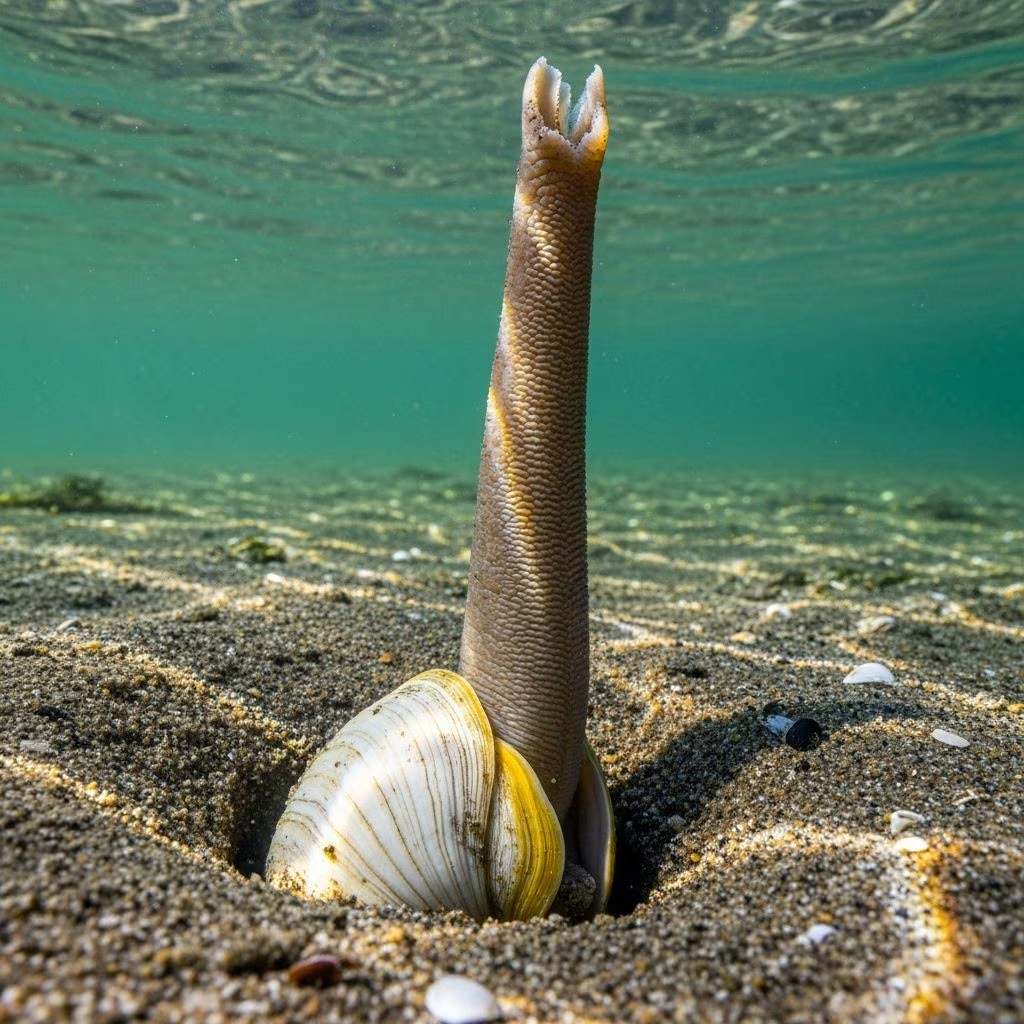
The geoduck’s anatomy is nothing short of remarkable. Unlike most clams, geoducks cannot fully retract into their shells. Their oversized siphon and mantle remain permanently exposed outside the shell’s protection.
- Shell: White, thick, and oval, usually about 15–20 cm long but rarely closes completely due to the large soft body and siphon.
- Siphon (“neck”): Length up to 1 meter; cannot be retracted. The siphon is used for feeding and respiration and has two openings—one for drawing in water and another for expelling it.
- Body: The geoduck’s body includes a small, muscular foot that is functionally important for juvenile clams but proportionally diminishes as the animal matures.
When fully extended, a geoduck’s siphon dramatically dwarfs the shell, accounting for its unusual shape and giving the animal a distinctive appearance within the mollusk family.
Habitat and Geographic Range
Geoducks are native to the coastal waters of the northeast Pacific, thriving in:
- Geographic range: From Alaska’s cold shores through the Pacific Northwest (including British Columbia, Washington State, and Oregon) down to Baja California, Mexico.
- Substrate preference: Soft, sandy, or muddy substrates of intertidal and subtidal zones; typically burrowed at depths from the low tide mark down to about 100 m (330 ft).
- Burrowing depth: Adult geoducks usually live between 45 cm (18 inches) and 1 meter (3.3 feet) beneath the ocean floor.
This deep burrowing protects the geoduck from predators and environmental stressors, making it relatively sedentary for most of its life.
Growth, Life Cycle, and Longevity
Few marine invertebrates can boast such extraordinary lifespans as the geoduck. The life cycle and growth rates of these clams are highly unusual among bivalves.
- Longevity: Typical lifespan of 100–140 years; the oldest recorded individual was 179 years old.
- Life cycle: Geoducks pass through seven distinct life-history stages, beginning as planktonic larvae after external fertilization. After 16–47 days, they settle on the seabed, use their foot to burrow down, and eventually establish their permanent burrow.
- Growth rate: Rapid in the first 3–4 years (up to 30 mm per year), after which it slows dramatically as the clam matures. Age is determined by counting the shell’s growth rings, much like tree rings.
- Sexual maturity: Females and males reach maturity about 3–6 years after settlement. Females release 1–2 million eggs per spawning event, but actual recruitment is low and juveniles are rare.
Once established, adult geoducks rarely move—anchoring to one spot for life. For many, this means lying hidden beneath the sand for more than a century.
Feeding and Ecological Role
Geoducks are filter feeders. Through their immense siphons, they continually pump seawater and extract microscopic food particles from their environment.
- Primary diet: Phytoplankton (microscopic, drifting plant-like organisms) suspended in the water column.
- Feeding mechanics: Water is drawn in through one opening in the siphon, passes over the gills for oxygen exchange, and microscopic food is trapped and consumed. The filtered water is expelled through the other opening.
- Ecological significance: By filtering vast quantities of water, geoducks help maintain water clarity and contribute to nutrient cycling within their ecosystems.
As one of the largest and oldest filter feeders in coastal regions, geoducks play an essential role in their marine communities.
Reproduction and Development
Geoducks have a fascinating reproductive cycle and impressive output, but their recruitment (the number of young that survive to adulthood) remains surprisingly low.
- Dioecious species: Individuals are distinctly male or female.
- Spawning season: Most reproduction occurs from late spring to early summer (typically June–July), with males spawning over a longer period than females.
- Fertilization: External; eggs and sperm meet in the water column, followed by planktonic larval development.
- Reproductive capacity: Females can release up to 2 million eggs per spawning, but intense predation and environmental hazards mean that few larvae survive.
While adults can continue reproducing throughout their long lifespans, successful recruitment of new juveniles is a relatively rare event, adding to the geoduck’s ecological vulnerability.
Geoducks and the Environment
Because of their filter-feeding habits and deep-burrowing lifestyle, geoducks are highly connected to their surroundings—and sensitive to environmental changes.
- Bioaccumulation: Geoducks can accumulate toxins from the water, including microorganisms and compounds like those responsible for paralytic shellfish poisoning (PSP). The risk is highest in the animal’s viscera (internal organs); the siphon and mantle, which are most commonly consumed, have lower concentrations of these toxins.
- Sentinel species: Geoducks’ longevity and stationary lifestyle can make them valuable bioindicators of long-term environmental changes and marine health.
- Threats: Overharvesting, habitat disruption, ocean acidification, and pollution can all impact wild geoduck populations.
Careful management and monitoring are essential to preserving both the species and the health of the marine ecosystems they inhabit.
Geoducks in Cuisine
Beyond their biological marvels, geoducks are prized as a culinary delicacy—especially in Asian markets.
- Global popularity: While local to the Pacific Northwest, over 90% of the Canadian geoduck harvest is exported, chiefly to China and Hong Kong, where it is highly valued for its sweet, crisp texture.
- Culinary uses:
- Served raw as sashimi or sushi
- Included in soups, hot pots, and stir-fries
- Its siphon (neck) is prized for its crunchy, sweet flavor; the mantle is typically tenderized and cooked.
- Nutritional value: Like most shellfish, geoducks are low in fat, rich in protein, and contain a variety of vitamins and minerals.
Professional divers harvest wild geoducks by hand using water jets—an exacting and environmentally sensitive technique that helps ensure sustainability in the fishery.
Commercial Harvest and Aquaculture
Harvesting and farming geoducks is a significant and tightly regulated industry in the Pacific Northwest, especially in British Columbia and Washington State.
- Commercial harvest: Targets mature clams buried deeply in coastal substrates. Divers use specialized underwater equipment to loosen sand and extract the clams by hand.
- Exports: The majority of harvested geoducks are shipped live to Asian markets, where they command premium prices.
- Aquaculture: In addition to wild harvests, geoducks are grown on farms, often starting as hatchery-raised juveniles that are planted into prepared plots and tend until mature (a process that can take 6–7 years).
- Sustainability: Regulations and quotas control both wild and farmed production to minimize environmental impact and preserve natural populations.
Both the wild and farmed geoduck industries provide economic benefits to Pacific coastal communities while facing challenges from environmental shifts and international trade dynamics.
Interesting Facts and Trivia About Geoducks
- Geoducks are among the longest-lived animals known—rivaled among marine invertebrates only by certain species of deep-sea clams and corals.
- The word “geoduck” sounds funny, but the clam itself isn’t a duck or related to any bird species.
- The shell’s annuli (growth rings) function like those of trees, recording the animal’s age and even hints about past ocean conditions.
- Though unmovable as adults, geoduck larvae are free-swimming and journey miles before settling on the sea floor.
- Due to their burrowing depth, geoducks can be extremely difficult to collect—even for experienced divers.
- Some geoducks have reportedly weighed over 7 kg (15 lbs), though most are far smaller at harvest.
Table: Quick Comparison — Geoduck vs. Other Clams
| Feature | Geoduck | Manila Clam | Razor Clam |
|---|---|---|---|
| Maximum Shell Length | 15–20 cm (6–8 in) | 5–7 cm (2–3 in) | 12–15 cm (5–6 in) |
| Siphon Length | Up to 1 m (3+ ft) | Short, retractable | Short, retractable |
| Lifespan | 100–140 years (up to 179) | 7–10 years | 14–18 years |
| Habitat Depth | Buried up to 1 m | Shallow burrow | Shallow burrow |
| Culinary Use | Raw or cooked (sashimi, hot pot) | Cooked | Cooked |
Frequently Asked Questions (FAQs)
Q: How do you pronounce “geoduck”?
A: It’s pronounced “gooey-duck” (\u02c8\u0261u\u02d0i\u02ccd\u028ck).
Q: Why is the geoduck’s siphon so long?
A: The long siphon allows the geoduck to stay safely buried deep under the sediment while still accessing surface water for filter feeding and respiration.
Q: Are geoducks safe to eat?
A: Yes. Most parts consumed (siphon and mantle) are safe, but like other shellfish, geoducks can accumulate toxins. Harvests are monitored for safety, especially for toxins causing paralytic shellfish poisoning (PSP).
Q: How long does it take for a geoduck to reach harvest size?
A: Typically, wild or farmed geoducks are harvested at about 6–7 years old when they reach prime commercial size (about 1 kg or 2.2 lbs).
Q: What is the nutritional profile of geoduck?
A: Geoduck meat is low in fat, high in protein, and contains essential nutrients including vitamin B12, selenium, and omega-3 fatty acids.
Q: Why is geoduck so expensive?
A: The combination of its rarity, harvesting difficulty, long grow-out periods, and high demand in Asian cuisine make geoduck one of the world’s more expensive seafood delicacies.
References
- https://en.wikipedia.org/wiki/Geoduck
- https://www.youtube.com/watch?v=HYouSGrLkIw
- https://www.adfg.alaska.gov/index.cfm?adfg=geoduck.printerfriendly
- https://geoduck.org/about/
- https://explorewashingtonstate.com/everything-never-wanted-know-geoducks/
- https://www.montereybayaquarium.org/animals/animals-a-to-z/geoduck-clam
- https://marinespecies.wildlife.ca.gov/pacific-geoduck-clam/the-species/