


The Essential Guide to Ginkgo Biloba
Ginkgo biloba—often called the maidenhair tree—is one of the oldest, most fascinating, and most widely recognizable trees in the world. Surviving from the age of dinosaurs to today’s bustling cities, this remarkable plant boasts a unique evolutionary story, iconic fan-shaped leaves, uses in traditional and modern medicine, and a vital role in urban landscapes.
What Is Ginkgo Biloba?
Ginkgo biloba is a unique species of tree native to China but now found worldwide, renowned for its resilience, distinct leaves, and deeply rooted legacy. Sometimes called the maidenhair tree due to its leaves’ shape, Ginkgo is the last survivor of an ancient lineage—one that predates the dinosaurs by millions of years. Not only is it botanically extraordinary, but it is also culturally revered and used for a wide range of purposes, from traditional medicine to urban landscaping.
Evolutionary History: A Living Fossil
Few plants on Earth can claim the title of “living fossil” as fully as Ginkgo biloba. With a lineage stretching back over 200 million years, Ginkgo is the sole surviving member of the Ginkgoaceae family. Its closest relatives disappeared after the Ice Age, but Ginkgo endured drastic changes in climate and geology, remaining morphologically unchanged since the Jurassic period.
The Ginkgo genus itself first appeared in the Permian period, over 290 million years ago. Today, botanists and paleontologists marvel at fossilized Ginkgo leaves that are virtually indistinguishable from those fluttering on modern trees.
- Classified as a gymnosperm (non-flowering seed plant) and sometimes called a “dinosaur tree.”
- Outlived global extinctions that wiped out vast swathes of prehistoric flora and fauna.
- Known for its remarkable stasis—remaining nearly unchanged in form and function over eons.
Unique Biology and Characteristics
Leaf Structure
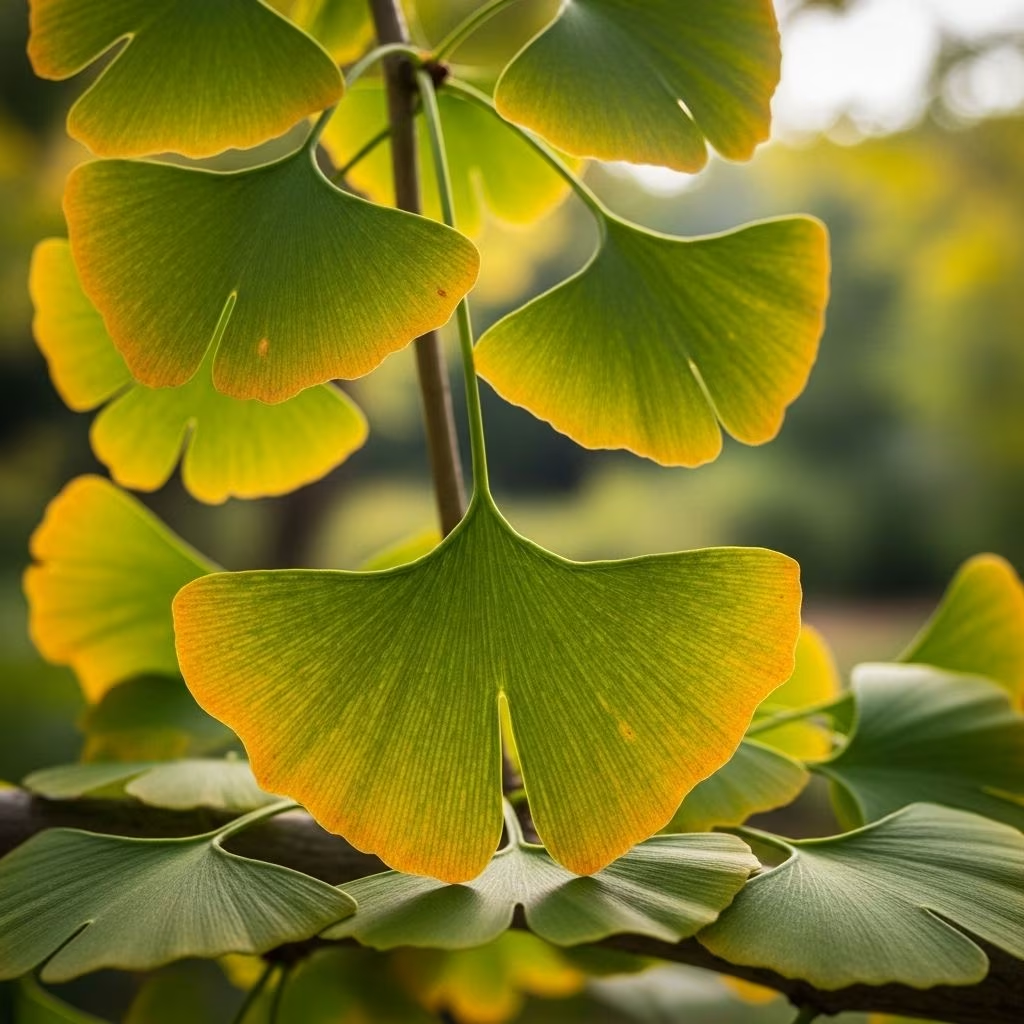
Ginkgo’s signature fan-shaped leaves set it apart from all other trees. These leathery leaves have a distinctive vein pattern—radiating outward in a manner reminiscent of maidenhair ferns, which inspired the common name maidenhair tree.
Reproductive Strategy
- Dioecious species: Each individual tree is either male or female.
- Male trees produce small pollen cones in the spring.
- Female trees bear seeds encased in a soft, aromatic outer flesh. When ripe, these seeds emit a potent odor due to butyric acid (similar to rancid butter), discouraging some plantings in urban settings.
- Despite the stink, the seeds (often called “ginkgo nuts”) are a delicacy in East Asian culinary traditions—once thoroughly cleaned and prepared.
Growth and Size
- Ginkgo biloba can live for centuries—some specimens are over 1,600 years old, with speculation of trees surviving more than 3,000 years.
- Mature height can reach 35–40 meters (115–130 ft.), with broad, spreading crowns.
- Extremely resistant to pests, diseases, pollution, and environmental stress.
Ecological Significance & Longevity
A potent symbol of resilience and renewal, Ginkgo biloba’s story is one of survival on both the botanical and urban stages.
- Withstood mass extinctions, including those that eliminated the dinosaurs.
- Some specimens famously survived the atomic bombing of Hiroshima in 1945 and continue to grow today, regarded as icons of hope and renewal.
- Ginkgo’s unique biochemistry—featuring compounds like ginkgolides and bilobalide—may underpin its ability to resist pathogens, pests, and environmental extremes.
- In urban settings, it is a preferred street tree due to its resistance to air pollution, salt, compacted soils, and limited root space.
Ginkgo in Culture & Human History
Ginkgo holds a place of reverence in many cultures, especially in East Asia where it is native. For millennia, it has featured in art, folklore, gardens, and traditional medicine.
- Celebrated in Chinese, Japanese, and Korean temples and monastery gardens as a symbol of endurance, peace, and wisdom.
- Associated with longevity and resilience in numerous myths and legends.
- Referred to in Chinese texts as “silver fruit” or “white fruit.” The name “ginkgo” is believed to result from a centuries-old transcription error.
The tree’s popularity in urban landscapes came later, but today it is beloved in cities worldwide, not just for its resilience but also for its striking fall foliage, which turns brilliant gold in autumn.
Growing and Caring for Ginkgo Biloba
Due to its exceptional toughness, Ginkgo is a favorite among urban gardeners, arborists, and landscape architects. However, it rewards careful planting and observation.
- Location: Prefers full sun but tolerates light shade and a variety of soil types, provided they are well-drained.
- Watering: Regular watering in the first few years helps establish strong roots; mature trees are drought-resistant.
- Pruning: Prune only as needed to maintain form, as Ginkgo’s growth is slow and steady.
- Spacing: Allow plenty of room for mature growth; trees can spread widely with age.
- Selection: For urban or ornamental planting, male cultivars are often chosen to avoid the messy (and pungent) fruit of female trees.
Ginkgo’s resistance to air pollution—and even de-icing salt—makes it ideal for roadside planting in major cities.
Medicinal Uses and Science
Ginkgo biloba leaves and seeds have been used in traditional Chinese medicine for centuries to address illnesses ranging from respiratory ailments to circulatory problems. Today, standardized Ginkgo extracts feature in herbal supplements globally—especially for cognitive and circulatory support.
Key Phytochemicals
- Ginkgolides & Bilobalide: Unique terpene lactones thought to contribute to Ginkgo’s neuroprotective and vascular effects.
- Flavonol glycosides: Such as quercetin and catechin, potent antioxidants believed to enhance circulation and combat oxidative stress.
- Proanthocyanidins: Another group of antioxidants with anti-inflammatory and vascular benefits.
Current Research & Efficacy
Modern research has focused on Ginkgo’s effects in several therapeutic areas:
- Memory & Cognition: Some studies suggest mild benefits in age-related cognitive decline and dementia, although evidence is mixed and not conclusive.
- Peripheral Circulation: Ginkgo may enhance blood flow, especially in the brain and extremities.
- Neuroprotection: Laboratory research indicates antioxidant, antiapoptotic, and neurotransmitter modulating properties.
- Mood & Wellbeing: There’s some indication of benefit for attention, mood, and activities of daily living, particularly in older adults.
It is important to note that while Ginkgo biloba is approved by the European Medicines Agency for symptomatic relief in dementia, it is not approved by the U.S. Food and Drug Administration for medical treatment. Most studies highlight limited effectiveness and stress the importance of standardized extracts for any potential benefits.
Risks & Considerations
Despite its widespread use, Ginkgo biloba is not without risks. Anyone considering supplementation should be aware of potential side effects and interactions.
- Allergic reactions: Some people may react to Ginkgo pollen or its compounds.
- Ginkgotoxin: Present in seeds, this can cause serious neurological symptoms or poisoning if consumed raw or in excessive amounts.
- Drug interactions: Ginkgo may interact with blood thinners (e.g., warfarin), antidepressants, and seizure medications, potentially increasing bleeding risk or neurological side effects.
- Carcinogenicity: Animal studies raise concerns about potential carcinogenicity, although the relevance to humans is unclear.
- Other side effects: Digestive upset, headaches, dizziness, and allergic skin reactions can occur, especially at high doses or in sensitive individuals.
Always consult a healthcare professional before starting Ginkgo supplements, especially for young children, pregnant or breastfeeding individuals, or anyone on concurrent medication.
Fun Facts About Ginkgo Biloba
- A tree of superlatives: Some Ginkgo trees in Chinese temple courtyards are thought to be more than 1,400 years old.
- Nuclear resilience: Trees near the epicenter of Hiroshima’s atomic blast sprouted new leaves within months, symbolizing hope and endurance.
- Urban favorite: New York City and other cities have planted thousands of Ginkgo trees due to their adaptability and low maintenance.
- Bonsai beauty: Ginkgo is a highly prized species in bonsai culture due to its sculptural form and longevity.
- Golden fall: In autumn, Ginkgo leaves transform entire avenues and parks into carpets of radiant gold before dropping almost simultaneously.
- Misnamed marvel: The word “ginkgo” comes from a botanical error in an old transcript. The correct original pronunciation was likely “yin-xing.”
Frequently Asked Questions (FAQs)
Q: Why is Ginkgo biloba called a living fossil?
A: Ginkgo biloba is called a living fossil because it has remained virtually unchanged for over 200 million years, surviving mass extinction events and retaining features found in ancient fossilized specimens.
Q: Are Ginkgo trees male or female?
A: Each Ginkgo tree is either male or female (dioecious). Male trees produce pollen, while female trees produce seeds with a fleshy, aromatic outer layer. Most urban plantings favor male trees to eliminate the strong odor of fallen fruits.
Q: Is it safe to eat Ginkgo seeds or nuts?
A: Ginkgo seeds, commonly used in Asian cuisine, must be properly prepared to remove toxins. Eating raw or large quantities can be dangerous, especially for children or people sensitive to ginkgotoxin.
Q: Does Ginkgo biloba really improve memory?
A: Scientific studies show inconsistent results. While some evidence suggests slight cognitive and memory improvements, especially in dementia, results for healthy adults are less convincing.
Q: Why plant Ginkgo biloba in urban areas?
A: Ginkgo’s resistance to pollution, pests, diseases, and urban stresses makes it ideal for city streets, parks, and gardens.
Q: How long can a Ginkgo tree live?
A: Ginkgo trees can live for hundreds, even thousands, of years. Records show individuals in China that are well over 1,400 years old, and some may surpass 3,000 years.
Q: Are there any environmental concerns with cultivating Ginkgo?
A: Ginkgo has little risk of becoming invasive. Rather, it is often used to restore urban landscapes and does not typically disrupt native ecosystems.
References
- Nature.com. “A gene cluster in Ginkgo biloba encodes unique multifunctional …”
- Wikipedia. “Ginkgo biloba.”
- NCBI PMC. “A Systematic Review and Meta-Analysis of Ginkgo biloba in …”
- Cleveland Clinic. “Pharmacotherapy Update – Ginkgo Biloba and Memory”
References
- https://www.nature.com/articles/s41467-022-32879-9
- https://en.wikipedia.org/wiki/Ginkgo_biloba
- https://pmc.ncbi.nlm.nih.gov/articles/PMC3679686/
- https://www.clevelandclinicmeded.com/medicalpubs/pharmacy/sepoct02/ginkgo.htm
- https://pmc.ncbi.nlm.nih.gov/articles/PMC8901348/
- https://www.science.org/doi/10.1126/science.157.3794.1270
- https://www.medicalnewstoday.com/articles/263105


