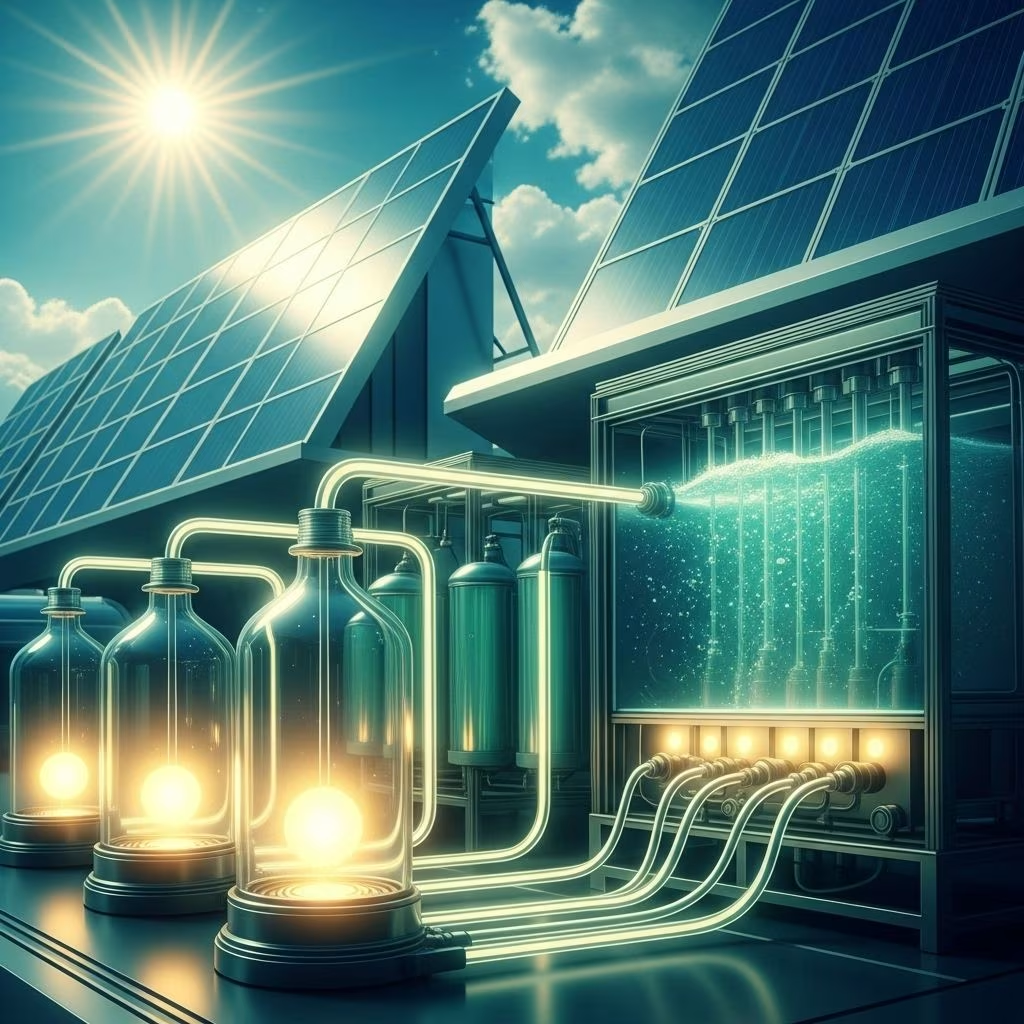
Green Hydrogen: Bottling Sunshine for a Clean Energy Future
Green hydrogen is often described as ‘sunshine in a bottle,’ signifying its promise as a storable, transportable, and sustainable form of energy derived from renewable sources. By splitting water using renewable electricity, we can create hydrogen fuel with almost zero greenhouse gas emissions, positioning green hydrogen as a cornerstone technology in the fight against climate change.
What Is Green Hydrogen?
Hydrogen is the universe’s most abundant element, but it does not occur naturally as a pure gas on Earth. Green hydrogen refers to hydrogen produced through the electrolysis of water powered by renewable energy sources such as solar, wind, or hydroelectricity. This process emits no greenhouse gases, distinguishing it from other forms of hydrogen dependent on fossil fuels.
- Grey hydrogen: Produced from natural gas or coal via steam methane reforming or gasification, emitting significant CO2.
- Blue hydrogen: Created similarly to grey hydrogen, but with carbon capture and storage technologies to reduce emissions.
- Green hydrogen: Generated with renewables and water, producing zero direct emissions.
The Production Process
The hallmark of green hydrogen is its production method: electrolysis. Here, water (H2O) molecules are split into hydrogen (H2) and oxygen (O2) by electricity supplied exclusively from renewable sources. The core process is as follows:
- Preparation: Purified water is introduced into an electrolyzer.
- Electrolysis: Electric current splits water into hydrogen and oxygen. The hydrogen is collected for use; the oxygen is often released or utilized elsewhere.
- Storage: Hydrogen gas is stored for later energy production, transportation, industrial use, or as a chemical feedstock.
The result is a fuel whose entire lifecycle—from production to utilization—generates negligible environmental impact, assuming a green electricity source.
How Green Hydrogen Is Produced
While most current hydrogen production relies on fossil fuels, green hydrogen uses renewable energy for a carbon-free output. The primary technology employed is water electrolysis:
| Type of Electrolyzer | Description | Key Features |
|---|---|---|
| Alkaline Electrolyzers (AE) | Mature, cost-effective; uses liquid alkaline electrolyte. | Best for large-scale, steady production; less suited to intermittent renewables. |
| Proton Exchange Membrane (PEM) | Solid polymer electrolyte; responsive to variable power. | Ideal for coupling with solar and wind, but more expensive due to precious metals. |
| Solid Oxide Electrolyzers (SOEC) | Operates at high temperatures; can integrate heat sources. | High efficiency for industrial settings; slower to start and stop. |
| Anion Exchange Membrane (AEM) | Emerging technology, blending AE affordability and PEM flexibility. | Lower costs, improved adaptability (still under development). |
Electrolyzers leverage renewable energy to split water, ensuring that the hydrogen produced is entirely “green.” The production process can be summarized as:
- Water Input: Clean, deionized water is required for efficient electrolysis.
- Electricity: Provided by solar, wind, or hydro sources.
- Electrochemical Reaction: At the anode, water loses electrons to form oxygen and hydrogen ions. At the cathode, hydrogen ions gain electrons to form hydrogen gas.
The Role of Renewable Energy
- Solar power: Photovoltaic panels generate electricity for electrolysis during daylight, capturing solar energy directly from the sun.
- Wind power: Wind turbines provide a steady and growing source of renewable electricity, especially in regions with strong wind resources.
- Hydroelectric: Hydroelectric plants can supply consistent renewable energy for large-scale hydrogen generation.
When there is excess renewable generation (e.g., midday solar or windy nights), the surplus power is directed to electrolyzers to make hydrogen, allowing renewable energy to be stored for later use.
Energy Storage and Integration
Green hydrogen acts as a bridge between renewable generation and energy demand by facilitating storage and transport:
- Battery energy storage: Captures surplus renewable electricity to run electrolyzers when direct generation is insufficient.
- Hydrogen storage: Compressed hydrogen tanks or underground caverns store hydrogen for future use, enabling seasonal and long-term energy storage.
Why Green Hydrogen Matters
The global push to decarbonize energy systems highlights the strategic importance of green hydrogen. Key drivers include:
- Emissions reduction: When produced with renewables, green hydrogen enables industries and transport to eliminate CO2 emissions associated with fossil fuels.
- Energy storage: Hydrogen enables long-term storage of surplus renewable energy, balancing intermittent solar and wind production across different timescales.
- Versatility: Can be converted into electricity or used directly as a fuel, a feedstock for industries (such as ammonia, steel), or a heat source for high-temperature processes.
- Energy security and independence: Reduces dependence on volatile fossil fuel markets and can be produced domestically wherever there is access to renewable resources and water.
Applications and Use Cases
Green hydrogen’s promise extends across the entire energy sector. Here are the primary areas of current and future impact:
- Transportation:
- Fuel cell electric vehicles (FCEVs) for long-haul trucks, buses, trains, shipping, and possibly aviation.
- Refueling stations operating on green hydrogen promote the transition to zero-emission mobility.
- Industrial sector:
- Replacement for carbon-intensive hydrogen in fertilizer, steel, and petrochemical production.
- Decarbonizing hard-to-abate sectors where direct electrification is technically or economically challenging.
- Electric power grid:
- Hydrogen-fired turbines and storage enable deep integration of renewables by providing backup and load balancing during periods of low solar or wind output.
- Buildings and heating:
- Blended into natural gas pipelines or replacing natural gas for heating, helping reduce emissions in urban environments.
Current Status and Growth Potential
Global investment in green hydrogen is accelerating. Numerous large-scale projects are being announced, and technological advancement is steadily cutting costs and improving efficiency.
- As of late 2023, hundreds of green hydrogen projects are in development stages worldwide, with pipeline capacity surging by over 35% to meet anticipated demand.
- Electrolyzer manufacturing is scaling up, with new plant construction in Europe, Asia, Australia, North America, and the Middle East.
- Governments are launching national hydrogen strategies, setting out incentives and regulations to stimulate both production and use.
Case Study: Scaling Up Electrolyzers
Investment from the Hydrogen Council and leading industrial players is creating a “hydrogen ecosystem.” This effort fosters:
- Advancements in electrolyzer efficiency and material science.
- Innovations in renewable integration and hydrogen logistics.
- Ongoing reductions in capital and operational costs, making green hydrogen more competitive with fossil-derived hydrogen.
Challenges Facing Green Hydrogen
Despite its promise, several obstacles must be overcome for green hydrogen to fulfill its potential:
- High production costs: Even with falling renewable energy prices, electrolyzers are capital-intensive and hydrogen’s production cost still exceeds fossil alternatives.
- Energy and resource requirements: Electrolysis is less energy efficient than direct use of renewables. Substantial quantities of clean water are also necessary—around 9 liters per kilogram of hydrogen produced.
- Infrastructure gaps: Storage, transport, and distribution systems for hydrogen are underdeveloped, requiring significant investment.
- Limited scalability today: Though many projects are in the pilot or demonstration phase, large-scale, low-cost deployment is still emerging.
- Policy and regulatory hurdles: New standards, safety codes, and incentives need to be established to accelerate market adoption.
Comparing Hydrogen Production Methods
| Type | Production Source | CO2 Emissions | Typical Cost |
|---|---|---|---|
| Grey Hydrogen | Natural gas/coal (fossil fuels) | High | Low |
| Blue Hydrogen | Fossil fuels + carbon capture & storage | Moderate (not zero) | Moderate |
| Green Hydrogen | Renewable electricity (solar, wind, hydro) + water | Zero (renewable-dependent) | High (falling) |
Green hydrogen is the only form that does not perpetuate fossil fuel use and can achieve truly sustainable energy cycles.
Looking Forward: The Path to a Hydrogen Economy
Realizing the transformative impact of green hydrogen will require:
- Rapid expansion of renewable electricity generation worldwide.
- Technological breakthroughs in electrolyzer design and hydrogen storage.
- Comprehensive infrastructure development—pipelines, filling stations, shipping.
- Strong policy support, financial incentives, and international collaboration.
As costs fall and markets mature, green hydrogen could become a pillar of the low-carbon economy, helping industries, cities, and nations achieve their climate targets.
Frequently Asked Questions (FAQs)
Q: Why is green hydrogen considered sustainable?
A: Green hydrogen is produced using renewable electricity and water, resulting in zero greenhouse gas emissions during production and use—making it a sustainable and environmentally friendly energy solution.
Q: How efficient is the water electrolysis process for green hydrogen?
A: Electrolysis typically operates at up to 80% efficiency, meaning that about four-fifths of the input energy is captured in the hydrogen produced. Continued R&D aims to increase this efficiency while reducing costs.
Q: What industries benefit most from green hydrogen?
A: Heavy industry (like steel and chemicals), long-distance transport (trucks, ships, trains), the power sector, and even residential heating can benefit from green hydrogen’s flexibility and zero-carbon credentials.
Q: What are the main obstacles to mass adoption?
A: Cost, infrastructure gaps, and technological hurdles in production, storage, and transport are the principal barriers. Strategic government and private sector investment is needed to overcome these.
Q: Can green hydrogen realistically replace fossil fuels?
A: In many high-emission sectors where direct electrification is infeasible, green hydrogen is one of the most viable long-term alternatives, though its widespread adoption depends on scaling up renewables and lowering overall costs.
References
- https://www.meco.com/how-is-green-hydrogen-produced/
- https://www.energy.gov/eere/fuelcells/hydrogen-production-processes
- https://en.wikipedia.org/wiki/Green_hydrogen
- https://www.weforum.org/stories/2021/12/what-is-green-hydrogen-expert-explains-benefits/
- https://www.engie.com/en/renewables/hydrogen/green-hydrogen-production
- https://www.youtube.com/watch?v=ZJcdQijE8T0
- https://www.energy.gov/eere/fuelcells/hydrogen-production-electrolysis