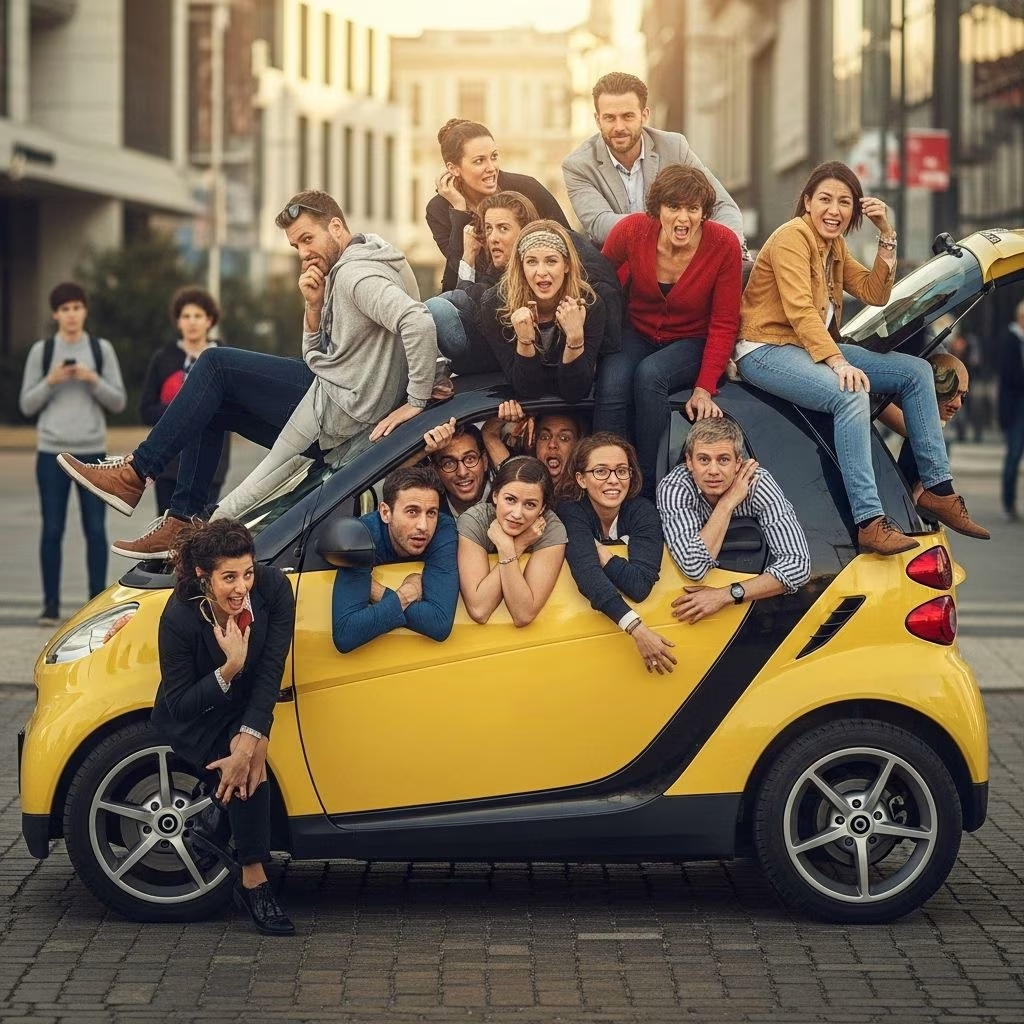
Little-Known Feat: Thirteen People Cram Into a Smart Car
At first glance, the Smart Fortwo looks like the ultimate city runabout—a microcar defined by its minimal footprint and iconic shape. Yet beyond its reputation as an urban mobility solution, the Smart Car became the centrepiece of a remarkable record: thirteen people fitting inside. This oddball feat is more than a viral sensation—it’s a testament to human ingenuity, automotive engineering, and an enduring appetite for quirky challenges.
Background: What Is a Smart Car?
The Smart Car, especially the Fortwo model, is manufactured by Smart, a division of Daimler AG. Designed explicitly for urban driving, it packs efficiency, cleverness, and style into a length just shy of three meters. Its compact width and nimble turning radius make it perfect for parallel parking, and its diminutive structure often elicits surprise over how much can fit inside—even if that wasn’t quite the designer’s intention.
- Length: About 2.7 meters (8.8 feet)
- Seating: Officially two adults
- Fuel Efficiency: Typically 31 city / 39 highway miles per gallon
- Purpose: Urban mobility, efficient parking, simple transport
Chasing the Record: The 13-People Smart Car Challenge
In 2010, a team of twenty-somethings at a university in Australia set out to break the Guinness World Record for the number of people squeezed into a Smart Car. Their efforts combined physical prowess with strategic positioning—thirteen people ultimately filled every nook of the diminutive cabin.
- The attempt required extensive coordination, teamwork, and flexibility.
- Most participants were gymnasts or dancers adept at contortion and balance.
- Safety was paramount; the car’s doors remained closed for at least five seconds to meet record requirements.
Other attempts around the world have tried to up the ante, with a record of up to sixteen people aiming to wedge themselves inside for viral acclaim. However, thirteen remains the most widely reported and recognized milestone.
Guinness World Record Criteria
- All participants must be fully inside, with doors closed.
- They must remain inside for a minimum period.
- No one can be forced or injured during the process.
Why? The Psychology Behind Group Squeeze Challenges
What drives people to orchestrate mass entry into a tiny car? The motivations are a mix of competitive fun, team-building, and curiosity about physical boundaries.
- Viral Appeal: Unusual records are ideal for social media and press attention.
- Team Bonding: Achieving a difficult goal together fosters camaraderie.
- Physical Challenge: Testing flexibility, endurance, and patience.
- Showcasing Design: Demonstrates the surprising space efficiency of microcars.
How Did They Do It? The Step-by-Step Cram
Fitting thirteen people into a Smart Car involves more than simply piling in:
- Two tallest individuals went in first, occupying the space behind the seats and under the dashboard.
- Next, participants wriggled into the footwells, with legs contorted around gear selectors and pedals (car off and parked).
- Pliant volunteers curled across the trunk space—accessible from inside.
- Others sat sideways or perched atop shoulders, maximizing vertical and horizontal capacity.
- Windows and doors closed, confirming that all bodies were contained within the rigid perimeter.
The entire process was filmed and witnessed according to Guinness guidelines. The sight of thirteen grinning faces pressed against the windows left a lasting impression—half amusing, half baffling.
Why the Smart Car Is (Surprisingly) Spacious
Despite its tiny frame, the Smart Fortwo’s interior makes clever use of vertical space and modular seat positioning. Designed for two adults, the lack of rear passenger seats means a larger cabin floor. Features that contribute to its paradoxical spaciousness:
- Tall roofline yields more headroom than many sedans.
- Flat floor and limited console intrusions create extra legroom for two—and extra crawl space for record attempts.
- Folding front seats and accessible hatch allow creative entry points.
- Minimalist dashboard leaves extra volume for upper bodies.
Microcar Engineering: Efficiency vs. Capacity
While the group fit challenge highlights Smart’s space maximization, the car’s engineering priorities center on efficiency and functionality. The vehicle’s core design elements:
- Short wheelbase: Enhances maneuverability in tight urban settings.
- Split hatch trunk: Allows surprisingly flexible cargo loading—enough for groceries or a filming setup.
- Weight distribution: Mid-mounted engine keeps the car agile, though handling at limit can be lively.
- Safety: Rigid steel passenger cell; fewer crumple zones but strong core.
Smart Car: More Than a Gimmick
- Its practical trunk and easy-access features defy assumptions about microcar limitations.
- Handling, while quirky due to size, is surprisingly capable for everyday driving.
- Fuel economy is adequate, though not stellar—owners trade ultimate MPG for urban convenience.
Record Attempts: From Fun to Awareness
Beyond breaking records, squeezing groups into small cars draws attention to the need for clever design in urban vehicles. These stunts highlight important automotive conversations:
- Urban congestion: Smaller cars mean less space consumed; ideal for crowded cities.
- Environmental impact: Vehicles like the Smart Car produce lower emissions per mile traveled.
- Social connection: Fun challenges can foster positive engagement with sustainable vehicle options.
Similar Records: How Smart Is the Smart Car?
| Vehicle Model | Official Capacity | Max People Squeezed In | Record-Date |
|---|---|---|---|
| Smart Fortwo | 2 | 13 | 2010 |
| Mini Cooper | 4 | 27 | 2012 |
| VW Beetle | 4 | 20 | 2001 |
| Fiat 500 | 4 | 14 | 2009 |
Smart Car in Pop Culture: Symbol of Small Wonders
From Europe to North America, the Smart Car has become a pop culture touchstone. Its distinctive shape, parking prowess, and suitability for city life make it a favorite among urban dwellers—while group-fit records add to its cachet as a symbol of “more than meets the eye.”
- Referenced in movies and TV as the archetypal tiny car.
- Showcased in viral YouTube videos and auto industry reviews.
- Celebrated in memes and humor about “packing it in.”
Environmental Perspective: Small Cars and Big Benefits
While most Smart Car drivers won’t try fitting a dozen friends inside, the underlying message resonates: smaller vehicles mean reduced urban impact.
- Less material used, less fuel burned, and lower emissions per capita.
- Parking efficiency reduces congestion and stress in busy cities.
- Microcars encourage reevaluation of personal space needs.
Frequently Asked Questions (FAQs)
Q: Is it safe to fit thirteen people inside a Smart Car?
A: No—these record attempts are performed with the car parked, engine off, and the doors closed briefly. Driving with excess passengers is unsafe and illegal.
Q: What is the official Smart Car seating capacity?
A: The Smart Fortwo is designed for two people, including the driver.
Q: Did the Guinness World Records recognize the thirteen-person fit?
A: Yes—the feat conforms to Guinness guidelines for mass entry into a small car, including all participants remaining inside with doors closed for a minimum period.
Q: Have other microcars set similar group squeeze records?
A: Yes. Vehicles such as the Mini Cooper and Fiat 500 have hosted even larger crowds in record attempts, sometimes requiring gymnasts or dancers for maximum flexibility.
Q: Can the Smart Car carry large cargo?
A: Within reason: its split hatch and flat interior allow surprisingly versatile loading for groceries or small packages, but it cannot match the capacity of larger hatchbacks.
Q: Why do people undertake group fit challenges?
A: For fun, team spirit, and to highlight ingenuity—and sometimes to promote the car or raise awareness about space-saving vehicles.
Conclusion: The Smart Car’s Big Message
The thirteen-person Smart Car record is more than a stunt. It illustrates the surprising room within clever engineering, the joy of collaboration, and the lessons in maximizing space and minimizing footprint. Brightly colored and instantly recognizable, the Smart Car remains an icon—not just of efficiency and urbanity, but of playful challenge. Ultimately, its greatest asset is not how many people fit inside, but how thoughtfully it fits into the world around it.