


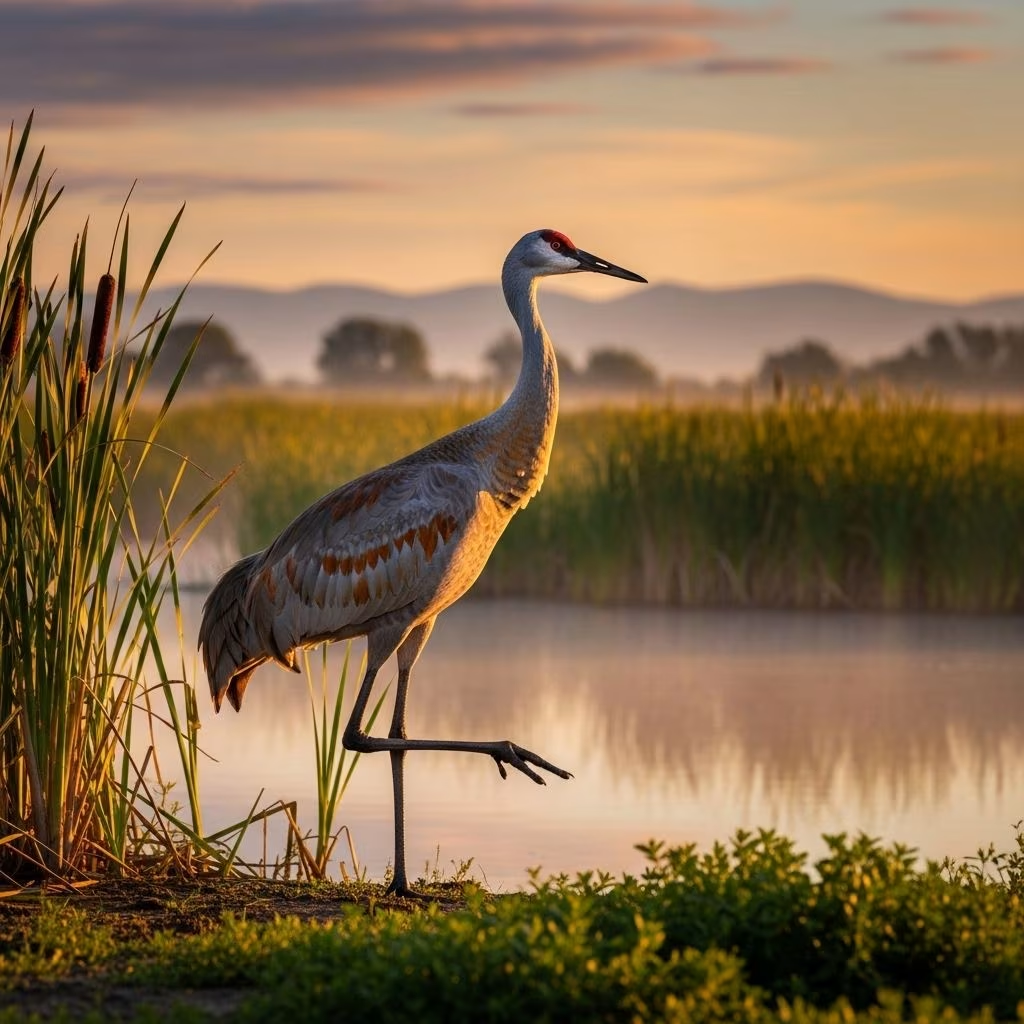
The Majestic Revival of Sandhill Cranes in California
Sandhill cranes—with their evocative trumpeting calls and striking courtship dances—have symbolized thriving wetlands across North America for centuries. Yet in California, their future became uncertain as modern agriculture and infrastructure replaced the very landscapes they depend on. Only through innovative conservation partnerships and adaptive land management is the return of these iconic birds now possible.
The Significance of Sandhill Cranes
Standing nearly four feet tall and boasting wingspans up to seven feet, Sandhill cranes are among the oldest surviving bird species. For millennia, they have migrated thousands of miles across the Pacific Flyway, a vital corridor running from Alaska and Canada to California’s Central Valley. Each autumn, tens of thousands of cranes once filled California’s skies on their way to traditional wintering sites.
- Greater Sandhill Cranes are now listed as Threatened in California, reflecting their vulnerability to habitat loss and population decline.
- Historically, the Central Valley’s mix of seasonal wetlands and grain fields offered cranes both food and safe roosting grounds.
Cranes inspire not only birdwatchers, but entire conservation movements as indicators of ecosystem health and the enduring importance of wetlands.
How Habitat Loss Shaped a Crisis
By the middle of the 20th century, 90% of California’s historical wetlands had vanished, converted to agriculture and urban use. While some crops—like rice and corn—offered substitute habitat, recent decades saw even these wildlife-friendly fields replaced with orchards and urban sprawl.
- Wetland drainage and the shift to permanent crops eliminated shallow water habitats essential for crane roosting.
- Intensive agriculture removed the small-grain fields that cranes relied on for foraging, especially during the winter.
- Land conversion pressured cranes not just in winter, but on their limited breeding grounds in Northeastern California, British Columbia, and Alaska.
Without reliable roosts and food, Sandhill cranes faced year-over-year declines and growing competition for whatever suitable areas remained.
Farmers and Conservationists Forge Unlikely Alliances
While some believe conservation and farming are always at odds, the fight for Sandhill cranes reveals a different story. Cranes often choose to roost in shallowly flooded agricultural fields, where they are safer from predators. Acknowledging this, California’s conservationists have partnered with willing farmers to integrate habitat restoration into working landscapes.
- The Sandhill Crane Program, coordinated by the Migratory Bird Conservation Partnership (The Nature Conservancy, Audubon California, and Point Blue Conservation Science), compensates farmers to flood fields and leave post-harvest grain, creating ephemeral crane habitat.
- Farmers use simple management actions, such as controlled flooding and adjusting harvest times, to maximize wildlife benefits while maintaining agricultural productivity.
- This system turns participating farms into dynamic, multi-use landscapes that support biodiversity and the regional economy.
As more landowners see benefits—not only for cranes but also for soil health, pest control, and ecotourism—the mosaic of croplands and wetlands in the Central Valley offers hope for lasting coexistence.
Strategic Conservation on Private and Public Lands
The fragmented nature of modern California landscapes means conservation cannot rely only on public wildlife refuges. A majority of Sandhill crane nesting and wintering sites now occur on private lands vulnerable to market pressures and new developments.
- Land acquisitions, like those at Woodbridge Ecological Reserve, help secure key habitat nodes.
- Wetland easements and incentive-based programs protect habitats on working ranches and farms, extending their conservation impact.
- Annual monitoring ensures that shifts in population or land use are detected early, guiding adaptive management.
Through collaboration, agencies and NGOs aim to sustain the delicate balance required for cranes to thrive in a region dominated by people and industry.
Innovative Approaches: Social Attraction and Community Engagement
Beyond habitat creation, scientists and land managers have experimented with social attraction techniques to encourage crane use of restored sites. These efforts include:
- Using crane decoys and recorded crane calls in newly flooded areas to persuade wild cranes to roost and feed.
- Installing signage and organizing community bird festivals to raise public awareness about the role of cranes in healthy landscapes.
- Engaging schools and local groups in crane-watching activities and citizen science monitoring.
These strategies turn recovery into a shared experience, building constituency for ongoing conservation beyond the limits of any single program.
Challenges Facing Crane Recovery
Despite notable successes, the return of Sandhill cranes in California is still threatened by multiple factors:
- Land conversion—especially the shift to less wildlife-friendly permanent crops—continues to erode potential habitat every year.
- Drought and increasing demands on water resources reduce opportunities for managed flooding and wetland maintenance.
- Climate change intensifies these trends, potentially altering both crane migration timing and food resource availability.
- Other risks—such as power line collisions, nest predation, disease, and human disturbance—require constant vigilance and adaptive response.
Conservationists stress the need for both landscape-scale planning and flexible, site-specific interventions to meet these evolving threats.
Measuring Success: Science-Driven Outcomes
Regular population surveys and habitat assessments underpin every aspect of crane recovery. Biologists track the number of wintering cranes, their foraging and roosting habits, and the health of nest sites across public and private lands.
- Collaborative monitoring programs provide reliable data to adjust restoration strategies and prioritize investments.
- Long-term trends indicate that where sustained effort is made—such as at established reserves and on participating farms—crane numbers are stabilizing or increasing.
- Success is also measured in broader terms: restored wetlands help other endangered species, improve flood control, and contribute to regional water quality.
The continuing necessity for adaptation ensures conservation remains robust in a changing world.
California’s Role in the Pacific Flyway
California’s Central Valley is the principal wintering ground for the Pacific Flyway population of Sandhill cranes. With their breeding ranges stretching from British Columbia and Alaska, the cranes’ fate in California shapes migration dynamics continent-wide.
- Maintaining stopover sites—from the Butte Sink in the north to the Carrizo Plain in the south—is a critical conservation priority.
- California’s leadership in crane recovery informs efforts to protect other migratory waterbirds along the flyway, uniting cross-border agencies and NGOs in common cause.
Every winter, the successful return of cranes represents a triumph not only for local conservationists, but for international migratory bird management.
Economic and Social Benefits of Crane Restoration
Bringing back the cranes yields rewards far beyond biodiversity metrics:
- Eco-tourism flourishes, with thousands drawn to witness crane gatherings and dances at refuges and festivals each autumn and spring.
- Community pride deepens around the stewardship of natural heritage, fostering future conservation leadership.
- Partnerships with agriculture bolster rural economies and showcase models for coexistence between food production and wildlife preservation.
These ripple effects help secure broad, lasting support for continued investments in wildlife-friendly landscapes.
Key Partners and Policy Drivers
The multifaceted return of Sandhill cranes is guided by:
- The Migratory Bird Conservation Partnership (The Nature Conservancy, Audubon California, Point Blue Conservation Science) and their BirdReturns initiatives.
- The California Department of Fish and Wildlife, providing funding, scientific oversight, and policy coordination.
- Federal agencies, supporting research and reserves along key migration corridors.
- Private landowners and local communities, whose cooperation is vital for conservation success.
Ongoing advocacy and scientific research shape new statewide conservation strategies and influence legislative priorities for wetland protection and sustainable water management.
Frequently Asked Questions (FAQs)
Q: Why are Sandhill cranes considered threatened in California?
A: Sandhill cranes are designated as threatened largely due to ongoing habitat loss, particularly the conversion of wetlands and grain fields to less wildlife-friendly uses, alongside additional pressures from development, drought, and predation.
Q: How do farmers participate in crane conservation?
A: Through voluntary programs coordinated by NGOs and state agencies, farmers can receive incentives to flood fields after harvest, retain grain stubble, and create temporary wetland habitats that benefit both cranes and farm operations.
Q: What benefits do cranes bring to local communities?
A: Besides supporting biodiversity, cranes drive local eco-tourism, enrich scientific and educational programming, and contribute to rural economies. Their presence often indicates a healthy, functioning ecosystem that also benefits agriculture and other wildlife.
Q: Can the public help support Sandhill crane recovery?
A: Yes. People can support recovery by participating in festivals, volunteering for citizen science bird counts, advocating for wetland protection, and supporting conservation organizations working on crane habitat initiatives.
The Road Ahead: A Blueprint for Wildlife Recovery
The return of Sandhill cranes is a living testament to the potential of science-based conservation, creative partnerships, and the resilience of nature. While many challenges persist—from water scarcity to ongoing land use pressure—California’s example offers a model for species recovery across dynamic, human-dominated landscapes.
- Sustained investment in habitat management and farmer incentives is essential.
- Innovative public outreach and adaptive science will be central to future gains.
- Collaboration at local, state, and international levels remains the cornerstone of recovery efforts.
With continued commitment, the trumpeting call and graceful dance of Sandhill cranes will echo across California’s skies—an enduring symbol of the power and promise of conservation.
References
- https://birdreturns.org/program/sandhillcranes
- https://savingcranes.org/wp-content/uploads/2024/12/north_america_sandhill_crane_program_web-1.pdf
- https://nrm.dfg.ca.gov/FileHandler.ashx?DocumentID=3521
- https://www.waterboards.ca.gov/waterrights/water_issues/programs/bay_delta/california_waterfix/exhibits/docs/petitioners_exhibit/dwr/part2_rebuttal/dwr_1296.pdf
- https://lodisandhillcrane.org
- https://calricenews.org/2025/08/14/birdreturns-sandhill-crane-program-deadline-approaching/
- https://content.govdelivery.com/accounts/CNRA/bulletins/3ae51b4
- https://www.nature.org/en-us/get-involved/how-to-help/places-we-protect/staten-island/
- https://calricenews.org/conservation/


