


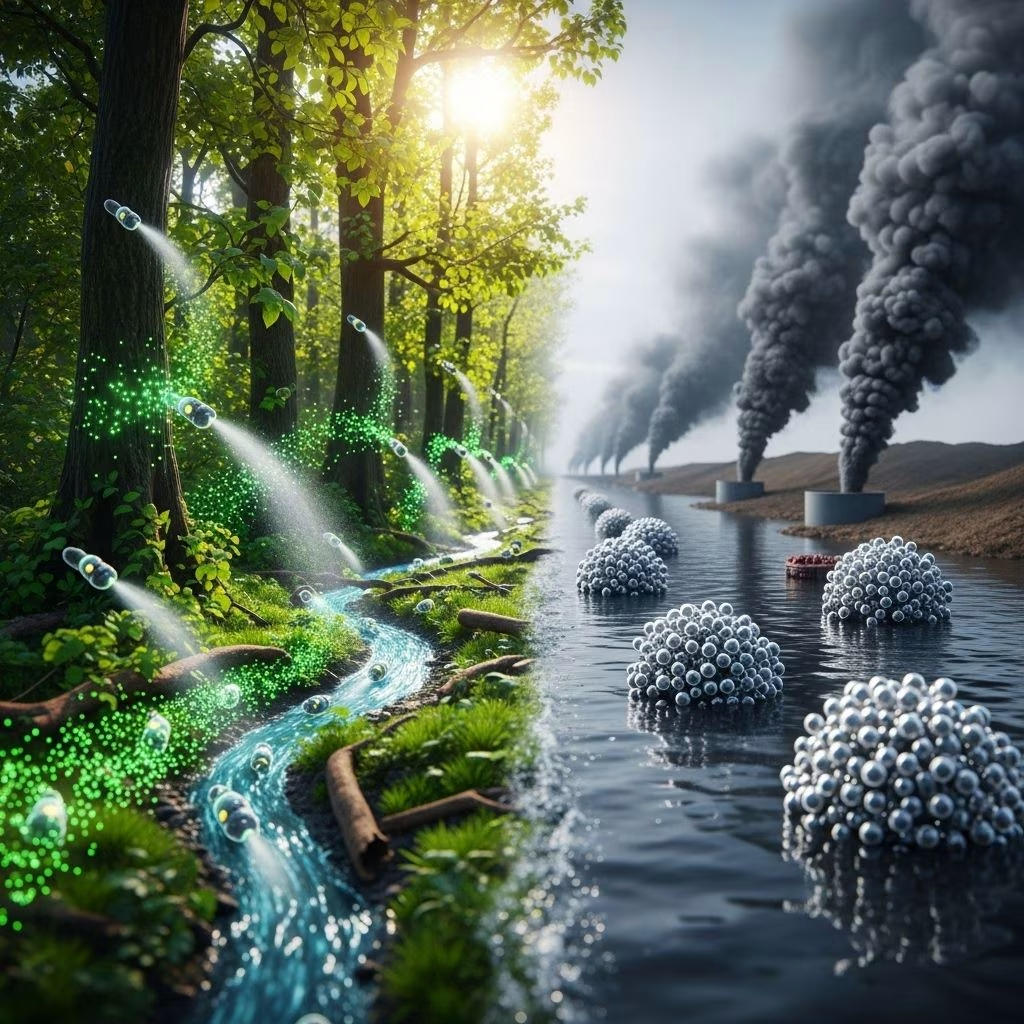
How Nanotechnology Impacts the Environment: Opportunities and Challenges
Nanotechnology, the science of manipulating matter at the scale of atoms and molecules, is revolutionizing numerous industries—from medicine and electronics to energy and agriculture. Its influence on the environment is uniquely double-edged: nanotechnology enables powerful solutions to some ecological challenges, while also introducing new risks and uncertainties due to the unprecedented properties of nanomaterials.
Understanding Nanotechnology and the Environment
Nanotechnology involves creating and utilizing materials or devices with components typically measured in nanometers (one billionth of a meter). At this scale, materials can behave very differently from their larger-scale counterparts, exhibiting new chemical, electrical, optical, and mechanical properties.
The environmental impact of nanotechnology can be classified into two central themes:
- Environmental benefits: Using nanomaterials to remediate pollution, improve industrial efficiency, conserve natural resources, and support the development of green technologies.
- Environmental risks: Potential for novel forms of pollution, toxicity to organisms, challenges associated with waste (nanopollution), and unknown effects from widespread nanoparticle release.
The Promise: Environmental Benefits of Nanotechnology
Nanotechnology has the potential to catalyze major advances in environmental protection. Some notable benefits include:
1. Pollution Detection and Environmental Monitoring
- Nanosensors: Extremely sensitive, capable of detecting tiny concentrations of pollutants—such as heavy metals, pesticides, and volatile organics—in water, air, and soil.
- Smart Dust: Nanodevices like ‘smart dust’ can provide real-time, distributed environmental measurement, helping track pollutant movement and accumulation.
2. Environmental Cleanup and Remediation
- Nanomaterials for Water Purification: Engineered nanoparticles (e.g., nano-iron, carbon nanotubes) can remove organic and inorganic contaminants from water supplies—from heavy metals and industrial chemicals to pathogens.
- Soil and Air Remediation: Nanoparticles can break down persistent pollutants, such as PCBs, or trap heavy metals, reducing their bioavailability.
- Oil Spill Cleanup: Nanostructured materials can absorb large quantities of oil efficiently, facilitating the cleanup of marine and freshwater environments.
3. Waste Reduction and Cleaner Manufacturing
- Green Manufacturing: Nanotechnology enables industrial processes that use fewer raw materials, generate less waste, and consume less energy.
- Green Chemistry: Applying nano-catalysts and environmentally benign reagents helps reduce hazardous byproducts and increase process efficiency.
4. Renewable Energy and Resource Conservation
- Nanomaterial-Based Solar Cells: Enhanced light absorption and electron transport improve solar panel efficiency, advancing the adoption of clean energy.
- Energy Storage: Nanotech improves batteries and supercapacitors, supporting broader use of renewable energy sources.
- Efficient Resource Use: Nano-coatings and composites make products more durable, lightweight, and resistant to corrosion, reducing overall resource consumption.
Environmental Risks and Concerns
Despite these benefits, nanotechnology introduces new challenges and concerns for ecosystem health and sustainability. The unique properties that make nanoparticles useful can also make them unpredictable or hazardous in natural systems.
1. Nanopollution and Environmental Release
- Nanopollution is the term for waste materials—especially nanoparticles—resulting from nanotechnology manufacturing or product disposal.
- Unintentional Release: Routine industrial processes, consumer product degradation, or improper waste management can introduce nanoparticles into air, water, and soils.
2. Toxicity and Biological Impact of Nanoparticles
Key Concerns:
- Bioaccumulation: Nanoparticles can accumulate in plants and animals, possibly moving up the food chain and causing unforeseen ecological or health effects.
- Cytotoxicity: Laboratory studies indicate some nanoparticles—such as silver, titanium dioxide, copper oxide, and carbon nanotubes—can be toxic to cells, leading to oxidative stress or even cell death in algae, crustaceans, and higher organisms.
- Plant Health: Soil contamination with certain nanomaterials (like copper oxide or cerium oxide) can impair photosynthesis and transpiration in plants, impacting growth and yield.
- Aquatic Ecosystems: Marine microalgae and small aquatic animals have shown increased stress and mortality in response to nanoparticle exposure.
3. Persistence, Mobility, and Uncertainty
- Unknown Fate in Nature: The ways that various nanomaterials move through, persist, and transform in soils and water remain poorly understood.
- Aggravated Pollution: In some scenarios, nanoparticles could interact with existing pollutants to form more toxic or persistent compounds.
4. Human Health Risks
- Human exposure can occur during nanomaterial production, use of nanoproducts, and disposal; regulatory frameworks are still evolving to assess and manage these risks.
Understanding Green Nanotechnology
In response to these dualities, green nanotechnology has emerged as a discipline focused on maximizing the environmental benefits of nanoscale science and engineering while minimizing risks. It is founded on these core principles:
- Eco-friendly Design: Creating nanomaterials that minimize resource use, waste generation, and toxicity.
- Lifecycle Thinking: Considering environmental and health impacts throughout the design, production, use, and disposal phases.
- Clean Manufacturing Processes: Replacing hazardous chemicals or solvents with safer alternatives (e.g., using water-based cleaning instead of volatile organic compounds for nano-surface treatments).
- Use of Renewable Inputs: Designing processes that incorporate renewable materials or energy sources whenever possible.
Examples of green nanotechnologies include:
- Microemulsions for cleaning: These water-based mixes efficiently remove residues without volatile, toxic chemicals.
- Green synthesis of nanoparticles: Using plant extracts, bacteria, or other biological processes as environmentally friendly alternatives to chemical synthesis.
The Lifecycle Dilemma: Use, Recycling, and Disposal
One of the main challenges with nanotechnology is considering its potential impacts across the entire lifecycle of nanomaterials—from production and use to disposal and degradation.
- Some nanoproducts are designed for single-use or have limited recyclability, increasing the risk of environmental accumulation.
- Waste streams containing nanomaterials may not be well managed by conventional treatment systems, raising concerns over infrequent but potentially significant releases.
Regulation, Risk Assessment, and Future Research Needs
As the use of nanotechnology accelerates both in public and private sectors, society faces the task of balancing innovation with prudence. Several key areas require ongoing attention:
1. Need for Better Toxicological Data
- Many nanomaterials have not been systematically studied for environmental or health toxicity.
- Standardized testing protocols that reflect real-world conditions are urgently needed.
2. Regulatory Progress and Challenges
- Governments and international agencies are beginning to develop guidance on nanomaterial risk assessment and labelling, but gaps remain.
- Effective regulation will require collaboration between scientists, industry, and policymakers to ensure safety without stifling beneficial innovation.
3. Lifecycle and Risk Management Guidelines
- Guidelines should address not only nanomaterial production and use, but also waste management, accidental release, and environmental monitoring.
- The development of green nanomanufacturing standards can facilitate environmentally responsible industry growth.
4. Public Engagement and Societal Dialogue
- Transparent communication of both benefits and risks is essential to informed decision-making and public trust.
- Stakeholder input can help direct research and policy toward truly sustainable nanotechnology development.
| Environmental Benefits | Environmental Risks |
|---|---|
| Advanced pollution cleanup (water/soil/air) | Nanoparticle toxicity to organisms |
| Improved pollution detection and monitoring | Bioaccumulation and potential food web impacts |
| Resource- and energy-efficient manufacturing | Waste management challenges (nanowaste) |
| Support for renewable energy and conservation | Unknown long-term effects in nature |
| Reduced emissions, greener products | Lack of regulation and monitoring standards |
Frequently Asked Questions (FAQs)
Q: What makes nanoparticles risky for the environment?
A: Nanoparticles are much smaller than ordinary pollutants and can interact uniquely with living cells, potentially leading to toxicity, bioaccumulation, and changes in ecosystem dynamics. Their full movement and behavior in the environment are still not entirely understood.
Q: How is green nanotechnology different from conventional nanotechnology?
A: Green nanotechnology prioritizes environmentally friendly materials, processes, and designs, aiming to reduce toxicity, wastage, and energy use, while seeking to address opportunities for environmental remediation and sustainability.
Q: Can current environmental regulations handle nanopollution?
A: Most existing regulations are not specifically designed for nanomaterials. There is a need for tailored standards and protocols for risk assessment, exposure monitoring, and disposal specific to the nanoscale.
Q: Are there eco-friendly methods to synthesize nanoparticles?
A: Yes, researchers are developing “green” synthesis methods using natural plant extracts, microbes, and water-based processes, which reduce hazardous byproducts and use less energy compared to traditional synthetic routes.
Q: What’s the future outlook for nanotechnology and the environment?
A: Ongoing research and better regulations are crucial to balance nanotechnology’s potential benefits with its risks. As green nanotechnology advances, the field could help deliver major environmental gains while minimizing harm—provided that science, policy, and public engagement keep pace with innovation.


