Is Your Fossil Valuable? A Guide to Fossil Identification and Expert Events
Fossils offer a direct window into the mysteries of Earth’s distant past, from providing cultural fascination to yielding crucial scientific data. If you’ve ever uncovered a curious rock and wondered if it might be the remains of an ancient creature or plant — or if you have family heirloom fossils sitting on a shelf — you’re not alone. This guide will walk you through identifying your fossil, understanding its value, and connecting with the right paleontological experts and events.
Understanding Fossils and Their Value
Fossils are evidence of ancient life preserved in rocks. They can range from bones and shells to plant imprints and even traces of animal movement. Their scientific and monetary values can vary dramatically based on factors like rarity, type, age, preservation, and provenance.
- Scientific value relies on how much a fossil contributes to knowledge about ancient ecosystems, evolution, or climate.
- Monetary value depends on condition, completeness, rarity, demand, and legality of collection.
- Personal or historical value often reflects a fossil’s unique story or connection to an individual or community.
Common Types of Fossil Finds
The majority of fossils found by enthusiasts fall into a few broad categories:
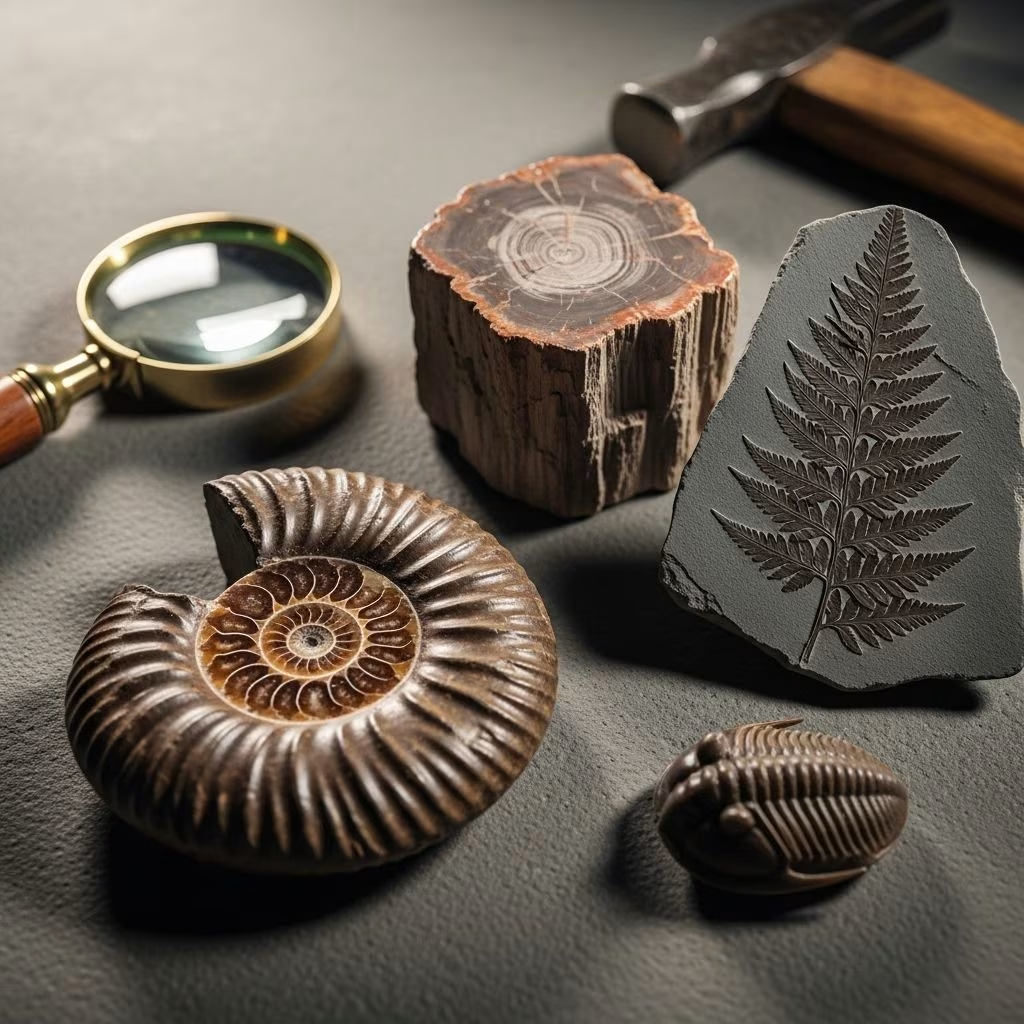
- Invertebrate fossils (like trilobites, brachiopods, ammonites)
- Plant fossils (such as leaf imprints, petrified wood, coal balls)
- Vertebrate fossils (dinosaur bones, fish, mammal teeth)
- Trace fossils (footprints, worm burrows, coprolites)
Each type has different scientific and financial values — and legal considerations.
First Steps: How to Identify Your Fossil
If you’ve found or inherited a fossil, here’s how to start narrowing down its identity:
- Observe shape and texture: Fossils stand out for their distinctive forms or surface details (like ridges, growth rings, or segmentations).
- Check for symmetry: Many shells and bones are bilaterally symmetrical.
- Color and density: Fossils are usually mineralized and will feel denser or heavier than modern bones or shells, often colored by minerals in surrounding rock.
- Matrix: The surrounding rock or sediment can provide clues about the fossil’s age and environment.
- Compare: Use field guides or reputable online fossil galleries for comparison.
For definitive identification, expert help is a must. But preliminary self-sleuthing prepares you for productive conversations at events or with professionals.
What Makes a Fossil Valuable?
Not all fossils are created equal. Paleontologists and collectors consider these criteria:
- Rarity: Uncommon specimens, such as new species or unusually complete skeletons, are highly valuable.
- Condition: Well-preserved fossils with minimal damage or distortion are prized.
- Scientific significance: If a fossil clarifies evolutionary questions or fills a gap in the record, it may be invaluable for research.
- Provenance: Clear documentation of where and how a fossil was discovered boosts both scientific and monetary value.
- Ethics and legality: Legal ownership and responsible collection are critical—many significant fossils belong in public trust or must be reported to authorities.
Pro Tip: Fossils found on public land in many countries cannot be sold or even kept privately—know local regulations before attempting to appraise or sell your find.
Can You Sell Your Fossil?
While a thriving fossil market exists, not every find is legal or appropriate to sell. Consider:
- Land ownership: Fossils found on private land may be yours to keep or sell, but those on public land often are not.
- Protected sites: Some locations are protected by law. Removal of fossils can incur heavy penalties.
- Ethics: Fossils of major scientific interest are best offered to museums or research institutions for study and preservation.
Fossil Identification Events: Connecting with Experts
For the fossil-curious, fossil identification (ID) events are among the best ways to get reliable information from trained paleontologists and geologists. These events, hosted by museums, universities, clubs, and nature centers, give the public a chance to:
- Have fossils, rocks, and minerals examined by experts
- Learn about laws and ethical collecting
- Discover local fossil sites and organizations
- View stunning displays and live demonstrations
What to Expect at a Fossil ID Event
- Free, informal evaluations: Most events are open to all and do not require appointments.
- Expertise: Staff may include paleontologists, geologists, advanced students, and volunteers with decades of experience.
- Learning opportunities: Many events tie in with field trips, lectures, or educational workshops for kids and adults.
- No appraisals: Most events refrain from providing official monetary valuations, instead focusing on scientific information and historical context.
How to Prepare for a Fossil ID Event
- Bring your fossil carefully wrapped, noting any information about where and when it was found.
- Take clear close-up photos (from multiple angles) if you cannot bring the specimen.
- Prepare questions: e.g., What is this? How old is it? How was it formed? Is it common?
- Leave fossils uncleaned if possible; chemicals or vigorous cleaning can destroy important details.
Common Questions Experts Will Ask
- Where did you find it? (Location and context are crucial.)
- Was it loose or embedded in rock?
- What else was found nearby?
- Have you cleaned or prepared it in any way?
Where to Find Fossil Identification Events
Across North America, hundreds of museums, science centers, and geological societies offer annual or seasonal fossil ID days. Typical hosts include:
- Natural history museums (local, regional, and national)
- University earth science departments
- Paleontology and geology clubs
- Parks and nature centers
- Rock and gem shows (which often feature guest paleontologists)
Check institution calendars early—popular events often coincide with National Fossil Day, Earth Science Week, or other science celebrations in October and throughout the year.
Sample Table: Where to Look for Fossil ID Events
| Venue | Event Type | Typical Timing |
|---|---|---|
| Natural History Museums | Public Identification Day | Annually or seasonally |
| Universities | Earth Science Week | October |
| Geology/Paleontology Clubs | Member Meetings, Fossil Swaps | Monthly/quarterly |
| Rock & Gem Shows | ID Booths with Experts | Varies by location |
| Parks & Nature Centers | Fossil Hikes, Kids’ Days | Spring, Summer, Fall |
Leveraging Online Resources for ID
- Use reputable online fossil databases and forums for preliminary comparison and peer feedback.
- Examples: USGS, Smithsonian, Paleontological Research Institution, Fossil Forum.
- Many organizations offer virtual “ask an expert” events or online submissions for fossil ID.
What Not to Do: Common Fossil Missteps
- Avoid harsh cleaning (especially with acids or strong detergents).
- Never break or chip a specimen to “see inside.”
- Don’t remove fossils from posted protected sites, parks, or illegal-to-collect lands.
- Avoid online websites or casual social media groups that offer quick cash appraisals with no scientific basis.
Getting Involved: Fossil Clubs and Societies
Becoming active in a local paleontology or geology club can dramatically expand your fossil knowledge and resource network. Clubs often:
- Organize collecting trips to legal sites
- Host lectures by working paleontologists
- Maintain private collections and club libraries
- Offer opportunities for public education and outreach
Fossils and the Law
Laws around collecting, owning, and selling fossils vary considerably by country, state, and even locality. Always:
- Check rules before collecting on any property
- Understand that vertebrate fossils on public land (in the US, for example) are typically government property
- Report unusual or significant finds—don’t try to sell or keep fossils that may be federally protected
Frequently Asked Questions (FAQs)
Q: Can anyone attend fossil identification events?
A: Yes. Most events are open to all ages and backgrounds, requiring no prior experience. Some museums or clubs may require membership for behind-the-scenes tours or fossil swaps.
Q: Will experts tell me the value of my fossil?
A: Most non-commercial events focus on scientific, educational, or cultural value—not monetary appraisals. For legal appraisals, certified fossil dealers or auction houses are required, but always check the legalities before proceeding.
Q: What should I bring to an event?
A: Bring the fossil (well-padded and protected), and as many details as possible about where and how it was found. Photos, field notes, and context make a big difference.
Q: What’s the most common fossil enthusiasts find?
A: Shells (such as brachiopods and crinoids), plant fragments, and shark teeth are among the most common. Dinosaur bones or complete animals are rare in most regions.
Q: Can I clean or repair my fossil?
A: Fossil prep is best left to experienced professionals. Many cleaning attempts ruin critical features. When in doubt, leave it as collected and consult an expert.
Final Thoughts
Fossils connect us to the impressive narrative of life on Earth. Whether your find is destined for a museum display, personal collection, or simply a memorable learning opportunity, proper identification and responsible stewardship ensure these treasures retain both their scientific impact and their wonder for generations to come.