IPCC Special Report: Laying the Foundations of Sustainable Cities
The Intergovernmental Panel on Climate Change (IPCC) has launched a transformative assessment process for cities, culminating in the Special Report on Climate Change and Cities (SR-Cities). This landmark initiative under the seventh assessment cycle (AR7) marks a pivotal moment—scientific rigor and urban practitioner expertise converge to shape a resilient, sustainable future for our built environments.
As the world faces intensifying climate risks, urban areas and buildings are both vulnerable hot spots and potential innovation hubs. The IPCC report, set for release in 2027, is designed to inform decisive action—from local governments to global agencies—on rebuilding cities for a climate-resilient era.
Why Cities and Buildings Matter in the Climate Fight
Urban environments are at the forefront of climate impacts. Cities house more than half the world’s population and contribute approximately 70% of global CO2 emissions, much of it from buildings and transport. Rapid urbanization, aging infrastructure, and inequities exacerbate both risks and opportunities.
The IPCC recognizes that the transformation of buildings and cities is essential for meeting ambitious climate targets, safeguarding communities, and driving inclusive prosperity. Their research highlights interconnected challenges and actionable solutions that can yield broad co-benefits—from decarbonization and health to economic vibrancy and social justice.
Urban Climate Vulnerabilities and Opportunities
- Extreme Weather: Heatwaves, floods, and storms increasingly threaten urban populations, especially marginalized groups.
- Infrastructure Stress: Aging water, energy, and transport systems face unprecedented climate loads.
- Emissions Hubs: Dense urban areas emit more greenhouse gases, but also offer concentrated potential for rapid mitigation.
- Innovation Potential: Cities drive technology advances, policy experiments, and large-scale implementation of sustainability solutions.
The SR-Cities Process: Unprecedented Collaboration
The seventh IPCC assessment cycle marks a fundamental shift: for the first time, urban practitioners are embedded alongside scientists in drafting the climate report. The April 2024 Riga scoping meeting ensured that voices from academia and city management collaboratively define the report’s goals and structure.
This co-creation process signals a move towards actionable, locally tailored solutions, and regards cities not just as sites of risk, but as engines of transformative change.
Expert Teams and Key Contributors
- Coordinating Lead Authors: Experts such as Prof. Jose Antonio Puppim de Oliveira (Brazil) guide chapters on accelerating change.
- Lead Authors: Researchers like Prof. Dr. Felix Creutzig (Germany) and Risto Veivo (Finland) focus on solutions by city types and regions.
- Practitioner Involvement: Urban leaders, planners, and technologists ensure the report is grounded in real-world feasibility and diversity.
This global team represents five continents, blending technical rigor and practical insight to address cities’ unique challenges in climate adaptation and mitigation.
Report Structure: Five Chapters for Action
The IPCC Special Report on Cities is systematically organized to guide stakeholders through the landscape of climate risks, opportunities, and intervention strategies. Each chapter is designed to build a coherent narrative, culminating in actionable recommendations.
- Foundational Overview: Explores cities’ roles in climate change, outlining vulnerabilities, emissions profiles, and key drivers for transformation.
- Historical and Future Trends: Analyzes trajectories, from past emissions to future risks, and highlights drivers of urban change such as population growth and technological advances.
- Interactions of Emissions and Risks: Details the interplay between urban emissions, exposure to hazards, and systemic vulnerabilities.
- Region-Specific Resilience Solutions: Presents practical strategies tailored to different types of cities and climatic regions, from megacities to small towns.
- Pathways for Urban Transformation: Focuses on enabling environments—policy instruments, finance, governance frameworks—to facilitate just, equitable, and lasting transformation.
Core Recommendations for Sustainable Buildings and Cities
The IPCC outlines a holistic approach to sustainable urban development, emphasizing rapid, sustained action and a balance of mitigation, adaptation, and equity. Key recommendations include:
- Deep Decarbonization: Implement energy-efficient retrofitting, electrification, and zero-carbon building standards.
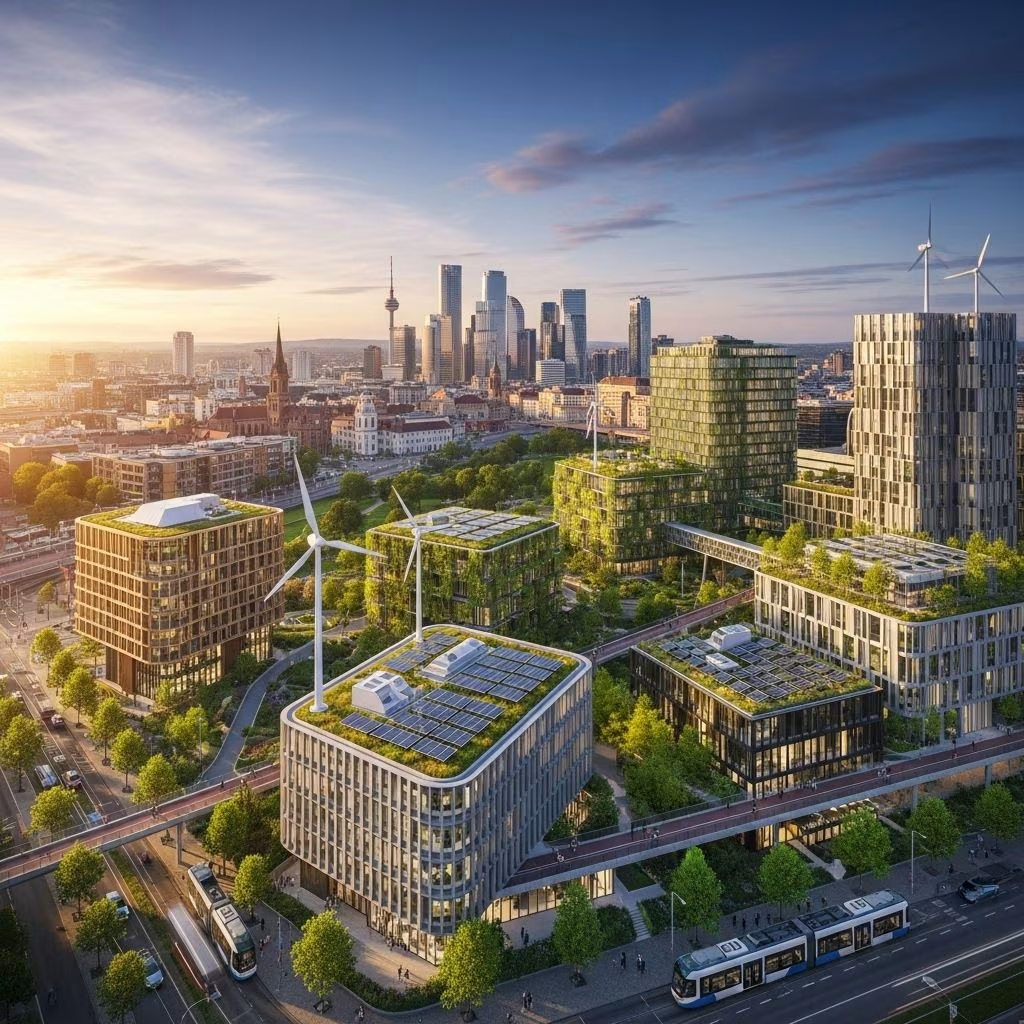
- Nature-Based Solutions: Expand urban green spaces, resilient landscaping, and biodiversity corridors to both sequester carbon and buffer climate impacts.
- Inclusive Governance: Foster participatory planning, empower communities, and address urban injustices in access to resources.
- Integrated Infrastructure: Plan for water, transport, energy, and housing systems that are climate-proof and interconnected.
- Resilient Materials and Design: Prioritize low-carbon materials, passive design strategies, and circular economy practices in new buildings and renovations.
Building Blocks for Climate-Resilient Cities
| Strategy | Benefits | Challenges |
|---|---|---|
| Energy-Efficient Retrofits | Reduces emissions, lowers costs, improves indoor comfort | Upfront capital, need for policy incentives |
| Green Roofs & Urban Forestry | Mitigates heat, enhances biodiversity, improves air quality | Maintenance, integrating with city codes |
| Smart Transit & Mobility | Decreases urban emissions, fosters equity, reduces congestion | Requires long-term investment, stakeholder alignment |
| Climate-Inclusive Governance | Supports adaptation, empowers communities | Building trust, ensuring representation |
Prioritizing Equity, Inclusiveness, and Justice
A major theme of the SR-Cities report is that climate action must address social justice. Vulnerable groups—such as low-income residents, minorities, and informal communities—often bear the brunt of climate hazards while having the least access to adaptive resources.
Equitable climate policies are needed to ensure that sustainable development benefits all, reinforcing the connections between healthy buildings, safe cities, and collective resilience.
- Inclusive Planning: Actively engage disadvantaged communities in decision-making.
- Affordable Access: Ensure green buildings and infrastructure improvements do not price out or displace vulnerable groups.
- Distributional Benefits: Deliver clean air, energy, and water to all city inhabitants, regardless of income or location.
- Job Creation: Green retrofits and climate innovation should drive decent work across sectors, aiding local economic development.
Accelerating Change: Enabling Policies and Financing
Transforming cities and buildings for sustainability requires robust coordination across multiple sectors. The report underscores the necessity of enabling policies, cross-sector partnerships, and creative financing to turn ambition into implementation.
- Policy Incentives: Provide tax credits, grants, and regulatory standards for green construction and retrofitting.
- Capacity Building: Invest in education and technical skills for planners, builders, and local officials.
- Multi-Level Governance: Align local, regional, and national strategies for climate-friendly urban planning.
- Innovative Finance: Mobilize public, private, and philanthropic funds to bridge gaps, particularly in developing regions.
Unlocking Global Impact: IPCC and the UNFCCC
The IPCC’s findings on cities and buildings will inform the United Nations Framework Convention on Climate Change’s (UNFCCC) Global Stocktake 2.0, helping shape global policy on urban climate strategies.
Expectations are high that the SR-Cities will be a benchmark for best practices in urban sustainability, influencing frameworks from local action plans to international agreements.
Key Insights from the Latest IPCC Findings
- Climate risk in cities is rising; sustainable buildings are central to both mitigation and adaptation.
- Rapid, collective action—including retrofits, renewables, and resilient design—can drastically reduce projected damages.
- Delays in adaptation and mitigation lock-in high-emissions infrastructure and escalate costs for future generations.
- Local leadership and globally coordinated science are critical to unlocking innovation and scaling best practices.
Frequently Asked Questions (FAQs)
What is the purpose of the IPCC’s Special Report on Cities?
The SR-Cities aims to provide a scientific foundation and actionable recommendations for transforming urban environments to confront climate change, focusing on resilience, equity, and solutions tailored to diverse urban contexts.
How are urban practitioners involved in the SR-Cities process?
For the first time, urban experts, planners, and local government leaders are co-authoring the report alongside scientists, ensuring that findings are grounded in practical realities and diverse perspectives.
What are key interventions for sustainable buildings?
- Energy-efficient retrofits and zero-carbon standards
- Passive and resilient design
- Integration of nature-based solutions
- Equitable access to financing and planning tools
How does the report address urban inequality?
The report highlights the need for inclusive urban planning, affordable green infrastructure, and community-driven adaptation strategies, ensuring that climate solutions benefit the most vulnerable.
What role will the SR-Cities play in international climate policy?
Its findings will guide negotiations and stocktaking at global forums like the UNFCCC, setting benchmarks for sustainable buildings and cities under the Paris Agreement goals.
Conclusion: Charting a Sustainable Future for Cities and Buildings
The IPCC SR-Cities Report embodies a new paradigm—one where cities and buildings anchor climate ambition through innovation, justice, and broad collaboration. As research and local expertise merge, the path forward becomes clear: holistic strategies, rapid action, and unwavering commitment are needed to cultivate sustainable, thriving urban environments for current and future generations.
References
- https://iclei.org/news/iclei-affiliated-experts-selected-to-co-author-ipcc-special-report-on-climate-change-and-cities/
- https://www.ipcc.ch/report/special-report-on-climate-change-and-cities/
- https://www.wri.org/insights/2023-ipcc-ar6-synthesis-report-climate-change-findings
- https://www.ipcc.ch/report/ar6/syr/downloads/report/IPCC_AR6_SYR_FullVolume.pdf
- https://www.ipcc.ch/report/ar6/syr/downloads/report/IPCC_AR6_SYR_LongerReport.pdf
- https://www.ipcc.ch/report/ar6/syr/downloads/report/IPCC_AR6_SYR_SPM.pdf
- https://www.ipcc.ch/2023/
- https://www.science.org/doi/10.1126/science.adl1522