


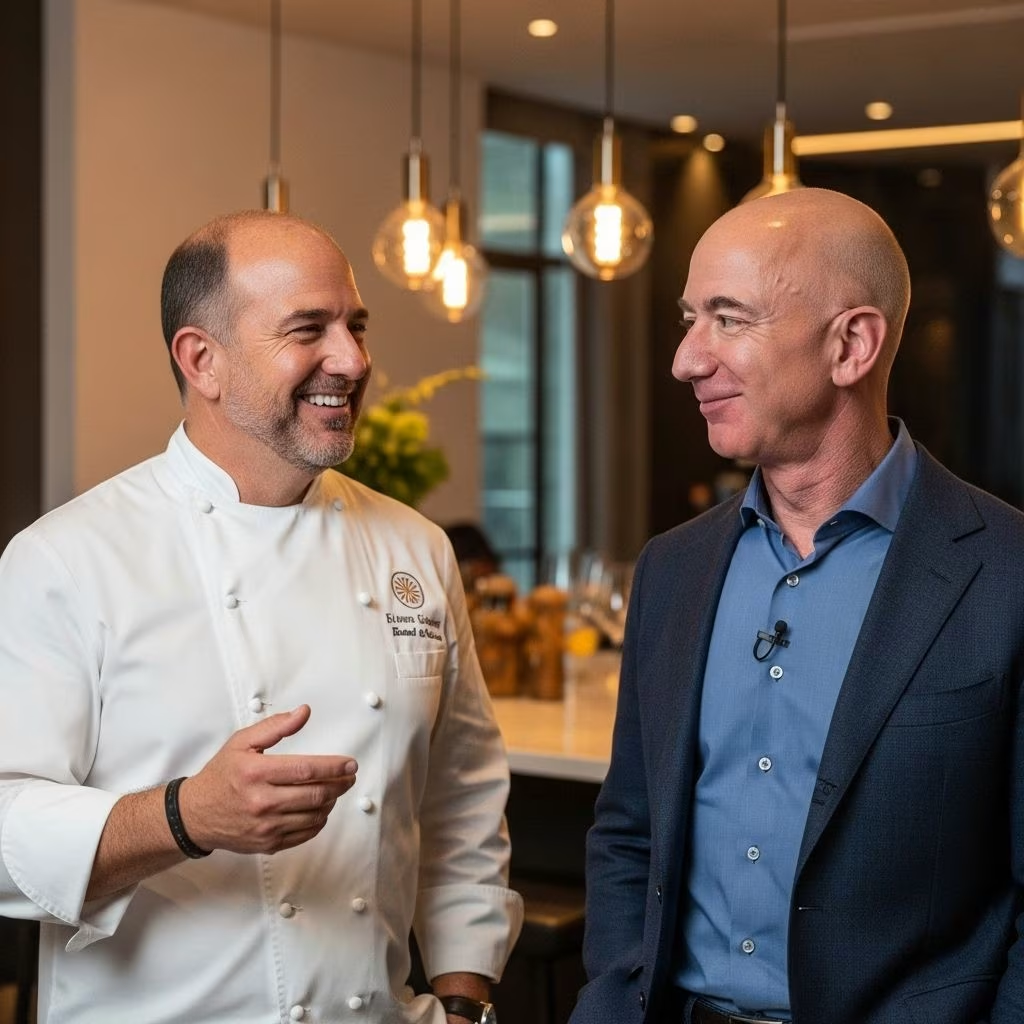
Chef José Andrés, Jeff Bezos, and the $100 Million Gift
Chef José Andrés, a globally renowned humanitarian and founder of World Central Kitchen (WCK), was catapulted into the global spotlight following a transformative $100 million donation from Amazon founder Jeff Bezos. This unparalleled act of philanthropy stands as a catalyst for sweeping changes in disaster relief, food security, and climate action worldwide.
The Courage and Civility Award: A Gift With Global Consequences
Jeff Bezos’s donation to José Andrés was the first of two Courage and Civility Awards, launched after his milestone Blue Origin space flight in July 2021. Bezos intended these awards—and their $100 million endowments—to empower leaders seeking practical solutions to the planet’s most urgent social and environmental challenges. Alongside Andrés, activist Van Jones was also a recipient, emphasizing a broader spectrum of global transformation.
- Philanthropic Impact: The size and versatility of the donation give Andrés significant autonomy to address root causes of hunger and disaster-related suffering.
- Strategic Purpose: The gift aims not only to provide emergency aid but also to advance systemic solutions, particularly at the intersection of food relief and climate change mitigation.
World Central Kitchen: Feeding Hope, One Meal at a Time
World Central Kitchen embodies the principle that a plate of food is a plate of hope. Founded in response to the devastating 2010 Haiti earthquake, WCK delivers meals to people in crisis zones, combining culinary expertise with logistical acuity. Their rapid-response teams operate in war zones, natural disasters, and areas beset with systemic hunger, ensuring nourishment when infrastructure collapses.
- Since its inception, WCK has served over 50 million meals worldwide.
- More than 45,000 volunteers have participated in relief missions across 13+ countries.
- WCK is renowned for rapid deployment and innovative strategies, often reaching communities before traditional humanitarian agencies.
The Pandemic & Expanding the Mission
Following COVID-19, WCK broadened operations to address hunger in healthcare facilities, support frontline workers, and supply the food-insecure amid economic dislocation. The pandemic galvanized the organization’s vision: not just to feed, but to systematically change food relief dynamics in a world facing compounding disruptions.
Addressing the Intersection: Hunger, Disasters, and Climate Change
Increasingly severe weather—from hurricanes to wildfires and floods—has made long-term hunger relief inseparable from climate action. WCK is channeling the Bezos donation to accelerate strategies that meet urgent needs and develop lasting resilience.
- Immediate Relief: The gift funds rapid mobilization for disaster zones (e.g., hurricanes, earthquakes, refugee crises).
- Sustainable Solutions: Investment is also flowing into new programs addressing food system vulnerabilities heightened by climate change—improving local agriculture, reducing food waste, supporting clean cooking technology, and bolstering community-led food infrastructure.
Andrés has publicly emphasized the urgent need to transform the way 3 billion people cook globally, pointing to the health and environmental costs of polluting cooking fuels. By improving access to clean cookstoves, WCK aims to reduce both air pollution and carbon emissions among vulnerable populations.
Inside the $100 Million: Strategic Uses and Early Outcomes
Andrés describes the Bezos donation as both an opportunity and an immense responsibility. In his words, “I’m just a cook… but cooks know how to feed people. Our goal is to address the blind spots in the system”. Early allocations have gone directly toward scaling operations at crucial moments, such as launching relief efforts in Ukraine and expanding capacity for hurricane response.
- Seed Funding for Emergencies: WCK has used portions of the gift as initial capital for rapid expansion when needed, covering logistics, transport, supplies, and volunteer mobilization.
- Investing in Solutions: Beyond short-term relief, funds are earmarked for developing scalable food aid models, sustainable sourcing, and culinary skills training to empower affected communities.
- Media & Advocacy: Andrés is investing in storytelling—through platforms like José Andrés Media—to educate and inspire broader audiences about food, culture, and solutions to hunger and environmental crises.
WCK’s Global Impact: A Track Record of Innovation
World Central Kitchen is distinguished by its nimbleness, creativity, and community-centric approach. Its operations include:
- Serving 4+ million meals in Puerto Rico after Hurricane Maria.
- Feeding thousands in Germany following catastrophic floods.
- Providing aid across North America, Latin America, Asia, and Europe during wars, wildfires, earthquakes, and public health crises.
Media, Storytelling, and Advocacy: Beyond Meals
José Andrés Media is the chef’s latest venture, using stories about food to highlight cultural ties, resilience, and global interconnectedness. The goal is to inform, inspire, and empower audiences to see the links between what we eat and the health of our communities and environment.
- Combining culinary art and humanitarian work to reach wider audiences.
- Creating educational content about sustainability, food systems, and disaster relief.
- Mobilizing action from donors, restaurants, and policymakers through persuasive storytelling.
A New Model for Disaster Relief: Agility and Local Partnership
The WCK model demonstrates that effective food relief goes far beyond airdropping supplies. Its tactics include:
- Partnering with local chefs, farmers, and volunteers to source and cook food on-site.
- Rapid assessment teams to identify the hardest-hit areas, sometimes beating larger organizations to the ground.
- Adapting menus and methods to meet local tastes and nutritional needs, promoting dignity and respect in crisis.
- Supporting economic recovery by buying from local producers and employing local labor.
| Traditional Food Aid | World Central Kitchen Model |
|---|---|
| Ships in bulk food, often shelf-stable | Prepares fresh meals on-site for immediate consumption |
| Long procurement chains, centralized operations | Leverages local supply chains, quick deployment |
| Little customization, one-size-fits-all meals | Adapts menus to local culture and dietary preferences |
| Limited local economic impact | Purchases locally, stimulates recovery of local food systems |
The Broader Meaning: Philanthropy, Responsibility, and Systems Change
The Bezos grant represents more than charity—it’s an experiment in systems change. With climate emergencies and conflict expected to drive higher rates of food insecurity, approaches like WCK’s—which are agile, inclusive, and sustainability-oriented—could set new standards for global relief efforts.
Andrés himself is unequivocal: “We cannot wait for more promises from world leaders. We need the fierce urgency of now”. The challenge is to leverage this transformative gift for maximum, lasting impact—not simply spending the money but investing it to solve, not just treat, the intertwined crises of hunger and climate change.
- Potential to inspire: The donation may set a precedent for other philanthropists to invest in innovative, high-impact models of charitable action.
- Scale without bureaucracy: WCK’s approach demonstrates how nimble, adaptable organizations can sometimes achieve more than larger, slower-moving counterparts.
Quotes From the Frontlines
- “This is a fight so hungry people can eat. We cannot wait for more promises from world leaders. We need the fierce urgency of now.” – Chef José Andrés
- “A plate of food is a plate of hope. It’s the fastest way to rebuild lives and communities.” – José Andrés
Frequently Asked Questions (FAQs)
Q: What is the Courage and Civility Award?
A: The Courage and Civility Award is an initiative by Jeff Bezos, granting $100 million to leaders who implement bold solutions to global crises. José Andrés and Van Jones were its first recipients.
Q: How will the $100 million donation be used by World Central Kitchen?
A: It will fund both immediate food relief after disasters and long-term efforts, such as improving food system resilience, supporting clean cooking technologies, reducing food waste, and empowering communities through local sourcing and training.
Q: What distinguishes World Central Kitchen from traditional humanitarian agencies?
A: WCK emphasizes rapid, locally driven responses. The group mobilizes chefs and local resources to prepare hot, culturally appropriate meals on the ground, strengthening communities during and after crises.
Q: How does WCK address the connection between hunger and climate change?
A: The organization goes beyond food delivery, investing in solutions like clean cooking fuels and local agriculture. By addressing food insecurity and emissions, WCK works at the intersection of human and planetary health.
Q: Why did Jeff Bezos choose José Andrés as a recipient?
A: Bezos cited Andrés’s proven innovation and compassionate leadership, highlighting how his World Central Kitchen has transformed food relief across the world and continues to adapt to bigger systemic challenges.
A Future of Hope: Next Steps for World Central Kitchen
As the world faces compounding disasters and social upheaval, World Central Kitchen—fueled by the generosity and vision of both Jeff Bezos and José Andrés—is forging a new paradigm for humanitarian response. Their work suggests that bold philanthropy, if guided by humility, agility, and a commitment to justice, can plant the seeds for lasting change at a global scale.


