


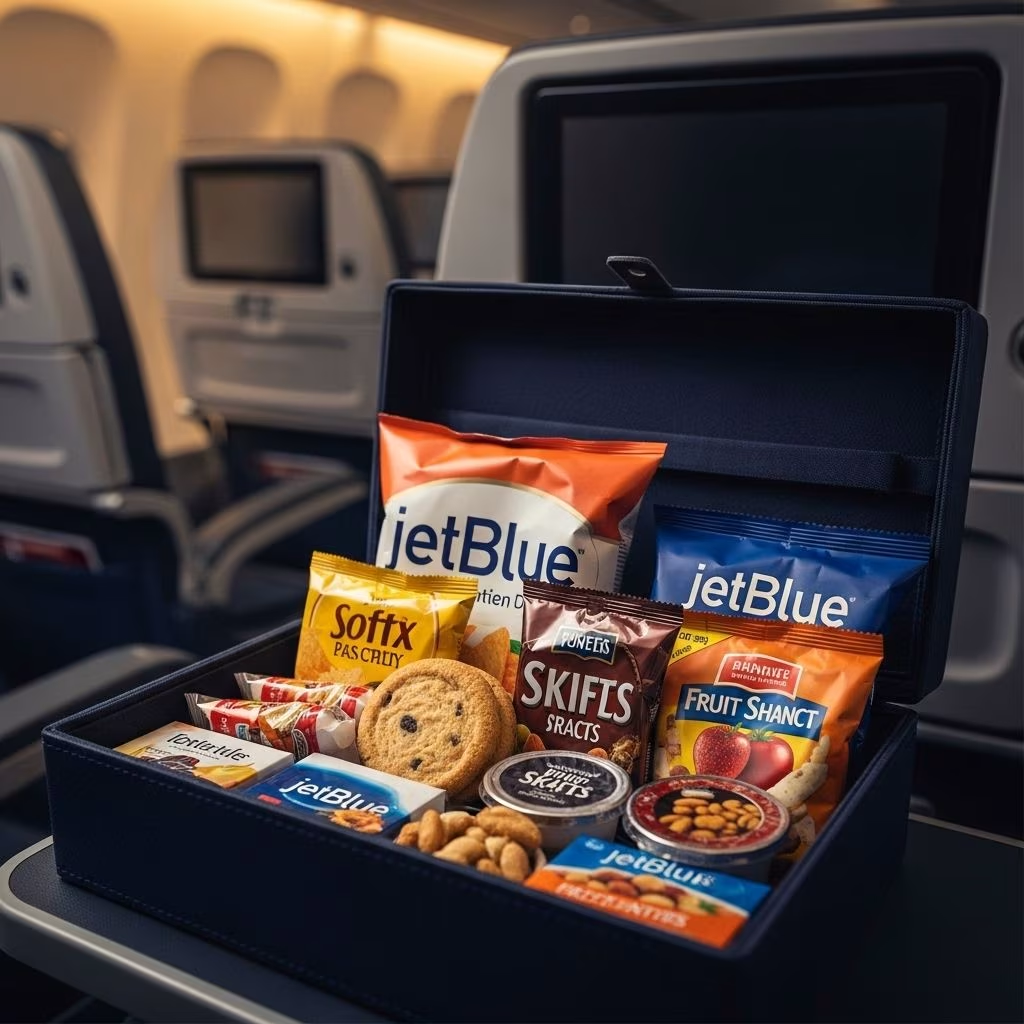
JetBlue’s In-Flight Snack Bar: Pioneering Solutions to Airline Food Waste
Food waste is a major sustainability concern in air travel, but JetBlue’s in-flight snack bar model offers an innovative blueprint for reducing waste and setting new industry standards. JetBlue, recognized for customer-centric service, is carving a path forward for airlines eager to minimize environmental impact and deliver a better passenger experience. This article delves deep into JetBlue’s approach, exploring the current state of airline food waste, the design and operations of the snack bar, emerging industry trends, and what this all means for the broader sustainability movement in aviation.
The Challenge: Food Waste at 35,000 Feet
Globally, airlines serve millions of meals every year, resulting in considerable food waste. From uneaten sandwiches and fresh produce to single-serve snack packaging, this waste poses logistical, financial, and environmental dilemmas for carriers and society at large. Addressing airline food waste requires holistic thinking, blending passenger preferences, operational logistics, and environmental stewardship.
- Volume of waste: Airlines dispose of tons of uneaten food daily, which frequently ends up in landfills, contributing to methane emissions and compounding the climate crisis.
- Complex logistics: Stringent food safety protocols, unpredictable passenger demand, and tight turnaround times make it challenging to align supply with actual consumption.
- Cost implications: Not only does wasted food mean lost revenue opportunities, it also incurs additional costs for disposal and compliance.
JetBlue’s Snack Bar: A New Approach to In-Flight Service
JetBlue’s self-serve in-flight snack bar, affectionately dubbed the “pantry,” was designed to empower passengers and dramatically cut down unnecessary waste. Unlike traditional airline catering, which often involves serving full meals with preset accompaniments, JetBlue gives customers the freedom to take only what they truly want.
- Self-Serve Model: Located in the galley, the pantry is accessible throughout most of the flight, allowing passengers to help themselves to a variety of packaged snacks and drinks at their own pace.
- Reduced Overproduction: Instead of preparing set meals for every passenger, JetBlue stocks the pantry based on predictive analytics and real passenger demand, minimizing the likelihood of excess.
- Packaging Optimization: Snacks are prepackaged in single-serve portions, which can actually aid in reducing waste by offering more precise inventory management and reducing spoilage.
- Empowering Choice: Passengers can satisfy cravings and dietary preferences, which means fewer untouched or discarded items.
What Snacks Are Offered?
The snack bar typically offers a rotation of well-known brands alongside healthier options, such as:
- Chips
- Pretzels
- Nuts and trail mixes
- Granola bars
- Beverages, including bottled water, sodas, and juice boxes
JetBlue also accommodates dietary restrictions and evolving customer preferences by frequently updating its snack offerings and partnering with brands that align with its sustainability mission.
Designing for Zero Waste: Operational Insights
At the heart of JetBlue’s approach is a commitment to reduce waste at every stage—from sourcing products to offloading waste post-flight. Several strategies underpin the airline’s operational ethos:
- Data-Driven Stocking: Analytics-driven stocking methods—based on flight route, time of day, and historical consumption data—reduce the risk of overstocking.
- Flexible Inventory: The pantry’s flexible design allows flight attendants to adjust offerings based on passenger feedback and specific flight needs, cutting down on generic “one-size-fits-all” provisioning.
- Reduced Leftovers: Because only popular and in-demand items are stocked, the residual waste at the end of each journey is minimized compared to the more rigid meal service models of other carriers.
The Waste Hierarchy in Practice
| Step | Application in JetBlue’s Model |
|---|---|
| Avoidance | Only stocking items with proven, ongoing demand |
| Reduction | Allowing self-service reduces the risk of unwanted food distribution |
| Reuse/Recovery | Unopened snacks may be safely reused where policies allow |
| Recycling | Seeking recyclable or compostable packaging for remaining waste |
| Disposal | Proper management of minimal unavoidable waste |
Industry Context: How Airlines are Addressing Food Waste
JetBlue’s initiative is part of a larger industry trend, as more airlines recognize the pressing need to address food waste and sustainability:
- Menu Personalization: Airlines such as Qatar Airways and Turkish Airlines have introduced a variety of dietary choices, including plant-based and allergen-sensitive options, to better align with passenger demand and reduce uneaten meals.
- Pre-ordering and Skipping Meals: Major carriers now offer pre-ordering for meals, as well as the option to skip meals altogether, further ensuring that only necessary food is prepared.
- Tech Innovation: Airlines are leveraging AI and advanced data analytics to more accurately predict passenger preferences and optimize inventory, leading to less surplus and spoilage.
- Packaging Shifts: Biodegradable packaging, compostable utensils, and recyclable materials are increasingly common, lightening the environmental load from single-use plastics.
JetBlue’s Sustainability Ambitions Beyond Food
JetBlue’s snack bar model is just one part of its broader commitment to sustainability. The airline participates in programs pushing for industry-wide reforms, including but not limited to the adoption of sustainable aviation fuel (SAF), energy-efficient operations, and partnerships for greener supply chains.
- Sustainable Aviation Fuel (SAF): JetBlue advocates for incentives and programs to promote SAF use, aiming for a significant reduction in greenhouse gas emissions in its operations.
- Emissions Reduction: Fleet modernization, efficient ground operations, and the use of renewable energy sources all play a part in its pursuit of net zero emissions by 2050.
- Advocacy and Partnerships: By working with government and industry peers, JetBlue is pushing for policy changes and innovations that increase access to sustainable solutions at scale.
Building a Culture of Sustainability
Within its operations, JetBlue seeks to embed environmental mindfulness at every level. Initiatives like green buildings, onboard recycling, and crew engagement set a tone that prioritizes planet-friendly thinking as a core company value.
Benefits to Passengers and the Environment
JetBlue’s transformation of its in-flight food program tangibly benefits both travelers and the planet.
- Customer Choice and Satisfaction: The self-serve snack bar enables passengers to eat what, when, and how much they want—improving satisfaction and personalizing the travel experience.
- Reduced Waste: By letting demand define supply, JetBlue minimizes catering surplus, meaning less food is discarded unnecessarily.
- Simplified Service: Crew members spend less time distributing unwanted food and more time engaging with customers or focusing on onboard safety and hospitality.
- Lower Carbon Footprint: Less food waste means fewer emissions from landfill decomposition, and carefully chosen packaging reduces reliance on resource-intensive single-use plastics.
Industry Impact: Inspiring Broader Change?
JetBlue’s approach offers a compelling template for other carriers and is already influencing the broader airline industry’s attitude to food service:
- Other carriers are piloting self-serve snack pantries and evaluating menu personalization as part of the drive toward greener skies.
- The focus on precise provisioning and data-driven inventory management is rapidly becoming best practice in airline operations.
- The emphasis on packaging materials and supply chain collaboration has stirred innovation among suppliers and caterers industry-wide.
Emerging Trends and Challenges
While the snack bar model is promising, ensuring safety, hygiene, and regulatory compliance remains critical. The industry continues to wrestle with:
- Supply Chain Resilience: Striking the right balance between offering variety and preventing overstocking requires flexible, responsive supply chains.
- Packaging Solutions: Developing packaging that is both protective and environmentally friendly is a continual challenge.
- Technological Integration: Advanced digital systems, from predictive analytics to contactless ordering and payment, are foundational to the future of sustainable catering.
How Passengers Can Participate in the Zero Waste Journey
JetBlue’s model works best with engaged passengers:
- Consider taking only what you’ll eat from the pantry to help minimize waste.
- Dispose of recyclables and compostables in the appropriate receptacles, following crew guidance.
- Share feedback with crew or the airline about preferred snacks or suggestions, informing better inventory in the future.
Conclusion: The Future of In-Flight Food Service
JetBlue’s in-flight snack bar demonstrates that innovative, customer-driven solutions can create more efficient and environmentally responsible air travel. As airlines worldwide aim to decouple customer satisfaction from waste generation, practices pioneered by JetBlue are likely to become mainstays in the next generation of flight experiences.
Through smart service design, focus on sustainability, and ongoing engagement with both customers and suppliers, JetBlue is helping reshape the narrative of airline hospitality in the era of climate consciousness. If this trend continues—and passenger awareness and regulatory pressure increase—zero waste could soon be standard at 35,000 feet.
Frequently Asked Questions (FAQs)
Q: Does JetBlue still serve free snacks and drinks onboard?
A: Yes, JetBlue continues to offer complimentary snacks and non-alcoholic beverages, now available through their innovative self-serve snack bar or “pantry” system.
Q: How does JetBlue ensure the snack bar doesn’t create new types of waste?
A: JetBlue optimizes stocking based on passenger demand, focuses on portion-controlled packaging, and is increasingly turning to recyclable and compostable materials to reduce its environmental impact.
Q: Are the self-serve snacks healthy or cater to special diets?
A: JetBlue continuously updates its snack bar selection to include a range of options, from healthy choices to allergen-aware and vegan snacks, reflecting evolving passenger preferences.
Q: What else is JetBlue doing to promote sustainability?
A: Beyond food waste, JetBlue is a vocal advocate for sustainable aviation fuel, invests in energy-efficient operations, and partners throughout the supply chain to push for broader environmental gains.
Q: Will JetBlue’s model become the standard across the airline industry?
A: While each airline operates differently, many are piloting similar service innovations and sustainable strategies, suggesting that JetBlue’s model could inspire widespread changes in in-flight food service.
References
- https://insights.worldtravelcateringexpo.com/2023/03/23/food-waste-and-tracking/
- https://legacycms.jetblue.com/public/dam/ui-assets/p/2019_2020_JetBlue_ESG_Reporting.pdf
- https://www.jetblue.com/magnoliapublic/dam/ui-assets/p/JetBlueResponsibilityReport2014.pdf
- https://www.jetblue.com/flying-with-us/inflight-experience/snacks-drinks
- https://www.tsa.gov/travel/security-screening/whatcanibring/food


