


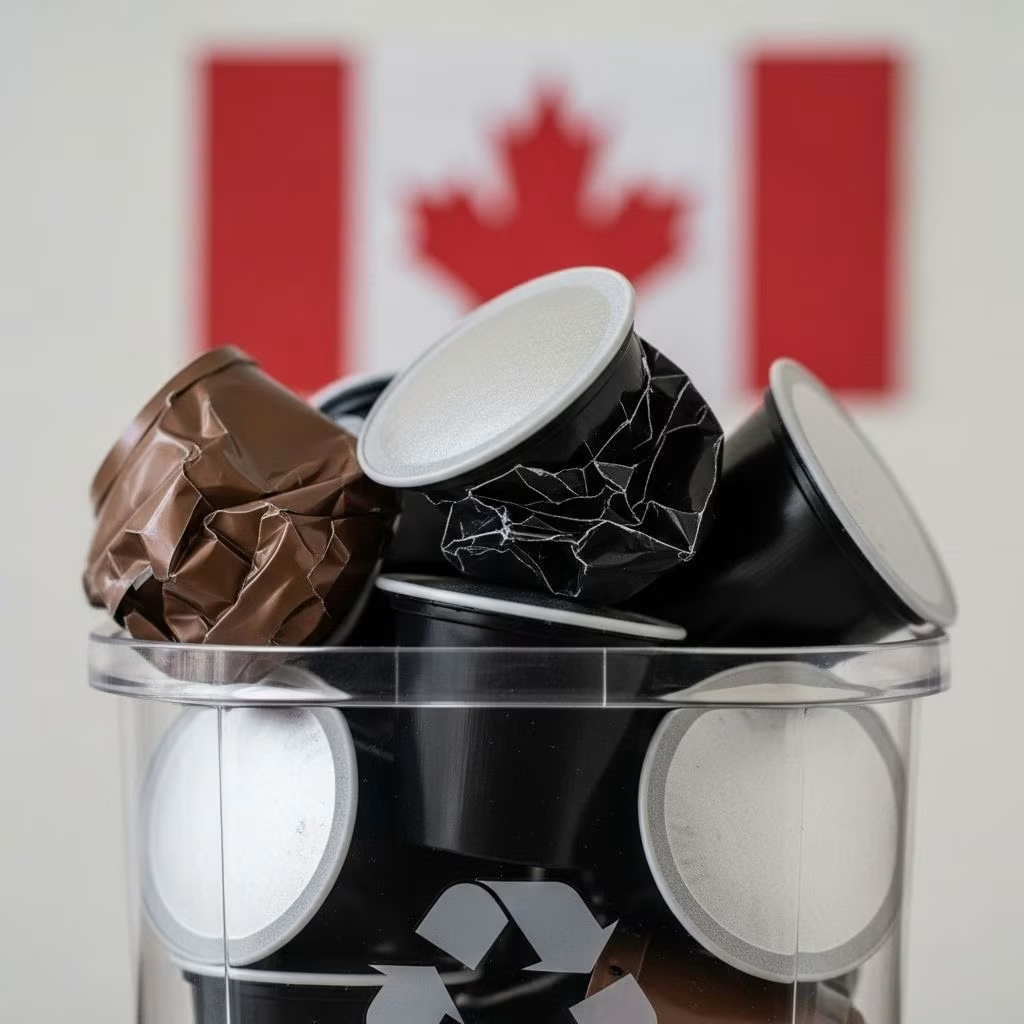
Keurig Canada Penalized Over Misleading Recycling Claims
In a landmark case that has stirred significant debate among environmentalists, regulators, and consumers alike, Keurig Canada faced a hefty penalty for misleading claims about the recyclability of its single-use coffee pods. The federal Competition Bureau in Canada fined the company $3 million for marketing its K-Cup pods as recyclable when, in reality, most municipal recycling programs did not accept these pods. The case underscores the pitfalls of greenwashing, challenges of plastic pollution, and the need for stricter oversight in corporate environmental advertising.
Background: The Rise of Single-Use Coffee Pods
The single-serve coffee pod revolution changed the way millions of people brew their morning cup. Brands like Keurig championed the convenience of quick, customizable coffee, but environmentalists quickly flagged concerns about the sheer volume of plastic waste. With billions of pods consumed each year, the question of how to responsibly dispose of them—let alone recycle—has become increasingly urgent.
- K-Cup pods are primarily made from polypropylene No. 5 plastic.
- Recycling guidelines and capabilities vary widely across Canadian municipalities.
- Keurig’s ads and packaging claimed pods were widely recyclable—this turned out to be misleading for most regions.
The Competition Bureau’s Decision and Fines
Following an extensive investigation, the Canadian Competition Bureau determined that Keurig Canada’s claims were not just mistaken—they were false and misleading in most of the country. Only select regions, notably British Columbia and Quebec, had municipal facilities that could process the pods, and even there, additional preparation steps were required. In response, the Bureau levied the following penalties:
- $3 million administrative monetary penalty
- $800,000 charitable donation to an environmental organization
- $85,000 to offset investigation costs
- Mandatory public notices in newspapers, on social media, on the Keurig Canada website, and via direct email to customers
The Competition Bureau’s conclusion: Keurig’s marketing created the impression that the pods were universally recyclable after consumers peeled off the foil lid and emptied out coffee grounds. In reality, recycling acceptance and processes varied, and many facilities would not accept the pods at all.
Source:
What Led to the Investigation?
- Grassroots advocacy: The Environmental Law Centre (ELC) at the University of Victoria, together with Ecojustice, triggered the investigation by filing a comprehensive complaint about Keurig’s advertising practices.
- Expert analysis: Legal director Calvin Sandborn led the review, finding that the company’s claims not only misled consumers but undermined broader recycling efforts and added contamination to plastic systems.
- Media attention: The investigation gained momentum after news articles advocating for a national plastics strategy prompted direct communication from Keurig to ELC—and subsequent legal scrutiny.
How Did Keurig Mislead Consumers?
Keurig’s recyclable claims appeared on its website, packaging, and via social media. The company instructed customers to simply peel off the foil lid and empty the coffee grounds before recycling. However, individual municipalities often require additive steps, and in many locales, pods are rejected entirely.
According to the Competition Bureau:
- Keurig’s claims were false or misleading where pods weren’t accepted in municipal recycling streams.
- Instructions understated the effort required to prepare pods for recycling.
- Many recycling centers refused the pods due to size, materials, and contamination risks.
Geographical Disparities
Recycling infrastructure in Canada is not uniform. While BC and Quebec process polypropylene pods, provinces like Ontario and Alberta do not. This means that consumers following Keurig’s instructions in those regions inadvertently added contamination to recycling bins, which can ruin entire batches of collected plastics.
The Broader Impacts of Greenwashing
| Aspect | Details | Impacts |
|---|---|---|
| Consumer Trust | Consumers rely on environmental product claims to guide purchases. | Misleading claims erode public trust and encourage improper recycling behavior. |
| Contamination | Unaccepted pods in recycling bins contaminate loads. | Makes recycling less efficient and increases processing costs. |
| Corporate Accountability | Legal penalties push companies to improve transparency and processes. | Sets precedent for other firms to follow accurate advertising practices. |
| Environmental Outcomes | False recyclability claims mask the true scale of plastic pollution. | Lowers attention on the need for improved infrastructure and reduction strategies. |
Class Action Lawsuits and Regulation in North America
Keurig’s misleading recyclability claims also sparked class action lawsuits in both Canada and the United States. In California, a judge certified a class action involving consumers who bought Keurig’s recyclable K-Cup pods from June 2016 onward. Similar litigation pursued in Massachusetts reflects a wider pattern of consumer dissatisfaction and regulatory scrutiny surrounding greenwashing in packaging and plastics.
In the US, Keurig Dr Pepper faced a fine from the Securities and Exchange Commission (SEC) for making inaccurate claims in its annual reports regarding the recyclability of K-Cup capsules. The SEC fined the Texas-based group $1.5 million, emphasizing that companies must accurately disclose material facts in investor reports. Despite Keurig’s claims of testing and validation, major recycling companies had communicated their refusal to process the pods. The SEC and other agencies thus strengthened their focus on complete and honest disclosures around environmental products.
Sources:
Understanding Plastic Recycling: Why Most Pods Aren’t Actually Recycled
At the heart of the Keurig controversy is the complex reality of plastic recycling systems. Coffee pods are quite small and made of mixed materials, which makes them difficult to sort and process. Most recycling facilities optimize sorting and melting processes for larger, more uniform items.
- Material composition: Keurig pods are made from No. 5 polypropylene—partly recyclable—but small pieces often get lost or rejected during sorting.
- Facility restrictions: Many plants run on machinery that cannot easily handle small, multi-component items like K-Cups.
- Preparation steps: Pods need to be emptied and cleaned; contamination with coffee grounds reduces acceptance.
The Role of Advocacy and Citizen Action
- Legal and policy advocates played a central role by filing complaints and pressing for investigations.
- Expert analysis from groups like the Environmental Law Centre provided the evidence needed to demonstrate harm and trigger regulatory response.
- Grassroots campaigns and consumer watchdogs can expose misleading claims and catalyze change at local and national levels.
Corporate Changes and Remedial Measures
Following the penalty, Keurig Canada agreed to revise its advertising and packaging. The company made changes to its messaging, clarifying where K-Cup pods might be accepted for recycling, and what specific preparation steps consumers would need to take. Keurig also committed resources to improving the environmental impact of its products and invested in community donations focused on sustainability.
- Updated statements on recyclability, now identifying regional limits.
- Direct notifications to customers about the deceptive advertising findings.
- Mounting efforts to convert manufacturing lines to recyclable formats, though infrastructure lags behind marketing claims.
The Bigger Picture: Plastics, Recycling, and Policy Challenges
This case exemplifies the larger tensions facing environmental progress in Canada and globally. Despite advances in packaging and recycling technology, consumer-facing claims often outpace actual infrastructure. The gap between corporate sustainability pledges and practical realities at the municipal level continues to hamper genuine progress.
- Plastics crisis: Municipal and national strategies for plastics reduction must address both source materials and consumer habits.
- Transparency: Regulatory bodies increasingly demand substantiation of green claims—prompting a new era of accountability.
- Innovation: The industry is under pressure to improve pod designs, labeling, and support for downstream recycling facilities.
Frequently Asked Questions (FAQs)
Why was Keurig fined in Canada?
Keurig Canada was fined because it made false and misleading claims about the recyclability of its single-use K-Cup pods, which are often not accepted in municipal recycling programs across much of Canada.
Source:
Are Keurig pods recyclable anywhere?
Keurig K-Cup pods can be recycled in some regions, notably British Columbia and Quebec, where local facilities accept polypropylene No. 5 plastic after pods are properly prepared. However, most municipalities do not accept them due to sorting issues and contamination risks.
Source:
What steps do I need to take to recycle a K-Cup pod?
To recycle K-Cup pods in regions that accept them, consumers generally must peel off the foil lid, empty the coffee grounds, and rinse the plastic shell. Even then, acceptance depends heavily on local recycling capabilities.
Was there a similar penalty in the United States?
Yes, Keurig Dr Pepper was fined $1.5 million by the SEC for inaccurate environmental claims in its annual reports, as major recycling companies stated they would not accept the pods.
Source:
How can consumers know which products are truly recyclable?
Consumers should verify local recycling guidelines, assess label clarity, and pay attention to independent watchdog ratings. Recyclability depends on both the materials and municipal facility capabilities.
Key Takeaways for Consumers and Regulators
- Check local recycling guidelines before assuming packaging or products marked as recyclable can actually be processed in your area.
- Demand clear claims: Push brands for transparent and substantiated recycling instructions and disclosures.
- Support regulation that holds companies accountable for greenwashing and false advertising.
- Reduce and reuse alongside recycling – using less plastic and opting for reusable products remains vital.
The Continuing Fight Against Single-Use Plastics
The Keurig Canada case stands as a pivotal moment in Canada’s efforts to confront plastic pollution and corporate accountability. While improved product designs and recycling technologies offer hope, progress depends on honest communication, strengthened infrastructure, and consumer action. As governments worldwide consider stricter rules on single-use plastics, cases like Keurig’s serve as both warning and catalyst for change.
References
- https://elaw.org/keurig-fined-ca-3-million-false-advertising
- https://www.esgtoday.com/sec-fines-keurig-1-5-million-over-coffee-pod-recyclability-claims/
- https://www.clg.org/Class-Action/List-of-Class-Actions/Keurig-Recyclable-K-Cup-Pods-Canadian-Class-Action
- https://www.worldcoffeeportal.com/news/keurig-dr-pepper-fined-1-5m-over-inaccurate-k-cup-recycling-claims/
- https://www.keurig.ca/keurigcanadanotice
- https://topclassactions.com/lawsuit-settlements/consumer-products/household/keurig-to-pay-1-5m-fine-over-k-cup-recycling-statements/
- https://www.bclplaw.com/en-US/events-insights-news/sec-roasts-keurig-for-claims-regarding-recycling-of-k-cup-pods.html
- https://trellis.net/article/what-companies-can-learn-from-the-secs-fine-over-k-cup-recyclability/


