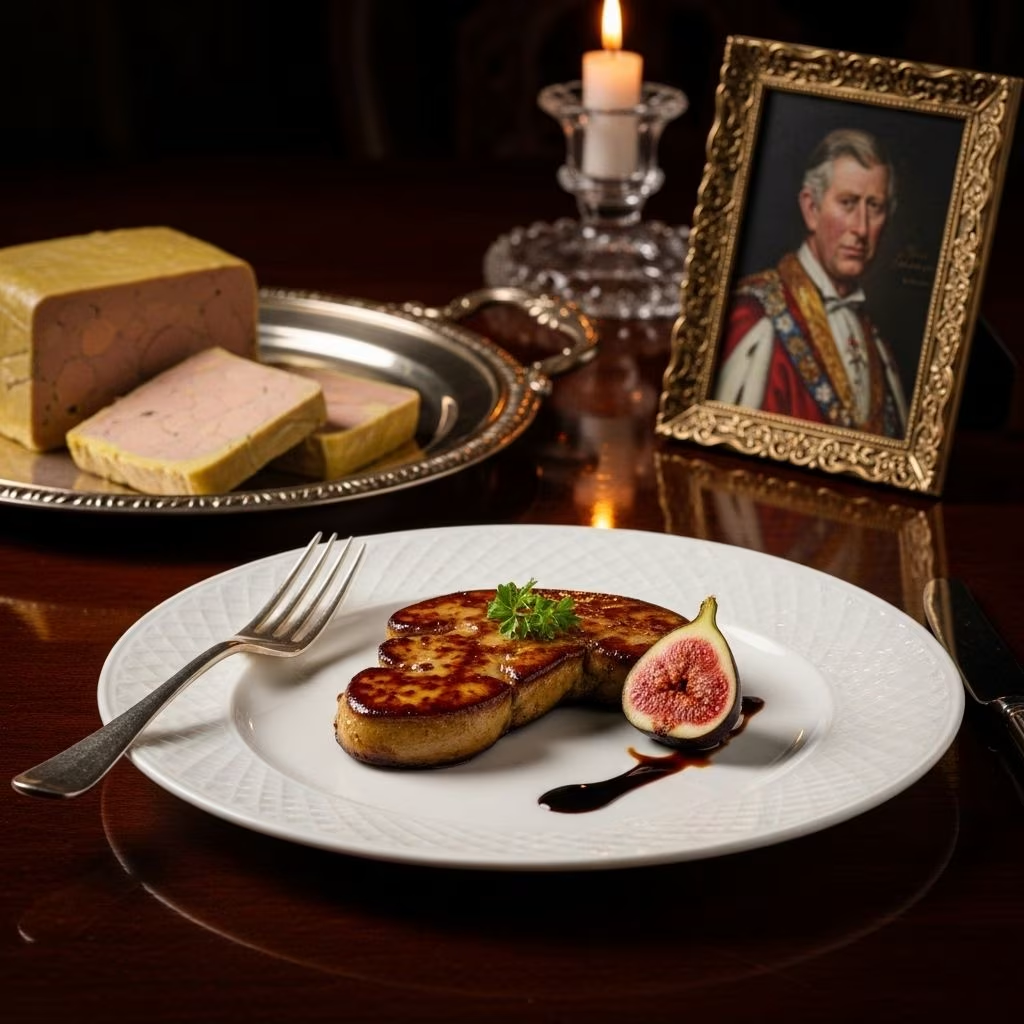
King Charles III’s Foie Gras Ban: A Royal Stand Against Animal Cruelty
Foie gras, long considered a symbol of luxury dining, has become the focus of heated debate about animal welfare and ethical gastronomy. The recent decision by King Charles III to ban foie gras from all royal residences marks a significant moment in the UK’s relationship with this controversial delicacy. This article explores the roots, repercussions, and future outlook of this royal decree, tracing its impact on politics, public opinion, and culinary traditions both in the UK and beyond.
What Is Foie Gras—and Why Is It Controversial?
Foie gras is a French delicacy made from the liver of ducks or geese that have been specially fattened through a process known as gavage (force-feeding). This process involves inserting tubes down the birds’ throats and delivering large quantities of food—typically corn purée—two to four times per day for about two weeks. The result is an enlarged, fatty liver prized for its luxurious texture and rich flavor.
- Force-feeding causes the birds’ livers to swell up to ten times their natural size, leading to distress, pain, and often organ failure before death.
- Many animal rights organizations describe the practice as a form of torture, while supporters claim the birds do not suffer to the degree claimed.
- The production of foie gras is illegal in several countries—including the UK—but its importation and sale remain legal in some regions.
King Charles III: From Prince of Wales to Compassionate Monarch
King Charles III has been a long-time advocate of ethical treatment for animals. As Prince of Wales, he quietly removed foie gras from menus at his private residences, favoring more sustainable and animal-friendly options. Upon his accession, he extended this policy to include all royal residences, such as Buckingham Palace and Sandringham.
- In November 2022, Palace officials confirmed that foie gras would be banned from every royal residence, aligning the monarchy’s dining policy with the King’s personal ethical values.
- Animal welfare organizations, including PETA and Animal Equality, celebrated the decision as a landmark victory and sent gifts of “faux gras”—a vegan alternative—to the Palace as a gesture of gratitude.
Royal Residences Covered by the Ban
| Residence | Status |
|---|---|
| Buckingham Palace | Banned |
| Windsor Castle | Banned |
| Sandringham | Banned |
| Other Royal Properties | Banned |
The Ethical Debate: Animal Welfare and Culinary Tradition
The controversy over foie gras centers on questions of animal suffering, tradition, and the definition of ethical luxury.
- Video footage and regular investigations reveal that force-feeding ducks and geese causes significant physical harm, including damaged organs, breathing difficulty, and distress.
- Supporters of foie gras often argue that the tradition is centuries old and intrinsic to French gastronomy. Some chefs and diners regard it as irreplaceable for festive, luxurious occasions.
- Majorities in the UK (and globally) increasingly view the practice as inhumane. Surveys show up to 79% of Britons support banning foie gras imports entirely.
How Force-Feeding Works: A Closer Look
Force-feeding involves inserting a tube into the bird’s throat and rapidly delivering up to 1 kg of corn mixture two to four times daily. For comparison, this would be as if a human were forced to consume around 12 kg of spaghetti per day.
- The birds’ livers grow from a normal 200 grams to about 2 kilograms.
- Consequences include liver disease, severe discomfort, and respiratory distress due to the vastly expanded organ pressing against other internal structures.
- The practice is widely condemned by veterinarians and animal welfare groups.
Foie Gras Laws in the UK and Internationally
The UK has long banned the domestic production of foie gras under national animal welfare laws. However, due to European Union trade rules (prior to Brexit), imports remained legal up until the UK’s recent political transitions.
- Brexit has opened the path for the UK to independently legislate against foie gras imports without contravening EU free trade laws.
- 22 of the 27 EU member states currently ban the force-feeding process necessary for foie gras at the national level.
- More than 20 countries globally, including Switzerland, have either partial or complete bans on force-feeding for foie gras.
Political Developments and Continued Campaigning
The debate around foie gras in the UK continues beyond royal dining rooms. Major celebrity campaigns and collaborative efforts by animal welfare organizations have pressured the UK government to enact stronger legislation:
- Notable supporters for a full import ban include Ricky Gervais, Dame Joanna Lumley, Evanna Lynch, and Sir Mark Rylance, among others.
- Labour Party MPs have publicly pledged to implement a ban, but critics argue that promised reforms have not materialized rapidly enough.
- Activist demonstrations and petitions, such as those coordinated by Animal Equality and PETA, continue to gain support nationwide.
The Rise of Faux Gras: Cruelty-Free Alternatives
In response to growing discomfort over traditional foie gras, innovative chefs and entrepreneurs have developed faux gras—vegan and vegetarian alternatives that mimic the texture and richness of traditional foie gras but without animal suffering.
- Acclaimed vegan chef Alexis Gauthier has popularized “faux gras” at his London restaurant Gauthier Soho, winning praise for taste and ethical integrity.
- Swiss Michelin-starred chef Tobias Buholzer produces a “Noix gras” terrine, made entirely from plant-based ingredients, which has become a staple in ethical fine dining.
- These alternatives are increasingly available in gourmet markets and featured on festive menus as substitutes for traditional foie gras.
Comparison Table: Foie Gras vs. Faux Gras
| Aspect | Foie Gras | Faux Gras |
|---|---|---|
| Main Ingredients | Duck or goose liver (force-fed) | Plant-based mixtures, such as lentils, nuts, mushrooms |
| Production Method | Force-feeding birds | Animal-free, cruelty-free |
| Animal Welfare | Widely criticized, causes pain and illness | Supports animal welfare, no suffering involved |
| Legal Status (UK) | Illegal to produce, legal to import | Fully legal |
Public Opinion: A Shift Toward Compassionate Luxury
Public sentiment in the UK has shifted dramatically in recent years. Where foie gras was once a status symbol, it is now increasingly viewed as a relic of outdated gastronomy:
- Nearly nine in ten Britons support a total ban on imported foie gras.
- Festive and state occasions now see a rise in plant-based alternatives, reflecting broader desires for ethical luxury.
- High-profile protests, celebrity endorsements, and viral social media campaigns amplify pressure on both lawmakers and the culinary industry.
Actions You Can Take
- Support cruelty-free alternatives by choosing faux gras and encouraging restaurants and caterers to follow suit.
- Sign petitions and write to elected officials to demand legislative action against force-fed products.
- Educate others about animal welfare issues associated with traditional luxury foods.
International Trends: Beyond the UK
The UK is not alone in its reassessment of foie gras. Policy changes and social movements in other countries highlight a growing global consensus:
- Switzerland is advancing toward a full ban on foie gras imports, following a successful parliamentary vote.
- In the European Union, only five out of the 27 member states allow force-feeding for foie gras production.
- Cities and regions worldwide, including California and New York City, have introduced bans on production or sale.
Health and Environmental Concerns
Aside from ethical issues, there are important health and ecological arguments against foie gras:
- Intensive poultry farming for foie gras increases the risk of disease outbreaks, such as avian influenza. Recent epidemics have led to the culling of millions of birds annually.
- Sustainable and plant-based alternatives have lower environmental impacts, consuming fewer resources and producing less pollution.
Frequently Asked Questions (FAQs)
Q: Why is foie gras considered unethical?
A: Foie gras production typically involves force-feeding ducks or geese, causing enlarged livers, pain, and distress. Animal welfare groups widely denounce it as unnecessary cruelty.
Q: Is it legal to eat or buy foie gras in the UK?
A: Production of foie gras is illegal in the UK. However, imports are still legal unless new legislation is enacted. The King’s ban applies only to royal residences, but not to private citizens.
Q: What is faux gras, and is it a viable alternative?
A: Faux gras is a plant-based food designed to mimic traditional foie gras. Chefs and critics praise high-quality versions for taste, texture, and being cruelty-free.
Q: Has King Charles III’s ban influenced restaurants and the food industry?
A: Yes. The royal endorsement of cruelty-free dining has encouraged high-profile restaurants and event caterers to reconsider serving foie gras, often switching to vegan alternatives.
Q: What action is the UK government taking on foie gras imports?
A: Despite growing calls and political pledges, the UK government has not yet banned imports. Campaigns continue to urge lawmakers to act on public sentiment and welfare principles.
The Future: Redefining Luxury Dining
King Charles III’s bold stance signals a pivot in Britain’s relationship with luxury cuisine. As more regions ban the production and importation of foie gras, and as innovative chefs create gourmet cruelty-free alternatives, a new definition of ethical luxury is emerging—one that weds culinary excellence with compassion. The coming years may well see foie gras become not just a product of the past, but a symbol of how traditions can evolve for a kinder future.