The Volcanic Birth of Lanzarote’s Vineyards
Lanzarote, the easternmost of Spain’s Canary Islands, lies off the coast of Africa. Today, it is renowned for its surreal vineyards and extraordinary wines. This reputation is owed not only to the labor of generations but also to massive volcanic eruptions in the early 18th century that destroyed much of the island’s arable land yet paradoxically created unique opportunities for viticulture.
Between 1730 and 1736, more than a quarter of Lanzarote was buried beneath lava and volcanic ash—referred to locally as rofe or picon. This disaster forced nearly half the island’s population to flee and reshaped the island’s future for agriculture and wine production.
A Landscape Like No Other: Ash, Pits, and Vines
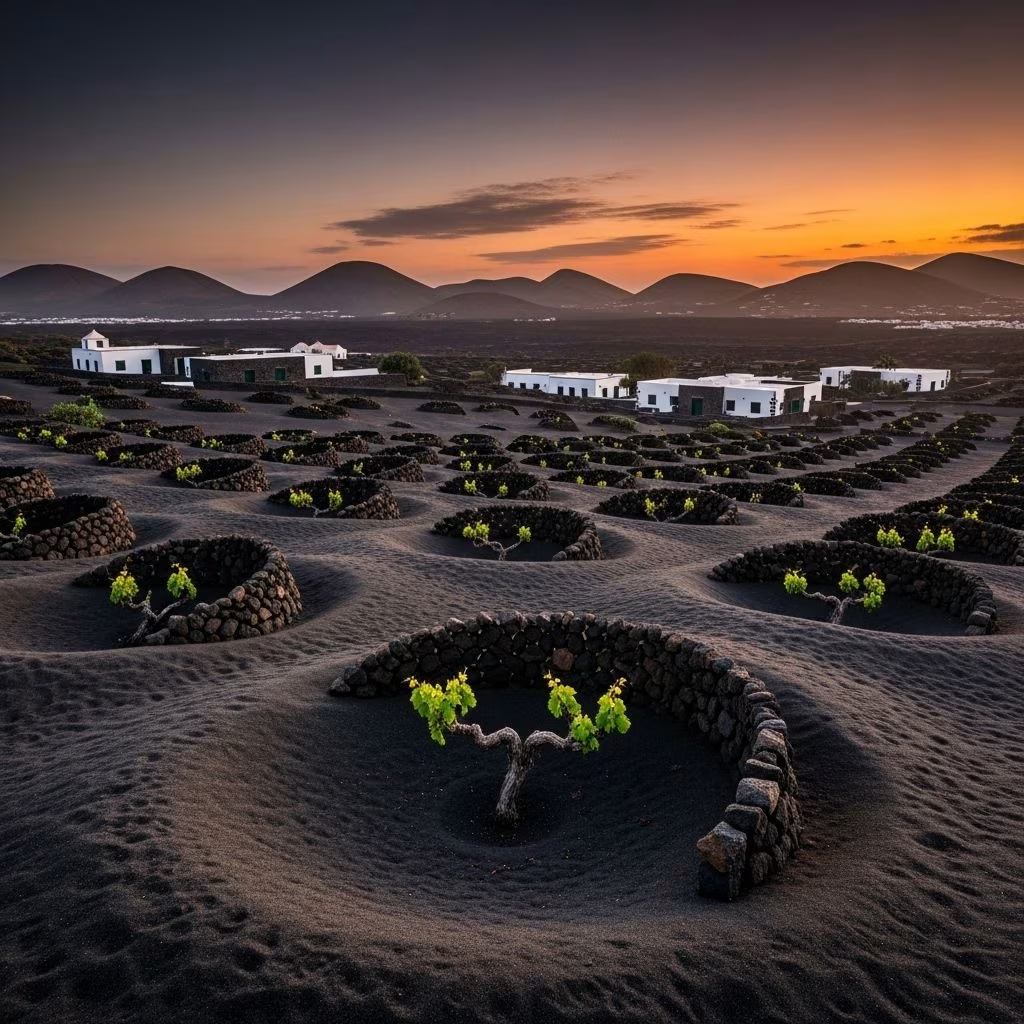
What sets Lanzarote apart from any other wine region is its otherworldly terrain—an expanse of black ash punctuated by isolated vines, each planted in deep pits and encircled by stone walls. These scenes appear almost alien, reminiscent of science fiction landscapes.
- Pit Cultivation: Farmers dig wide pits (up to 4 meters across and 3 meters deep) through volcanic ash to reach the subsurface fertile soil. Each pit holds one to three vines.
- Zocos: Semi-circular stone walls (known as zocos, built from dry lava stone) shelter the vines from strong northern trade winds and help preserve vital humidity.
- Trench System: In areas where pits are impractical, trenches are dug and lined with linear windbreaks, allowing higher planting density.
This radical reshaping of the vineyard landscape is a direct response to Lanzarote’s extremely dry climate, with just 150 ml of rainfall per year—the lowest of any major wine region. No manual irrigation is used, even today; instead, the volcanic ash retains overnight humidity and traps moisture from ocean winds, gradually releasing it to the vines during the day.
La Geria: Lanzarote’s National Park and Wine Heartland
At the heart of Lanzarote lies La Geria, a national park and protected landscape atop the lava flows from Timanfaya. Here, the striking contrast of black ash with the green vines creates both a dramatic visual effect and a balanced ecosystem.
- La Geria is famed for producing the volcanic Malvasia grape, renowned for its aromatic, mineral-driven wines.
- The region supports a centuries-old tradition of viticulture, with family-run vineyards and manual agricultural practices.
- The landscape is highly biodiverse, hosting native plants and wildlife which co-exist with viticulture.
The Role of El Grifo: Spain’s Historic Winery
El Grifo is one of Spain’s oldest operating wineries, founded in 1775 and located in La Geria. For centuries, it has specialized in producing “impossible wine” in an improbable location.
Interviewed for the legacy of volcanic winemaking, Juan Jesús Martín Feo, El Grifo’s manager, highlighted:
- The innovation and resilience of Lanzarote’s winegrowers after the eruption, turning destruction into opportunity.
- The unique pit and trench cultivation methods, which have remained largely unchanged over centuries.
- The importance of traditional manual labor—El Grifo works with 160 local viticulturists, most grapes are harvested by hand.
Generational succession is a pressing challenge, as younger generations are less inclined towards the physically demanding work of hand harvest in pit systems.
Survival Against Adversity: Lanzarote’s Wine Story
The history of Lanzarote’s wine is a tale of adaptation and survival:
- Before the eruption: The island’s central farmland was its breadbasket, dominated by cereal crops.
- After the eruption: The ash rendered conventional farming impossible. Islanders experimented with vines, discovering that the subsoil, protected by volcanic ash, was ideal for wine grapes—especially Malvasia.
- Current viticulture: Lanzarote now has nearly 2,000 registered viticulturists and 21 wineries, protected under the Denominacion de Origen. Five native grape varieties, ungrafted and many over 100 years old, thrive on the island, having escaped the phylloxera plague that devastated other European wine regions.
As much as 30% of the island’s surface is covered in volcanic soil, with fields of vines replacing old cereal crops across La Geria and beyond.
How Ash and Wind Make Wine Possible
Lanzarote’s signature winemaking success is due to the properties of volcanic ash and the clever use of wind protection:
- The rofe acts as an impermeable layer, trapping ambient humidity overnight and maintaining stable moisture levels beneath the surface—critical in such a dry climate.
- The semi-circular stone walls shield the delicate vines from trade winds, while also contributing to humidity retention within each pit.
- These techniques insulate the roots and minimize water loss, allowing Malvasia and other grapes to ripen slowly and intensely, producing wines with high acidity, intense aromas, and mineral qualities.
Vineyard Mosaic: Lanzarote’s Unique Visual Identity
Lanzarote’s vineyards form an incredible mosaic landscape:
- The regular pattern of pits and windbreaks creates a geometric contrast visible from above—black circles in an ash field punctuated by green vines.
- This unique visual identity is recognized globally as a symbol of heroic viticulture.
- It is a magnet for photographers and wine tourists, who flock to La Geria National Park to experience both the wines and the surreal landscape.
The Grape Varieties of Lanzarote
The volcanic vineyards of Lanzarote primarily cultivate five native grape varieties:
- Malvasia Volcánica: The star grape, producing aromatic, mineral white wines.
- Listán Blanco: Commonly used for light, crisp whites.
- Listán Negro: Typically made into earthy red wines.
- Muscatel: Used for sweet and dessert wines.
- Diego: An indigenous variety providing structure to whites.
Many of these vines are over a century old, remaining ungrafted because the island’s isolation protected them from phylloxera.
Sustainable Agriculture and the Culture of Hand-Harvest
Beneath the technological innovation, Lanzarote’s vineyards are a model of sustainable agriculture:
- No irrigation: Survival depends purely on natural humidity and conservation methods.
- Manual labor: All the harvesting and vine care is performed by hand, minimizing mechanical impact on the landscape.
- Minimal chemical use: The isolated environment reduces pests and diseases, allowing for more organic growing practices.
This emphasis on sustainability is central to both the identity and success of Lanzarote’s wine industry.
Lanzarote’s Vineyards in Global Context
| Feature | Lanzarote | Traditional Wine Regions |
|---|---|---|
| Climate | Arid, desert-like, 150 ml rainfall/year | Variable, often moderate rainfall |
| Vine Age | Many 100+ years, ungrafted | Variable, often grafted due to phylloxera |
| Soil Type | Volcanic ash and lava | Loam, clay, limestone, sandstone |
| Planting System | Pits and zoco stone walls | Rows, trellises, bush vines |
| Irrigation | None | Often irrigated |
Challenges to Lanzarote’s Viticultural Future
- Generational Change: Younger generations are less willing to take on the demanding manual labor required for pit cultivation, threatening the continuity of traditional methods.
- Climate Change: Increased temperatures and shifting weather patterns could further challenge moisture retention and vine survival.
- Market Forces: Protecting the unique identity and value of Lanzarote wines in a globalized wine market is an ongoing struggle.
Local and international interest in heroically farmed, low-intervention wines is helping fuel a revival, but the future will require both innovation and the preservation of tradition.
Visiting Lanzarote: Wine Tourism Highlights
- La Geria National Park: Guided tours of pit vineyards and traditional wineries.
- Wine Tastings: Discover volcanic Malvasia, Listán Blanco, and unique dessert wines.
- Bodegas El Grifo: Explore Spain’s oldest functioning winery, its museum, and original cellars.
- Landscape Photography: Capture the surreal beauty of ash fields and green vines.
Frequently Asked Questions (FAQs)
Q: Why are Lanzarote’s vineyards planted in pits?
A: Pits are dug to penetrate the thick volcanic ash and reach fertile soil. The ash traps humidity, and the pit walls shield vines from wind and reduce evaporation, allowing survival without irrigation.
Q: What grapes are unique to Lanzarote?
A: The most famous is Malvasia Volcánica, which along with Listán Blanco, Listán Negro, Muscatel, and Diego, make up Lanzarote’s five native varieties.
Q: How are Lanzarote’s vines protected from phylloxera?
A: The island’s isolation and volcanic soils have prevented the spread of phylloxera, allowing vines to remain ungrafted and exceptionally old.
Q: Are Lanzarote’s wines organic?
A: Most vineyards use minimal chemicals due to natural pest resistance, and many practice organic or sustainable methods, though not all are officially certified.
Q: Is wine production increasing or decreasing on Lanzarote?
A: Wine production faces challenges from generational changes and climate, but international interest in volcanic wines is helping to maintain production levels.
Conclusion: The Triumph of Ingenuity in Ash
Lanzarote’s volcanic vineyards are a testament to agricultural ingenuity and the power of adaptation. In a landscape once devastated by eruptions, farmers used the properties of volcanic ash and windswept terrain to create an enduring culture of wine—one that remains rooted in tradition, sustained by manual labor and innovation, and celebrated for its sustainable practices and breathtaking beauty.
References
- https://artsandculture.google.com/story/bodegas-el-grifo-more-than-two-centuries-of-history-camaras-de-comercio-de-canarias/CgXRPXa-9XHuLA?hl=en-US
- https://wineshoplanzarote.com/pages/unique-lanzarote-wines
- https://thesourcingtable.com/blogs/learn/exploring-volcanic-variety-in-the-canary-islands
- https://thenodmag.com/content/volcanic-wine-lanzarote-island-spanish-canaries