


The Strange Volcanic Vineyards of Lanzarote
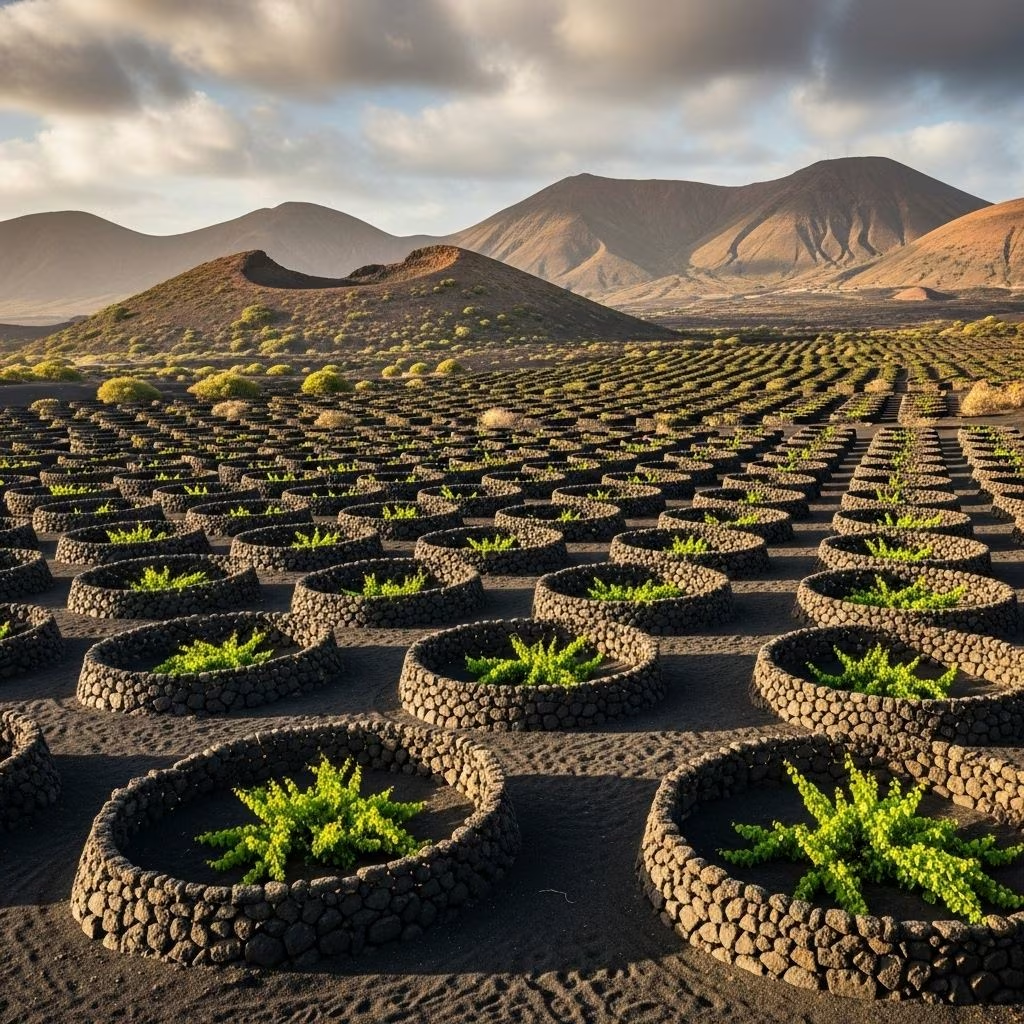
In the heart of the Canary Islands, Lanzarote’s stark, volcanic landscape gives rise to one of the world’s unique and improbable wine regions. This is not a lush valley filled with vines, but a windswept, blackened expanse, where wine is cultivated in pits dug into volcanic ash and protected by crescent-shaped stone walls. This remarkable transformation from devastating destruction to agricultural marvel tells a story of human resilience, ingenuity, and environmental adaptation.
The Eruption That Changed Everything
Between 1730 and 1736, Lanzarote was subjected to a relentless series of volcanic eruptions that reshaped its future. The explosions in the Timanfaya region buried fertile farmland beneath layers of lava and ash, obliterating agricultural life and triggering events so severe that half the island’s population emigrated in search of survival.
- 30% of Lanzarote’s land was covered by volcanic material.
- The island’s then-flourishing cereal crops were lost to the new, unyielding soil.
- A social and economic catastrophe led to a dramatic population decline.
Yet, out of this devastation, something extraordinary emerged.
A New Beginning: Wine from Ashes
After the eruptions, the people of Lanzarote embraced an unexpected crop: the grapevine. The peculiar combination of volcanic ash, known locally as rofe or picon, and the underlying soil proved to be surprisingly hospitable to vines. Farmers discovered that the volcanic ash retained precious moisture from the sparse rainfall and frequent coastal fogs, providing a key resource in an otherwise arid climate where average annual rainfall barely exceeds 150 mm and irrigation is absent.
This adaptation led to the birth of the now-iconic vineyards of La Geria – a broad region where black ash, green vines, and ancient stonework coalesce into an alien yet alluring landscape.
La Geria: Lanzarote’s Living Vineyard Museum
La Geria is both a protected landscape and a functioning wine region, perched over some of the deepest flow fields from Timanfaya’s eruption. Here, every element of viticulture is shaped by necessity and tradition:
- Pits (often 4 meters wide and 3 meters deep) are painstakingly dug by hand to reach soil beneath the ash.
- Each pit contains one to three vines, planted in a small oasis of fertile ground.
- Curved stone walls (zocos) are built around each pit to shelter the vines from the persistent trade winds.
The result is a vast mosaic of thousands of individually protected vines—a scene that looks more like a surrealist painting than a standard vineyard. La Geria has become a symbol of Lanzarote’s identity and an emblem of “heroic viticulture.”
The Epicenter: El Grifo and the Legacy of Volcanic Winemaking
At the heart of this tradition is Bodegas El Grifo, the oldest winery in the Canary Islands and one of the five oldest in Spain, dating back to 1775. El Grifo stands as a testament to the persistence of local families and their commitment to producing exceptional wine in daunting conditions.
- El Grifo sources over half its grapes from the traditional pit system.
- The winery collaborates with nearly 160 independent, often multi-generational viticulturists.
- Harvesting is entirely manual, a labor-intensive process considered both economically vital and culturally significant.
Winemaking in Lanzarote is not just an agricultural pursuit—it is a living heritage at risk from changing demographics and the reluctance of younger generations to continue such demanding work.
Pit Cultivation and Trench Systems: Ingenious Methods of Survival
Two ingenious systems emerged to allow grapes to thrive in Lanzarote’s hostile environment:
- Pit System: Viticulturists dig deep pits through the volcanic layer to reach soil. Pits are then lined with protective zocos (stone walls), allowing a low-density but resilient planting.
- Trench System: Where possible, trenches are dug and protected with linear stone walls, enabling denser planting of vines.
Both systems exploit the volcanic ash’s ability to:
- Trap atmospheric moisture, including dew and mist.
- Insulate the earth, maintaining cooler roots and stable growing conditions.
- Prevent water evaporation, preserving what little rainfall Lanzarote receives.
This adaptation of ancient techniques to a modern challenge highlights the intersection of tradition and environmental necessity, making Lanzarote’s vineyards a model for sustainable agriculture in arid environments.
The Grapes: Malvasia and Other Native Varieties
The star of Lanzarote’s volcanic vineyards is the Malvasia grape. These old, ungrafted vines—some over a century old—are uniquely suited to the environment, boasting resilience to both drought and disease. Notably, Lanzarote’s isolation allowed its vines to escape the devastating phylloxera plague that swept through most of Europe’s vineyards in the 19th century.
- Five principal indigenous grape varieties are cultivated on the island.
- Wines are often tangy, mineral-rich, and display vibrant acidity, a direct result of the volcanic soils.
- The Malvasia grape is particularly prized for producing aromatic, refreshing whites that have earned international acclaim.
Combined with the challenging growing conditions, this results in unique wines that are celebrated for their character and distinct sense of place.
Harvesting: Herculean Labour and the Threat to Tradition
With all work performed by hand, harvesting on Lanzarote is a physically demanding process. The steep, ash-filled pits, intense sun, and buffeting winds test even the fittest workers. Because mechanization would destroy the delicate pits and walls, every cluster of grapes must be carefully picked and carried by hand.
However, there is a growing challenge facing the region’s viticulture:
- The younger generation is increasingly reluctant to take up the grueling work of vineyard maintenance and harvesting.
- The aging population of local viticulturists poses a threat to the long-term sustainability of traditional wine production.
Despite this, the vineyards remain the lifeblood of Lanzarote’s agricultural community, and efforts continue to preserve these skills across generations.
The Landscape: A Surreal, Protected Ecosystem
The visual spectacle of La Geria’s vineyards—thousands of emerald vines in inky, ash-lined craters—is so unique that the landscape has been designated a protected national park. The contrast between the green vines and black earth creates a surreal environment that draws thousands of visitors each year, making wine tourism another branch of Lanzarote’s economic resilience.
Yet, beneath the surface beauty lies a carefully balanced ecosystem:
- Pit cultivation supports biodiversity by reducing the need for synthetic inputs.
- The absence of irrigation and reliance on natural moisture retention supports conservation of local water supplies.
- Preservation of traditional techniques protects both local heritage and delicate environmental balances.
Why Are Volcanic Wines Special?
Volcanic soils impart unmistakable mineral notes to wines—often described as smoky, saline, or even slightly earthy. Other unique characteristics include:
- Intense acidity, providing freshness and longevity in both reds and whites.
- Complex aromas and flavors born from the interaction of specific grape varieties with mineral-rich soils.
- Low yields, resulting in more concentrated fruit flavors and exclusive bottlings.
Lanzarote’s wines are now sought after internationally, competing with other volcanic wine regions from Sicily’s Etna to the Aeolian Islands and beyond.
Resilience, Adaptation, and Global Recognition
Lanzarote’s vineyards are a story of resilience and adaptation—how hundreds of years of tradition, shaped by adversity, have created one of the most sustainable and visually stunning wine regions anywhere in the world. Today, over 2,000 winemakers produce for 21 registered wineries, forming a vibrant community united by the landscape and its bounty.
The island’s wines have garnered international awards for their quality, and the dramatic scenery continues to inspire artists, writers, and travelers alike. Noted Nobel laureate José Saramago described walking through the deserted, windswept vineyards as a “trance-like” experience that fills the spirit with indescribable happiness.
Frequently Asked Questions (FAQs)
What makes Lanzarote’s vineyards different from other wine regions?
Lanzarote’s vineyards are unique in both appearance and cultivation methods. Vines are planted in individual pits dug into volcanic ash and sheltered by stone walls, a technique developed in response to the island’s arid climate and intense winds. No other wine region practices pit-cultivation on such a scale, creating a landscape unlike any other in the world.
Why are grapevines planted in pits in Lanzarote?
The pits are dug to access fertile soil beneath the volcanic ash and to create microclimates that retain moisture, trap humidity, and protect the grapes from harsh winds. This system enables grape cultivation despite Lanzarote’s minimal rainfall and strong trade winds.
What grape varieties are typical in Lanzarote’s vineyards?
The main grape is Malvasia, known for producing crisp, aromatic white wines. Other varieties include Listán Blanco and Listán Negro, with all being ungrafted and often exceptionally old due to the absence of the phylloxera pest.
How do Lanzarote’s volcanic soils influence the flavor of the wine?
The mineral-rich volcanic soils impart distinct characteristics to the wine, notably vibrant acidity, stony minerality, and a freshness rarely found elsewhere. These soils also ensure low yields, resulting in concentrated flavors and unique aromas.
Is winemaking in Lanzarote sustainable?
Yes. The absence of irrigation, reliance on natural climate adaptations, and preservation of traditional methods make Lanzarote’s winemaking among the most sustainable worldwide. It protects limited water resources and nurtures local biodiversity.
Table: Lanzarote Vineyard Characteristics vs. Traditional Vineyards
| Feature | Lanzarote Vineyards | Typical Vineyards |
|---|---|---|
| Soil Type | Volcanic ash (rofe/picon), lava | Sedimentary, loam, clay, etc. |
| Climate | Arid, <150 mm rain/yr, windy | Temperate, seasonal rain |
| Vine Planting | Hand-dug pits & protected by stone walls | Rows, trellised or bush-trained |
| Watering | No irrigation; relies on trapped humidity | Irrigation common if needed |
| Key Varieties | Malvasia, Listán Blanco, Listán Negro | Chardonnay, Merlot, Cabernet, etc. |
| Harvesting | Manual, pit-by-pit | Machine or manual row by row |
| Sustainability | High – natural moisture, minimal intervention | Variable |
The Enduring Legacy and Future Prospects
Lanzarote’s volcanic vineyards are at a crossroads: they represent both a celebration of centuries-old ingenuity and a challenge for future generations. While their wines have achieved international acclaim and the landscape enjoys protected status, sustainability now depends on engaging youth and innovating within the bounds of tradition.
For now, the island stands as one of the world’s greatest examples of how devastation can yield unlikely bounty, and how people, land, and culture can evolve to turn disaster into enduring prosperity.
References
- https://artsandculture.google.com/story/bodegas-el-grifo-more-than-two-centuries-of-history-camaras-de-comercio-de-canarias/CgXRPXa-9XHuLA?hl=en-US
- https://wineshoplanzarote.com/pages/unique-lanzarote-wines
- https://thesourcingtable.com/blogs/learn/exploring-volcanic-variety-in-the-canary-islands
- https://thenodmag.com/content/volcanic-wine-lanzarote-island-spanish-canaries


