


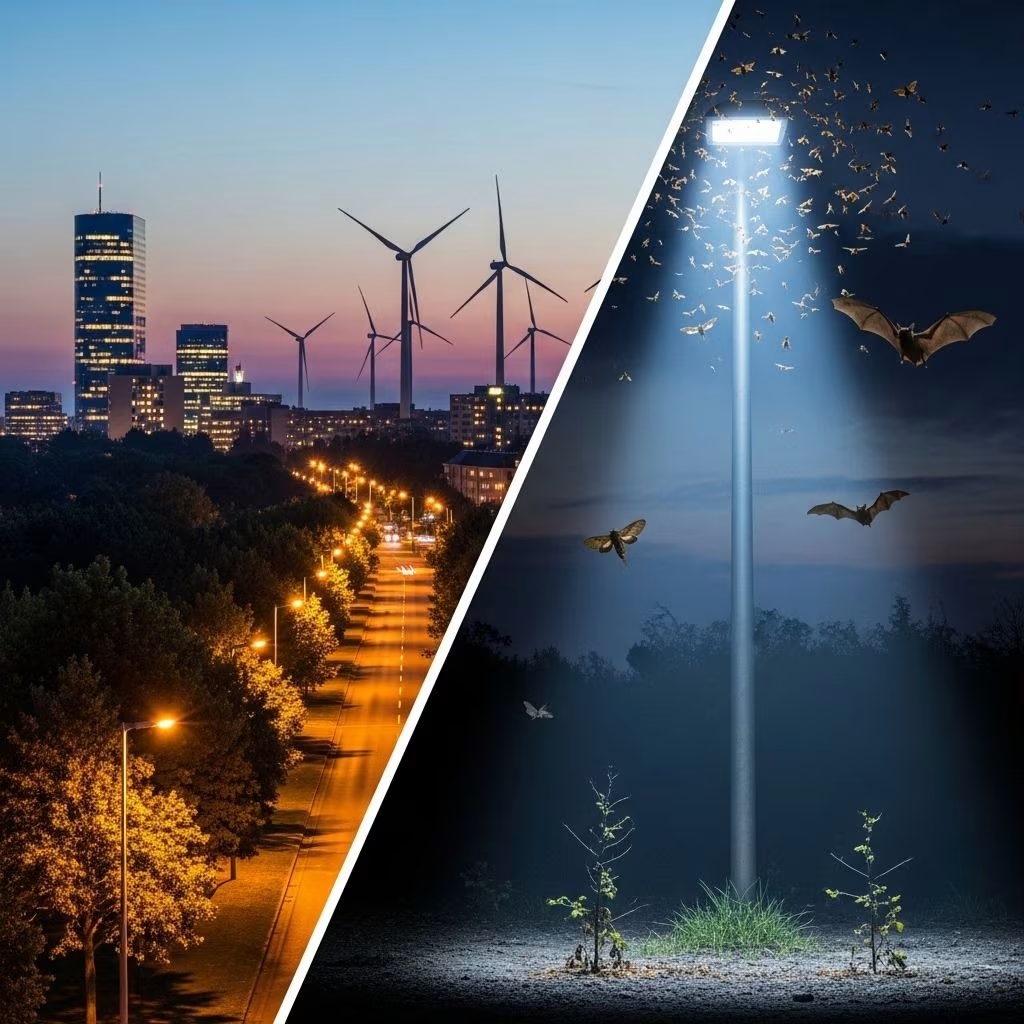
LED Street Lighting: Energy Savings vs Environmental Risks
In recent years, cities worldwide have rapidly adopted LED street lighting as an eco-friendly alternative to traditional sources like high-pressure sodium lamps. While their exceptional energy efficiency offers significant financial and climate advantages, mounting evidence reveals that widespread deployment of LEDs is also driving substantial ecological and health impacts through increased light pollution, spectral changes, and disruption of natural cycles.
How LED Streetlights Became the New Standard
The switch to LEDs has been driven by government policy, declining availability of conventional bulbs, and strong economic incentives:
- Federal and state agencies promote LED conversion for sustainability goals and infrastructure modernization.
- Utility companies champion LEDs due to their lower energy use and reduced maintenance costs, offering cities substantial savings.
- Traditional high-pressure sodium lamps are rapidly being phased out by manufacturers, creating market pressure for LED adoption.
- Energy savings from LED conversions can equate to removing hundreds of cars from the road annually in mid-sized cities, contributing to emission reduction targets.
Yet, the shift has focused heavily on cost and climate benefits, often with limited consultation of environmental experts or advisory boards before large-scale implementation.
Benefits of LED Street Lighting: Efficiency and Cost Savings
- Energy Efficiency: LEDs consume up to 50-70% less energy than older technologies, directly reducing municipal energy bills and carbon footprints.
- Longevity: LEDs have a longer lifespan, minimizing maintenance requirements and replacement cycles.
- Climate Impact: Wide adoption supports emissions reduction strategies crucial for climate change mitigation.
These factors have made LED streetlights a cornerstone in efforts to “green” urban infrastructure.
Environmental Risks: Light Pollution and Ecosystem Disruption
LEDs produce a broad white spectrum rich in blue light, which is more disruptive to wildlife and human health than the orange glow of sodium lamps. Satellite imagery and scientific research demonstrate that the transition to LED has not only reduced energy waste but dramatically increased light pollution:
- Skyglow is increasing by 10% per year, compared to just 2% prior to LED proliferation, affecting urban and rural skies alike.
- Artificial light at night (ALAN) is spreading beyond cities, altering the behavior and survival of countless organisms.
Impacts on Wildlife
- Nocturnal insects: Populations of moth caterpillars decline by up to 50% beneath LED fixtures; insects attracted to blue-rich lighting become disoriented, exhausted, and die prematurely, disrupting pollination and reproduction cycles.
- Migrating birds: Billions of birds rely on natural darkness and celestial cues for migration. Brightened skies cause confusion, increased collision risk, and altered flight paths.
- Sea turtles: Excessive beachfront lighting, especially unshielded and blue-rich emissions, pulls hatchlings inland. Disoriented, they often fail to reach the ocean and suffer high mortality rates.
- Fish: Blue bridge lighting can disrupt upstream migrations, impacting salmon and other aquatic species.
More broadly, approximately 60% of animal species are nocturnal and face severe adverse effects from the proliferation of nighttime electrical lighting.
Impacts on Ecosystem Function
- Disrupted food webs: Declines in insect and pollinator abundance reverberate through local food chains, affecting birds, bats, and other predators.
- Plant-invertebrate interactions: Nighttime light can change plant development cycles and reduce the diversity and abundance of essential ecological partners.
- Algae and microorganisms: Even single-celled amoeba and algae in aquatic environments show behavioral and physiological disruptions under artificial light.
Human Health Risks: Disrupted Sleep and Circadian Rhythms
Multiple studies and reports, including a widely cited 2016 American Medical Association (AMA) paper, highlight significant human health concerns tied to LED streetlight exposure:
- Circadian disruption: White LEDs impact sleep cycles five times more intensely than conventional sodium lamps, suppressing melatonin production.
- Sleep loss: Chronic exposure may contribute to higher risks of cancer, diabetes, heart disease, and obesity, with melatonin loss affecting cell repair and immune function.
- Glare and discomfort: Poorly shielded LED fixtures increase glare, decreasing nighttime visibility and comfort, especially for children and older adults.
These factors make the widespread LED rollout a public health issue, particularly in densely populated areas.
Why the Shift is Complicated: Policy and Market Constraints
Many localities, such as Boca Raton, have struggled to balance energy reform with environmental stewardship:
- Decisions were often driven by utility regulation and bulb availability, rather than long-term ecological impact.
- Environmental and advisory boards were sometimes bypassed, creating gaps in mitigation planning and public consultation.
While the initial decision may not be reversible, cities are pursuing new approaches to limit harm and improve outcomes for all affected groups.
Table: LED Streetlights—Benefits and Risks Comparison
| Aspect | Benefits | Risks |
|---|---|---|
| Energy Usage | Lower energy consumption, reduced emissions | – |
| Cost | Reduced operational and maintenance costs | Some mitigation techs (amber LEDs, shielding) more expensive |
| Light Pollution | Potentially reduced stray light with proper design | Increased skyglow, broader spectrum emissions |
| Environmental Impact | Climate change mitigation | Disrupts wildlife, nocturnal species, migration patterns |
| Human Health | Brighter, safer streets possible with better design | Sleep disruption, melatonin suppression, glare |
Mitigation Strategies: Minimizing Harmful Impacts
Technical Solutions
- Dimmers: Adjusting brightness can limit over-exposure and reduce skyglow.
- Shielding: Fitting fixtures with shields focuses light downward, protecting night skies and habitats.
- Amber LEDs: Using warm-spectrum LEDs dramatically reduces harmful blue light but comes at higher upfront costs.
- Spectra adjustment: LEDs can be tailored for spectral output to lessen ecological impact, a feature unavailable with traditional lamps.
Policy and Planning
- Engage environmental advisory boards and local stakeholders in streetlight decisions.
- Pilot programs and experimental lighting rigs allow for rapid testing and validation of mitigation measures before citywide deployment.
- Policy frameworks increasingly recommend limits on night-time lighting density and intensity.
Research and Monitoring
- Use network ecology to assess entire communities’ responses to artificial lighting.
- Develop biomonitoring metrics for ongoing environmental assessment around major road schemes.
Challenges to Implementation
- Cost constraints: Amber LEDs and shielding increase installation expenses, sometimes limiting uptake despite environmental benefits.
- Lack of research: Few long-term, large-scale studies on LED ecosystem impacts currently guide municipal policy.
- Market pressures: The phase-out of older lighting technologies gives little time for thorough evaluation and planning.
Frequently Asked Questions (FAQs)
Q: Do LEDs really save energy and money for cities?
A: Yes. LEDs consume significantly less energy and last longer than high-pressure sodium lamps, reducing power bills and maintenance costs for municipalities.
Q: Why are LEDs considered riskier for wildlife?
A: Unlike narrow-spectrum lamps, LEDs emit broad-spectrum light rich in blue wavelengths, which disrupts nocturnal animals’ natural behaviors, interferes with migration, and increases mortality among various species.
Q: Can LED streetlights affect human health?
A: Research from the American Medical Association indicates exposure to white LEDs at night can disrupt circadian rhythms, suppress melatonin, and contribute to health issues like poor sleep, obesity, diabetes, and cardiovascular disease.
Q: What can cities do to limit the environmental impact?
A: Cities can deploy shielding, use dimmers, and prefer amber LEDs to reduce blue light emissions. Public consultation and stakeholder engagement are critical for effective policies.
Q: Are these issues relevant outside cities?
A: Yes. Increased skyglow from LEDs extends beyond urban boundaries, affecting rural ecosystems, beachfronts, and even aquatic habitats frequented by wildlife.
Conclusion: Navigating the Future of Urban Lighting
The transition to LED streetlights has brought undeniable climate and cost benefits, but it has also exposed gaps in planning and environmental foresight. Skyglow and ecological disruption are growing, requiring targeted mitigation and policy strategies to balance sustainable energy goals with ecosystem protection.
- Future solutions require integrated approaches: technical fixes, evidence-based policy, and robust stakeholder engagement.
- Ongoing research must inform local governments to refine and adapt LED use for both urban resilience and ecological health.
Only with careful assessment and collaboration—across science, government, and communities—can the promise of efficient lighting truly be realized without compromising the natural world.
References
- https://www.wlrn.org/news/2023-03-06/led-streetlights-are-energy-efficient-but-are-they-environmentally-friendly-its-complicated
- https://royalsocietypublishing.org/doi/10.1098/rstb.2022.0355
- https://policysearch.ama-assn.org/councilreports/downloadreport?uri=%2Fcouncilreports%2Fa16_csaph2.pdf
- https://www.energy.gov/eere/ssl/light-night
- https://newarkcollaborative.org/blog/can-street-lighting-reduce-crime
- https://www.science.org/doi/10.1126/sciadv.abl6891
- https://health.ec.europa.eu/scientific-committees/easy-read-summaries-scientific-opinions/are-led-lights-safe-human-health-2_en


