Lorde’s ‘Virgin’ Album: Redefining Physical Music Through Sustainability and Art
When Lorde announced the physical release of her fourth studio album, Virgin, fans and music critics alike took notice—not just for the music, but for the bold new approach to packaging. By choosing a fully transparent, recyclable CD and a striking visual theme, Lorde sparked a debate about the role and future of physical albums in the streaming era, the intersection of art, sustainability, and functionality, and what it means to own music in 2025. This article explores the innovation, controversy, and larger cultural conversation provoked by Lorde’s daring launch.
Background: The Rise of Sustainable Music Packaging
Physical music formats—vinyl, cassette, CD—have experienced both decline and revival in recent decades. While most listeners now stream music digitally, physical releases remain cherished by collectors, audiophiles, and fans seeking connection to artists. In this context, musicians and record labels face increasing pressure to reduce environmental impact and offer more sustainable products.
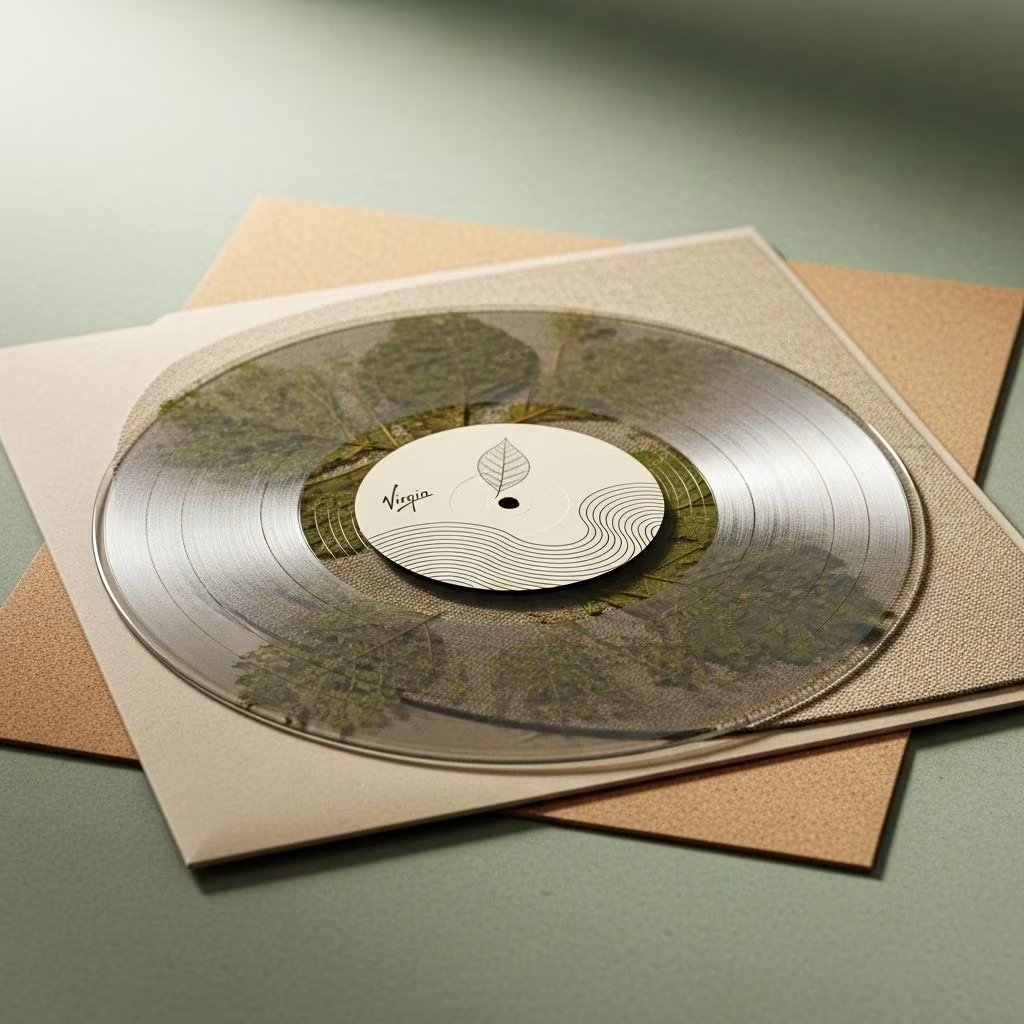
Lorde’s Virgin album enters this discussion with an audacious solution: the fully transparent CD, packaged in a recyclable jewel case and accompanied by a 20-page booklet of alternate imagery.
- Eco-friendly design: All parts of the Virgin CD package are recyclable, including the clear disc itself.
- Carbon neutral shipping: Orders ship with 100% offset carbon emissions, supporting verified reduction projects.
- Limited edition: The clear CD is offered as a limited release, positioned as a collectible artifact and artistic statement.
The Transparent CD: Minimalist Art Meets Practical Challenge
The Virgin CD’s most notable feature is its physical appearance: a clear disc, nearly invisible save for faint markings. This minimalism mirrors themes in Lorde’s new music—transparency, vulnerability, introspection—and aligns with the album’s topline aesthetic, including artwork featuring a pelvic X-ray and IUD imagery.
- Visual identity: The transparent design visually reinforces the album’s central motifs: bodily autonomy, openness, and the blurring of boundaries between personal and public.
- Collector appeal: The package includes a full-color booklet with non-adult imagery and is intended as a tangible extension of the album’s emotional content.
However, the quest for innovation in packaging met unexpected technical hurdles. Many fans who purchased the Virgin CD for playback discovered their discs would not work in common CD players, including car stereos, hi-fi audio systems, and even recent computer drives.
Why Doesn’t the Transparent CD Work?
- CD technology relies on reflectivity: Standard CDs use metallic layers that reflect laser light so the player can read encoded data. Virgin’s clear plastic disc lacks sufficient reflectivity, causing reading errors and rejection.
- Compatibility issues: Reports confirm that even advanced, modern CD players—including recent car models—often fail to recognize or play the disc.
- Art vs. utility: The design, praised for boldness, is sometimes described by frustrated fans as “unplayable art.”
Fan Reactions and the Backlash: Symbolic Artifact or Frustrating Flaw?
Following the release, online forums and social media channels lit up with user experiences. Many shared disappointment—especially those who sought both the collectible value and the chance to play the physical music at home or on the go.
- Some described the transparent CD as “a beautiful object, but basically unplayable.”
- The backlash illuminated fans’ attachment to tangibility, ritual, and tradition in music fandom—juxtaposed against rapidly shifting technology.
- Several called for official responses from Lorde’s camp regarding testing and quality assurance, speculating on whether the discs had been adequately vetted before production.
Despite controversy, other fans celebrated the aesthetic, embracing the CD as a physical piece of album-era art—even if it’s destined for shelf display, not the stereo.
Artistic Intention: Music, Vulnerability, and Physicality
Lorde’s album itself continues the artist’s tradition of deep introspection and electronic soundscape. Critics note that Virgin explores themes of body image, identity, and personal transformation, closely tied to the packaging’s visual language.
- Musical evolution: Virgin shifts from the beachy textures of Solar Power back to the cinematic, synth-heavy style reminiscent of Melodrama, with a focus on emotional honesty.
- Visual metaphor: The transparent disc and X-ray artwork reinforce Lorde’s commitment to “see-through” storytelling, blurring the lines between vulnerability and strength.
- Body and technology: By using an unorthodox CD medium, the album asks listeners to reconsider their relationship with the body, technology, and art itself.
The Role of Physical Media in Music Today
While streaming services dominate listening habits globally, physical media remains a crucial aspect of music culture—especially among collectors and dedicated fans. Today’s physical releases are expected not only to deliver music but also to tell stories, reflect artistic themes, and minimize environmental impact.
| Format | Physical Utility | Eco Considerations | Collector Value |
|---|---|---|---|
| Standard CD | Universal compatibility | Mixed recyclability | Moderate—common, mass-produced |
| Vinyl | High-quality sound | Low eco-friendliness | High—often limited editions |
| Lorde’s Transparent CD | Limited compatibility | Full recyclability | High—unique, collectible, artistic |
| Digital Streaming | Ubiquitous, instant | Minimal footprint | None—intangibility |
This tension points to a growing problem for artists: how to create innovative, sustainable, meaningful physical releases without alienating fans who expect seamless, functional products.
Industry Impact: Lessons for Future Album Packaging
The Virgin release offers both inspiration and caution for musicians intent on reimagining music’s physical extensions. Industry observers and eco-minded producers note several lessons:
- Testing is critical: Beautiful packaging must be rigorously checked across devices, especially for high-profile, limited launches.
- Balance art with accessibility: Conceptual design should enhance—not compromise—fan experience and usability.
- Transparency about risks: Clear communication with fans regarding compatibility and intended use can mitigate backlash and manage expectations.
- Innovate sustainably: Music products must strive for reduced carbon footprint, opting for recyclable and renewable materials wherever possible.
Lorde: The Virgin Album—Critical and Commercial Reception
Despite the CD drama, Lorde’s Virgin album itself has garnered praise from critics for its bravery, sonic palette, and vulnerability. Reviews by Pitchfork, The Guardian, and NME highlight the return to emotional depth and electronic textures, marking an evolution in Lorde’s artistry.
- Critical acclaim: The album explores complex topics—gender identity, transformation, personal truth—with grace and innovation.
- Commercial performance: Streaming figures outshine physical sales, but Virgin’s tangible editions remain coveted among collectors.
Lorde’s Ultrasound World Tour is set to begin later in the year, likely shifting focus back to music performance and live experience, rather than packaging controversy.
Sustainability in Music: What Comes Next?
Lorde’s experiment pushes the industry to reconsider how albums connect with ecology, technology, and fandom. As packaging evolves, several strategies emerge:
- Using compostable and biodegradable materials for future releases.
- Offering digital downloads with artist-designed physical merch that doesn’t serve as a playback device, but rather as memorabilia.
- Partnering with environmentally certified suppliers and shipping services.
- Including clear warnings or guides for compatibility on experimental formats.
The journey to reconcile sustainability, artistic expression, and consumer expectation continues. Virgin’s transparent CD stands as a symbol—both inspiring and problematic—of the challenges facing music packaging in the 21st century.
Frequently Asked Questions (FAQs)
Q: Why did Lorde use a transparent CD for Virgin?
A: The transparent CD matches the album’s themes of openness and introspection, serves as an artistic statement, and supports sustainable, recyclable packaging.
Q: Can the transparent CD be played in all CD players?
A: No. Many fans report compatibility issues, with some CD players—especially those needing metallic reflectivity—not able to read or play the disc.
Q: Is the Virgin CD package environmentally friendly?
A: Yes. The CD, booklet, and case are all recyclable, and shipping is carbon neutral for U.S. customers.
Q: What can fans do if their disc won’t play?
A: Most have turned to streaming platforms or treat the CD as a collectible artifact rather than a functional audio device.
Q: How has the industry responded?
A: The Virgin release has sparked debate over the balance between artistic innovation and consumer usability, prompting calls for improved testing and clearer communication in future projects.
Key Takeaways
- Lorde’s Virgin album reimagines physical music packaging, prioritizing eco-friendliness and artistic boldness.
- Transparent, recyclable CD design aligns with the album’s themes but presents significant compatibility challenges for playback.
- Fan reaction is divided—many celebrate the artistic vision, while others lament loss of utility.
- Industry lessons include balancing innovation with accessibility, rigorous product testing, and clear communication of format risks.
- The future of music packaging will depend on advances in sustainable materials, transparent design, and how artists engage with listeners and collectors in a post-physical era.