


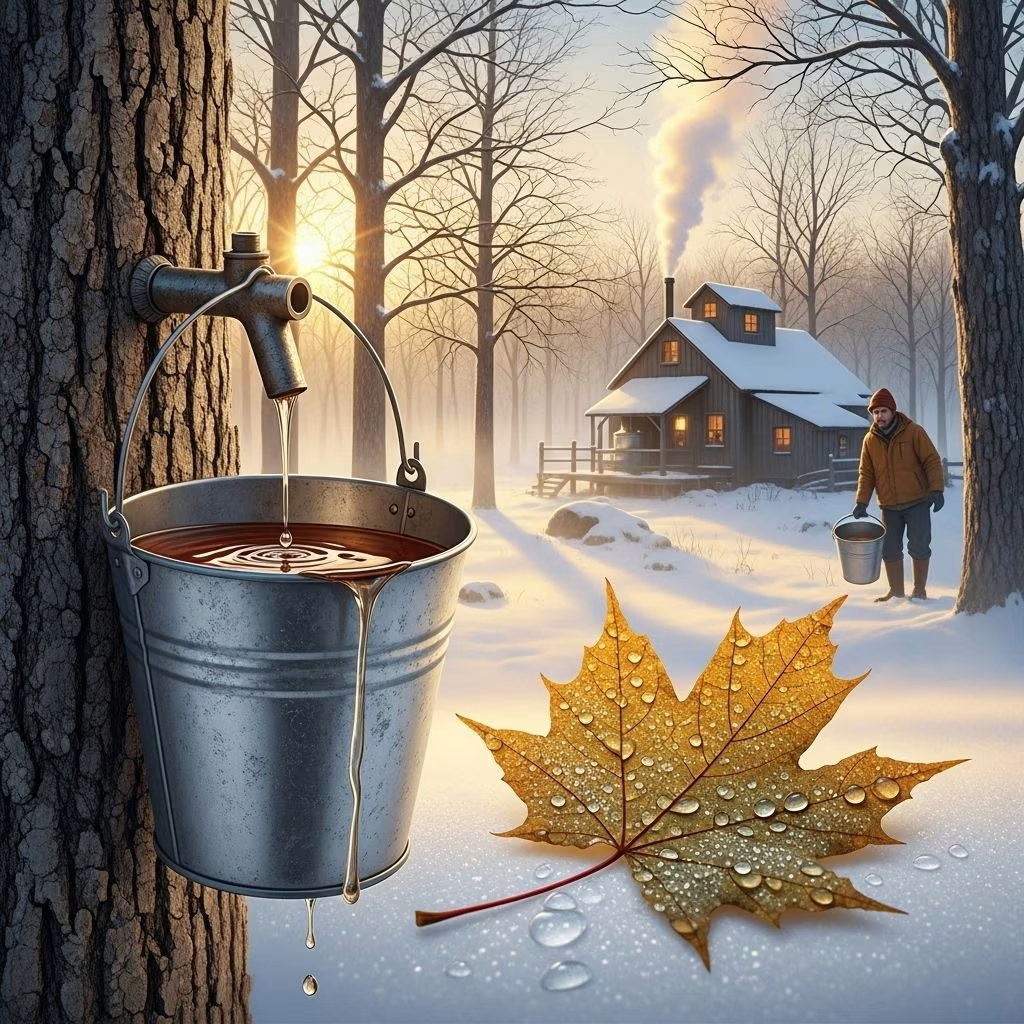
Maple Sap and Syrup Production: An In-Depth Guide
Maple syrup is one of North America’s traditional sweeteners, prized for its rich flavor and natural origins. Produced primarily from the sap of sugar maple trees, maple syrup making marries centuries-old techniques with modern research and technology. This guide explores the complete process, from sap collection to syrup bottling, highlights the environmental and economic dimensions, and answers common questions surrounding this sustainable, delicious craft.
What is Maple Sap?
Maple sap is the clear, slightly sweet liquid produced by maple trees as they emerge from winter dormancy. It is the essential raw material for maple syrup and other maple products. The sap mainly consists of water (about 98%) and 2% naturally occurring sugars, alongside trace minerals and organic compounds which contribute to the syrup’s flavor profile when concentrated and caramelized during processing.
- Source Trees: Primarily sugar maples (Acer saccharum), though black maple and other species can be used.
- Season: Sap flows during late winter and early spring, when daytime temperatures rise above freezing and nights are still cold.
- Composition: About 2% sugar, mainly sucrose, with water and minerals.
The History of Maple Syrup Production
The practice of making maple syrup is deeply rooted in Native American tradition. Indigenous peoples were the first to understand the sap’s potential as a sweetener, teaching European settlers the tapping techniques and syrup-making skills. Over time, syrup-making evolved into an artisanal practice, employing new tools and methods yet retaining its ecological sensitivity and reliance on seasonality.
- Native American innovation: Early use of wooden spiles and birch bark containers.
- Colonial adaptation: Pioneers refined the boiling and storage processes.
- Modern developments: Introduction of metal taps, tubing, and reverse osmosis for efficiency.
Preparation for the Maple Syrup Season
Proper preparation is essential months before the tapping season begins. Producers, called sugarmakers, engage in a wide range of tasks to ensure an effective and clean production cycle.
- Firewood cutting and splitting for boiling sap in traditional sugarhouses.
- Clearing pathways in the sugarbush (grove of maple trees) to facilitate access.
- Equipment cleaning: Meticulous cleaning and maintenance of taps, buckets, tubing, evaporators, and filters.
- Repair and setup of sap collection systems (tubing or buckets).
Identifying and Tapping Maple Trees
The process of tapping begins with identifying suitable maple trees. Only healthy trees with a minimum diameter of about 10-12 inches are tapped, ensuring their vitality for future years.
- Tree selection: Sugar maples are preferred due to higher sugar content, but red and black maples are sometimes used.
- Tap placement: Taps (spiles) are typically drilled about 1.5-2 inches into the trunk, away from previous tap scars.
- Number of taps: Usually 1-2 taps per mature tree to avoid stressing the tree.
- Equipment: Traditional metal buckets or modern plastic tubing connected to collection tanks.
Step-by-Step Tapping Process
- Drill a clean hole of the appropriate diameter and depth using a hand or power drill.
- Insert the spile (tap) gently to avoid damaging the tree.
- Attach the collection device—bucket or tubing.
- Seal any openings to prevent contamination.
Maple Sap Collection
Once the sap begins to flow, usually triggered by alternating freeze-thaw cycles, it is collected daily. Producers check buckets or tubing for overflowing and contamination.
- Volume: A mature maple can yield 10-20 gallons of sap per season.
- Quality: Fresh sap should be processed quickly to prevent spoilage; it is clear and mildly sweet.
- Tubing systems: Modern operations use gravity-powered or vacuum-assisted tubing networks for efficiency and hygiene.
Sap Processing and Boiling: Turning Sap into Syrup
The transformation of sap into syrup is achieved through a process of evaporation, concentrating sugars while removing water. This is traditionally done in an evaporator pan, but can also be performed using various modern and small-scale equipment.
- Evaporators: Large, flat metal pans heated by wood fires or other fuels; often partitioned for continuous flow.
- Reverse osmosis (RO): High-pressure filtration in commercial setups to remove up to 70% of water before boiling, reducing energy consumption and time.
- Boiling: Fresh sap enters at the rear, moves forward as water evaporates, and becomes increasingly sweet.
- Temperature indication: Sap becomes syrup when it reaches 7–7.5 °F (approx. 219 °F at sea level) above the boiling point of water.
- Ratio: Approximately 40 gallons of sap are needed to produce 1 gallon of pure maple syrup, depending on sap sugar content.
| Process Step | Description | Traditional Equipment | Modern Equipment |
|---|---|---|---|
| Tapping | Drilling holes and inserting spiles | Metal spiles, buckets | Plastic taps, tubing |
| Collection | Gathering sap daily | Buckets | Vacuum tubing |
| Evaporation | Boiling off water in the sap | Wood-fired pans | Reverse osmosis, fuel burners |
| Finishing | Final boiling/final syrup check | Small finishing pan | Density meter, hydrometer |
| Filtering & Grading | Removing particles, grading for color | Gravity filtration, visual judging | Pressure filtration, color grading charts |
| Packing | Storing syrup for sale | Glass bottles | Plastic/glass containers, labeling |
Home vs. Commercial Production
- Home/hobbyists: May use kitchen stoves, turkey fryers, or small outdoor boilers. Steam can make indoor surfaces sticky; boiling is best done outdoors.
- Commercial scale: Employ large evaporators, advanced filtration, and continuous monitoring systems.
Filtering, Grading, and Packing Maple Syrup
After evaporation, the syrup must be filtered to remove sugar sand (mineral deposits) and other particulates. Filtration ensures clarity and smooth texture. Syrup is then graded according to color and flavor before being packed for sale or storage.
- Filtering: Through cloth or pressure filters to remove impurities.
- Grading: Based on USDA or local standards for color (golden, amber, dark) and taste profile.
- Packing: Bottled in glass or plastic containers, labeled for quality assurance.
Maple Syrup Industry: Trends and Sustainability
The maple syrup industry thrives in the Northeastern United States and Eastern Canada, providing both small-scale artisanal production and large-scale commercial operations. Environmental consciousness and sustainable forest management are central to long-term production.
- Economic significance: Maple syrup is a key agricultural product in states like Vermont, New York, and provinces like Quebec.
- Ecological impact: Responsible tapping practices help maintain healthy forests; over-tapping or poor management can stress trees.
- Sustainability: Producers follow guidelines limiting taps per tree and spacing them year to year, ensuring decades of productive sap yield.
- Climate concerns: Changes in temperature patterns due to global warming may affect sap flow timing and yield.
Benefits of Maple Syrup Production
- Natural sweetener: Less processed than refined sugar, contains trace minerals.
- Low-impact: Harvesting does not require tree removal; forests preserved for decades.
- Community: Supports rural economies and seasonal festivals.
Tips for the Home Sugarmaker
- Tap only healthy maple trees with at least a 12-inch diameter.
- Use clean, food-grade buckets or tubing for collection.
- Boil sap as soon as possible to prevent spoilage; never store unboiled sap for more than a day or two in warm weather.
- Boil outdoors whenever possible to avoid excessive indoor humidity and sticky surfaces.
- Finish boiling on the stove for greater control, monitoring syrup temperature and thickness.
Frequently Asked Questions (FAQs)
Q: What types of maple trees can be tapped for syrup?
A: The sugar maple is preferred due to higher sugar content, but red, black, and silver maples can also yield sap suitable for syrup production.
Q: How much sap does it take to make one gallon of maple syrup?
A: On average, 40 gallons of sap are needed to produce one gallon of maple syrup, though this depends on the sugar content of the sap.
Q: When is the best time to tap maple trees?
A: Tapping begins in late winter to early spring, when daytime temperatures rise above freezing and nights remain below freezing, triggering sap flow.
Q: How can I tell when my syrup is done boiling?
A: Syrup is complete when it reaches 7–7.5°F above the boiling point of water (216–219°F), or when it is 67% sugar by weight. Professional tools like hydrometers and thermometers aid in assessing this.
Q: Is maple syrup production sustainable?
A: Yes. When producers follow responsible tapping guidelines and use sustainable forest management, syrup production can continue for generations without harming the trees.
Glossary of Key Terms
- Sugarbush: A grove of maple trees tapped for sap collection.
- Spile: A small tap inserted into the tree to draw sap.
- Evaporator: Large pan or vessel used for boiling down sap.
- Sugar sand: Minerals that precipitate during boiling, filtered from finished syrup.
- Reverse osmosis: Filtration process used to remove water before boiling, common in high-volume production.
Maple Syrup in Culinary Use and Health
Pure maple syrup, with its rich flavor and essential nutrients, is valued for more than just pancakes. It contains antioxidants, trace minerals like manganese and zinc, and is considered a natural alternative to refined sweeteners.
- Use as a topping for breakfast foods, desserts, or glazes for roasted meats and vegetables.
- Choose Grade A (golden, amber, dark) for different flavor intensities.
- Store syrup in cool, dark places; refrigerate after opening.
Conclusion
The art and science of maple sap and syrup production highlight the delicate balance between honoring tradition and embracing innovation. Whether crafted by a family in their backyard or produced for international markets, maple syrup represents sustainable forestry, careful stewardship, and the joy of transforming nature’s bounty into an enduring culinary treasure.
References
- https://www.massmaple.org/about-maple-syrup/
- https://www.ctmaple.org/how-do-you-make-maple-syrup.html
- https://www.instructables.com/How-to-make-Maple-Syrup/
- https://www.youtube.com/watch?v=unI7tlk3dWE
- https://maple.extension.wisc.edu/producers/
- https://escuminac.com/blogs/all-blogs/how-is-real-maple-syrup-made-step-by-step
- https://sycamorelandtrust.org/2021/02/backyard-maple-syrup/
- https://www.youtube.com/watch?v=7SrdKlzvHSs


