


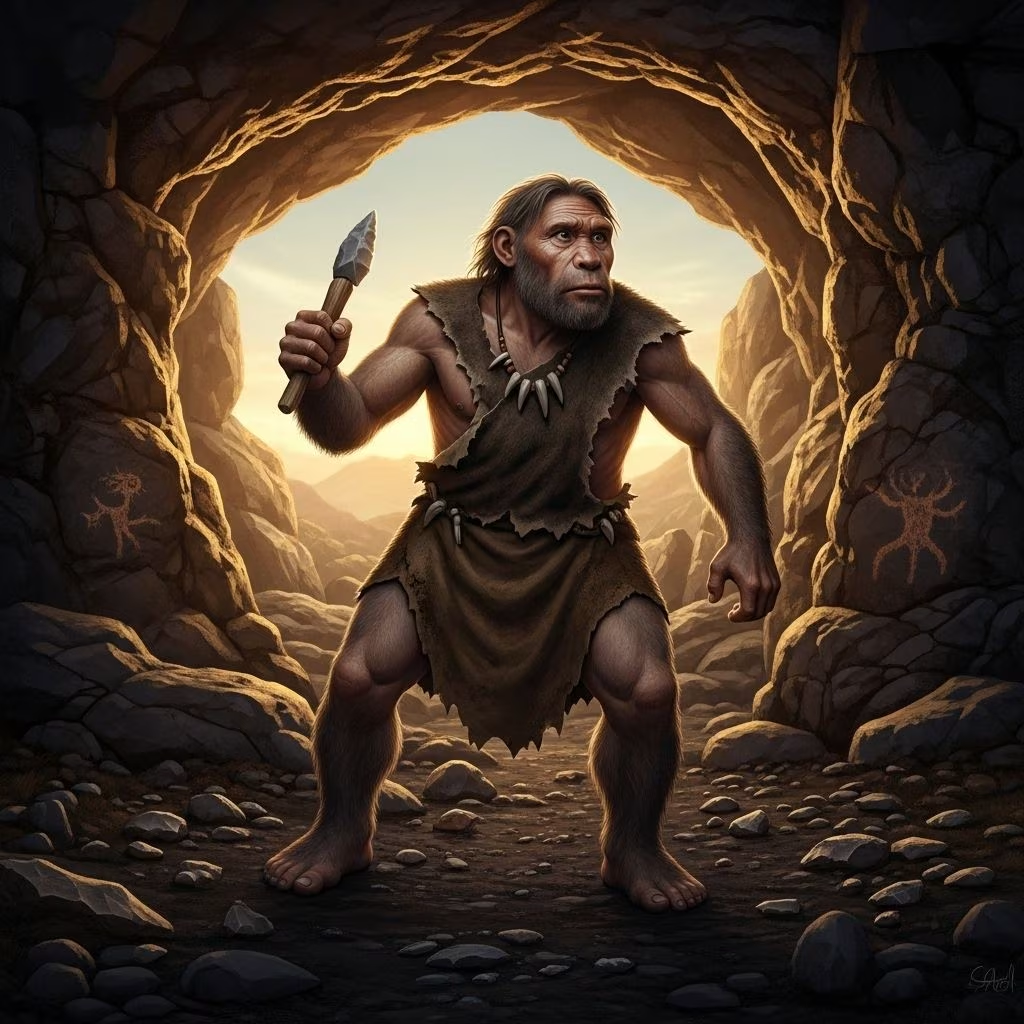
Often depicted as brutish and primitive, Neanderthals have long been misunderstood. Recent research reveals a far more nuanced portrait: Neanderthals were resilient, innovative, and complex. This article explores the surprising facts about Neanderthals, debunking myths and illuminating their true place in the story of human evolution.
Who Were the Neanderthals?
Homo neanderthalensis, commonly called Neanderthals, are our closest extinct human relatives. They lived in Europe and southwestern to central Asia from about 400,000 to 40,000 years ago. Their fossil record is rich, allowing scientists a detailed look at their biology, culture, and capabilities.
- Where they lived: From Atlantic Europe to central Asia, including areas now known as Belgium, France, Spain, the Middle East, and Russia.
- Physical adaptations: Shorter, stockier bodies with barrel chests and muscular limbs, which helped them survive cold, glacial environments.
- Brain size: Comparable to, and sometimes larger than, that of modern humans, reflecting both their intelligence and their large body size.
Neanderthal Appearance: More Than Just a Caveman
The popular image of Neanderthals as hairy, stooped, and crude is a far cry from the reality reconstructed by current science.
- Facial structure: Large browridges, a broad nose, and a prominent midface. Their large nasal passage helped warm and humidify cold air in Ice Age Europe.
- Body build: Stocky and muscular, adapted to conserve heat and thrive in frigid climates.
- Height and weight: Males averaged about 5 feet 5 inches (164 cm) and 143 lbs (65 kg); females averaged 5 feet 1 inch (155 cm) and 119 lbs (54 kg).
Genetic evidence suggests Neanderthals had a range of skin and hair colors similar to those found in modern Europeans, including lighter and darker pigmentation. Far from being the ‘missing link,’ their robust features simply reflect adaptation, not inferiority.
Master Toolmakers and Skilled Hunters
Neanderthals were innovative toolmakers. They developed the Mousterian stone tool industry, including:
- Sophisticated flake tools that could be customized to specific tasks
- Use of wooden spears for hunting large prey
- Some of the earliest known use of bone tools, preceding modern humans in this domain
They were skilled seasonal hunters who targeted large mammals like reindeer and red deer in addition to marine life such as mollusks, dolphins, and fish when near the coast.
Complex Diet: Not Just Meat-Eaters
Although Neanderthals were once thought to be almost exclusively carnivores, research now reveals a diverse diet:
- Heavily reliant on animal protein, but also consumed a variety of plants, nuts, and seeds
- Direct evidence from tooth plaque shows they ate mushrooms, moss, pine nuts, cooked grains, and medicinal plants
- Exploited marine resources when available
This adaptability to different food sources likely aided their survival in challenging environments.
Fire, Clothing, and Shelter: Adapting to the Ice Age
Contrary to outdated notions of primitive lifestyle, Neanderthals:
- Controlled fire for warmth, cooking, and safety
- Lived in constructed shelters made from wood, stone, and animal skins
- Were the first early humans to regularly wear clothes, using animal hides fashioned with bone awls
While they lacked the fully tailored garments of modern humans, Neanderthals’ clothing and housing innovations were crucial for surviving subarctic conditions.
Symbolism, Art, and Burial: Expressions of Culture
Archaeological findings show that Neanderthals engaged in symbolic behaviors once thought exclusive to Homo sapiens:
- Deliberate burial of their dead, sometimes with grave goods like flowers or animal bones
- Use of ochre pigments for possible body decoration or symbolic purposes
- Creation of personal ornaments such as perforated animal teeth or shells
- Possible earliest cave art in Spain, predating Homo sapiens art in Europe
These discoveries signal cognitive and cultural capacities rivaling those of modern humans.
Social Bonds and Life Challenges
Neanderthals lived in small, tightly-knit groups with strong social bonds:
- Evidence of injured or disabled individuals being cared for by others, implying empathy and cooperation
- High frequency of bone fractures, a testimony to a dangerous lifestyle spent hunting large prey
- Demonstrated use of tools for sewing and hide preparation, indicating division of labor and cooperation
Despite living shorter lives on average than contemporary Homo sapiens, Neanderthal communities likely provided support for the ill and elderly.
Neanderthals Were Not Our Ancestors, But Our Kin
One persistent misconception is that modern humans are direct descendants of Neanderthals. In reality:
- Neanderthals and Homo sapiens evolved from a common ancestor, likely Homo heidelbergensis, around 500,000 years ago.
- They represent a parallel branch of human evolution—our cousins, not our ancestors.
For over 200,000 years, Neanderthals and Homo sapiens coexisted in Eurasia, sometimes occupying the same territories and likely interacting in complex ways.
Interbreeding: Their Legacy Lives On
Far from fading into oblivion, Neanderthals left a biological legacy within modern humans:
- Interbreeding with Homo sapiens occurred multiple times during their coexistence.
- DNA studies show that all non-African modern humans carry about 1-2% Neanderthal DNA.
- This genetic inheritance contributes to:
- Immune system strength
- Skin and hair traits
- Susceptibility and resistance to some diseases
The genetic overlap highlights how thoroughly intertwined our histories are.
Why Did Neanderthals Disappear?
The reasons for their disappearance remain debated. Possible factors include:
- Competition with modern humans for resources
- Climate change and deteriorating environmental conditions
- Small, isolated populations prone to genetic bottleneck and inbreeding
- Pandemics or disease spread
- Cultural and technological factors possibly favoring Homo sapiens
Rather than a swift extinction, evidence points to gradual assimilation and interbreeding as contributing factors to their decline.
Neanderthal Innovations vs. Human Ingenuity
| Neanderthals | Homo sapiens |
|---|---|
| Advanced flake tools (Mousterian industry) | Rapid innovation in tool design (Upper Paleolithic tools) |
| Seasonal hunting strategies | Broad-spectrum foraging strategies |
| Burial of dead with simple grave goods | Elaborate ritual burials, symbolic artifacts |
| Limited evidence of cave art | Abundant evidence of painting, sculpture, and ornamentation |
| Body painting (ochre use) and ornaments | Complex jewelry, clothing, musical instruments |
Debunking Common Myths
- Myth: Neanderthals were dumb brutes.
Fact: They made advanced tools, used fire, created symbolic art, and buried their dead. - Myth: They exclusively ate meat.
Fact: Their diet included a variety of plants, nuts, mushrooms, and seafood. - Myth: Neanderthals went extinct without a trace.
Fact: Much of their DNA lives on within modern non-African humans. - Myth: Only Homo sapiens practiced culture and symbolic thought.
Fact: Neanderthals also exhibited symbolic behavior, adornment, and caregiving.
Frequently Asked Questions About Neanderthals
How are Neanderthals related to modern humans?
Neanderthals and Homo sapiens share a common ancestor and interbred, but are separate branches of the human family tree. All non-African modern humans carry a small percentage of Neanderthal DNA.
Did Neanderthals have language?
While direct evidence of spoken language is absent, the structure of their vocal tract, their use of symbolic objects, and their complex social behavior suggest some form of communication was likely.
What caused their extinction?
The disappearance of Neanderthals is attributed to a combination of climate change, competition with modern humans, and gradual assimilation through interbreeding.
Were they artistic or spiritual?
Neanderthals created personal ornaments, used ochre for coloring, buried their dead, and possibly produced cave art. These behaviors suggest a capacity for symbolic thought and perhaps spiritual beliefs.
What is their lasting influence?
Besides genetic contributions, discoveries about Neanderthals continue to shape our understanding of what it means to be human.
Key Takeaways
- Neanderthals were intelligent, adaptive, and culturally sophisticated, not primitive brutes.
- Their diet, tool use, and symbolic behavior overlapped significantly with early Homo sapiens.
- Interbreeding left a genetic legacy in modern humans.
- Current science continually revises our view, revealing Neanderthals as complex members of our extended human family.


